“Amaravati’s destiny hangs in the balance as Andhra Pradesh grapples with the challenge of defining its capital.”

In recent developments, the Andhra Pradesh High Court has directed the state government to construct and develop Amaravati as the capital within six months. This directive adds a new chapter to the ongoing saga of the state’s capital conundrum, marked by legislative interventions, legal battles, and significant public dissent.
The origin of this controversy lies in the Andhra Pradesh Decentralisation and Inclusive Development of All Regions Bill, 2020. This legislative move aimed to establish three capitals for the state – Visakhapatnam as the executive capital, Amaravati as the legislative capital, and Kurnool as the judicial capital. The rationale behind this plan was to foster balanced regional development and inclusive growth.
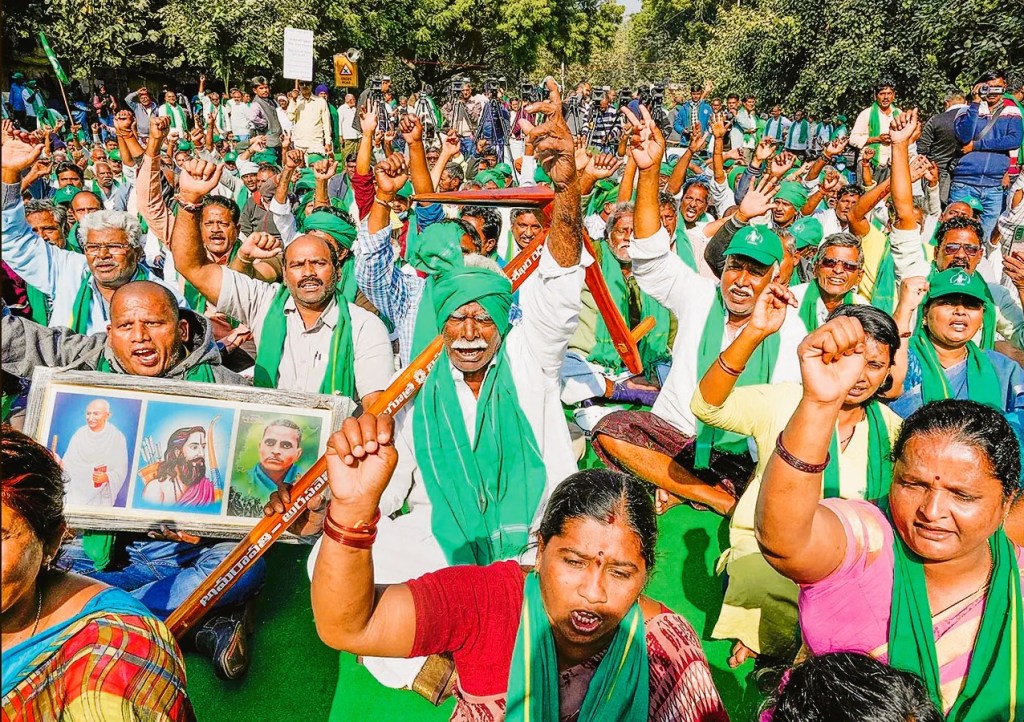
The government’s decision to change the capital had far-reaching consequences, particularly for farmers in and around Amaravati. Approximately 30,000 acres of land were acquired from these farmers, and the proposed capital shift threatened to disrupt their lives and livelihoods. This aspect added a layer of complexity to the controversy, with farmers organizing protests against the government’s move.
In November 2021, the Andhra Pradesh Decentralisation and Inclusive Development of All Regions Repeal Bill, 2021 was passed, seeking to annul the earlier laws supporting the three-capital plan. The government promised a “better” and “comprehensive” replacement for the repealed legislation. However, this led to legal challenges, setting the stage for a judicial battle over the state’s capital configuration.
The recent ruling by the Andhra Pradesh High Court added a new dimension to the controversy. The court held that the state legislature lacked the authority to legislate on shifting, bifurcating, or trifurcating the capital. It directed the government to adhere to the existing A.P. Capital Regional Development Authority Act and Land Pooling Rules. The court also emphasized the need to develop plots belonging to landowners and return them within three months.
The legal aspects of the case are grounded in constitutional principles. The High Court emphasized that only Parliament holds the competence to make decisions regarding the setup of legislative, executive, and judicial organs of the state. This raised questions about the constitutional validity of the state’s attempts to change its capital configuration without central approval.
While the three-capital plan was devised to promote balanced development, it faced several criticisms and concerns. Logistically, separating the executive, legislative, and judicial functions posed challenges, especially during forth coming assembly sessions. The financial feasibility of developing three capitals also raised eyebrows, along with worries about the environmental impact and lack of infrastructure in the selected locations.

Proponents of the three-capital plan argued that it could lead to balanced regional development, attract investment, and improve accessibility to government services. However, opponents contended that the challenges, including coordination issues and financial concerns, outweighed the potential benefits.
The plight of farmers who contributed land for the original capital project added a human element to the controversy. The uncertainty surrounding the fate of their land and the perceived betrayal by the government fueled protests and added a social and ethical dimension to the capital conundrum.
Examining the international landscape revealed that multiple capitals exist in various countries for historical, administrative, and political reasons. However, the unique circumstances of Andhra Pradesh’s case, involving the reversal of a previous capital plan, set it apart from global examples.
As Andhra Pradesh stands at a crucial juncture, considering the legal intricacies, public sentiments, and economic implications, the road ahead must be navigated carefully. Consultation with stakeholders, feasibility studies, infrastructure development, and environmental impact assessments should guide the decision-making process.
The proposal for three capitals in Andhra Pradesh reveals a multifaceted strategy driven by political, financial, and real estate motives. The Yuvajana Sramika Rythu Congress Party (YSRCP) aims to consolidate power by redistributing administrative functions, strategically weakening opposition forces in North Andhra and Rayalaseema. Financially, the concept of multiple capitals offers a cost-effective alternative, directing funds towards welfare programs. Real estate interests emerge, involving influential figures with holdings in Vizag poised to benefit.

Factual considerations scrutinize the developmental impact of a judicial capital in Kurnool/Rayalaseema, express concerns about scheme sustainability, and stress the importance of a forward-looking capital like Amaravati. The conclusion advocates a long-term perspective, discouraging Vizag as the capital due to environmental concerns, criticizing current government policies, and emphasizing the need for inclusive, sustainable decision-making. The controversy, marked by legal, political, economic, and social complexities, faces a critical juncture with the High Court ruling, urging careful navigation as the state awaits the pivotal Supreme Court judgment. The outcome will shape Amaravati’s role and determine the state’s trajectory, underlining the imperative for thoughtful, inclusive decision-making for stability and sustainable development.
Visit arjasriaknth.in for more insights
 ARJA SOCIAL PERSPECTIVES
One response to ““Decoding the Andhra Pradesh Capital Conundrum: Three Capitals, One Controversy””
Balanced analysis of the man made crisis of Capital location and the surrounding constitutional, political and public issues.
LikeLike