“Exploring the Rhythmic Tales of Telangana’s Kakatiya Dynasty with Kuchipudi Maestro Padmaja Reddy”
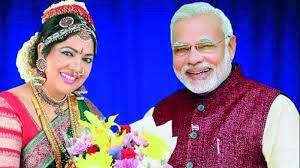
In the world of Kuchipudi dance, Padmaja Reddy stands as a beacon of artistic excellence and cultural revival. Born on January 1, 1967, this Indian Kuchipudi exponent and music teacher have not only carved a niche for herself in the dance realm but have also contributed significantly to the preservation of Telangana’s rich heritage.
Padmaja Reddy’s journey began in the quaint town of Pamarru, Krishna district, Andhra Pradesh. Born into a Reddy family to G. V. Reddy and Swarajyalakshmi, she spent her formative years immersed in the cultural tapestry of her grandparents’ home in Pamarru. Later, she moved to Hyderabad, where her passion for Kuchipudi would blossom.Educated at St. Theresa School and Reddy College, Padmaja pursued her Bachelor of Arts, laying the foundation for a life dedicated to the arts.
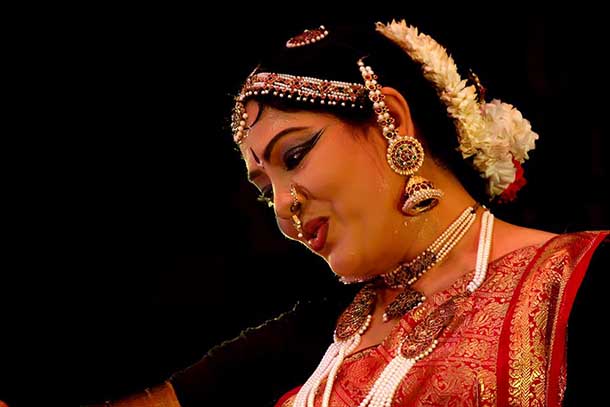
Under the guidance of the illustrious Shobha Naidu, Padmaja Reddy honed her skills in Kuchipudi. Her performances, notably in the roles of Satyabhama and Rudrama Devi, earned her recognition. Yet, Padmaja sought to transcend traditional mythological narratives, delving into contemporary social issues through her art.
She crafted ballets like “Bruna Hatyalu,” condemning female foeticides, “Jagruthi,” exploring HIV/AIDS issues, and “Vajra Bharati,” igniting national integrity ethos. Amidst these societal reflections, Padmaja continued to enchant audiences with mythological wonders like “Bhamakalapam,” “Mahishashura Mardhini,” and “Navadurgalu.”
In an interview, Padmaja Reddy shared her vision to create a classical dance form rooted in Telangana’s culture. The result was “Kakatiyam,” a two-part Kuchipudi visual dance form inspired by the history and themes of the Kakatiya dynasty. This dance concept drew from her meticulous research on the Ramappa Temple, Thousand Pillar Temple, and Warangal Fort, documented in the ancient text “Nritta Ratnavali.”
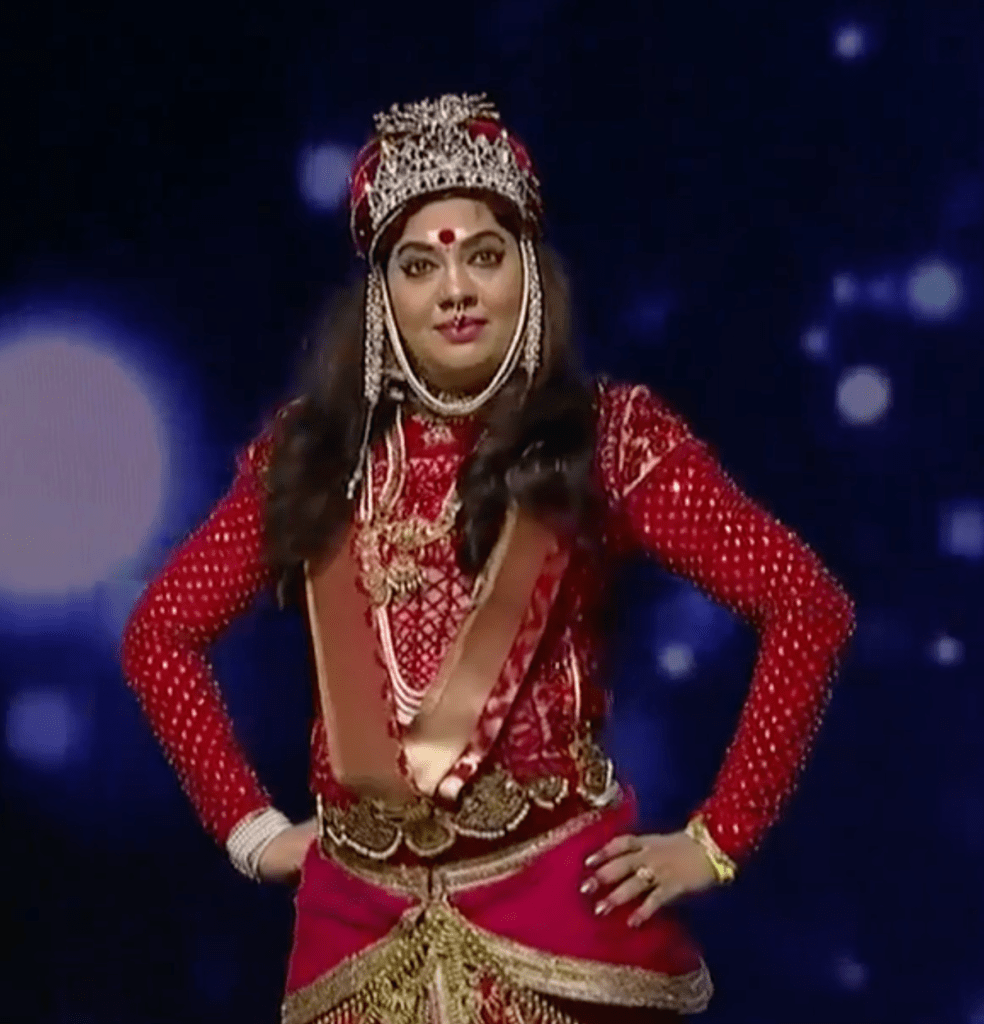
Performing as Rudrama Devi, queen of the Kakatiya dynasty, Padmaja first unveiled the initial part in February 2017. The second part followed in December 2021, both staged at Shilpakala Vedika in Hyderabad. Kakatiyam, an ode to Telangana’s cultural heritage, became Padmaja’s way of sowing the seeds for a dance form that resonates with the people.
The journey of Kakatiyam wasn’t without its challenges. The vastness of dance concepts from “Nritta Ratnavali” led to a deliberate choice of content for budgetary and feasibility reasons. Padmaja’s dedication to the art form persisted, even during the pandemic, with online classes becoming a vital tool for training her students.
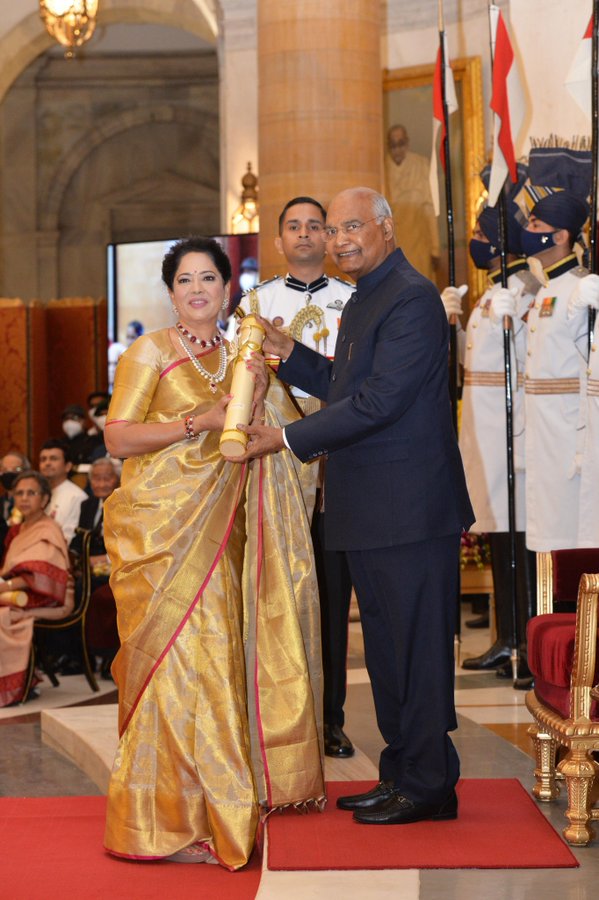
Padmaja Reddy’s contributions to Kuchipudi earned her numerous honors, including the prestigious Kala Ratna in 2006 and the Sangeet Natak Akademi Award in 2015. Notably, she became the first dancer from Telangana to receive this highest national honor in the arts. In 2022, the Government of India conferred upon her the Padma Shri, recognizing her outstanding achievements in the field of art.
Married to Gaddam Srinivas Reddy, with a son named Pranav, Padmaja Reddy continues to reside in Begumpet, Hyderabad. Her commitment to Kuchipudi extends beyond performances; she imparts her knowledge at the “Pranav Institute of Kuchipudi Dance,” named after her son.
Looking ahead, Padmaja envisions further exploration of the dance concepts detailed in “Nritta Ratnavali.” She aims to present a series of dance ballets progressively, bringing forth the richness of Kakatiya-era dance forms.
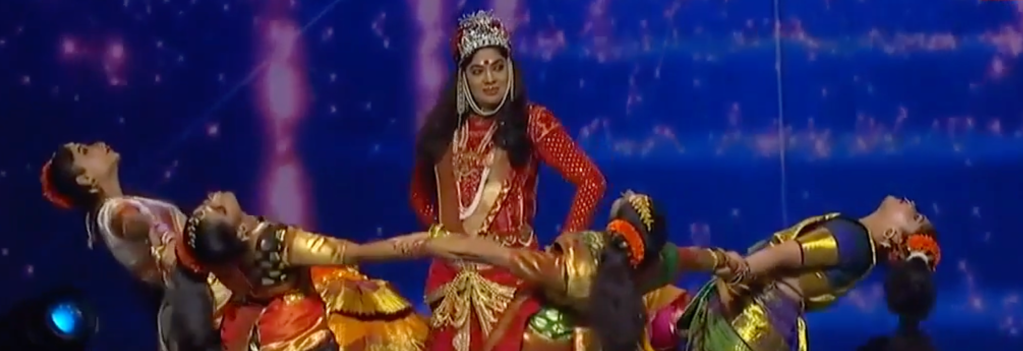
Padmaja Reddy’s artistic journey, marked by dedication, innovation, and a deep-rooted connection to her cultural heritage, showcases the transformative power of dance. Through Kakatiyam, she not only revived forgotten dance forms but also instilled a sense of pride and identity in the people of Telangana. As Padmaja continues to nurture her creation, the legacy of Kakatiyam unfolds as a testament to the timeless beauty of Indian classical dance and its enduring power to captivate hearts and transcend generations.
visit arjasrikanth.in for more insights

