The pulsating heart of Indian politics beats to the rhythm of promises, where freebies, charmingly known as the “Revdi culture,” have become both a weapon and a liability. This exploration delves into the intricate world of political giveaways, uncovering the layers of impact they cast on the nation’s economy, society, and governance. As the debate intensifies, the article navigates the terrain of benefits, pitfalls, and the looming question of sustainability.
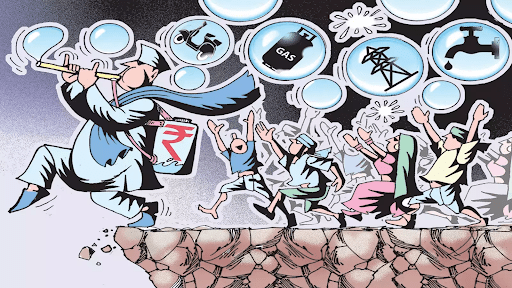
In the grand theatre of public policy, programs like MGNREGA take center stage, offering the promise of assured wages. This not only contributes to a robust and healthier workforce but also acts as a lifeline for those battling the claws of poverty. The stage widens as the Public Distribution System (PDS) enters, a supporting actor offering subsidized food grains, ensuring both consumer welfare and fair remuneration for farmers. The symphony crescendos with subsidized food grains through the PDS and schemes like PMGKAY. In a nation prone to crises, these initiatives become the guardians of basic food security, shielding the vulnerable from the spectre of starvation, especially during unprecedented events like the COVID-19 pandemic.
Enter the protagonists – initiatives like mid-day meals and free bus passes. They not only address the immediate need of hunger in schools but also act as catalysts for societal transformation. The narrative takes an empowering turn with free bus passes for women in Tamil Nadu, encouraging their participation in the workforce and laying the foundation for economic stability. In a surprising twist, the distribution of free color televisions emerges as a subplot combating domestic violence. The televisions become agents of change, fostering women’s empowerment and self-respect, revealing the unexpected societal dividends of seemingly unrelated freebies.
Subsidies, such as free laptops, take the stage as necessities, not luxuries. In the evolving landscape of skills and knowledge, these freebies become instrumental in enhancing productivity, bridging the gap between the digital divide and ensuring a more competitive and knowledgeable workforce. Fiscal incentives in states like Kerala step into the limelight, aiming to encourage corporate growth and industrial development. The symphony, now reaching its zenith, echoes promises of economic prosperity through strategic fiscal policies.
However, as the applause for these initiatives resonates, dissonant chords emerge. The funds for these freebies, often financed through loans, fail to contribute to additional revenue. The curtain lifts, revealing the growing debt burden that silently shadows the applause. Behind the scenes, a more clandestine act takes place – borrowing for freebies occurring off-budget. This financial sleight-of-hand conceals debt and circumvents fiscal targets, leaving the audience unaware of the economic smoke and mirrors. As the drama unfolds, the excessive spending on freebies distorts the plot. Resources are diverted from growth-enhancing items and infrastructure, creating an imbalanced narrative that might compromise long-term economic goals.
The spotlight now reveals a stark truth – expenditure distortion contributes to social inequalities. The World Inequality Report takes centre stage, pointing to the concentration of income among the top 1% in India, a result of the very policies meant to uplift the masses. A subplot emerges, questioning the sustainability of the entire performance. The focus on free power, water, and similar promises risks diverting attention from sustainable growth, renewable energy, and the development of efficient public transport. The script takes an unexpected turn as reliance on indirect taxes for funding freebies becomes apparent. The consequence – a disproportionate tax burden, impacting economic competitiveness and leaving the audience questioning the true cost of their “free” gifts.
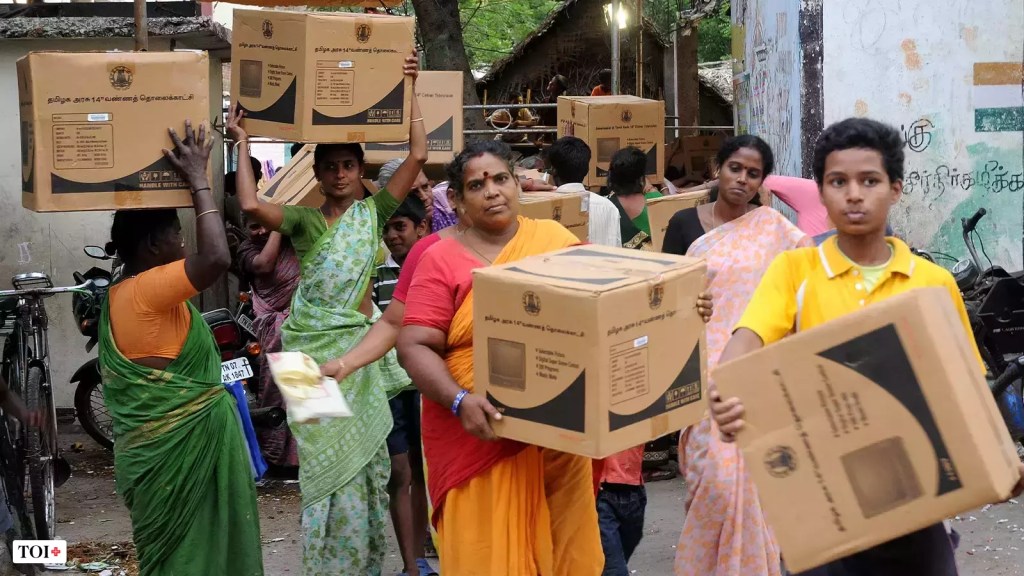
As the crescendo builds, a final act unfolds – the race for providing freebies poses a risk of fiscal disaster. Discussions about mechanisms like subnational bankruptcy punctuate the air, casting shadows on the economic stability of regions engulfed in the freebie frenzy. Enter the supporting characters – legislative checks, especially by the Opposition. They become the guardians of accountability, holding the government accountable and ensuring that the show remains within the bounds of economic prudence. The Comptroller and Auditor General (CAG) audit steps into the limelight, theoretically a check on the financial integrity of the performance. However, limitations in addressing immediate political concerns become apparent, leaving the audience questioning the efficacy of this safeguard. Market responses, portrayed through loan pricing for different state governments, become the silent narrators of the financial health of the regions. They offer cues about the stability of finances and the looming spectre of debt sustainability.
The Supreme Court, like the wise elder, steps in and suggests constituting an expert committee. This committee, comprising representatives from beneficiaries, governments, finance bodies, and regulatory bodies, becomes the beacon of hope for a more nuanced evaluation of the freebie phenomenon. The conductor steps forward, urging the audience to distinguish between merit goods and public goods. This differentiation becomes crucial to address concerns about inequality and economic distortion, reshaping the narrative around the very definition of “freebies.” A contemplative interlude emerges – evaluating the long-term impact of freebies on the economy, life quality, and social cohesion. This moment of reflection becomes essential to craft a sustainable and enduring melody that transcends the immediate political applause.
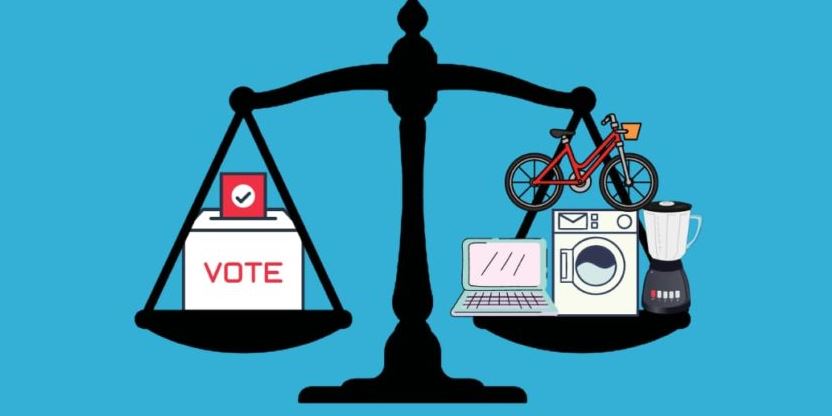
The script takes a turn towards constitutional revisions. Revisiting the Seventh Schedule, amending Article 282, and modifying the Fiscal Responsibility and Budget Management (FRBM) acts are proposed measures. The goal – to enforce complete disclosure of liabilities and usher in an era of transparency. A subtle but significant subplot unfolds – the Constitution requires states to seek the Centre’s permission for borrowing. This avenue becomes a potential tool for imposing conditionalities, injecting a note of responsibility into the narrative.
In a dramatic twist, the idea of establishing realistic prospects of a financial emergency in cases of fiscal irresponsibility emerges. This prospect serves as a deterrent, forcing actors on the political stage to think twice before indulging in the reckless distribution of economic favours.
The curtain falls, and the spotlight dims. The debate over freebies in Indian politics, with all its complexities and contradictions, echoes the need for a nuanced approach. Balancing short-term political gains with long-term economic sustainability becomes the challenge of the next act. Instituting checks, revisiting constitutional provisions, and ensuring transparency emerge as crucial steps in navigating the complex landscape of freebies. The upcoming expert committee’s findings become the anticipated climax, offering insights into developing a comprehensive framework that addresses both the benefits and concerns associated with freebies in Indian governance. As the final notes of the symphony linger, the audience is left with a lingering question – can the melody of freebies be transformed into a harmonious composition that resonates not just in the political arena, but in the hearts and minds of a nation aspiring for sustainable growth and inclusive prosperity? The next act, yet unwritten, holds the answer.
visit arjasrikanth.in for more insights
 ARJA SOCIAL PERSPECTIVES
One response to ““Freebies in Indian Politics: A Double-Edged Sword””
Excellent article .
Would there be any takers or it is only timepass !!
.Politicians will find a way out to continue with the present arrangements which suit to one & all .
Keep the people poor,misguide them and than lure them during elections by all means to regain power .
Each political party is unfortunately one step a head of other party.
Politicians instead of treating themselves as custodians ,start treating them owner of the country’s resources with virtually no accountability barring elections etc.
Let see how things turn out.
I personally speaking, doubt any worth happening in this direction.
Thanks.
LikeLike