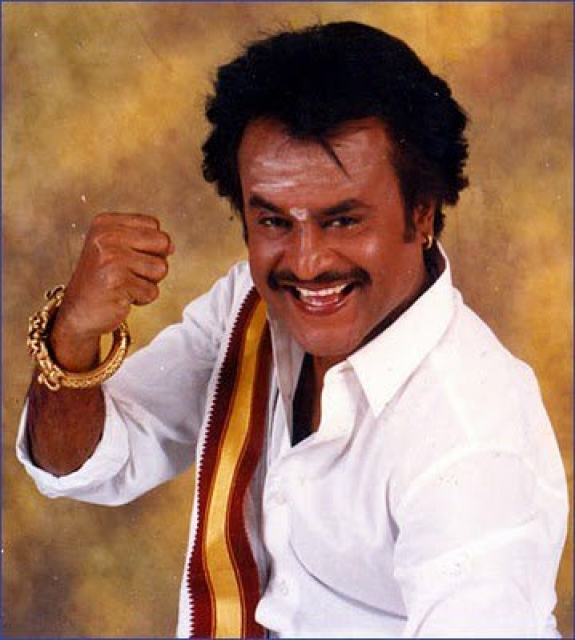
As the world celebrates the birth anniversary of the legendary Rajinikanth, it’s an opportune moment to reflect on the life and career of a man who has become synonymous with Indian cinema. Born on December 12, 1950, as Shivaji Rao Gaekwad, Rajinikanth’s journey from a bus conductor to the “Superstar” of Indian cinema is nothing short of a cinematic marvel.
In a recent interview, Rajinikanth himself addressed the question on everyone’s mind: Is he considering retirement? The answer was clear – Rajinikanth is not contemplating retirement at the moment. His love for acting and the joy it brings him are evident. The iconic actor expressed his desire to continue gracing the silver screen for as long as he can, bringing joy to his millions of fans worldwide.
However, the seasoned actor did drop a hint about a potential shift in focus. Rajinikanth openly shared his willingness to explore a full-time foray into politics in the future. While he remains committed to entertaining audiences, the prospect of serving the public through politics is a path he is willing to tread.
No tribute to Rajinikanth would be complete without revisiting some of his most monumental cinematic achievements. Here’s a glimpse into the top 10 highest-grossing movies of the Superstar:
2.0 (2018): A sci-fi thriller that pushed the boundaries of Indian cinema. Jailer (I) (2023): An action-packed comedy-crime drama showcasing Rajinikanth’s versatile acting. Kabali (2016): An action-crime drama that captivated audiences worldwide. Enthiran (2010): A groundbreaking science fiction film that showcased Rajinikanth’s dual roles. Darbar (2020): A cop drama that added another dimension to Rajinikanth’s repertoire. Petta (2019): A stylish action film that became a box office sensation. Annaatthe (2021): A recent release that continues to make waves in the cinematic landscape. Sivaji (2007): A film that solidified Rajinikanth’s position as the matinée idol of Tamil cinema.
These movies not only shattered box office records but also became cultural phenomena, elevating Rajinikanth to the status of a living legend.
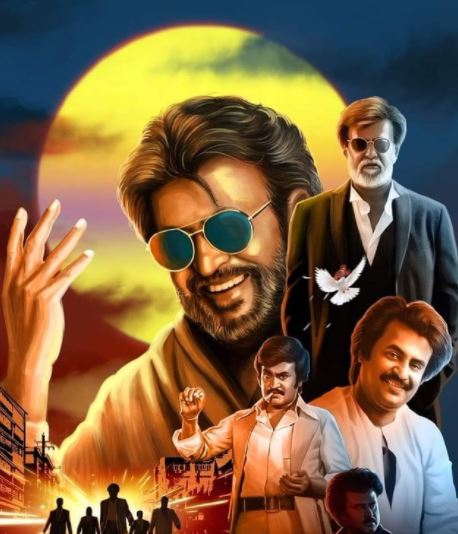
To understand the journey of Rajinikanth, we must go back to his cinematic debut. In 1975, under the guidance of director K. Balachander, Rajinikanth made his debut in the Tamil drama Apoorva Raagangal. His initial role, a minor one as an abusive husband, hinted at the potential waiting to be unleashed.
It was Balachander’s Telugu drama film Anthuleni Katha (1976) that marked Rajinikanth’s first major role, setting the stage for his breakthrough in Tamil cinema with Moondru Mudichu (1976). Balachander’s keen eye for talent played a pivotal role in discovering Rajinikanth’s acting prowess.
From negative roles in films like Avargal, 16 Vayathinile, Aadu Puli Attam, and Gaayathri to positive characters in movies like Kavikkuyil and Sahodarara Savaal, Rajinikanth showcased his versatility early in his career. His portrayal of a failed lover in Bhuvana Oru Kelvi Kuri (1977) earned him critical acclaim, marking a turning point in his journey.
The late ’70s saw Rajinikanth’s ascent to lead roles with films like Bairavi (1978), Mullum Malarum (1978), and Aval Appadithan (1978). The latter earned him a Tamil Nadu State Film Award Special Prize for Best Actor.
The 1980s solidified Rajinikanth’s status as both an action hero and a superstar with movies like Billa (1980) and Murattu Kaalai (1980). He ventured into comedy with Thillu Mullu (1981), a Tamil remake of the Bollywood film Gol Maal (1979).

His Bollywood debut in Andhaa Kaanoon (1983) and success in films like Nallavanukku Nallavan (1984) expanded his reach beyond Tamil cinema. The latter earned him the Filmfare Award for Best Tamil Actor.
Rajinikanth’s 100th film, Sri Raghavendrar (1985), portrayed him as the Hindu saint Raghavendra Swami. Despite being a box-office failure, it showcased his willingness to experiment.
The latter half of the ’80s witnessed Rajinikanth’s foray into Hindi cinema with films like Geraftaar (1985) and ChaalBaaz (1989). His Hollywood debut in Bloodstone (1988) marked a bold step into international cinema.
Rajinikanth’s influence wasn’t confined to the realm of cinema. A major turning point in his life occurred when K. Balachander discovered him for the 1975 film Apoorva Raagangal. This marked the beginning of a journey that saw Rajinikanth’s impact not only in entertainment but also in politics.
A staunch follower of the late NTR, Rajinikanth actively participated in politics, campaigning for the Telugu Desam Party (TDP). However, the trajectory of his political involvement took an unexpected turn after the tragic on-set accident in 1989.
Rajinikanth’s contribution to cinema has been duly recognized over the years. In 1984, he received a Nandi Award for Best Actor in a supporting role for the film Sundari Subbarao. The pinnacle of recognition came in 2005 when he was honored with the NTR National Award, solidifying his place in the pantheon of Indian cinema.
In the new millennium, Rajinikanth continued to redefine Indian cinema. Films like Chandramukhi (2005) and Sivaji (2007) showcased his enduring appeal. The latter, directed by S. Shankar, made him the second-highest paid actor in Asia after Jackie Chan. His portrayal of a scientist and an andro-humanoid robot in Enthiran (2010) marked a significant chapter. The film was India’s most expensive production at the time of its release and remains among the highest-grossing Indian films of all time.The experimentation continued with the 2014 animated film Kochadaiiyaan, the first in India shot with motion capture technology. While it faced commercial challenges, it highlighted Rajinikanth’s willingness to embrace innovation.
Beyond the entertainment industry, Rajinikanth’s contributions to society are significant. His on-screen persona often reflected a larger-than-life character, embodying principles of justice, courage, and righteousness. This portrayal had a profound impact on his fans, transcending the realms of fiction. Rajinikanth’s on-screen characters often stood as symbols of resilience and social justice. His movies addressed societal issues, and the impact went beyond the box office. Films like Kaala (2018), where he played a Malaysian Tamil crime boss, demonstrated his commitment to storytelling that resonates with societal values.
As we celebrate Rajinikanth’s birth anniversary, we reflect not only on his cinematic achievements but also on the man behind the characters. His journey from a bus conductor to a global cinematic icon is an inspiration to many. Rajinikanth’s charisma, humility, and commitment to his craft have left an indelible mark on the hearts of millions. With over 170 films to his credit and a career spanning decades, Rajinikanth remains a cultural phenomenon. He is not just a star; he is a symbol of cinematic excellence, a mentor to aspiring actors, and a beloved figure whose influence transcends borders.
As Rajinikanth continues to grace the silver screen with his magnetic presence, the world eagerly awaits the next chapter in the cinematic journey of the one and only Superstar. Happy Birthday, Rajinikanth, may your legacy continue to inspire generations to come!
visit arjasrikanth.in for more insights

