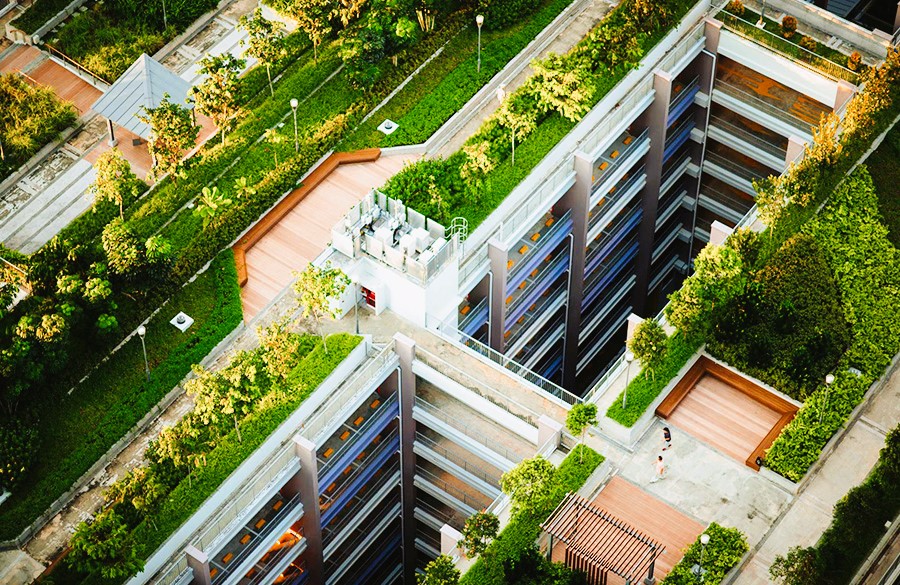
“Beyond concrete confines, rooftop gardens emerge as urban oases, transforming cities into eco-friendly havens of sustainability and serenity.”
In the dynamic landscape of urban living, where towering structures dominate the skyline, the emergence of rooftop gardens stands as a beacon of hope for a more sustainable and harmonious future. Beyond their aesthetic appeal, these elevated sanctuaries play a pivotal role in reshaping the very essence of our cities, offering a multitude of benefits that extend far beyond mere visual allure.
Picture a lunch break that whisks you away from the confines of your office to a rooftop park with panoramic views, a refreshing breeze, and a vibrant display of greenery. Rooftop gardens offer a rare communion with nature, especially in the bustling metropolises where green spaces are often a luxury. Scientific studies consistently underline the mental health benefits of regular contact with greenery, reducing stress levels and enhancing overall well-being.
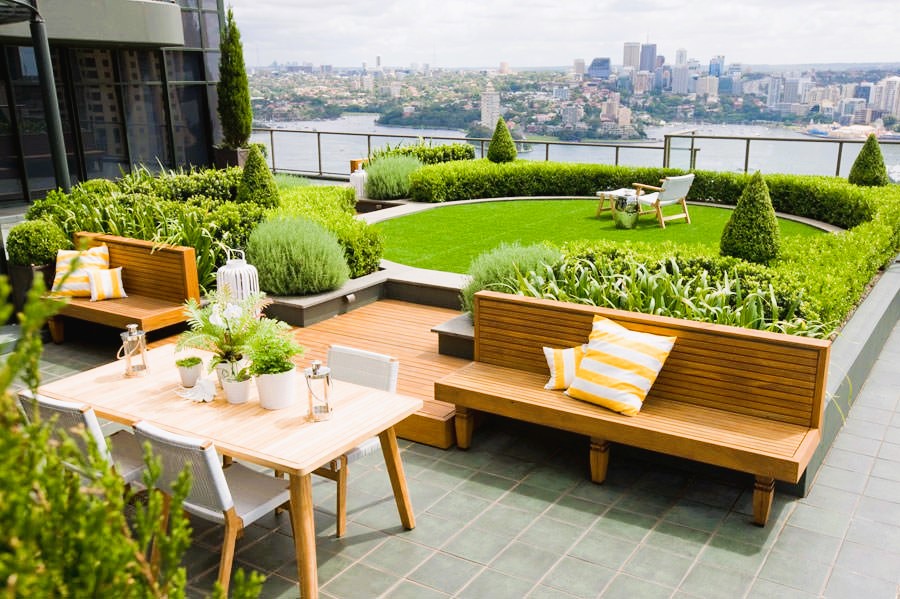
A happier and less stressed workforce isn’t just a utopian vision; it’s a tangible outcome of integrating rooftop gardens into urban spaces. The positive impact on mental health not only improves the quality of life for city dwellers but also has ripple effects on workplace productivity and seamless employee recruitment.
Rooftop gardens emerge as silent warriors in the battle against urban air pollution, a formidable foe faced by metropolitan areas worldwide. Acting as natural air purifiers, these green spaces filter airborne pollutants and gases through the photosynthesis process. While a single rooftop garden may seem like a drop in the ocean, the cumulative effect of numerous green roofs can significantly lower greenhouse emissions, combating smog and dust distribution in urban environments.
In a world grappling with excessive waste, rooftop gardens contribute significantly to waste reduction by extending the lifespan of building materials and technologies. From waterproofing membranes to HVAC systems, these gardens promote sustainability by integrating greenery into the urban infrastructure.
Rooftop gardens are not only aesthetically pleasing but also efficient in harnessing the power of rain. They play a crucial role in water management by retaining up to 80% of rainfall in summer and 40% in winter. Acting as natural filters for runoff, they moderate rainwater temperature, reducing the risk of local flooding.
However, the most significant advantage of rooftop gardens lies in their ability to combat the Urban Heat Island (UHI) effect. Urban areas often experience elevated temperatures due to concrete surfaces absorbing and retaining heat. Rooftop gardens mitigate this effect by cooling cities through the daily evaporation cycle of plants. This, in turn, reduces the dependency on air conditioners and cooling technologies, impacting energy consumption and contributing to a more sustainable urban ecosystem.
Speaking of energy consumption, rooftop gardens emerge as champions in the realm of energy efficiency. These green spaces provide insulation that retains heat in winter and keeps temperatures cool in summer. Studies confirm that rooftop gardens modify temperature fluctuations, moderate heat flow through roofs, and significantly reduce the energy demand for air conditioning, especially during warmer seasons.
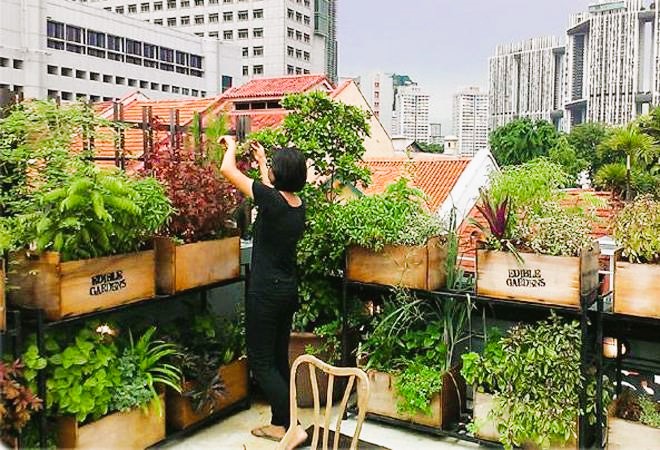
The green revolution isn’t confined to temperature regulation; it extends to urban agriculture, a burgeoning initiative fostered by rooftop gardens. Transforming rooftops into miniature farms, these spaces contribute to the production of fresh, organic food in an environmentally friendly manner, bringing sustainable agriculture to the heart of urban living.
Beyond temperature insulation and energy efficiency, rooftop gardens act as natural sound barriers. The combination of soil and plants absorbs, reflects, or deflects sound waves, providing effective noise reduction. In bustling urban areas or locations near airports and flight paths, the impact of noise pollution is profound. Rooftop gardens offer a natural solution to mitigate these challenges, enhancing the quality of life for city dwellers.
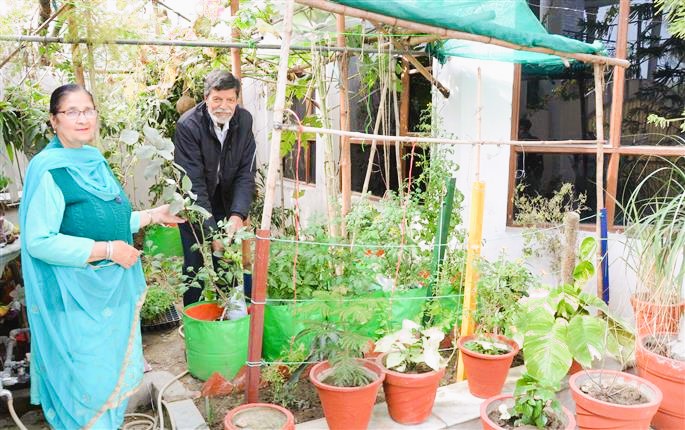
As Indian cities grapple with expanding populations and the consequential rise in food demand, the conventional agricultural sector faces scrutiny for contributing significantly to the country’s greenhouse gas emissions. Simultaneously, it is increasingly vulnerable to the impacts of climate change. In response, various stakeholders, including the government, research institutions, and civil society, are actively seeking sustainable solutions to ensure the resilience of India’s food production.
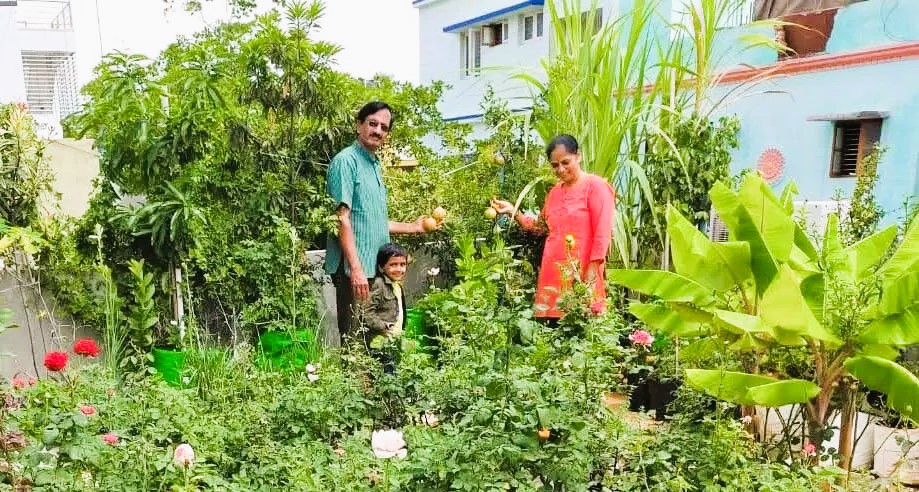
In this direction, the AP SkillMission during the peak of the COVID-19 pandemic took up a unique program of skilling housewives in rooftop gardening. The program virtually imparted concepts followed by physical assistance from the Green Army. Over 10,000 housewives in Vijayawada are benefiting from this program, fostering the concept of “Good is grown at home; our home harvest is our home cooking.” The initiative emphasizes the synergy between growing one’s food and using it in home-cooked meals.
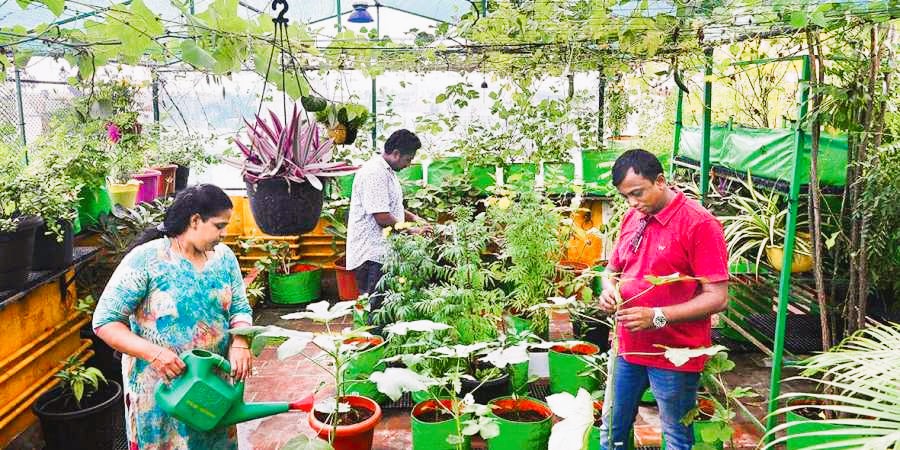
As we gaze towards the horizon of urban development, let us champion the cause of rooftop gardens – a testament to our commitment to greener, healthier, and more harmonious cities. In cultivating these elevated landscapes, we sow the seeds of a future where sustainability and urban living coalesce seamlessly, creating a legacy for generations to come. The serenity of rooftop gardens, the energy efficiency they bring, the sustainable agriculture they foster, and the alternative food systems they inspire all contribute to a holistic vision of urban living. These green havens above not only redefine the skyline but also redefine our relationship with the environment, urging us to tread lightly on the planet while cultivating a vibrant and sustainable urban future.
visit arjasrikanth.in for more insights
 ARJA SOCIAL PERSPECTIVES
2 responses to ““Rooftop Gardens: Elevating Urban Living for a Greener Tomorrow””
Now a days it became common on concentrating the greenery promotion ” Rooftop gardening. The elaborated touch on all sides shall be a good education to Urban dwellers.If the Government agencies encourage the growth , it creates a new modern serene life in between the concrete jungle. Dr Arja’s keen observation on the urban living standards is a benchmark for future generations.
LikeLike
Dr, Very great innovative project in urban. Good initiation . I sincerely appreciate your idea & great service to Environment.
LikeLike