• About

SOCIAL PERSPECTIVES

  • The Long-Awaited Spiritual Dawn: Ram Mandir’s Inauguration Marks a Global Transformation”

    January 22nd, 2024

    “Ram Mandir: A Spiritual Beacon Lighting the World’s Awakening”

    The inauguration of the Ram Mandir in Ayodhya is not merely a construction milestone; it symbolizes a profound spiritual awakening resonating globally. With roots stretching over eight decades, this monumental event reflects unwavering devotion, uniting millions in a collective quest for spiritual rejuvenation. Beyond architectural magnificence, the temple embodies a universal yearning for spiritual renewal, a beacon guiding humanity toward a harmonious and enlightened future. This historic milestone encapsulates a spiritual consciousness that transcends time and space.

    The historical backdrop of the Ram Mandir unfolds in layers, beginning with Guru Nanak Dev’s worship in 1510, establishing the site’s spiritual sanctity. However, in 1528, Babar’s construction of a Masjid sparked years of contention. The divine appearance of Ramlalla in 1949 reignited hope, leading to the Archaeological Survey of India’s discovery of ancient temple pillars in 1976. The Supreme Court’s landmark decision on January 1, 1993, solidified Lord Ram as a constitutional entity, paving the way for the temple’s construction. This intricate historical tapestry weaves a narrative of spiritual perseverance and legal milestones, culminating in the grand inauguration of the Ram Mandir.

    The installation of deities in the Ram Mandir heralds not just the opening of a temple but signifies a global spiritual renaissance. Millions of devotees globally rejoice, recognizing Lord Ram as the embodiment of pleasure and the soul’s connection with the supreme. In a world grappling with mental health challenges, the temple stands as a sanctuary, offering spiritual wellness akin to a Hospital role in providing physical health. This spiritual awakening transcends borders, offering solace to the distressed and becoming a beacon of hope for those seeking inner harmony. The Ram Mandir emerges as a haven where the timeless teachings of Lord Ram resonate, providing a transformative experience for millions, fostering a collective yearning for spiritual growth in a modern, tumultuous world.

    The Ram Mandir’s cultural impact is profound, echoing the historical significance of temples as vital influencers in societal shaping. Prime Minister Modi’s leadership in inaugurating the Ram Mandir not only nurtures a spiritual environment but also positions Ayodhya as a cultural epicenter. Going beyond religious confines, the temple’s influence champions a culture of righteousness, encouraging contemplative practices, and fostering holistic well-being. In this contemporary context, the Ram Mandir emerges as not merely a religious edifice but a cultural symbol promoting values that transcend religious affiliations. Its inauguration marks a resurgence of cultural ideals, propelling Ayodhya into a prominent role as a guardian of tradition and a wellspring of spiritual and cultural rejuvenation for a diverse and evolving society.

    The Ram Mandir’s inauguration is poised to significantly impact spiritual tourism in India, enhancing the nation’s global recognition as the spiritual capital. Acting as a pivotal attraction, the temple beckons seekers from across the globe, drawing those enthusiastic to immerse themselves in the profound spiritual legacy of India. Beyond being a place of worship, the Ram Mandir becomes a symbolic gateway, inviting explorers to delve into the country’s rich spiritual heritage. This cultural and spiritual pilgrimage is expected to elevate India’s standing on the global stage, fostering a deeper understanding of its diverse traditions and reinforcing the nation’s status as a beacon for spiritual seekers worldwide.

    The inauguration Ceremony, planned at the BAPS Temple in Abu Dhabi a month later than the Ram Mandir Inauguration, also signifies the global significance of the events. Prime Minister Modi’s unwavering commitment to this ceremony reflects a leader devoted to faith, resonating with millions worldwide. Particularly, the youth are captivated by the spiritual awakening catalyzed by such events, reaffirming India’s spiritual identity on a global platform. This ceremony extends beyond national borders, serving as a testament to the universal appeal of the Ram Mandir’s inauguration, fostering a shared spiritual consciousness that transcends cultural and geographical boundaries.

    In the face of criticism, Prime Minister Modi’s commendable commitment to prioritizing the collective well-being of the masses shines through. The event, despite its detractors, has become a source of hope and excitement, promising a transformative experience for millions. In a world marked by polarization, leaders endowed with conviction and character play a pivotal role in steering positive change. The resilience exhibited by the Prime Minister in the pursuit of initiatives that resonate with the masses underscores the importance of unwavering leadership, capable of navigating through diverse opinions. This episode stands as a testament to the power of hope and optimism, fostering a sense of anticipation for a brighter and more harmonious future.

    In the majestic presence of the towering Ram Mandir, its inauguration serves as a resplendent spiritual dawn that eclipses boundaries and transcends diverse beliefs. Beyond merely honoring a divine presence, this momentous event becomes a catalyst for cultural resurgence and a harbinger of spiritual tourism. All eyes turned towards Ayodhya witness the rekindling of age-old traditions, signifying a global paradigm shift towards heightened spiritual awareness. The Ram Mandir, standing tall and resolute, transcends its physical manifestation to become a guiding beacon for humanity—a symbol of unity and enlightenment. In its sacred precincts, the world glimpses not just a temple but a transformative force that steers humanity towards a future defined by harmony, enlightenment, and a shared spiritual consciousness.

    visit arjasrikanth.in for more insights

  • “Gautam Adani’s Vision Unveiled – Green Hydrogen: The Game-Changer in India’s Net-Zero Odyssey”

    January 21st, 2024

    “Adani’s Green Energy Revolution: Pioneering the Path to Net-Zero with Green Hydrogen”

    Gautam Adani, the visionary founder of the Adani Group, has set his sights on transforming India into a net-zero carbon economy by 2047. At the forefront of this ambitious journey is Adani’s fervent belief in the potential of green hydrogen to revolutionize the energy landscape. With plans to invest $20 billion in green hydrogen projects, Adani aims to produce 1 million tonnes annually by 2025. This article explores Adani’s vision, the Adani Group’s strategic moves, and the pivotal role green hydrogen plays in India’s sustainable future.

    Adani’s commitment to green hydrogen unfolds as a key component in his broader vision for a sustainable India. The Adani New Industries Ltd (ANIL), a subsidiary of Adani Enterprises, is steering the development of a backward-integrated value chain for green hydrogen. The company has allocated $2.5 billion so far, with plans to implement the first phase of the project, achieving an annual capacity of 1 million tons by FY27.

    Aligned with India’s decarbonization goals, Adani Green Energy Ltd (AGEL) envisions achieving 45 GW by 2030. Leveraging technology to reduce the Levelized Cost of Energy (LCOE), AGEL strives to facilitate large-scale adoption of affordable clean energy, contributing significantly to India’s renewable energy capacity.

    The Adani Group, under Gautam Adani’s leadership, articulates a vision to be a world-class leader in businesses that enrich lives and contribute to nation-building through sustainable value creation. The core philosophy centres around growth with goodness, emphasizing the positive impact on both lives and nations.

    At the 54th Annual Meeting of the World Economic Forum, Gautam Adani underscores the pivotal role of green hydrogen in achieving net-zero emissions. The key to leveraging green hydrogen on the road to net zero,” Adani, emphasizes the environmental and developmental benefits of green hydrogen. Adani stresses its potential as a clean fuel with zero emissions, essential for global carbon neutrality goals.

    Gautam Adani’s some of insights into the significance of green hydrogen:
    Adani advocates for a decrease in production costs to make green hydrogen more affordable. Drawing parallels with the solar power model, He emphasizes the need for the cost of green hydrogen production to decline from the current $3-5 per kilogram towards $1/kg for widespread adoption; Adani proposes a strategic shift towards renewables and green hydrogen rather than replacing one fossil fuel with another. This not only ensures energy security but also addresses air quality concerns in cities and contributes to food security by eliminating uncertainties in imported ammonia prices; Adani’s positions green hydrogen as an equitable solution with the potential to avert the adverse impacts of climate change globally.

    Adani New Industries Limited (ANIL) is actively developing solutions for globally competitive green hydrogen. The 1 MMTPA project in Gujarat is expected to start production by FY2027, with plans to scale up to 3 MMTPA within the next decade. The Adani Group’s commitment involves an investment of around USD 50 billion, reflecting their dedication to shaping a greener future.

    Gautam Adani’s vision for greening India through green hydrogen stands as a beacon of hope in the pursuit of net-zero carbon emissions. The Adani Group’s strategic moves, backed by substantial investments, demonstrate a commitment to sustainable development. Adani’s blog serves as a roadmap, offering insights into the transformative potential of green hydrogen and the essential role it plays in shaping the future energy landscape. As the Adani Group pioneers the path to net-zero, green hydrogen emerges as a game-changer, marking a paradigm shift towards a cleaner and more sustainable India.

    visit arjasrikanth.in for more insights

  • “After 500 Years of Anticipation, Ayodhya’s Ram Mandir Stands Tall: A Symbol of Faith, Unity, and Architectural Splendour”

    January 21st, 2024

    “Ayodhya’s Triumph: Unveiling the Spiritual and Architectural Marvel of Ram Mandir”

    The eagerly awaited dream of millions of Hindus is poised to materialize on January 22, 2024, with the inauguration of the Ram Mandir in Ayodhya. This momentous occasion not only concludes a 500-year wait but also signifies a crucial chapter in India’s cultural and spiritual history. Ayodhya, the sacred birthplace of Lord Ram, boasts various temples that echo tales of devotion. The construction of the Ram Mandir stands as a testament to the unyielding faith of millions, bringing to fruition a vision that has endured through centuries. As the doors of this iconic temple swing open, they unveil not just a magnificent structure but a symbol of unity, faith, and the profound connection that binds the spiritual heritage of India.

    Ayodhya, situated in the Indian state of Uttar Pradesh, holds profound historical and cultural significance. Formerly the capital of the Awadhi Kingdom, Ayodhya is intricately linked to the Hindu epic Ramayana as the birthplace of Lord Ram. This sacred city is adorned with various temples, including the revered Hanumangarhi, Nageshwar Nath Temple, and the exquisite Birla Temple, each narrating a unique story of devotion. Beyond its historical relevance, Ayodhya is also home to the Ram Lalla Temple, Kosambi Park, and the Rama Mandap, attracting visitors from across the country. The completion of the Ram Mandir in Ayodhya further solidifies the city’s cultural heritage, marking a significant milestone in the spiritual landscape of India.

    The architectural design of the Ram Mandir draws inspiration from the Nagara style, marking a departure from contemporary construction methods. Crafted exclusively from stone, the temple not only exemplifies remarkable longevity but also ensures structural sturdiness. The meticulous attention to detail is evident in the ground, first, and second floors, each supported by a remarkable array of columns. This emphasis on architectural grandeur not only reflects the cultural significance of the temple but also showcases a commitment to preserving traditional craftsmanship. The Ram Mandir stands as a splendid testament to the enduring charm of Nagara-style architecture, symbolizing a harmonious blend of heritage and spirituality.

    The main temple structure of the Ram Mandir in Ayodhya stands as a testament to architectural grandeur, crafted meticulously from pink sandstone. Boasting an impressive volume of 4.7 lakh cubic feet, this high-quality sandstone is sourced from the Bharatpur region in Rajasthan. The plinths, composed of 17,000 granite stones procured from Telangana, add a sturdy foundation to the temple. Further enhancing the visual magnificence, the intricate inlay work employs a combination of coloured and white marbles. This thoughtful selection of materials and the detailed craftsmanship contribute significantly to the overall aesthetic appeal and structural integrity of the sacred Ram Mandir, symbolizing a harmonious blend of artistry and devotion.

    For the construction of idols in the Ram Temple, two massive Shaligram stones sourced from the Gandaki river bank in Nepal hold immense significance. The 51-inch idol portraying Lord Ram as a child, sculpted by the talented artist Arun Yogiraj, stands as a masterpiece of spiritual artistry. Crafted exclusively from Shaligram stones, the idol not only reflects exceptional craftsmanship but also adds a distinctive spiritual essence to the iconic representation of Lord Ram. This careful selection of materials and the artistic prowess invested in the statue contribute to the overall sanctity and uniqueness of the religious artifacts within the sacred precincts of the Ram Mandir in Ayodhya.

    The meticulously crafted design of the Ram Mandir stands as a testament to the visionary work of Chief Architects Chandrakant Sompura and his two sons – Nikhil Sompura and Ashish Sompura. This architectural marvel was not created in isolation; design advisors from esteemed institutions, including IIT Guwahati, IIT Chennai, IIT Bombay, NIT Surat, Central Building Research Institute Roorkee, National Geo Research Institute Hyderabad, and the National Institute of Rock Mechanics, played a crucial role in the project’s planning and execution. Their collective expertise ensured that the temple’s design reflects a harmonious blend of tradition and innovation, contributing to the cultural and architectural legacy of the Ram Mandir.

    The completion of the Ram Mandir transcends architectural triumph; it embodies deep cultural and spiritual significance. The temple’s foundation, enriched with sacred soil from 2587 regions such as Jhansi, Bithoori, Haldighati, Yamunotri, Chittorgarh, and the Golden Temple, reflects a harmonious blend of unity in diversity. This symbolic act underlines the sacred nature of the temple, connecting diverse regions in a tapestry of faith and devotion. Beyond its physical structure, the temple stands as a beacon of shared heritage, reminding us of the profound values that bind our cultural tapestry. The Ram Mandir is not just a place of worship; it is a testament to India’s rich cultural mosaic and the enduring spirit of unity that defines our collective identity.

    The inauguration of the Ram Mandir in Ayodhya is a historic milestone, transcending architecture to symbolize the realization of a centuries-old dream. It is a jubilant celebration of cultural heritage, reaffirming India’s spiritual identity. The sacred temple doors opening herald a new era marked by unity, faith, and profound reverence for Lord Ram, embodying the resurgence of the nation. In commemorating this momentous occasion, we join in the collective celebration of Ayodhya’s triumph, recognizing the transformative power of shared faith. The architectural marvel stands as a testament to the enduring legacy of Lord Ram, forever imprinted in the heart of India, inspiring generations with its spiritual and cultural significance.

    Visit arjasrikantj.in for more insights

  • Birth Day Greetings to Ajit Doval: India’s Guardian Angel in the Shadows

    January 20th, 2024

    Celebrating the Strategic Brilliance and Legacy of Ajit Doval, the ‘James Bond of India’

    In the realm of Indian security, Ajit Kumar Doval stands as a stalwart, earning the moniker ‘Indian James Bond.’ From his early days as the youngest police officer decorated with the Police Medal to his pivotal role in high-stakes operations, Doval’s journey is a saga of unwavering dedication and strategic brilliance.

    Doval, born on January 20, 1945, emerged from the hilly terrains of Pauri Garhwal, donning the legacy of his father, Major Gunananda Doval. His early schooling at Ajmer Military School laid the foundation for a remarkable career. Graduating in Economics from Agra University in 1967, he soon joined the Indian Police Service, initiating a journey marked by courage and cunning.

    Doval’s first taste of success came during a brief stint in Thalassery in 1972. Tasked with restoring peace after communal unrest, his deft handling earned him the epithet ‘Indian James Bond.’ This was just the beginning of a career filled with daring exploits.

    Doval’s legend grew in the late 1980s when he infiltrated the Golden Temple in Amritsar, providing invaluable intelligence for Operation Black Thunder. His ability to gain trust facilitated a successful strike against militants with minimal casualties.

    A master of disguise, Doval spent seven years living incognito in Pakistan’s Lahore. His deep cover allowed him to befriend locals and gather crucial intelligence, marking a unique chapter in the annals of espionage.

    Retiring as the Director of Intelligence Bureau in 2005, Doval’s strategic acumen found new heights when he assumed the role of National Security Advisor in 2014. His leadership brought about a doctrinal shift in India’s security policy, emphasizing a ‘Defensive Offensive’ and the ‘Double Squeeze Strategy.’

    Doval’s distinguished service earned him the Kirti Chakra in 1998, a rare honor for a police officer. The Padma Vibhushan, India’s second-highest civilian award, stands testament to his exceptional contributions.

    Ajit Doval’s legacy is etched in the annals of Indian security. His visionary leadership, operational brilliance, and commitment to the nation have not only safeguarded India but have also elevated its global standing. As he turns 78, we salute the ‘James Bond of India’ for his immeasurable contributions, making every Indian proud.

    In the shadows where national security thrives, Ajit Doval remains a guardian angel, ensuring that the sun never sets on the sovereignty of India.

    visit arjasrikanth.in for more insights

  • Pakistan-Iran Escalation: Unravelling the Strategic Dynamics in Precision Strikes

    January 20th, 2024

    “A tit-for-tat unfolds in the region as Pakistan retaliates with precision strikes against Iran, sparking concerns over escalating tensions.”

    In a dramatic turn of events, Pakistan’s military announced precision strikes in Iran against the Baluchistan Liberation Army and the Baluchistan Liberation Front, both deemed terrorist groups. This move comes just two days after Iran’s missile attacks in Pakistan’s province, intensifying the already strained relations between the two neighbouring nations. As the world watches, the intricacies of this geopolitical chess game become crucial to understanding the consequences and potential ramifications.

    Pakistan’s military conducted precision strikes, employing a range of weaponry, including killer drones, rockets, loitering minions, and sand weapons. Named “Operation Marber Saran,” the strikes were aimed at dismantling terrorist hideouts in the Siesta Chatan province of Iran. The Ministry of Foreign Affairs in Pakistan asserted that maximum care was taken to avoid collateral damage. However, media reports indicated the loss of nine lives in the assault, raising questions about the true extent of precision in these strikes.

    The Ministry of Foreign Affairs in Pakistan released a statement citing concerns about safe havens enjoyed by Pakistani-origin terrorists in Iran’s ungoverned spaces. Pakistan, in its communication with Iran over the past years, had consistently raised these concerns without witnessing satisfactory action. The lack of response allegedly led to the decision to take matters into its own hands. The statement emphasized that the strikes were highly coordinated and specifically targeted, underlining Pakistan’s commitment to securing its citizens against threats emanating from across the border.

    Iran, in response, condemned Pakistan’s strikes on its soil, viewing them as a violation of its sovereignty. The precision strikes targeted the posts of two Baloch separatist groups, the Baluchistan Liberation Front and the Baluchistan Liberation Army. Iran labelled these actions as a decisive step in response to the perceived aggression against its security. The tit-for-tat exchange raises concerns about further escalation and the potential for a protracted conflict in the region.

    The aftermath of the precision strikes witnessed a rapid deterioration in diplomatic relations. Pakistan recalled its ambassador from Iran, signalling the severity of the situation. In a reciprocal move, Iran expelled the Pakistani Ambassador. The exchange of such diplomatic blows further underscores the gravity of the current geopolitical tensions.

    Media coverage has played a pivotal role in shaping perceptions around these precision strikes. The narrative presented by both Pakistani and Iranian media outlets has contributed to the public’s understanding of the events. As media writers reported casualties despite Pakistan’s claims of minimizing collateral damage, questions arise about the transparency of information dissemination.

    The international community closely monitors the evolving situation, expressing concerns over the potential ramifications of this tit-for-tat exchange. The region has been a hotbed of geopolitical complexities, and any escalation has the potential to impact global stability. The fallout from these precision strikes could influence the geopolitical dynamics in the Middle East and South Asia, drawing the attention of major global players.

    As Pakistan and Iran navigate these uncharted waters, the precision strikes mark a significant juncture in their bilateral relations. The consequences of these actions, both regionally and globally, remain uncertain. The diplomatic fallout, the potential for further military engagements, and the role of international actors will shape the trajectory of events in the coming days. The world watches with bated breath as these two nations stand at the crossroads, teetering on the edge of conflict or diplomatic resolution. The strategic dynamics unfolding in the wake of these precision strikes are poised to leave an indelible mark on the geopolitical landscape.

    visit arjasrikanth.in for more insights
  • “Restoring Sacred Sites for a Renewed National Spirit: A Journey Towards Unity and Pride”

    January 20th, 2024

    “Reviving Cultural Heritage: Rebuilding Temples and Nurturing National Spirit”

    The restoration of cultural and religious heritage is pivotal for shaping a nation’s identity and spirit. This article explores the significance of rebuilding temples as symbols of resilience, national pride, and unity in India’s historical context. Examining projects like the Kashi Vishwanath Temple Corridor, Mahakaleshwar Temple redevelopment, Ram Temple in Ayodhya, and the Shree Mandira Parikrama in Puri, it delves into the profound impact of temple restoration on national cohesion and cultural preservation.

    Historical events, such as the Arabian armies’ conquest of Spain, offer insights into the resilience of nations. Despite attempts to break conquered spirits, history reveals instances where nations, upon reclaiming their heritage, rebuilt with remarkable dedication. This historical resilience guides the endeavour to revive cultural heritage, emphasizing the enduring strength embedded in reclaiming one’s identity and rebuilding a nation’s cultural legacy.

    Understanding the purpose behind the destruction of grand structures like temples is crucial. Invaders aimed not only to plunder but to shatter the backbone of the human spirit. The act of restoration transcends physical reconstruction; it becomes a profound endeavour to reclaim the nation’s pride and reignite a sense of unity among its people.

    The issue of rebuilding temples in India spans over seven decades. The lack of enthusiastic engagement in cultural heritage reconstruction can hinder a nation’s progress. Rectifying this imbalance entails nurturing a collective national spirit, rekindling a shared sense of identity, and pride through the restoration of cultural landmarks.

    Preserving cultural ethos becomes imperative amid demographic challenges. India’s youthful demographic dividend holds immense potential, but without a profound appreciation for cultural pride, it risks diluting the national spirit. Fostering a sense of cultural identity among the younger generation is pivotal for preserving and revitalizing India’s diverse cultural tapestry.

    The Kashi Vishwanath Temple Corridor project, costing around INR 800 crore, reflects India’s commitment to preserving cultural and spiritual heritage. The triumphant revival triggers a cultural renaissance in Varanasi, attracting cultural tourism, and showcases the nation’s dedication to safeguarding its rich legacy.

    The grand redevelopment of the Mahakaleshwar Temple in Ujjain, costing around Rs 850 crore, emphasizes the conservation and restoration of heritage structures. The holistic project signifies a commitment to preserve cultural and spiritual heritage and enhance devotee facilities, fostering national unity.

    The construction of the Ram Temple in Ayodhya, anticipated to conclude by December 2021, symbolizes the triumph of cultural restoration. The estimated cost of around Rs 1,800 crore covers construction, materials, labor, and administrative expenses. The project’s progress is on track, and the inauguration is by Prime Minister Narendra Modi on 22 January 2024.

    Days before the Ram Temple consecration, the Shree Mandira Parikrama project around Puri’s Jagannath Temple, costing Rs 800 crore, aims to transform Puri into a world-class heritage city. Overcoming hurdles, including legal challenges, the grand opening is planned in January 2024, inviting representatives from nearly 1,000 temples.

    The rejuvenation of the Yadagirigutta Temple, now known as Yadadri, with a budget of Rs 1,000 crore, exemplifies India’s commitment to preserving cultural and spiritual heritage. The successful restoration underscores the nation’s dedication to safeguarding its rich legacy for future generations.

    Rebuilding temples in India transcends a mere physical endeavour; it symbolizes the restoration of national pride, unity, and cultural heritage. Ensuring a harmonious restoration requires leaders from diverse communities to engage in constructive dialogue. Nurturing the nation’s spirit, comprehending its cultural ethos, and actively involving the population are imperative for India’s sustained growth. Amidst changing demographics, leveraging the talents of Non-Resident Indians (NRIs) becomes crucial for India’s global ascent. Temple restoration is not just an architectural revival; it signifies a spiritual renaissance, anchoring the nation in its cultural roots and propelling it towards a future marked by unity, pride, and continuous growth.

    visit arjasrikanth.in for more insights

  • Debunking the K-Shaped Recovery Narrative: India’s Ascendance and Changing Economic Landscape

    January 19th, 2024

    “Redefining economic narratives: Exploring India’s resilience, growth, and shifting paradigms in the aftermath of the pandemic.”

    The prevailing discussions surrounding a K-shaped recovery post-pandemic in India seem flawed, biased, and misinformed. These arguments primarily serve the interests of specific quarters who find India’s remarkable progress and its emergence as a leader in the new global south unpalatable. In this article, we will examine various patterns and indicators that challenge the notion of India’s underperformance and present a more nuanced perspective on the country’s economic trajectory.

    The traditional proxies used to gauge India’s economic well-being, such as low 2-wheeler sales or fragmented land holdings, fail to capture the true dynamics of the Indian economy. Instead, we should focus on indicators like income, savings, consumption, expenditure, and policy measures aimed at empowering the masses. These factors, combined with the proliferation of digital technologies and support systems, paint a more accurate picture of India’s progress.

    Contrary to popular belief, 2-wheeler sales in India have shown stellar performance, even during periods of economic slowdown. For instance, in FY’19, when the agricultural GDP slouched at 2.1% and rainfall deficiency reached around 14%, 2-wheeler sales reached approximately 2.12 crore units. Even in the current fiscal year, sales are projected to touch 1.80 crores. Furthermore, post-pandemic, we see a trend of households reallocating their savings towards physical assets such as real estate, and a significant percentage of buyers shifting to used or entry-level cars.

    Tractor sales, often considered an indicator of rural well-being, have remained robust, further challenging the narrative of a K-shaped recovery. Additionally, we observe inter-group and intra-group transitions in both the 2-wheeler and 4-wheeler segments. With rising incomes, individuals are opting for more expensive motorcycles and cars, while two-wheelers are being considered as giffen goods, leading to the substitution effect.

    Post-pandemic, there has been a shift from savings channelled into physical assets to financial assets, aligning with the global trend of taking advantage of lower interest rates. However, recent data suggests a renewed interest in financial assets in India since 2023.

    An interesting example of the rising prosperity and disposable income in rural areas can be seen in the growth of food delivery platforms. These platforms have found significant traction in non-metro areas, with an estimated 2 crore family members actively using services like Zomato. This trend reflects the rich Indian heritage of sharing and prioritizing family well-being.

    Contrary to popular belief, income inequality in India has significantly declined. Gini coefficient estimates using income tax data indicate a decline from 0.472 to 0.402 during FY14-FY22. This decline is due to a great migration at the bottom of the income pyramid, with a substantial number of individuals moving up the income ladder. The changing income patterns of MSMEs also reflect the evolving industry and service landscape, with more entities entering the formal economy.

    The narrative of a K-shaped recovery in India fails to capture the true essence of the country’s economic progress. The indicators discussed in this article highlight the resilience of the Indian economy and the positive shifts in income patterns, consumption behaviour, and investment trends. It is crucial to move beyond preconceived notions and embrace a more comprehensive understanding of India’s growth story, which is characterized by inclusivity, empowerment, and a renaissance of the new global south.

    visit arjasrikanth.in for more insights

  • Transforming Puri: The Jagannath Parikrama Project and the Journey to a World-Class Heritage City

    January 19th, 2024

    The ambitious Jagannath Parikrama Project aims to transform Puri into a world-class heritage city, attracting millions of devotees to the famous Jagannath Temple.

    In a grand endeavour to elevate Puri’s status as a world-class heritage city, the government has launched the Jagannath Parikrama Project. With an estimated budget of 800 crore rupees, this ambitious initiative aims to create a heritage corridor that will facilitate the visitation of millions of devotees to the revered Jagannath Temple. As part of a series of transformative projects, the Jagannath Parikrama Project holds immense significance in shaping Puri’s future as a cultural and religious hub.

    The primary objective of the Jagannath Parikrama Project is to enhance the experience of devotees visiting the temple. Previously, encroachments and residential and commercial establishments around the temple hindered devotees from obtaining a clear view and easy access to the shrine. With the project’s completion, devotees will have the opportunity to move freely around the temple and witness its grandeur. Additionally, the Parikrama Project aims to provide security to the shrine, ensuring the safety of the deities and the devotees.

    The government envisions the Jagannath Parikrama Project as a significant infrastructure development around the Jagannath Temple, the likes of which haven’t been seen in the past 700 years. By attracting an estimated 10,000 devotees every day, the project is set to boost tourism and promote economic growth in the region. The government has taken elaborate security measures to ensure a smooth flow of devotees and to maintain the sanctity of the temple.

    In its quest to transform Puri into a heritage city, the government has undertaken various projects. The construction of the ODISHA’s first trumpet bridge connecting Puri bypass to the grand road aims to decongest the temple town. Additionally, a parking lot at Raghunandan Pilgrimage Center and the development of the C-Marg provide easy access to the temple for visiting devotees. Several other city projects, including parking spaces and beautification projects, have been completed or are nearing completion.

    The timing of the inauguration of the Jagannath Temple Parikrama Project, just days before the consecration ceremony of the Ram Mandir in Ayodhya, holds political significance. Chief Minister Naveen Patnaik strategically planned this event to counter the Hindu nationalist narrative of the BJP and to promote Odia pride. The project serves as a testament to the government’s commitment to cultural nationalism and showcases Naveen Patnaik’s vision for the state.

    The Jagannath Parikrama Project, with a total budget of 800 crore rupees, including land acquisition costs, has been solely funded by the state government. The project has faced criticism from opposition parties, accusing the ruling party of using state funds for political gains. The government’s allocation of 156 crore rupees for promotional activities, including the grand inauguration event, has faced scrutiny from political opponents.

    The Jagannath Parikrama Project is a significant step towards transforming Puri into a world-class heritage city. With its aim to enhance devotee experience, provide security, and boost tourism, this project holds immense potential. As the government works towards achieving its vision, it is crucial to strike a balance between preserving the sanctity of the temple and promoting sustainable development. The completion of the Jagannath Parikrama Project signifies the government’s commitment to preserving cultural heritage while embracing modernity, ultimately shaping Puri’s future as a global spiritual and cultural destination.

    visit arjasrikanth.in for more insights

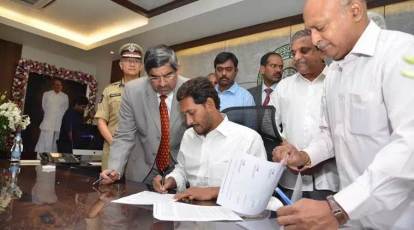
  • The Political Landscape of Andhra Pradesh: Challenges and Changes

    January 19th, 2024

    Navigating the Controversies and Transformations in Andhra Pradesh’s Politics

    The political landscape of Andhra Pradesh has undergone significant shifts in recent years, marked by controversies and strategic decisions. This article aims to navigate through the challenges and changes, exploring the controversies surrounding Government , the aftermath of the 2019 elections, and the strategic decisions made by the YSRCP in shaping the state’s political future. Additionally, it delves into the significance of local leadership, the impact of historical lessons, and the importance of embracing change in the realm of Andhra Pradesh’s politics.

    Andhra Pradesh, once a region known for its vibrant political dynamics, has recently faced a series of controversies, casting a shadow over its governance and integrity. The current Government after a sweeping victory in the 2019 elections, has been embroiled in allegations ranging from involvement in illegal mining to connections with liquor and sand mafia activities. These accusations have not only tarnished the image of the government but have also fuelled concerns about the state’s progress and economic growth.

    Critics argue that the actions taken by the State Government including neglecting central government projects, have set Andhra Pradesh back by decades. The state’s commitment to development has been called into question, raising doubts about its ability to attract investments and foster economic prosperity. The controversies surrounding the State Governance have become a focal point in the political discourse, with stakeholders expressing their concerns about the direction in which the state is heading.

    In response to the challenges and controversies, the YSRCP has embarked on a journey of strategic changes in its local leadership. The party’s decision to appoint new in-charges for constituencies is a calculated move aimed at countering anti-incumbency sentiments and securing a majority in the upcoming elections. YS Jagan Mohan Reddy’s vision, as articulated by the party, involves winning a staggering 175 constituencies and potentially replacing up to 50 legislators.

    This strategic overhaul underscores the YSRCP’s commitment to performance-based decision-making and teamwork. By acknowledging the need for change within its ranks, the party is signalling a willingness to adapt and respond to the evolving political landscape. The sweeping victory of the YSRCP in the 2019 elections may have influenced YS Jagan Mohan Reddy’s strategy, leading him to believe that the people voted for his leadership rather than focusing on local leadership and MLA candidates.

    The 2019 elections, which catapulted the YSRCP to power, marked a turning point in Andhra Pradesh’s political history. The majority win seemingly reinforced the notion that the electorate had voted based on the charismatic leadership of YS Jagan Mohan Reddy. However, this realization has prompted the YSRCP to make bold decisions that might reshape the party’s trajectory.

    A parallel can be drawn with the political landscape of the 1980s when N. T. Rama Rao rose to prominence. The emphasis on the leader’s persona over the local representatives led to transformative changes, and the YSRCP’s current strategy may serve as a reminder of the lessons learned from history. The treatment of MLAs with less dignity and disrespect might mirror the political manoeuvres of the past, and the party risks repeating the mistakes that history has witnessed.

    In the ever-evolving world of politics, adaptability is key to survival and success. The YSRCP’s decision to replace MLAs and make strategic moves demonstrates their readiness to embrace change and respond to the needs and aspirations of the people. While the outcome of these changes remains uncertain, the party’s commitment to counter attack anti-incumbency is evident.

    As history has shown, anything can happen in politics, and being open to change is crucial for long-term success. The YSRCP’s ability to navigate through controversies, learn from historical parallels, and strategically adapt to the evolving political landscape will shape the party’s future and, consequently, the future of Andhra Pradesh.

    Andhra Pradesh stands at a crossroads, grappling with controversies, strategic changes, and the ever-present need for political adaptability. The controversies have raised questions about governance, integrity, and the state’s commitment to development. The YSRCP’s strategic decisions, including the overhaul of leadership and emphasis on performance-based decision-making, reflect a proactive approach to counter anti-incumbency sentiments.

    The aftermath of the 2019 elections and historical parallels offer valuable lessons for the YSRCP as it navigates the complex political terrain. The party’s focus on the leader’s persona and strategic changes in constituencies evoke memories of transformative political movements in the past. The lessons from history underscore the importance of balancing leadership charisma with the strength of local representatives.

    As Andhra Pradesh prepares for the upcoming elections, the choices made by the electorate will shape the state’s political trajectory. It is crucial for the people to carefully consider the potential consequences of these choices and remain open to change for a better and prosperous Andhra Pradesh. The political landscape is dynamic, and the ability to adapt and learn from the past will determine the state’s political destiny.

    visit arjasrikanth.in for more insights

  • Silent Transformation: Prime Minister Modi’s Vision for a New Bharat

    January 19th, 2024

    Prime Minister Narendra Modi is silently making the best efforts to create a new Bharat, leaving behind British names and practices, with the aim of propelling India to become one of the top three developed nations in the world within the next five years.

    In a bold and visionary move, Prime Minister Narendra Modi has embarked on a transformative journey to reshape India’s identity by reclaiming its historical and cultural roots. By changing the name of British India to Bharat, he aims to foster a collective sense of pride and unity among the Indian people. This article explores the various initiatives undertaken by the Prime Minister to create a new Bharat, free from the shackles of colonialism, and position India as a global leader in the next five years.

    One of the cornerstones of Prime Minister Modi’s vision is the construction of a new Parliament Bhavan. This architectural marvel will not only provide a modern and technologically advanced environment for lawmakers but also infuse elements inspired by India’s rich cultural heritage. The incorporation of traditional motifs and architectural styles will evoke a sense of pride and identity among the citizens, while state-of-the-art facilities will enable efficient legislative proceedings and informed decision-making.

    To showcase India’s rich maritime history and assert its cultural identity, the Indian Navy has replaced the British symbols on its flag with the emblem of Chhatrapati Shivaji Maharaj. This significant change signifies a shift towards recognizing and honouring indigenous heroes and their contributions to the nation. The inclusion of Shivaji’s emblem on the navy flag pays homage to his courage, valour, and indomitable spirit, instilling a sense of pride and purpose among the naval personnel.

    In another move to reclaim India’s cultural identity, the Indian government has decided to rename Rajpath, the iconic ceremonial boulevard in New Delhi, to Karthavya Path. This renaming initiative aims to reflect the true essence of India’s heritage and emphasize the nation’s commitment to its responsibilities. The term “Karthavya” signifies duty and purpose, aligning with India’s philosophy of fulfilling one’s obligations towards the nation and society.

    To honor the contributions of India’s freedom fighters and redefine the nation’s historical narrative, the government has erected Subhas Chandra Bose’s statue in place of the British statues at India Gate. This gesture pays tribute to one of the most influential leaders of India’s independence struggle and serves as a powerful reminder of the sacrifices made by countless individuals towards the nation’s freedom.

    Prime Minister Modi has announced the changing of the Beating Retreat song from its British colonial origins to an iconic Hindi song by the legendary Lata Mangeshkar. This decision reflects the government’s commitment to honoring India’s rich heritage and showcasing its vibrant traditions on a global platform. By embracing indigenous music, the government aims to promote Indian culture and foster a sense of national pride and unity.

    In a departure from the British colonial tradition, the Indian government has decided to replace the iconic red briefcase with an Indian-made tab for presenting the budget. This decision reflects the government’s commitment to promoting indigenous products and shedding the remnants of colonial symbolism. The move highlights India’s technological advancements and supports the “Make in India” initiative.

    The Modi government has revised the Indian Penal Code (IPC), replacing the outdated British-era code with the Bharatiya Samhita. This reform aims to update archaic laws and incorporate modern-day procedures, addressing contemporary challenges. By modernizing the IPC, the government seeks to ensure that laws align with the needs and aspirations of the Indian society and promote a sense of justice and fairness.

    Prime Minister Modi has renamed the iconic Mogul Gardens in Rashtrapati Bhavan to Amrit Udhyan, emphasizing the importance of connecting with India’s cultural heritage. This renaming initiative creates a sense of pride and belonging among the Indian populace, encouraging the appreciation and protection of the nation’s cultural treasures. It serves as a reminder of our shared history and the need to nurture our cultural identity in a rapidly changing world.

    Prime Minister Narendra Modi’s silent yet powerful efforts to create a new Bharat, free from British names and practices, are poised to transform India into one of the top three developed nations in the world within the next five years, Through initiatives such as the construction of a new Parliament Bhavan, the replacement of colonial symbols, the renaming of iconic landmarks, and the promotion of indigenous art, culture, and traditions, Prime Minister is Promoting indianness. This is a step towards reclaiming India’s identity and celebrating its rich heritage. The renaming of iconic landmarks is another way to assert India’s independence and uniqueness. Prime Minister Narendra Modi’s determination and vision are driving this transformation, and the future of a new and developed Bharat seems promising.

    visit arjasrikanth.in for more insights
←Previous Page
1 … 97 98 99 100 101 … 134
Next Page→

Blog at WordPress.com.


Loading Comments...
 

    • Subscribe Subscribed
      • SOCIAL PERSPECTIVES
      • Join 99 other subscribers
      • Already have a WordPress.com account? Log in now.
      • SOCIAL PERSPECTIVES
      • Subscribe Subscribed
      • Sign up
      • Log in
      • Report this content
      • View site in Reader
      • Manage subscriptions
      • Collapse this bar