• About

SOCIAL PERSPECTIVES

  • Indian Railways: The Great Privatization Dilemma

    February 10th, 2025

    Derailing the Dilemma: Can Indian Railways Ever Truly Be Privatized Without Chaos?

    Indian Railways, a colossal entity and a symbol of national pride, stands at a defining moment. The debate over its privatization has intensified as the government grapples with modernizing this behemoth while preserving its role as the lifeline of millions. The vision? A socio-business hybrid model where the government retains control over infrastructure while private players inject efficiency, innovation, and capital. The reality? A bureaucratic maze, investor reluctance, and political hesitancy that make this an uphill battle.

    With 8 billion passengers and over 1.5 billion tons of freight transported annually, Indian Railways is indispensable. However, inefficiencies, financial haemorrhaging, and outdated infrastructure have rendered it a sluggish giant. Passenger fares remain artificially low, subsidized by exorbitant freight charges. The operating ratio—a key indicator of financial health—hovers above 98%, meaning nearly every rupee earned is spent. In such a scenario, privatization appears to be a logical solution, but the challenges are formidable.

    Indian Railways is not just a business; it is a strategic asset. In times of war, disaster, or emergency, seamless national coordination is paramount. The UK’s experiment with railway privatization offers cautionary lessons—fragmented services, skyrocketing fares, and declining reliability. India cannot afford such a fate. Any attempt at privatization must ensure national security, service affordability, and universal accessibility.

    The 2019 initiative to allow private trains on 100 routes was a failure. The structure was rigid—private firms had to invest in trains, bear operational costs, and still pay revenue shares to the government. The response was tepid, with only two bidders, one being IRCTC itself. This exemplifies the fundamental problem: private players seek profitability, while Indian Railways has long been a socio-economic service.

    The cross-subsidization model, where freight revenue subsidizes passenger fares, is a ticking time bomb. Freight customers, burdened by excessive charges, are increasingly shifting to road and pipeline transport. If private players are given control, they will seek profitability through fare hikes. Lessons from the aviation sector are sobering: privatization often leads to additional charges, dynamic pricing, and service segmentation. The Delhi Metro Airport Line is a stark reminder of this—high fares deterred passengers, leading to losses and an eventual government takeover.

    Rather than outright privatization, a socio-business hybrid model seems to be the best path forward. The government should retain ownership of tracks, stations, and safety infrastructure while allowing private operators to run passenger services on a per-kilometre fee basis. This ensures efficiency without compromising strategic control. A phased approach, akin to Japan’s railway privatization, could work—initially allowing private operators under strict regulations and gradually reducing government stakes over time.

    Railway stations hold immense real estate potential. Leasing out land for malls, hotels, and offices can create alternative revenue streams. Hong Kong’s MTR system successfully uses real estate to fund railway development. A land tax within a 500-meter radius of major stations could ensure that businesses benefiting from railway connectivity contribute to infrastructure maintenance.

    However, execution remains the biggest hurdle. Privatization is politically sensitive—any attempt to raise fares or restructure operations meets fierce resistance. Railway unions, voter concerns, and bureaucratic inertia are powerful obstacles. Without strong political will, even the best-laid plans will crumble.

    Indian Railways is at a critical juncture. If privatization is done right, it could modernize services, enhance efficiency, and reduce financial stress. But a rushed, unstructured approach could lead to chaos, unaffordable fares, and public backlash. The government must strike a balance—retaining control over infrastructure while allowing private efficiency in services and operations. A bold political vision, investor-friendly policies, and stringent regulatory oversight are non-negotiable for success. If executed correctly, Indian Railways can transform into a self-sustaining economic powerhouse. If not, it risks derailing into financial and operational ruin.

    Visit arjasrikanth.in / @DrArjasreekanth for more insights

  • Shattered Dreams, Chained Hopes: The Tragic Journey of the Innocent Lured by False Promises

    February 9th, 2025

    “In the Echoes of Opportunity, Humanity’s Struggle Unfolds Amidst the Global Migration Crisis”

    In a world where the promise of a better life dangles like a mirage before the desperate, the story of countless innocent souls lured into the abyss of illegal migration continues to unfold with devastating consequences. Their journey begins with a dream—a dream sold by unscrupulous agents who paint an illusion of prosperity and success in the land of opportunity. With assurances of easy passage and high-paying jobs in the United States, these individuals, often from poor and rural backgrounds, gather their life savings and place their trust in the hands of faceless predators lurking in the shadows of unchecked immigration networks. What follows is a perilous journey fraught with deception, exploitation, and, ultimately, heartbreak.

    In recent months, the world has borne witness to a gut-wrenching spectacle—hundreds of deported individuals, shackled like criminals, forcibly sent back to their homeland aboard military aircraft. The images of these individuals, their dreams crushed, their spirits broken, serve as a grim reminder of the price of desperation. Each face carries a story—a story of sacrifice, betrayal, and unimaginable suffering.

    Among those forcibly repatriated is a young man from a small village, his eyes once brimming with hope now cast downward in defeat. He had sold his family’s ancestral land, convinced by an agent’s promise of a lucrative job in America. Instead, he found himself stranded in a foreign land, living in constant fear, exploited by those who preyed on his illegal status. His journey, which began with aspirations of lifting his family out of poverty, ended in chains on a cold military flight home. He is not alone. Thousands like him have faced similar fates, their American dream turning into an unrelenting nightmare.

    The rise in mass deportations has sparked outrage and debate, both at home and abroad. Critics have questioned the ethics of detaining and expelling individuals who were lured into illegal migration by fraudulent means. The sight of handcuffed deportees raises critical concerns about human rights violations and the treatment of undocumented immigrants by U.S. authorities. Back in their homeland, these individuals are often met with social stigma, their families left in financial ruin, and their prospects for employment or rehabilitation bleak. The system that failed to protect them abroad now turns a blind eye to their plight at home.

    The unchecked proliferation of fraudulent migration agents has emerged as a major catalyst for this crisis. Operating with near impunity, these individuals exploit the vulnerability of those seeking a better life. They use deceptive advertisements on social media, promising swift and legal migration to the United States, Canada, and Europe. Posing as legitimate consultants, they charge exorbitant fees, forge documents, and orchestrate perilous routes through Mexico, Central America, and other risky passageways. Many migrants, once trapped in this web of deception, find themselves stranded in hostile environments, subject to extortion, violence, and, in many cases, human trafficking.

    Authorities are now scrambling to dismantle these criminal networks. Investigations have uncovered elaborate operations spanning multiple countries, including India, Canada, and the United States. The Enforcement Directorate (ED) has launched a probe into over 8,500 financial transactions linked to illegal migration schemes. This crackdown follows the tragic deaths of Indian migrants attempting to cross the Canada-US border—a somber testament to the deadly consequences of these fraudulent enterprises. Key agents, including notorious facilitators operating from Canada, have been identified, with ongoing efforts to bring them to justice.

    Diplomatic efforts have also intensified, with India seeking to negotiate structured work visa agreements and legal pathways to prevent its citizens from falling prey to illegal migration schemes. In his recent discussions with U.S. officials, Indian Prime Minister Narendra Modi underscored the need for cooperation in tackling human trafficking while ensuring the fair treatment of undocumented immigrants. However, the task remains daunting. The U.S. administration, under renewed anti-immigration policies, is pressing forward with mass deportations, straining diplomatic ties and further complicating the lives of thousands caught in limbo.

    The repercussions of illegal migration extend beyond individual hardships; they reflect broader socio-economic challenges that need immediate redressal. Regions like Punjab, Gujarat, and Andhra Pradesh have seen a disproportionate number of their youth falling victim to these schemes, highlighting the urgent need for domestic job creation and economic stability. Strengthening vocational training, investing in rural development, and providing access to legal migration avenues must become national priorities.

    Equally crucial is the regulation of misleading social media advertisements that prey on the gullible. Governments must introduce stringent mechanisms to scrutinize the accuracy of migration-related advertisements and hold fraudulent agencies accountable. Public awareness campaigns, leveraging digital platforms and grassroots outreach, can play a pivotal role in educating potential migrants about the risks of undocumented travel. Schools, community organizations, and local leaders must be actively involved in dispelling myths surrounding easy overseas employment and highlighting legal alternatives.

    The haunting images of shackled deportees boarding military aircraft should serve as an awakening. The cycle of exploitation, deception, and shattered dreams must be broken. Every individual deserves the right to seek a better future, but not at the cost of their dignity, freedom, and life. The fight against illegal migration is not merely a policy challenge—it is a moral imperative. Only through concerted efforts—strong governance, community awareness, and global cooperation—can we ensure that hope does not become a commodity sold to the desperate, and that dreams are not built on the foundations of deceit.

    Visit arjasrikanth.in for more insights

  • Divine Chaos, Flawless Order: The Cosmic Dance of Governance at Maha Kumbh Mela 2025

    February 8th, 2025

    Where 500 Million Devotees Meet Precision Planning: Yogi Adityanath’s Masterstroke in Faith, Safety, and Logistics

    As the sun rises over the sacred confluence of the Ganga, Yamuna, and the mystical Saraswathi in Prayagraj, the air vibrates with chants, bells, and the resounding echoes of conch shells. The Maha Kumbh Mela 2025, an event of cosmic significance, has drawn an estimated 500 million devotees, making it the largest religious gathering in human history. This grand spectacle is not only a spiritual magnet but also an unparalleled logistical challenge—one that the Yogi Adityanath government has undertaken with meticulous planning, relentless execution, and an unwavering commitment to faith and safety.

    A Kumbh Mela is no ordinary event. It occurs every 12 years at one of four sacred riverside locations—Prayagraj, Haridwar, Nashik, and Ujjain. This festival traces its origins back to the ancient legend of Samudra Manthan, where celestial beings and demons churned the cosmic ocean to obtain Amrit, the nectar of immortality. The 2025 Maha Kumbh carries even greater significance as it marks the completion of 144 years, a full cycle of 12 Kumbhs, under rare planetary alignments. The festival is a vibrant confluence of devotion, culture, and spiritual purification, culminating in the Amrit Snan, a sacred dip believed to cleanse lifetimes of sins and bestow moksha.

    Organizing an event of this magnitude is a monumental undertaking, particularly when it comes to accommodating the 13 Akharas of revered Sadhus, each with distinct traditions, customs, and rituals. The Sadhus, some of whom belong to centuries-old monastic orders such as Juna, Niranjani, and Mahanirvani, travel primarily during the night and rest in transit camps during the day. Special trains facilitate their movement, while unique provisions for their accommodations, such as designated tents and stay facilities, are crucial. Managing these spiritual leaders while maintaining the sacred atmosphere of the event requires immense effort and attention to detail. At the same time, over 50 crore pilgrims, each driven by unwavering faith, converge on Prayagraj to take a sacred dip at the most auspicious moment. The challenge of balancing these immense spiritual dynamics with administrative precision requires meticulous planning and flawless execution.

    Yogi Adityanath, demonstrating remarkable foresight and strategic leadership, ensured the seamless integration of tradition and governance. His administration orchestrated the event with a focus on honoring centuries-old rituals while ensuring that everything ran smoothly. The Chief Minister personally led negotiations and coordination efforts with the Akharas, fostering an environment of mutual respect and cooperation. Ensuring the smooth participation of the Akharas, especially during the highly significant Shahi Snan, required an intricate understanding of their customs and spiritual hierarchies. Yogi Adityanath, a monk himself, navigated these complexities with a rare blend of authority and reverence, ensuring that traditions remained intact while administrative efficiency was maximized.

    The logistical and infrastructural demands of the Maha Kumbh are staggering. The festival spans an area of 4,000 hectares, with over 150,000 tents erected to accommodate pilgrims. Sanitation has been a paramount concern, as maintaining cleanliness amidst such a massive influx of people is no small feat. The government deployed over 10,000 sanitation workers to ensure the event’s cleanliness under the “Swachh Kumbh” initiative. More than 1.5 lakh toilets were installed across the Mela grounds, along with a rapid waste disposal system to manage the enormous volume of waste generated daily. The sheer scale of sanitation efforts reflects the administration’s commitment to ensuring that the Mela remains a clean, organized, and respectful gathering for devotees.

    Security at Maha Kumbh 2025 is a masterpiece of strategic planning, utilizing modern technology to safeguard the event. Over 40,000 personnel, including police officers, paramilitary forces, and intelligence units, were deployed to ensure order and safety. Multi-layered security arrangements, such as AI-powered surveillance systems, facial recognition technology, and underwater drones, monitor crowds. Cybercrime experts also work tirelessly to thwart any potential digital threats. A seven-ring security system encircles the Sangam area, controlling entry and exit points, while 700 boats patrol the riverbanks to prevent accidents. These advanced measures ensure that, despite the overwhelming crowd, the Mela remains a safe and secure event for all devotees.

    However, despite the extensive preparations, tragedy struck on the night of January 29, when a stampede claimed the lives of 30 pilgrims. Despite the police’s repeated calls for crowd management and the removal of devotees from designated areas, the intensity of faith led many to ignore safety warnings, determined to partake in the Amrit Snan. This heartbreaking incident highlights the powerful devotion that defines the Kumbh Mela but does not diminish the responsibility and foresight of the administration, which had taken every possible measure to prevent such an event.

    Medical preparedness has been another cornerstone of the administration’s strategy. Over 1,200 medical personnel have been stationed across Mahakumbh Nagar, particularly around key bathing dates like Basant Panchami. The event’s medical infrastructure includes 23 hospitals, 360 beds, 10 first-aid posts, and 24/7 ambulance services. Comprehensive health inspections, round-the-clock sanitation, and an efficient supply of medicines ensure that devotees receive timely medical attention when necessary. The state-of-the-art 100-bed central hospital, with emergency response teams, underscores the government’s dedication to prioritizing health and safety during this massive event.

    Maha Kumbh 2025 also generates an immense economic ripple effect. Economic activity during the Mela is expected to generate transactions worth ₹2.5 lakh crore, contributing nearly 0.8% to India’s GDP. Over 4,600 religious, social, and spiritual organizations have set up their pandals, creating a vibrant ecosystem of cultural exchange and economic vitality. From local vendors to large-scale enterprises, the economic impact is felt far and wide, illustrating how the Mela not only serves as a spiritual gathering but also as a driving force for economic prosperity.

    Even amidst the overwhelming influx of devotees, the administration ensures that announcements about available facilities, assistance points, and crowd management strategies are made at regular intervals. Coordination among government agencies, security forces, health officials, sanitation workers, and volunteers is impeccable. More than 5,000 volunteers are dedicated to serving meals to the masses, adding to the event’s spirit of selfless service and communal effort.

    The scale of daily maintenance is equally impressive. Pilgrims leave behind an unimaginable volume of discarded clothes, food remnants, and other waste materials. Yet, by dawn, the ghats are pristine, the pathways are spotless, and the tents are perfectly arranged, ready for another day of devotion. This tireless effort speaks volumes about the discipline, planning, and execution behind the event.

    Through all these extraordinary measures, Yogi Adityanath and his administration have demonstrated that when governance aligns with faith, meticulous execution can create a harmonious confluence of spirituality and administration. The Maha Kumbh is not just a religious event—it is a powerful testament to how exceptional governance can transform chaos into order and ensure that faith and devotion are upheld in the most organized manner.

    Visit arjasrikanth.in / @Arjasreekanth for more insights

  • Larsen & Toubro: Building the Future, Shaping Nations

    February 7th, 2025

    Celebrating L&T Formation Day – A Legacy of Excellence and Innovation

    Today marks a significant milestone in the journey of Larsen & Toubro (L&T) – a conglomerate that has not just shaped the landscape of Indian industry but has also played a pivotal role in national development. As we commemorate L&T Formation Day, (7FEB1946),  it’s an opportune moment to reflect on its rich history, remarkable contributions, and the latest endeavors that showcase its enduring commitment to progress.


    Larsen & Toubro Private Limited traces its roots back to 1938 when Danish engineers Henning Holck-Larsen and Soren Kristian Toubro founded a Mumbai-based company. The duo’s vision and foresight laid the foundation for what would become a powerhouse in engineering, construction, and technology. World War II became a catalyst for diversification, leading to the incorporation of Engineering Construction & Contracts (ECC) in 1944, a significant step toward construction projects.

    Post-Independence in 1947, L&T expanded its footprint across India, setting up offices in Calcutta, Madras, and New Delhi. The acquisition of 55 acres in Powai, Mumbai, in 1948 marked the establishment of its main manufacturing hub. Notably, L&T’s ownership structure is diverse, including insurance companies, employee associations, investment groups, banks, and individual investors, exemplifying its commitment to inclusivity.

    Over the years, L&T evolved into a global conglomerate with operations spanning technology, engineering, construction, manufacturing, and financial services. L&T addresses critical needs in sectors such as Hydrocarbon, Infrastructure, Power, Process Industries, and Defense. L&T Construction, a major group company, stands as India’s largest construction organization, contributing significantly to various core sector industries and infrastructure projects.

    L&T’s impact on India’s infrastructure is profound, with contributions to iconic projects like the Statue of Unity, Lotus Temple, and advancements in the defense industry. Its diverse portfolio includes high-rise towers, airports, IT parks, automobile plants, hospitals, and power projects, showcasing its versatility and excellence.

    L&T’s commitment to professionalism is evident in its meritocratic culture. The company’s top management comprises individuals who started as trainees, highlighting a culture that values talent and nurtures growth. Currently structured into 11 virtual companies, each focusing on specific business verticals, L&T ensures a dedicated approach to diverse sectors.

    On this auspicious day, we extend heartfelt congratulations to every member of the L&T family. Your dedication, hard work, and innovation have been instrumental in making L&T a beacon of success. As we celebrate the journey from a small workshop to a global conglomerate, it’s essential to recognize the collective efforts that have propelled L&T to its current position.

    In the latest chapter of its storied journey, L&T is actively involved in the construction of the Ayodhya Ramandir. This monumental project holds cultural and historical significance, and L&T’s participation underscores its capabilities in executing complex and prestigious endeavours. The Ramandir construction becomes a symbol of L&T’s commitment to national heritage and its role in shaping the future.

    The legacy of Larsen & Toubro extends beyond construction and engineering to technology services. L&T Technology Services Limited (LTTS), established in 2012, stands as a global leader in Engineering Research and Development services. With a diverse portfolio and strategic acquisitions, LTTS continues to innovate and contribute to cutting-edge technological advancements.

    As L&T celebrates   Formation Day,  the whole nation  acknowledge the incredible journey from humble beginnings to becoming a stalwart in India’s industrial landscape. The resilience, vision, and dedication of Larsen & Toubro have left an indelible mark on the nation’s growth story. Here’s to the past, present, and future of L&T – a journey of excellence that continues to shape the destiny of nations. Happy Formation Day!

    Visit arjasrikanth.in for more insights
  • A Legacy Beyond Time: Jeet Adani and Diva Shah’s Epic Union

    February 7th, 2025

    Jeet Adani & Diva Shah: A Legacy-Powered Union of Modern Vision and Timeless Tradition”

    February 7, 2025, marks an extraordinary moment as two of India’s most influential families unite in celebration. Jeet Adani, the youngest son of visionary business leader Gautam Adani, is set to marry Diva Jaimin Shah, the daughter of renowned diamond tycoon Jaimin Shah. In the historic city of Ahmedabad, this joyous occasion will unfold with elegance and simplicity, reflecting the deep-rooted values and traditions that define both families.

    Jeet and Diva’s union is more than a personal milestone—it symbolizes the merging of two remarkable legacies. These families have not only shaped their respective industries but also contributed significantly to India’s global stature. Their coming together epitomizes a harmonious blend of modern aspirations and cultural heritage, making this event a celebration of shared values and new beginnings.

    Jeet Adani, the youngest scion of the Adani empire, has proven himself as a dynamic leader with an ambitious vision. A graduate of the prestigious University of Pennsylvania’s School of Engineering and Applied Sciences, Jeet further honed his leadership acumen by completing the Owner/President Management Program at Harvard Business School. These academic achievements, paired with his innate drive, have equipped him with the tools to navigate the complexities of the business world.

    Since joining the Adani Group in 2019, Jeet has rapidly ascended the corporate ladder. He began his career in the office of the Group CFO, where he immersed himself in strategic finance, capital markets, and risk management. In 2020, he assumed a pivotal role as the Director of Adani Airport Holdings, spearheading the group’s ambitious foray into India’s aviation sector. Under his leadership, the airport division has emerged as a key player in enhancing the nation’s infrastructure.

    Jeet’s contributions extend beyond aviation. As Vice President of Group Finance and Director of Adani Digital Labs, he has been instrumental in the development of a super app aimed at revolutionizing customer experiences across the Adani Group’s diverse sectors, including power, ports, and airports. This project underscores Jeet’s forward-thinking approach and his commitment to driving digital transformation within the group.

    Yet, Jeet’s personality extends far beyond boardrooms and business strategies. He is an avid guitarist, a car enthusiast, and a certified pilot, embodying a multifaceted spirit that inspires the younger generation. His ability to seamlessly blend professional excellence with personal passions adds a dynamic dimension to his character, making him a leader of tomorrow in every sense.

    On the other hand, Diva Jaimin Shah exudes a quiet elegance that complements Jeet’s vibrant persona. Although she maintains a low profile, Diva comes from a family synonymous with excellence in the diamond industry. Her father, Jaimin Shah, co-owns C. Dinesh & Co. Pvt. Ltd., a globally acclaimed diamond manufacturing company. Established in 1976, the firm has become a cornerstone of India’s diamond trade, renowned for its craftsmanship and innovation. Under Jaimin Shah’s visionary leadership, the company has expanded its reach to international markets, cementing its status as a global leader.

    Diva’s grace, humility, and adherence to family values make her the ideal partner for Jeet in this union. Her understated charm reflects the sophistication and cultural richness that define her upbringing. Together, Diva and Jeet represent a beautiful harmony of tradition and modernity, poised to carry their families’ legacies forward.

    Their engagement, was an intimate affair, attended by close family and friends. It symbolized not only their personal commitment to one another but also the convergence of two powerful family legacies. The Adani family, a titan in infrastructure, energy, and innovation, now joins hands with the Shah family, a beacon of excellence in the diamond industry. This union signifies a partnership that goes beyond personal ties, representing shared values, mutual respect, and a vision for a brighter future.

    Gautam Adani, while speaking about the wedding, emphasized the simplicity and traditional essence of the celebration. “Jeet’s marriage is on February 7. Our activities are like common people. His marriage will be very simple and with full traditional ways,” he remarked, dismissing any speculation about an extravagant, celebrity-style event. This humility and adherence to tradition underscore the values that both families hold dear, further elevating the significance of this occasion.

    The choice of February 7, 2025, for the wedding carries deep cultural significance. The date coincides with Dashami, an auspicious day in the Hindu calendar symbolizing prosperity and new beginnings. By aligning the wedding with this spiritually significant day, the families have infused the event with a profound sense of tradition and harmony.

    As Jeet and Diva prepare to embark on this journey together, their union is celebrated not just as a marriage but as a symbol of enduring love, respect, and shared purpose. The convergence of their families’ legacies offers an inspiring narrative of collaboration, resilience, and ambition. Their story is a testament to the possibilities that arise when tradition meets innovation, and personal values align with professional aspirations.

    Jeet Adani and Diva Shah’s wedding embodies their compassion for Divyangas, reflecting a deep commitment to inclusivity. Ahead of their February 7 nuptials in Ahmedabad, they visited Mitti Cafe, Mumbai, which employs individuals with disabilities, and invited the team to their wedding. Their generosity extends further, pledging Rs 10 lakh each (Rs. 50 crores) annually to support the weddings of 500 Divyang women. Jeet’s advocacy includes championing a “Divyang Special” episode on Shark Tank India and promoting employment for persons with disabilities. Inspired by his mother Priti Adani’s philanthropy, Jeet and Diva’s compassionate acts have earned them heartfelt blessings, marking a noble beginning.

    Heartfelt wishes pour in from across the globe, celebrating the beginning of this new chapter. May their marriage be blessed with love, joy, and unwavering support. As they honour their families’ traditions while forging a path uniquely their own, Jeet and Diva stand as a beacon of hope and inspiration for generations to come.

    Here’s to a union that not only celebrates love but also the promise of a brighter, shared future. As they step into this new phase, the legacy of their illustrious families continues to shine, lighting the way for a lifetime of happiness and success.

    Visit arjasrikanth.in /@DrArjasreekanth for more insights

  • When Accreditation Turns into a Cash Cow: The Dark Side of NAAC

    February 6th, 2025

    The Great Indian Accreditation Bazaar: NAAC Turned College Ratings into a Corrupt Marketplace!!

    Education is often touted as the great equalizer, a powerful tool capable of lifting communities and propelling nations toward progress. In India, the extraordinary competition among higher education institutions has turned accreditation into a highly sought-after validation. Enter the National Assessment and Accreditation Council (NAAC), an autonomous body that promises to uphold educational quality and integrity through a structured grading system. However, recent events have revealed a disquieting reality: the very mechanisms designed to maintain educational standards have been infested by corruption, transforming prestige into a marketplace where grades can be bought.

    The National Assessment and Accreditation Council (NAAC) is responsible for evaluating colleges based on curriculum, education quality, infrastructure, research, governance, and student support. However, concerns have been raised about its credibility, with allegations of corruption and manipulation of accreditation ranks. Reports suggest that institutions with outdated curricula and poor research output have received high grades, while reputed colleges have been unfairly rated lower. In some cases, NAAC’s evaluation appears superficial, focusing on hospitality over academic excellence. Such inconsistencies question the integrity of the accreditation process, highlighting the need for transparency and genuine efforts to uphold educational standards.

    NAAC was established in 1994, with the noble aim of evaluating and accrediting institutions for their adherence to predefined quality parameters across various educational dimensions, including infrastructure, faculty, curriculum, and governance. This grading system is crucial; an A+ or A++ conferred by NAAC is not merely an accolade but a gateway to additional funding, enhanced reputation, and bolstered enrolment opportunities for institutions. In a highly stratified academic landscape, these grades wield enormous power and influence.

    Yet, investigations have unmasked a startling degree of illicit practices within the NAAC assessment framework. Recent allegations expose a disturbing intertwining of academia and corruption that harks back to precedents set by scandals in other regulatory bodies. The Medical Council of India, for instance, has faced similar corruption crises, demonstrating that the root problems persist across sectors.

    At the centre of the current scandal are individuals tasked with evaluating institutions for accreditation. Instead of championing academic integrity, some members of the NAAC inspection committees have reportedly traded favourable evaluations for bribes, revealing a systemic rot. This isn’t just an abstraction; specific cases involve negotiations where institutions desperate for top-tier ratings are effectively compelled to pay significant sums, confirming the damaging reality: money speaks louder than merit.

    The ramifications of this transactional approach to accreditation are profound and pervasive. For one, students are caught in an elaborate web of deceit. Attending an A+ rated institution, they believe they are receiving a quality education, only to find themselves in environments that fail to deliver the promised academic rigor. When these individuals graduate, they do so with degrees devoid of the competencies their institutions claimed to impart, leading to a workforce saturated with inadequately prepared graduates.

    Furthermore, the impact ripples outwards, diluting professional standards across industries. Employers rely on accredited education as a marker of quality, yet they are often oblivious to the fact that these metrics are skewed by bribery and deceit. Real talent becomes obscured by the façade of inflated institutional reputations, potentially resulting in concerning misalignments between job requirements and applicant qualifications.

    As investigations into the corruption surrounding NAAC unfold, questions regarding the integrity of the accreditation process loom large. With high-profile figures and institutions implicated, the credibility of university grades comes into profound question. If grades can be purchased, then what does it say about the legitimacy of academic credentials? This crisis risks overshadowing genuine academic efforts and undermines the educational system as a whole.

    Moreover, the organizational structure of NAAC, comprising academics, educational administrators, and representatives from governmental bodies, ideally promotes balanced oversight. However, it can also inadvertently create fertile ground for favouritism and corrupt practices. When those entrusted to monitor and uphold educational integrity become complicit in its degradation, the system collapses under the weight of its own contradictions.

    Some leaders within education and accreditation circles have publicly vowed to address these issues, pledging reforms aimed at enhancing oversight, transparency, and accountability. However, history suggests that mere promises often fall short of producing real change. If advancements are to materialize, a fundamental overhaul of the system is essential.

    The path forward mandates an independent inspection process, where evaluators are chosen through transparent criteria that uphold their integrity above reproach. Additionally, incorporating technology in the form of AI for accreditation assessments could help mitigate the risks associated with human bias and corruption. Institutions that fail to comply with ethical standards should face severe consequences, including loss of accreditation and potential legal repercussions.

    Finally, there needs to be a cultural shift within educational institutions, fostering a reverence for authentic excellence over mere appearances. Until grading becomes a symbol of genuine achievement rather than a commodity to be traded, the pernicious cycle of corruption will undoubtedly persist.

    The unsettling events surrounding NAAC should serve as an urgent wake-up call, prompting all stakeholders in education to confront these uncomfortable truths. The integrity of the educational landscape hinges on genuine assessments, and the future of countless aspiring students rests in the balance. We must reclaim education from the clutches of corruption, ensuring that it remains the great equalizer as it was always meant to be. Glaring contradictions—between purpose and practice, quality and façade—must be resolved if we are to restore credibility and faith in the very institutions that are tasked with shaping our future. The moment for introspection and reform is now, if we are to avert a grim trajectory that tarnishes the transformative potential of education.

    Visit arjasrikanth.in /@DrArjasreekanth for more insights

  • Delhi 2025 Political Circus : The Ultimate Power Tussle – Freebies, Fireworks & Fury!

    February 5th, 2025

    With promises raining, tempers flaring, and accusations flying, the battle for Delhi’s throne turns into a high-stakes political spectacle!*

    As the countdown to the Delhi general elections on February 5, 2025, begins, the national capital is witnessing an electrifying political showdown. The atmosphere is charged with grand promises, fierce accusations, and a flurry of freebies as parties pull out all the stops to woo voters. Political leaders are engaged in an all-out battle, each vying for dominance in what is shaping up to be one of the most contentious elections in Delhi’s history. With a high-stakes contest unfolding, strategies are becoming more aggressive, rhetoric sharper, and alliances more fragile.

    Prime Minister Narendra Modi has taken center stage, leading the Bharatiya Janata Party’s (BJP) charge with a high-impact promise—a monthly stipend of ₹2,500 for women in Delhi under a newly proposed scheme. This initiative is part of BJP’s broader vision to uplift marginalized sections of society and secure crucial support from women voters, who hold significant influence in electoral outcomes. Modi’s enduring charisma, coupled with the BJP’s robust campaign machinery, is expected to play a critical role in the party’s push to reclaim power in a city where it has struggled to establish a stronghold for over two decades. The BJP is positioning itself as the agent of change, offering governance that aligns with its “double-engine” model, emphasizing the synchronization of central and state administration for accelerated development.

    Meanwhile, Congress leader Rahul Gandhi is intensifying his attack on both the ruling Aam Aadmi Party (AAP) and the BJP, seeking to revive his party’s fading presence in Delhi. Congress, once a dominant force in the capital, has seen its influence wane significantly over the past decade. Gandhi has taken a sharp stance against AAP, focusing on issues such as rising pollution, inflation, and governance failures. He argues that AAP’s populist measures have failed to address the city’s deeper infrastructural and environmental challenges. By drawing attention to these inadequacies, Congress is attempting to position itself as the viable alternative, despite its declining voter base in recent years.

    Former Chief Minister Arvind Kejriwal, the face of AAP, remains resolute in defending his government’s track record. He continues to highlight his administration’s flagship initiatives, including free electricity, free bus rides for women, and investments in education and healthcare. Kejriwal’s populist policies have garnered strong grassroots support, particularly among the lower-income groups who have benefited from these schemes. However, his government has faced mounting criticism over the persistent pollution crisis, inefficiencies in public services, and allegations of corruption. As the election approaches, AAP’s ability to counter opposition narratives while sustaining its voter base will be a crucial test of its political endurance.

    The battle for Delhi is further intensified by the active scrutiny of political analysts and media commentators, who are closely evaluating the promises and performance of the contesting parties. Senior journalists highlight the high stakes of this election, particularly for the BJP, which has been out of power in the capital since 1998. They emphasize that the party’s dependence on a “double-engine” governance model—where state and central administrations function in tandem—will be put to the test against the electorate’s inclination toward localized governance approaches.

    Beyond the political rhetoric, key policy debates have emerged, with healthcare being a major point of contention. The Ayushman Bharat scheme has been a focal issue, with AAP challenging its efficacy and arguing that Delhi’s existing government hospitals already provide free treatment. The BJP, on the other hand, has defended the scheme, citing its success in other states and its potential to improve healthcare accessibility in Delhi. The contrasting visions for healthcare highlight the broader ideological divide between the parties, reflecting their differing approaches to governance and welfare.

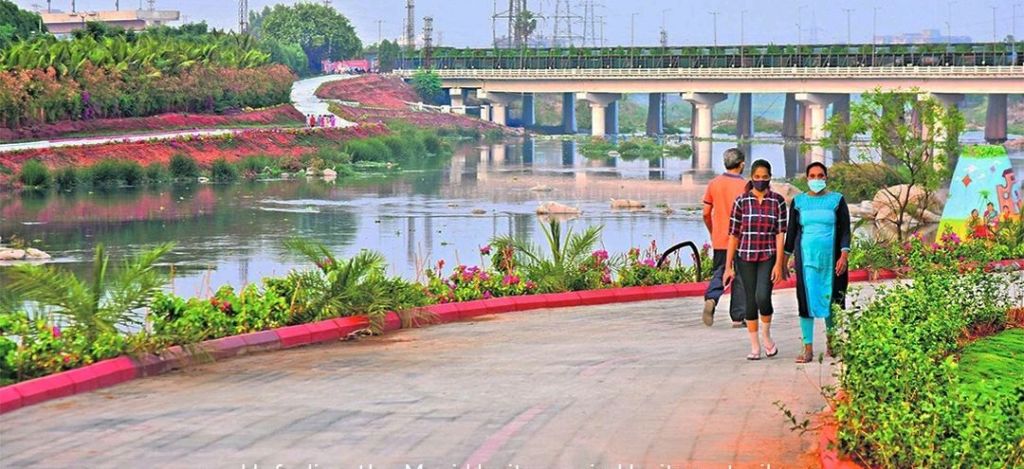
    Amidst the political spectacle, accusations and counter-accusations are escalating. The BJP has accused AAP of mismanaging essential services, while AAP has hit back, questioning the BJP’s governance at the national level. One of the most contentious issues remains the pollution crisis, particularly the deteriorating state of the Yamuna River. Both parties have attempted to project themselves as champions of environmental sustainability while simultaneously blaming each other for the worsening conditions. The environment, long considered a peripheral electoral issue, has now taken centre stage, influencing public sentiment as Delhi grapples with severe air and water pollution.

    Local governance issues are also playing a decisive role in shaping voter preferences. Everyday concerns such as garbage collection, road maintenance, and civic infrastructure have become flashpoints for residents across different socioeconomic strata. Both in affluent colonies and unauthorized settlements, citizens express deep frustration over inefficient municipal services, making urban management a key election issue. With voters increasingly scrutinizing the tangible impact of government policies on their daily lives, parties are under pressure to move beyond grand promises and demonstrate concrete solutions.

    The upcoming Delhi elections are poised to be a dramatic and high-stakes contest, with each party deploying its most aggressive tactics to capture the electorate’s favour. From extravagant promises and scathing critiques to ideological clashes and strategic alliances, the capital is set to witness an intense political showdown. As February 5, 2025, approaches, the only certainty is that Delhi’s voters hold the ultimate power to decide the city’s future. The electoral battlefield is set, the rhetoric is at its peak, and the stakes have never been higher. In this political spectacle, every vote will count, and every strategy will be tested in what promises to be a defining moment in Delhi’s political history.

    Visit arjasrikanth.in for more insights

  • Indian Cities: The Dystopian Dream That Refuses to Wake Up

    February 4th, 2025

    From the Concrete Jungle to the Cesspool of Governance—India’s Cities Are Stuck in a Paradox of Progress and Failure

    Indian cities present a striking paradox—dynamic yet decaying, promising yet punishing, thriving yet throttling. They stand as the pulsating heart of an ancient civilization, yet also reflect the shattered dream of modern governance. The chaos is not simply the result of poor planning, but a deeply entrenched systemic failure. This dysfunction is compounded by political apathy, misplaced priorities, and a collective resignation to mediocrity.

    The most recent Global Liveability Index of 2024 paints a grim picture for India’s urban landscape. Delhi and Mumbai, once hailed as the economic and political powerhouses of the nation, languish in a dismal 141st place, earning a mere score of 60.2 out of 100. Bengaluru, often celebrated as India’s tech hub, fares even worse, ranking 146th and earning the dubious distinction of being the least liveable city in the country. Other cities such as Chennai and Ahmedabad, while slightly better, still fail to make it into the top 20 in either global or Asian rankings. Meanwhile, cities like Geneva, Zurich, and Singapore epitomize the kind of efficient, aesthetically pleasing, and humane urban existence that India aspires to but has repeatedly failed to achieve.

    The reasons behind this deplorable state of affairs are not merely administrative or governance failures; they are deeply rooted in how urban life is perceived and managed. The rapid onset of democracy in India, without a corresponding evolution of elite governance, has left cities trapped in a never-ending cycle of short-term fixes and political expediency. In many developed nations, city planning was driven by a cultural elite long before mass democracy took hold. In India, however, elections were held before the country had even established basic urban infrastructure like roads, sanitation systems, or townships. The result has been a complete lack of continuity in urban planning and an absence of a long-term vision for city-building.

    Unlike other nations where strong institutional frameworks guided city development, India’s cities were thrust into the chaos of electoral populism before these institutions were properly established. While elitism has its drawbacks, history shows that cities built with a strong, centralized institutional structure tend to thrive. India, however, never allowed its elites the time or the power to build such frameworks before being thrust into the labyrinth of politics.

    The obsession with grand, futuristic projects—smart cities, bullet trains, twin cities, and hyperloops—has only served to overshadow the basic needs of urban life. These projects promise innovation but fail to address pressing issues such as green spaces, clean air, efficient public transport, and waste management. In Indian cities, urban governance has become a cesspool of bureaucratic inefficiency, where the rich and the poor coexist in parallel worlds—luxury high-rises towering over sprawling slums. Neither side benefits from competent, well-implemented policies.

    The causes of urban decay go beyond mere political mismanagement. If politicians were solely to blame, the country’s elite would have long ago created private cities that mirror the living standards of their global counterparts. But the deeper issue lies in a collective apathy. Unlike the Thai middle class, which ensures that Bangkok remains orderly and hygienic despite its congestion, Indians have, by and large, come to accept chaos, filth, and mismanagement as the natural order of things. Municipal bodies, instead of focusing on lane discipline, waste disposal, or creating public parks, are often mired in petty political infighting and budget manipulations. The government assumes that citizens will endure squalor and, in turn, citizens rarely demand better services or improvements.

    Migration has long been seen as a survival tool in India. However, it has also eroded the sense of ownership and responsibility towards urban spaces. Historically, India’s influential class has sought to escape urban decay—first from colonial rule, then from post-independence instability, and now from the collapse of city infrastructure. Unlike Western nations, where citizens with long-term stakes drive city development, India’s elite have always had one foot out the door, never fully investing in fixing their cities.

    Yet, paradoxically, the very elite that once abandoned India may now hold the key to its urban revival. As global economic dynamics shift and India’s international clout grows, a new generation of wealthy Indians is reconsidering life in their homeland. Unlike their predecessors, who were more interested in preserving their privileges, this new generation seeks urban order, aesthetics, and infrastructure not out of altruism but out of self-interest. This shift, however modest, could push city planning reforms forward. If this affluent class begins to demand well-planned, efficient cities, it could provide the political pressure needed for change.

    Despite the grim scenario, reclaiming India’s urban spaces is not impossible. The key lies in decentralized urban governance—empowering local bodies to take charge of city planning instead of relying on distant state or central authorities. There is an urgent need for a legally binding, long-term urban development framework that prioritizes sustainability, mobility, and public health. Public-private partnerships should be leveraged to create sustainable urban ecosystems, and civic engagement must be fostered to ensure that citizens demand better services and hold their leaders accountable.

    Mass transit investment must take precedence over road expansions that cater only to private car owners. India desperately needs efficient metro networks, bus rapid transit systems, and pedestrian-friendly infrastructure to create inclusive urban spaces. By focusing on long-term, intelligent planning, Indian cities can be transformed from chaotic nightmares into thriving, liveable urban centres that benefit all citizens, not just the privileged few. The time to act is now, before the urban catastrophe becomes irreversible.

    In conclusion, India’s cities embody a paradox of progress and stagnation. While the challenges are immense, the potential for transformation exists—if only political will, civic engagement, and visionary planning are prioritized. The time for change is overdue, and the nation cannot afford to wait any longer.

    Visit arjasrikanth.in or @DrArjasreekanth for more insights

  • Deep Seek: The AI Maverick That’s Defying Silicon Valley and Sparking a Global Tech Revolution

    February 3rd, 2025

    No Cutting-Edge Chips. No Industry Gatekeepers. Just Pure Innovation—Inside the Billionaire’s Bold Play to Rewrite AI History.

    In the high-stakes world of artificial intelligence, where secrecy and billion-dollar investments reign supreme, one name has emerged from the shadows to challenge the status quo—Deep Seek. This once-obscure project, founded by billionaire Le Flyer, has rapidly evolved into a formidable force, reshaping AI development in ways that even Silicon Valley didn’t anticipate. Spending over $1 billion annually, Deep Seek has relentlessly pushed the boundaries of AI capabilities, proving that innovation isn’t just about having the best resources—it’s about rethinking the game altogether.

    Deep Seek stunned the tech world in December 2024 with the release of its revolutionary AI model, V3. This wasn’t just another incremental improvement; it was a bold declaration that AI could be developed outside the traditional powerhouses of OpenAI and Google DeepMind. V3 showcased capabilities on par with state-of-the-art models, setting a new standard for logical reasoning, efficiency, and accessibility. Unlike its Silicon Valley counterparts, Deep Seek adopted a radically different approach—one rooted in transparency and accessibility rather than exclusivity.

    What makes Deep Seek’s journey even more astonishing is the fact that it has been built without access to the most advanced semiconductor chips. With the U.S. imposing strict export restrictions on high-end AI chips to China, many expected Deep Seek to falter. Instead, the company engineered its way around these limitations, optimizing less powerful hardware to extract unprecedented performance. The result? A lean, efficient AI model that challenges the notion that bigger budgets and cutting-edge chips are prerequisites for world-class AI.

    But Deep Seek isn’t just making AI more efficient—it’s making it more accessible. Unlike the guarded, closed-source approach of industry giants, Deep Seek has embraced an open-source philosophy, allowing developers, researchers, and businesses to download and modify its AI models for commercial use. This move has shattered cost barriers, making AI development up to a hundred times cheaper than competing solutions from OpenAI or Anthropic. The implications are profound: industries, startups, and even independent developers now have access to AI capabilities that were once locked behind multimillion-dollar investments.

    The impact of Deep Seek’s innovations extends beyond cost and efficiency. It signals a seismic shift in how AI is developed and who gets to shape its future. By proving that AI breakthroughs don’t require monopolistic control over technology, Deep Seek has inspired a new wave of AI democratization. If AI is to be the defining technology of the 21st century, its benefits should not be restricted to a select few corporations. Deep Seek’s approach challenges Silicon Valley’s proprietary grip on AI, offering a viable alternative where talent and ingenuity matter more than financial muscle.

    This disruption isn’t just technical—it’s geopolitical. Deep Seek’s ascent coincides with rising tensions in global technology rivalries, particularly between China and the United States. With Washington tightening restrictions on advanced tech exports, China’s AI ambitions faced significant roadblocks. Deep Seek’s success, however, demonstrates that necessity is the mother of invention. By overcoming limitations imposed by chip shortages and regulatory barriers, it has showcased China’s resilience and ability to innovate independently.

    The implications of Deep Seek’s AI revolution reach far beyond corporate boardrooms. Imagine a world where AI-powered education tools personalize learning for every student, where small businesses harness AI-driven automation without spending a fortune, and where developing nations leverage affordable AI to transform healthcare and governance. Deep Seek’s vision makes these possibilities tangible, signaling a future where AI is not just an elite privilege but a universal tool for progress.

    Naturally, Deep Seek’s rise hasn’t been without controversy. Some critics speculate whether the company has borrowed heavily from established AI research, raising questions about intellectual property and ethical AI development. Others warn of the risks associated with making such powerful AI widely available. The open-source movement in AI, while democratizing, also presents challenges in preventing misuse. However, these debates underscore the broader challenge the AI industry faces—balancing innovation with responsibility.

    The parallels between Deep Seek’s breakthroughs and historical technological revolutions are hard to ignore. Much like how Tesla disrupted the auto industry with electric vehicles or how open-source software redefined computing, Deep Seek is rewriting the playbook for AI. The difference? AI has the potential to reshape nearly every facet of human life, making this revolution even more consequential.

    For tech giants like Nvidia, which has long dominated the AI chip market, Deep Seek’s advancements introduce a new era of unpredictability. If AI can be developed efficiently without relying on the most expensive hardware, the traditional economic models of AI development may no longer hold. This paradigm shift forces industry leaders to rethink their strategies or risk being left behind.

    As the AI arms race intensifies, Deep Seek stands at the forefront of a movement that challenges the very foundations of how AI is built, accessed, and controlled. Whether it will maintain its trajectory or face hurdles from regulators and competitors remains to be seen. But one thing is certain—Deep Seek has already altered the course of AI history.

    In an industry driven by secrecy, Deep Seek’s openness is its biggest weapon. In a field dominated by the powerful, its efficiency is its greatest advantage. And in a world increasingly shaped by AI, Deep Seek’s audacious gamble may just redefine the future. The age of AI is no longer just about who has the deepest pockets—it’s about who has the boldest vision.

    Visit arjasrikanth.in for more insights

  • 🚀 Mumbai’s Sky-High Metamorphosis: The Adani Group’s Bold Leap into the Future of Aviation 🌍✈️

    February 2nd, 2025

    From Terminal 1’s Grand Rebirth to a Next-Gen Aerotropolis—Mumbai’s Aviation Revolution Takes Flight!

    Mumbai, the pulsating heart of India’s financial and cultural landscape, is on the cusp of an aviation revolution that promises to redefine its skyline and transform the travel experience. Chhatrapati Shivaji Maharaj International Airport (CSMIA), the city’s primary gateway to the world, is undergoing a historic transformation, with Terminal 1 (T1) set to be reimagined under the visionary leadership of the Adani Group. This ambitious project is not just an expansion but a strategic move to elevate Mumbai’s status as a global aviation hub, ensuring it can accommodate the growing influx of passengers while maintaining world-class standards.

    The redevelopment of T1 is set for completion by 2028-29, ushering in a new era of air travel in Mumbai. With a significant increase in capacity by 42%, the upgraded terminal will be capable of handling 20 million passengers per annum (MPPA). However, this initiative is about more than just numbers; it represents a commitment to future-proofing Mumbai’s aviation infrastructure in an ever-evolving global landscape. The demolition of the existing T1 structure is scheduled to commence in November 2025, paving the way for a next-generation terminal that embodies efficiency, sustainability, and cutting-edge technology.

    To ensure a seamless transition during this extensive redevelopment, passenger traffic will be managed through CSMIA’s Terminal 2 (T2) and the Navi Mumbai International Airport, which is slated to commence operations in 2025. This strategic approach is designed to maintain operational continuity and ensure that Mumbai’s aviation sector continues to thrive despite the large-scale transformation taking place.

    Leading this ground-breaking project is Jeet Adani, Director of Adani Airport Holdings Limited, whose commitment to revolutionizing Mumbai’s aviation landscape is evident. “The team at CSMIA is working tirelessly with our stakeholders to ensure a smooth transition with minimal disruption to daily operations. This redevelopment is not just about expansion—it is about future-proofing Mumbai’s place on the global stage. Our priority remains to deliver the exceptional service that our passengers expect,” he affirms.

    The new T1 is poised to become a benchmark in global airport design and functionality. The reimagined terminal will be a fusion of art, technology, and sustainability, with an architectural design inspired by the ocean’s waves. This innovative approach will seamlessly integrate aesthetics and functionality, creating a passenger-centric environment that prioritizes comfort, convenience, and efficiency.

    The transformation of T1 will introduce a completely redesigned Passenger Terminal Building (PTB), optimized for domestic operations but adaptable for future international flights. A state-of-the-art Multi-Modal Transit Hub (MMTH) will facilitate effortless connectivity between air, rail, and road networks, ensuring a seamless travel experience for passengers. Sustainability will be at the heart of the new terminal, featuring biophilic elements, extensive greenery, and energy-efficient systems aimed at reducing the airport’s carbon footprint.

    The upgraded infrastructure will incorporate advanced district cooling systems, cutting-edge electrical substations, and an intelligent baggage handling system designed for enhanced efficiency and reliability. Additionally, the integration of digitization and automation, with innovations such as DigiYatra, self-baggage drop kiosks, and e-Gates, will redefine the passenger experience, making air travel more intuitive, hassle-free, and technologically advanced.

    The redevelopment of T1 marks a significant milestone for Adani Airport Holdings Limited (AAHL), a subsidiary of Adani Enterprises. As the majority stakeholder in Mumbai International Airport Limited (MIAL), the Adani Group has firmly established itself as a pioneer in managing and modernizing complex infrastructure projects. However, their vision extends beyond constructing an advanced terminal; they aspire to create an aerotropolis—an integrated ecosystem where aviation serves as the catalyst for commercial, industrial, and urban development. This holistic approach will ensure that CSMIA emerges as a central hub for economic growth and innovation in Mumbai.

    Given the scale of this endeavour, the redevelopment will be executed in meticulously planned phases. To guarantee uninterrupted operations, passenger traffic will be efficiently managed between T2 and the Navi Mumbai International Airport. Close coordination with airlines and key stakeholders will be maintained to ensure smooth flight schedules, while advanced automation and additional personnel will be deployed to optimize passenger flow within the terminal.

    Upon completion, T1 will stand as India’s first brownfield, biophilic, and environmentally sustainable airport terminal. The innovative design will incorporate renewable energy sources, water conservation techniques, and state-of-the-art carbon emission reduction strategies. This commitment to sustainability will position CSMIA as a trailblazer in eco-friendly aviation, setting a precedent for airports across the world.

    Under the transformative leadership of the Adani Group, Mumbai’s aviation landscape is poised for a paradigm shift. The redevelopment of CSMIA is not merely an infrastructural upgrade; it is a bold declaration of Mumbai’s aspirations, reflecting a commitment to innovation, excellence, and sustainability. As the city prepares to embrace this monumental change, the excitement surrounding this ambitious project continues to build, signalling a new era of air travel that prioritizes passenger experience, environmental responsibility, and technological advancement.

    With the countdown to 2028-29 underway, travellers can anticipate stepping into a redefined Terminal 1—an ultramodern space where comfort, technology, and sustainability converge to create an unparalleled travel experience. As Mumbai takes this transformative leap, the city is set to cement its position as a global aviation powerhouse, ushering in an era of enhanced connectivity and cutting-edge infrastructure. The skies are the limit, and with the Adani Group at the helm, Mumbai’s aviation renaissance is set to become a remarkable journey of progress and growth.

    Visit arjasrikanth.in / @DrArjasreekanth for more insights

←Previous Page

1 … 35 36 37 38 39 … 135
Next Page→

Blog at WordPress.com.


Loading Comments...
 

    • Subscribe Subscribed
      • SOCIAL PERSPECTIVES
      • Join 99 other subscribers
      • Already have a WordPress.com account? Log in now.
      • SOCIAL PERSPECTIVES
      • Subscribe Subscribed
      • Sign up
      • Log in
      • Report this content
      • View site in Reader
      • Manage subscriptions
      • Collapse this bar