• About

SOCIAL PERSPECTIVES

  • Sky Shield: The S-400 Triumf and India’s Strategic Airpower Revolution

    May 10th, 2025

    The S-400 Transforms India’s Defense Posture, Deters Adversaries, and Redefines Regional Security Dynamics

    In the rapidly transforming arena of contemporary warfare, the induction of cutting-edge air defence systems can recalibrate regional power equations with profound strategic implications. India’s acquisition of the S-400 Triumf system from Russia marks a decisive enhancement of its defensive architecture and signals a robust shift in its deterrence posture, particularly in the context of its enduring strategic competition with Pakistan. The S-400’s arrival is not merely a technological upgrade; it is a deliberate recalibration of India’s national security framework in response to an increasingly unpredictable security environment.

    With its highly integrated, multi-layered interception capabilities, the S-400 is designed to neutralize a wide spectrum of aerial threats, ranging from ballistic and cruise missiles to stealth aircraft and high-speed unmanned aerial vehicles. In an era where aerial superiority is increasingly defined by stealth and stand-off weapons, the S-400’s ability to engage targets such as Pakistan’s Babur and Ra’ad cruise missiles, or advanced variants like the JF-17 Block III, provides India with unprecedented strategic depth. The growing relevance of UAVs and loitering munitions in regional military doctrines further amplifies the value of the S-400’s agile and adaptive threat-response capabilities.

    The 2019 Balakot airstrikes and their aftermath underscored the vulnerabilities of traditional air defences in the face of precision-guided munitions and retaliatory salvos. In this context, the S-400 offers a decisive countermeasure, ensuring rapid threat detection and interception long before hostile assets can inflict damage. Its engagement envelope—extending up to 400 kilometers—covers major population centers like Delhi and Mumbai, as well as forward bases and military installations along the western front, thereby denying adversaries the element of surprise.

    Beyond its kinetic prowess, the S-400 imposes a psychological cost on potential aggressors. Its capacity to track and engage up to 80 targets simultaneously complicates offensive planning for Pakistan’s air force and missile corps. The sheer difficulty of breaching Indian airspace protected by a network of S-400 batteries serves as a credible deterrent, compelling adversaries to reconsider escalation pathways that involve aerial intrusions or missile attacks.

    Pakistan’s missile arsenal, including the Babur cruise missile and the Shaheen series of ballistic missiles, adds further complexity to India’s threat matrix. The S-400’s radar systems, capable of detecting low-observable targets at ranges of up to 600 kilometers, offer India a critical early-warning and preemptive strike capability. This transforms the nation’s missile defence from a reactive to a proactive domain, capable of disrupting adversarial intentions well before they reach Indian territory.

    Historically, India’s air defence relied on systems like the Akash SAM and the SPYDER, which, while effective in limited theatres, lacked the range and integration necessary for modern air defence. The induction of the S-400 bridges this strategic gap, integrating long-range detection with precision interception and ensuring seamless coordination across India’s air defence grid. This layered coverage allows for a graduated response to diverse threats, from high-altitude surveillance aircraft to terrain-hugging cruise missiles.

    The S-400 also represents a critical counterbalance to Pakistan’s battlefield nuclear weapons doctrine, especially the deployment of short-range missiles like the Nasr. By equipping India with the capability to intercept fast-moving, low-altitude nuclear-capable missiles, the system mitigates the coercive leverage that tactical nuclear weapons might otherwise provide. In doing so, it strengthens India’s strategic stability and fortifies its no-first-use doctrine by increasing confidence in second-strike survivability.

    While initially procured with a primary focus on countering China’s expanding military capabilities along the northern frontier, the deployment of the S-400 along the western border enhances India’s ability to deter threats from both adversaries concurrently. Its mobile launch units can be rapidly repositioned based on evolving threat perceptions, enabling a responsive and flexible defence posture that aligns with real-time operational needs.

    In technological terms, the S-400 significantly outclasses Pakistan’s existing air defence infrastructure. Systems like the Chinese-origin HQ-9 and LY-80 fall short in terms of detection range, engagement accuracy, and threat discrimination. This asymmetry grants India a decisive edge in airspace dominance and undermines the feasibility of any precision strike or suppression campaign by Pakistan. It effectively raises the threshold for conflict initiation, reinforcing deterrence through capability superiority.

    Ultimately, the S-400 Triumf is not just a military asset; it is a strategic instrument that reshapes the contours of airpower dynamics in South Asia. Its presence alters adversarial calculus, enhances India’s airspace integrity, and contributes significantly to regional stability by reducing the probability of successful first-strike attempts. It serves as a cornerstone in India’s broader defence modernization strategy, complementing indigenous efforts while addressing critical capability voids.

    Although China remains a central consideration in India’s security doctrine, the S-400’s immediate impact is most visibly felt in the Indo-Pakistani context. As the region navigates a complex mix of conventional rivalries, proxy threats, and nuclear brinkmanship, the S-400 provides India with the means to safeguard its sovereignty, respond decisively to provocations, and project strategic maturity in a volatile geopolitical theatre.

    In essence, the S-400 embodies India’s resolve to stay ahead of the curve in national defence. It represents an intelligent convergence of diplomacy, technology, and strategic foresight—securing not just borders, but the larger idea of a stable, assertive, and self-reliant India.

    Visit arjasrikanth.in for more insights

  • Sri City: Andhra Pradesh’s Syntax of Steel and Silicon”

    May 9th, 2025

    Sri City: Andhra Pradesh’s Silent Symphony of Industrial Renaissance

    Nestled in the fertile expanses of Chittoor district, Sri City rises not merely as a manufacturing hub but as an emblem of India’s industrial aspirations—bold, deliberate, and future-facing. This integrated business city, spread across 7,500 acres of meticulously designed land near Tirupati, represents the triumph of vision over inertia. In just over a decade, an audacious blueprint has blossomed into a thriving industrial ecosystem where innovation, investment, and inclusivity converge. What was once a nascent promise has matured into one of India’s most compelling economic narratives—an oasis of productivity where multinational behemoths and indigenous enterprises operate in seamless synchrony.

    The latest chapter in this unfolding saga is set to be written by LG Electronics, which, with a planned investment of ₹5,001 crore, is laying the cornerstone for a sprawling manufacturing facility. Scheduled for initiation on May 8 under the aegis of Andhra Pradesh’s Minister for Education, IT, and Electronics, Nara Lokesh, the project underscores a pivotal leap in economic ambition. Over a phased period of six years, LG will manufacture a diverse portfolio of consumer durables—refrigerators, washing machines, and air conditioners—while localizing core components such as compressors and heat exchangers. This strategic indigenization is poised to tighten supply chains, lower import dependency, and embed technological know-how within Indian soil.

    Importantly, this initiative transcends infrastructure—it’s a profound investment in human capital. With over 2,000 direct employment opportunities expected and ancillary investments of ₹839 crore across five supporting units, the ripple effect will be felt across households, skill centers, and ancillary industries. The seeds of this development were sown in a high-level dialogue between Lokesh and LG’s leadership in Japan in September 2024—a meeting that epitomized the synergy between policy intent and industrial momentum. Andhra Pradesh’s unwavering commitment to enabling ease of doing business, especially in Rayalaseema, is bearing tangible fruit.

    Yet LG’s story is but a recent note in a longer symphony of industrial transformation. Today, Sri City is home to over 300 companies, including more than 50 Fortune 500 corporations. Household names such as PepsiCo, Isuzu, Kellogg’s, and Alstom do not merely operate here; they co-create value. Collectively, they have infused over ₹30,000 crore in investments, supporting more than 50,000 families and elevating the socio-economic landscape of southern Andhra Pradesh. What makes this ecosystem distinctive is not just the quantum of capital deployed, but the breadth of sectors represented—from automotive and electronics to pharmaceuticals and agri-processing—each industry reinforcing the other in a virtuous economic loop.

    Sri City’s distinction lies equally in its civilizational sensibility—its human-centric urbanism. Residential quarters mirror the best of urban design, international schools shape a new generation of talent, and hospitals serve not just workers but the surrounding communities. The infrastructure, though industrial in foundation, is ecological in spirit: solar rooftops, water recycling systems, and abundant green belts make Sri City a laboratory for sustainable development. It is rare for an industrial cluster to exhibit this degree of environmental consciousness while scaling economic heights.

    Logistically, Sri City is a masterstroke. Direct access to National Highway 16, a dedicated freight corridor, and a passenger rail station form a multimodal connectivity matrix that few Indian industrial regions can rival. The proposed domestic airport, coupled with possible metro rail extensions, will further anchor Sri City as a logistical pivot between Chennai and Krishnapatnam ports, transforming it into a trade gateway with international reach.

    Equally commendable are its efforts to democratize industrial participation. With over 30% of its workforce comprising women and sustained collaboration with the National Skill Development Corporation, Sri City is not merely creating jobs—it is nurturing careers. Vocational training programs, local upskilling initiatives, and inclusive hiring policies have transformed the neighboring communities into stakeholders in the city’s success. It’s an evolving model of industrial humanism—where economic inclusion is not an afterthought, but a cornerstone.

    Looking ahead, Sri City’s horizon is luminous with possibilities. The planned foray into electric vehicles, semiconductors, and aerospace aligns seamlessly with India’s push toward advanced manufacturing. The envisioned Mega Industrial Park for MSMEs is set to democratize opportunity further by reducing entry barriers and stimulating innovation. Smart city features like 5G-enabled infrastructure, IoT-integrated zones, and a push for zero liquid discharge standards ensure that this industrial city is not just future-ready—it is future-defining.

    However, the arc of progress must not slacken. Critical infrastructure like the proposed airport must be expedited. Deeper strategic partnerships with tech frontrunners in South Korea, Japan, and beyond can position Sri City higher along the global value chain. Simultaneously, ecological stewardship must remain sacrosanct—a reminder that development and sustainability are not binaries but dual imperatives.

    Ultimately, Sri City’s enduring allure lies in its larger symbolism. It is not just a plot of industrial land but a canvas where India’s aspirations are being painted—with precision, care, and courage. It exemplifies how industrial development, when embedded in sustainability, inclusivity, and human development, can uplift entire regions. As Andhra Pradesh aspires to be a major contributor to India’s $5 trillion economic ambition, Sri City stands not just as a beacon, but as a bellwether.

    The transformation is not a promise—it is a process already unfolding. From a daring idea to a powerful industrial testimony, Sri City has rewritten the grammar of growth. Its story, still being penned, is India’s own declaration of industrial maturity—a tale of how vision, partnership, and persistence can forge prosperity from potential.

    Visit arjasrikanth.in for more insights

  • Cannibalizing Tomorrow: Pakistan’s Suicide Pact with Terror and the Bullet That Bites Back

    May 8th, 2025

    Blood Snow in Paradise: Pakistan’s Terror Factories Turn Kashmir into a Graveyard of Innocents and Their Own Future

    The serene valleys of Pahalgam, where snow-capped peaks once mirrored the purity of untouched landscapes, now echo with the screams of tourists caught in the crossfire of a decades-old war they never signed up for. In April 2025, the idyllic meadows turned crimson when militants from The Resistance Front (TRF), a rebranded offshoot of Lashkar-e-Taiba, massacred 28 innocent travellers—families, honeymooners, and adventure seekers—in what they called a “response to Indian occupation.” This attack, like countless others, was proudly claimed by terrorists operating from Muzaffarabad, the nerve center of Pakistan-Occupied Kashmir (PoK), where groups like Lashkar-e-Taiba (LeT) and Jaish-e-Mohammed (JeM) thrive under the shadow of Pakistan’s military-industrial complex. While India reels from relentless violence, Pakistan’s obsession with nurturing terror as a state policy is not just bleeding its neighbour—it is cannibalizing its own future, squandering resources on unproductive hatred while its economy crumbles and its youth rot in radicalized madrassas.

    Muzaffarabad, a city cradled by the Jhelum River, is no ordinary capital. It is a launchpad for death. Here, LeT and JeM militants train in camps disguised as mosques and residential complexes, mastering guerrilla warfare and bomb-making under the guidance of Pakistan’s Inter-Services Intelligence (ISI). The 2025 Pahalgam attackers, a mix of Pakistani nationals and locally radicalized youth, were products of this ecosystem. Their tactics? Outsourced violence. Their mission? To keep Kashmir burning while Pakistan’s generals cling to the illusion of “strategic depth” against India. But this strategy is backfiring spectacularly. Every missile fired across the Line of Control (LoC), every dollar funnelled into jihadist madrassas, and every propaganda video glorifying suicide bombers is a nail in Pakistan’s coffin—a nation that could have been a regional economic powerhouse but chose to become a patron of global terrorism instead.

    Consider the irony: Pakistan spends billions propping up groups like LeT and JeM, whose fighters once boasted about “liberating” Kashmir but now find themselves pawns in a doomed game. The 2025 Pahalgam massacre, like the 2019 Pulwama attack, was met with global condemnation—but also exposed Pakistan’s crumbling façade. When India retaliated with precision strikes on Muzaffarabad using SCALP missiles, Pakistan’s military cried “civilian casualties,” conveniently ignoring that its terror camps operate in densely populated areas. This is the playbook: hide behind civilians, cry victimhood, and keep the Kashmir dispute alive. But the world is waking up. The UN’s hollow pleas for “restraint” and Saudi Arabia’s tepid mediation efforts cannot mask the truth: Pakistan’s terror factories are a liability, not just for India but for the entire region.

    The cost of this obsession is staggering. While Pakistan’s leaders fund jihad, their citizens queue for subsidized wheat. The China-Pakistan Economic Corridor (CPEC), which slices through PoK, was supposed to be a lifeline. Instead, it has become a symbol of exploitation—Chinese bulldozers grabbing land, hydropower projects diverting resources to Beijing, and locals protesting “economic colonialism.” Meanwhile, Pakistan’s military silences dissent in PoK with brute force. Pro-India voices vanish. Journalists are threatened. And yet, the myth of “Azad Kashmir” persists—a “freedom” that chains its people to poverty and violence.

    India’s stance is clear: PoK is Indian territory, stolen in 1947 by tribal raiders backed by Pakistan’s military. Legally, historically, and morally, India’s claim is unassailable. The Shimla Agreement of 1972 locked Kashmir as a bilateral issue, yet Pakistan insists on internationalizing it, hoping to distract from its own failures. But India’s surgical strikes, like Operation Sindoor in 2025, signal a new era—one where tolerance for cross-border terror has evaporated. Every time a Pahalgam happens, India’s resolve hardens. The message is stark: silence the terrorists, or we will.

    But here’s the tragic twist: Pakistan’s terrorism industry isn’t just India’s problem. It’s a self-inflicted wound. Radicalized youth who could have been doctors, engineers, or teachers now rot in graves or prisons, their potential wasted on futile jihad. Funds that could have built schools and hospitals instead buy AK-47s and suicide vests. And for what? A war Pakistan cannot win. Even Afghanistan, itself a victim of terror, watches in horror as Pakistan exports extremism, only to face blowback from groups like the TTP.

    The solution is agonizingly simple. Arrest the terrorists flooding Kashmir. Dismantle the camps in Muzaffarabad. Redirect resources from hate to hope. Imagine a Pakistan where the Indus River irrigates farms instead of feeding terror networks. Where Gilgit-Baltistan’s mountains attract tourists, not Chinese bulldozers. Where PoK’s hydropower lights up homes, not bomb factories. This is not a utopian fantasy—it’s a choice. Pakistan’s elites cling to terrorism as a tool of policy, but the cost is their own demise.

    The 2025 Pahalgam attack was a wake-up call. When will Pakistan answer? Every bullet fired at India ricochets, tearing through its own future. The snows of Kashmir will keep falling, but unless the bloodstains are washed away, paradise will remain a graveyard—and Pakistan, the architect of its own ruin.

    Visit arjasrikanth.in for more insights

  • “The Great Career Migration: The Death of Corporate Loyalty Birthed a New Era of Radical Professional Autonomy”

    May 7th, 2025

    From Pension Plans to Passion Projects—The Unstoppable Rise of the ‘Career Nomad’ and What It Means for the Future of Capitalism

    In an era defined by velocity, volatility, and virtualization, the traditional linear career trajectory is rapidly becoming obsolete—especially for the emergent generation entering the workforce. The archetype of long-term corporate allegiance, once symbolized by decades of service culminating in a ceremonial retirement, is increasingly anachronistic. What has taken its place is a more fluid, aspiration-driven model of work, shaped by personal fulfilment, technological innovation, and evolving socio-economic realities.

    Today’s young professionals approach employment with a mindset vastly different from that of previous generations. For them, a job is less a destination and more a launchpad—a strategic milestone in a broader narrative of self-development. They navigate the professional ecosystem not through static roles but through dynamic experiences, leveraging each opportunity to acquire new competencies, expand networks, and align with causes that mirror their values. This attitudinal shift, increasingly evident across sectors, is redefining organizational norms and prompting a systemic rethink of talent engagement models.

    Contributing to this paradigm shift is a climate of economic unpredictability. The psychological contract that once bound employees to institutions—based on job security and long-term loyalty—has weakened amid cycles of layoffs, automation, and structural recalibrations. In response, young professionals have recalibrated their expectations, favouring agility over attachment, and impact over inertia. Their career choices are not driven solely by compensation but by a matrix of factors: intellectual stimulation, cultural alignment, growth velocity, and purpose. This shift is exemplified by the high attrition rates among management trainees and early-career professionals who disengage when institutional promises fail to resonate with personal ambitions.

    This generation is also uniquely empowered by socio-economic context. Many hail from financially stable, dual-income households, granting them the freedom to make bolder, less risk-averse decisions. In addition, the social architecture of work has transformed: digital platforms like LinkedIn not only normalize frequent job changes but actively celebrate them as indicators of ambition and adaptability. Visibility, validation, and velocity are now embedded in the very fabric of modern career navigation.

    Organizations, confronted with the high cost of attrition and the erosion of traditional loyalty metrics, are being compelled to rethink their human capital strategies. The financial toll of employee turnover—ranging from 20% to over 200% of an individual’s annual salary depending on role seniority—is only one dimension of the challenge. The deeper concern lies in the organizational inertia that follows repeated exits: diminished morale, disrupted workflows, and weakened institutional memory.

    In response, forward-looking companies are beginning to redesign their employee value propositions. Flexible work structures, including hybrid and remote options, are being institutionalized not as perks but as essential frameworks for modern engagement. Geographic mobility is increasingly supported, allowing talent to work from locations aligned with family or lifestyle preferences. Traditional career ladders are being replaced by more adaptive, lattice-like models that facilitate non-linear growth—rewarding performance and potential over tenure and conformity.

    Equally significant is the democratization of workplace influence. Many organizations are actively involving junior employees in strategic dialogues, signalling a shift toward flatter hierarchies and collaborative governance. Initiatives like reverse mentoring, innovation councils, and cross-functional shadowing are no longer experimental—they are strategic imperatives. In such environments, employees experience a deeper sense of belonging and agency, essential ingredients for sustained engagement.

    The effects of this cultural reengineering are already manifesting. A growing number of young professionals are assuming leadership roles, not merely due to age or tenure, but because they embody the values, agility, and digital fluency required in contemporary organizational life. The informal norm of proximity between interns and CXOs, once inconceivable, now defines the ethos of progressive workplaces.

    As work undergoes a tectonic transformation, responsibility lies with both individuals and institutions to co-create a new social contract—one that balances aspiration with alignment, autonomy with accountability. Organizations that resist this transition risk irrelevance. Those that embrace it will emerge as talent incubators, innovation hubs, and purpose-driven ecosystems.

    Ultimately, the ambitions of the modern workforce are neither transient nor trivial. They represent a profound recalibration of what it means to work, contribute, and grow in the 21st century. The career landscape is no longer a single path but a constellation of possibilities, and the ability to navigate it with dexterity and intentionality will define both individual success and institutional longevity. The great career migration is not merely a trend—it is a structural shift redefining the meaning of work itself.

    Visit arjasrikanth.in for more insights

  • Code, Conscience & Conquest: Andhra Pradesh Built an Invisible Government for a Visible Tomorrow”

    May 7th, 2025

    “From drone-led disaster response to WhatsApp-driven citizen services, Andhra Pradesh’s real-time command hub is redefining the citizen-state relationship for the digital age.”

    In a country where governance once echoed with rustling files, endless queues, and “come-tomorrow” delays, Andhra Pradesh has ripped up the script and rebooted the system. Welcome to the land of *Governator 2.0*—a state where bureaucracy doesn’t wear khadi but code, where AI isn’t just artificial—it’s officially indispensable, and where every swipe, ping, and click is another nail in the coffin of archaic governance. This isn’t e-governance; this is **governance on caffeine.**

    At the epicenter of this high-voltage transformation is the Real-Time Governance (RTG) Center, a nerve hub that feels more like Tony Stark’s command station than a state control room. Thirty-three departments sync seamlessly into one CORE dashboard that doesn’t just monitor data—it *decodes* it. Cyclone? RTG deploys drones before the storm hits. Health crisis? Hospital bed availability is visible in real-time. It’s predictive, it’s prescriptive, and most importantly, it’s proactive.

    And the revolution doesn’t stop at dashboards. Andhra Pradesh has thrown open the gates of governance to its people through more than 7,000 MeeSeva centers and the AP Online Portal. From land records to caste certificates, what once required bribes and babus now takes just a few taps. The outcome? A staggering 90% cut in document submissions, ₹1,100 crore saved in paperwork, and a new chapter in transparency.

    The real show-stealer, however, is “ManaMitra”—a WhatsApp-based governance genie that listens, learns, and delivers. With 273 services already available and 380 on the horizon, governance is now as easy as texting a friend. The interface is casual, the back-end is colossal, and the impact? Electrifying. Millions now prefer texting the government over visiting it.

    While most states are still flirting with digitization, Andhra Pradesh has gone full throttle. AI, NLP, and blockchain aren’t buzzwords here—they’re blueprints. NLP-powered grievance redressal reroutes complaints with GPS-like accuracy. AI virtual assistants like “Swecha” speak Telugu and other dialects, closing the digital divide with the power of language. Land records are secured through blockchain, ensuring that ownership is transparent, tamper-proof, and tout-free.

    And when it comes to mobile governance, the AP One App is the Swiss Army knife of citizen services. It bundles over 100 functionalities, from bill payments to registrations, all within a tap’s reach. Certificates are drone-delivered to tribal hamlets, and AP FiberNet ensures no village is too remote for this data-fuelled revolution. If governance were a bloodstream, Andhra Pradesh is bleeding bytes into every village, school, and hospital.

    What makes this digital saga particularly compelling is its impact on character. End-to-end tracking, automated workflows, and real-time analytics have left little room for corruption. The citizen is now a stakeholder, not a supplicant. RTG user satisfaction surveys boast an 85% approval rating. Over 3 million people are actively engaging via WhatsApp. This is governance that doesn’t just serve—it listens, evolves, and empowers.

    But Andhra Pradesh isn’t just patting itself on the back. It’s eyes-wide-open to the challenges—cybersecurity threats, digital exclusion in rural belts, and bureaucratic inertia. The counter-strategy? High-grade encryption, digital literacy campaigns, and relentless upskilling of public officials. This is not a state drunk on tech hype—it’s a state engineering its future with methodical madness.

    Meanwhile, other states are sprinting in the same race with impressive strides. Kerala’s e-Sevanam and Aardram Mission offer telemedicine and paperless governance with a 95% digitization rate. Tamil Nadu’s e-Sevai and Amma centers provide seamless access to 650+ services, backed by AI grievance redressal. Gujarat has revolutionized land records with facial recognition-based pension disbursement, and Maharashtra’s Aaple Sarkar makes urban e-services a breeze. But it is Andhra Pradesh’s integration of predictive AI, real-time IoT, conversational interfaces, and blockchain-backed assurance that makes it the dark horse turned frontrunner in India’s digital transformation derby.

    And the vision? It only gets bolder. AI models are being trained to preemptively renew pensions, issue agricultural alerts, and bridge service delivery gaps before citizens even realize them. Health platforms will soon track vaccinations and enable teleconsultations. Smart Villages infused with IoT will redefine how we perceive rural India. Urban governance is using drones to swat mosquitoes and monitor cleanliness, while skill development programs are shaping a remote-ready, gig-economy workforce.

    It’s not just technology—it’s intent. Under the catalytic vision of Chief Minister N. Chandrababu Naidu, the message is clear: don’t digitize for the sake of it; digitize with empathy, accountability, and purpose. Departments are being pushed to consolidate services, eliminate redundancies, and communicate with crystal clarity. Every byte of data, every bot deployed, is aimed at making governance faster, leaner, smarter—and above all—kinder.

    As India accelerates toward its digital future, Andhra Pradesh isn’t just leading the charge—it’s redrawing the map. This isn’t just an upgrade of governance—it’s an **uprising**. It’s a future where government lives in your pocket, answers in your language, works while you sleep, and evolves as you live. It’s not e-governance. It’s not m-governance. It’s **we-governance**—powered by algorithms, driven by empathy, and co-authored by every citizen.

    Visit arjasrikanth.in for more insights

  • “Justice on Trial: When the Judge Becomes the Judged”

    May 6th, 2025

    “From Governors to Judges-The Bench Can’t Preach Timeliness While Sitting on 10 Million Cases & Cash Scandals!”

    In a judicial landscape where efficiency is increasingly equated with justice, the Supreme Court of India stands at a defining juncture. Recent discussions around instituting fixed timelines for the assent of bills by governors and the President have reignited an important debate: if the highest court in the land can impose deadlines on other constitutional authorities, should it not also set performance benchmarks for itself? This question gains urgency in the context of growing public awareness and critique, amplified by social media, about judicial delays and systemic inefficiencies. As public scrutiny intensifies, it is imperative that the judiciary embraces reform with transparency, accountability, and a renewed commitment to timely justice.

    A recent incident involving a High Court judge in Delhi, where unaccounted currency was reportedly found in his official residence, has further shaken public confidence in the integrity of the judicial system. The optics of this revelation are troubling, particularly when juxtaposed with the massive backlog of more than one crore (10 million) pending cases across Indian courts. This crisis of credibility cannot be addressed by rhetoric alone—it demands a structured and accountable roadmap to strengthen the foundations of justice delivery in the country.

    The *India Justice Report* offers a sobering analysis of the four fundamental pillars of India’s justice system: police, judiciary, legal aid, and prisons. It exposes sharp disparities between states, especially between the more efficient southern states and their northern counterparts. Southern states demonstrate better performance in areas such as judge-to-population ratios, case disposal rates, infrastructure investment, and access to legal aid. This variance calls attention to the urgent need for systemic reform across states and at the national level.

    Despite the escalating crisis, the Supreme Court has yet to implement a clear, enforceable framework for reducing pendency and streamlining judicial processes. Key issues highlighted by the report include a persistent shortage of judges, inadequate financial allocation to the judicial branch, and the lack of meaningful representation of women and marginalized communities in the judiciary. These challenges demand action. Just as the judiciary expects efficiency and discipline from the executive and legislative branches, it must subject itself to similar standards.

    The effectiveness of legal aid, which is supposed to ensure that justice is not denied to the underprivileged, remains alarmingly inconsistent. Southern states have fared better in developing structured legal services authorities and ensuring their accessibility, while many northern states continue to falter in both outreach and effectiveness. This regional imbalance widens the gap between the privileged and marginalized, undermining the constitutional guarantee of equal access to justice.

    Another critical indicator of performance is vacancy rates across judicial posts. States with lower judicial vacancies and higher budget utilization typically exhibit better outcomes in terms of pendency and disposal rates. Southern states’ relative success, however, is not merely a result of superior administrative systems. It is also tied to socio-cultural factors such as higher literacy rates, stronger civic engagement, and public demand for accountability. Replicating this success in other parts of the country requires strategic investments in human resources, infrastructure, and capacity-building.

    Public perception of judicial inefficiency is fast becoming a credibility crisis. As citizens increasingly turn to digital platforms to express frustration over judicial delays, the judiciary risks alienating the very people it is meant to serve. The Supreme Court must acknowledge this shift in public sentiment and take proactive measures to lead institutional reform. Introducing internal timelines for case resolution, digitizing processes, and publicly sharing performance metrics could go a long way in rebuilding trust.

    Equally vital is the issue of representation. The underrepresentation of Scheduled Castes, Scheduled Tribes, and women within the judiciary mirrors broader societal inequities and fuels public skepticism. A judiciary that reflects the diversity of the population it serves is not only more just but also more relatable and credible. Increasing diversity is not just a symbolic gesture—it is a necessary condition for substantive justice.

    The need for reform is clear. India requires a judiciary that is equipped to handle its caseload with diligence, fairness, and speed. The Supreme Court must lead this transformation from the front—by setting ambitious but achievable standards for case disposal, supporting judicial training and digitization, and urging structural reforms across all levels of the justice system. It must also champion greater financial autonomy and ensure that the judiciary receives adequate funding to meet its growing demands.

    Ultimately, the call for reform is not about placing the judiciary under siege. It is about strengthening the institution to meet the evolving needs of Indian democracy. The credibility of the judiciary rests not just on its constitutional authority, but also on its moral leadership and commitment to equity and efficiency. By embracing transparency, fixing timelines, and promoting diversity, the Supreme Court can reaffirm its status as the sentinel of justice and a cornerstone of Indian democracy. Through such a proactive approach, it will pave the way for a future where justice is not just promised—but promptly and fairly delivered to all.

    Visit arjasrikanth.in for more insights

  • Quantum Ascension on the Silk Path: Ganesha Sharma’s Disruptive Odyssey from Annavaram Riverbanks to the Kanchi Kamakoti Throne

    May 5th, 2025

    Rocket Science in Saffron: Ganesha Sharma’s Mind-Blowing Leap from Coconut Oil Lamps to Commanding Kanchipuram’s Cosmic Throne

    From the tranquil riverbanks of Annavaram to the venerable corridors of Kanchipuram, the meteoric rise of Ganesha Sharma is not simply the story of personal triumph, but the rewriting of entrenched paradigms surrounding succession, spiritual authority, and the stewardship of tradition. Sharma’s ascension as the 71st spiritual head of the Kanchi Kamakoti Peetham, occurring on the auspicious occasion of Akshaya Tritiya, encapsulates both the continuity and dynamic transformation of spiritual leadership within a changing India. At an age when most scholars are only beginning to find their voices, Sharma stands as custodian of an institution whose influence has defined, for centuries, the trajectory of South Asian spiritual consciousness.

    What truly distinguishes Sharma’s investiture is its teleological momentum: more than just a succession, it signals an acceleration. Here, the authenticity of rural ritual commingles with the institutional gravitas of the Peetham, creating a synthesis that both honors legacy and redefines it for a new era. Such convergence is especially salient in a tradition where cycles of continuity are valorized; Sharma’s appointment thus becomes emblematic of transformation—of tradition rendered nimble, responsive, and modern.

    Contrary to the perception of hierarchical transfer as routine, Sharma’s emergence represents an audacious reimagining of what it means to lead a historic spiritual establishment. His early years, shaped by the spiritual ambiance of Annavaram and nurtured by a lineage steeped in Vedic learning, reflect not the passive inheritance of knowledge, but its lived, iterative transmission. The harmonies of Rig Vedic recitation, absorbed from the age of six, evolved through comprehensive engagement with the Vedangas well before adolescence. Far from rote accumulation, this learning was marked by a spirit of intellectual inquiry and guidance from erudite mentors.

    Central to Sharma’s trajectory is his deliberate expansion across languages and philosophical schools; proficiency in Tamil enabled him to immerse in the scholarly life of Kanchipuram, while mastery of the Dashopanishads and exposure to the rigor of Vedantic dialectics equipped him to navigate both theological debate and practical leadership. The pivotal meeting with his predecessor at Basara was not simply ceremonial. It served as a crucible for discernment, with Sharma emerging as the rare confluence of scriptural acumen, spiritual temperament, and latent administrative prowess.

    His rigorous apprenticeship transcended mere ritual instruction. It became an immersive preparation for stewardship across intellectual, liturgical, and practical domains. Here, his progression encompassed advanced hermeneutics, mastery of intricate ceremonial rites, and the deft balancing of personal discipline with growing public responsibility. Such formation speaks to a lived recognition that contemporary spiritual authority requires empathy, flexibility, and the capacity to integrate ancient wisdom with modern exigencies.

    Sharma’s induction was thus a spectacle of symbolic import, attracting not only devout laity but also political and civic dignitaries—a testament to the mutt’s broad socio-cultural footprint in the national consciousness. By adopting the ochre robes, Sharma eschewed the notion of hermetic withdrawal, instead signaling renewed public engagement and the application of dharma to the dilemmas and discourses of the present. This was not merely an internal rite of passage, but an assertion of a revised social contract, coalescing tradition, aspiration, and communal service.

    It is crucial to note that Sharma’s leadership is situated in a context marked by complexity. The Kamakoti Peetham’s rich history has been punctuated by episodes of debate, scrutiny, and periodic reinvention. Sharma now faces the dual imperative of responding to such scrutiny and mobilizing it as a catalyst for renewal. Where regional identity was once a fault line, his Andhra origins now function as a bridge, fostering cross-cultural harmony and inclusiveness. This has been interpreted as emblematic of an evolving, cosmopolitan, and youthful reinvigoration of the Peetham’s mandate.

    Unlike earlier epochs, where spiritual leadership was synonymous with monastic withdrawal, today’s custodianship entails multiple dimensions—ritual, doctrinal, archival, philanthropic, and interfaith. Sharma is now entrusted with not only preserving sacred rites and doctrinal purity but also with the stewardship of educational, medical, and charitable institutions. Navigating these responsibilities calls for embracing technology, engaging the youth, and responding with agility to a rapidly changing, pluralistic society.

    If a core achievement is to be identified, it is Sharma’s creative synthesis of inherited wisdom and adaptive innovation. His ability to translate the cadence of Vedic literature into the digital idiom, to render tradition a living resource, echoes a national trajectory that seeks global engagement without the erosion of indigenous identity. In Sharma, continuity truly meets reinvention.

    In essence, Ganesha Sharma’s investiture marks the transformation of an ancient seat into a crucible of intellectual openness, spiritual vigor, and communal responsibility. His leadership is defined as much by empathy as by erudition, transcending narrow boundaries and resonating with a collective longing for rootedness amid relentless change. Sharma’s legacy promises to be one not just of inheriting office, but of galvanizing a movement—fusing epochs, peoples, and communities in a spirit of continual renewal. In his rise, tradition and ambition harmonize, laying foundations for a forward-looking dharma inseparable from the fabric of modern India.

    Visit arjasrikanth.in for more insights

  • “From Fragile Gaps to Fortified Futures: Reimagining India’s Security Architecture”

    May 4th, 2025

    Transforming Moments of Vulnerability into Catalysts for Unified, Tech-Driven, and Citizen-Empowered National Security

    India, a nation of immense resilience and hope, continues to face intermittent security setbacks that shake its collective conscience. From the heart-wrenching Pulwama attack in 2019 that claimed the lives of 40 CRPF jawans to the recent tragedy in Pahalgam in April 2025 where 28 tourists lost their lives, these incidents are painful reminders of vulnerabilities that persist despite our growing security capabilities.

    Each of these incidents leaves behind more than just grief—it calls for urgent introspection. While the locations and targets vary, the broader pattern of response reveals critical gaps. These are not failures of spirit, but lapses in coordination, preparedness, and technology adoption. The perpetrators exploit precisely these fissures, taking advantage of outdated protocols, fragmented intelligence systems, and uncoordinated local responses.

    Yet, this isn’t a moment to despair—it is a call to action. India does not suffer from a lack of courage or capability. Our brave security personnel have time and again displayed unmatched valour. What we now require is a strategic and unified approach to national security—an architecture that is modern, agile, and standardized across states.

    A central takeaway from recent incidents is the need for a unified framework. A “One Nation, One Security Code” should be our collective goal—an integrated model that mandates uniform standard operating procedures (SOPs) across states, especially for high-sensitivity zones like pilgrimage routes, major festivals, and popular tourist destinations. These SOPs must include real-time surveillance using drones, RFID-tagged vehicle monitoring, facial recognition entry points, and strict access timelines.

    Moreover, intelligence must be treated not as an administrative formality, but as a cornerstone of pre-emptive action. All actionable alerts must trigger immediate, automated notifications across a national security grid, ensuring that no agency operates in isolation. A fully integrated, technology-driven intelligence-sharing platform can be the game-changer we need.

    Accountability, too, must evolve. Not as blame, but as responsibility. A robust review mechanism should be established to ensure compliance with protocols and to initiate swift action when lapses occur. Public service must uphold public trust, and transparency in performance—especially in matters of national security—is essential.

    In parallel, empowering citizens as active stakeholders in security can act as a powerful deterrent. Drawing inspiration from successful global models like Israel’s “Civil Guard,” India can initiate volunteer-based auxiliary security forces, particularly in rural and tourist areas. Community policing, anonymous tip lines, and basic counter-terror training can create a vigilant grassroots ecosystem.

    Technological modernization must remain a core pillar. AI-driven surveillance, real-time GIS mapping, predictive analytics for crowd control, and centralized monitoring can transform how we safeguard lives. Our adversaries leverage cutting-edge tech—it’s time we outpace them with innovation and speed.

    India has the talent, the institutions, and the will to overcome these challenges. What is needed now is synchronization, urgency, and resolve. Every reform we implement today is a tribute to those we’ve lost—and a safeguard for countless lives in the future.

    Pulwama should have been a watershed. Pahalgam must be the turning point. Let these moments of grief fuel lasting reforms. The cost of inaction is too high, and the responsibility is too sacred to be deferred.

    India must act—not from a place of fear, but from a position of strength, unity, and purpose. Because national security isn’t just about protecting borders—it’s about protecting the very fabric of our shared future.

    Visit arjasrikanth.in for more insights

  • Celluloid Thunderstorm: Dasari’s Cinema Wasn’t Safe—It Was a Siren  

    May 4th, 2025

    Dasari Narayana Rao’s Maverick Films Still Electrify Indian Conscience and Refuse to Let Society Sleep

    May 4th stands not just as a date on the calendar, but as a living pulse in Indian cultural history—a day to remember Dasari Narayana Rao, the maverick whose films detonated complacency, ignited debate, and thundered against the quiet grind of injustice. Eight years after his passing, his cinema storms on, untamed and undiminished, haunting screens and stirring social imaginations far beyond his time.

    Emerging from Palakollu in 1947, Dasari did not walk into the Telugu film industry so much as invade it, banishing artistic inertia and lighting a torch for storytelling that refused to be silent or safe. With his debut *Tata Manavadu* (1972), the message was unequivocal: cinema wasn’t his escape, but his weapon of scrutiny and transformation. “I didn’t make movies to entertain—I made them to interrogate,” he declared, signaling a philosophy that would define a lifetime’s work.

    Across a staggering corpus of over 150 films, Dasari shattered the comfort of formula, instead mining themes of social unrest, resistance, and identity with relentless persistence. The depth of his filmography is marked both by its sheer volume—enshrined in record books—and by its fiery moral edge. In *Meghasandesam* (1983), a National Award-winning classic, he orchestrated lyric and rain in a ballet of longing and injustice, letting rural anxieties and agricultural disputes drip from every frame. These were not mere cinematic fables; they were epic arguments with society, using art as both balm and blade. His scripts leapt from screens to streets, as protestors and everyday citizens carried his dialogues onto placards and into real-life struggles.

    With films like *Aaj Ka M.L.A. Ram Avtar* and *Osey Ramulamma*, Dasari’s lens drilled into the rot of political opportunism and unyielding caste hierarchies, making visible those truths that convention would have covered in silence. He gave a roar to the voiceless, his camera always aware of its role as witness and judge. *Amma Rajinama* defied deeply entrenched patriarchy, propelling a housewife’s private revolt into a cultural conversation, not just reflecting society but, with characteristic Dasari ferocity, demanding that it wake up and change.

    What made Dasari’s legacy truly seismic was his rare ability to blend mass appeal with moral provocation—a populist director whose films were as likely to draw whistles as they were to unnerve the powerful. His art was never a retreat from reality but a full-throated challenge to it, employing melodrama as a clarion call rather than mere spectacle. He did not slow at the borders of language or region: with fearless experimentation, he remade Telugu social dramas into Bollywood’s idiom, torching conventional Hindi cinema with films like *Prem Tapasya* and *Zakhmi Sher*, injecting the escapist gene pool with urgent, uncomfortable truths. Audiences responded, often with raucous enthusiasm, renewing his reputation as the ‘Subaltern Spielberg’—a title earned, not bestowed.

    Yet Dasari’s influence surged far beyond his directorial credits. As founder of the newspaper *Udayam*, he pried open Tollywood’s inner workings—exposing nepotism, advocating for newcomers, and using the printed word to agitate for fairness as energetically as he did on film. His mentorship of actors like Vijayashanti was nothing less than transformational, recasting sidelined talent into stardom and rewriting the rules for female agency on screen.

    Politics, for Dasari, was only cinema by other means. When he entered the Rajya Sabha and took on the coal ministry, he carried with him the mantle of his cinematic mission—unafraid of controversy, relishing public debate, and espousing the belief that narrative power was as crucial on the parliamentary floor as in the director’s chair. His life blurred the script between art and policy, his commitment sustained by an uncompromising belief in justice.

    Today, long after the curtains fell on his prolific career, Dasari’s voice vibrates through the corridors of culture. His films endure as urgent watchwords for anyone intent on interrogating the truths of caste, power, and gender. In Andhra villages, screenings of *Osey Ramulamma* continue to provoke cheers and inspire reflection; in university seminar rooms, his works are dissected for their commentary on oppression and liberation; and in every conversation about art’s potential to overhaul society, his example is invoked with reverence.

    Remembering Dasari Narayana Rao is not merely to recollect celluloid milestones, but to celebrate a mind too large and restless for any single medium to contain—a sentinel who never bowed to inertia, and whose legacy is a flashing reminder of the transformative possibilities of art. On this anniversary, it is impossible not to salute the audacity, vision, and moral courage that made Dasari Narayana Rao a force of nature in Indian cinema—a firebrand who turned every reel into a rallying cry and every screening into a societal reckoning.

    Visit arjasrikanth.in for more insights
  • Konaseema: The Sleeping Giant That Will Outshine Kerala’s Backwaters

    May 4th, 2025

    A Wild Dream to Transform Andhra’s Untouched Delta into the World’s Next Eco-Tourism Powerhouse

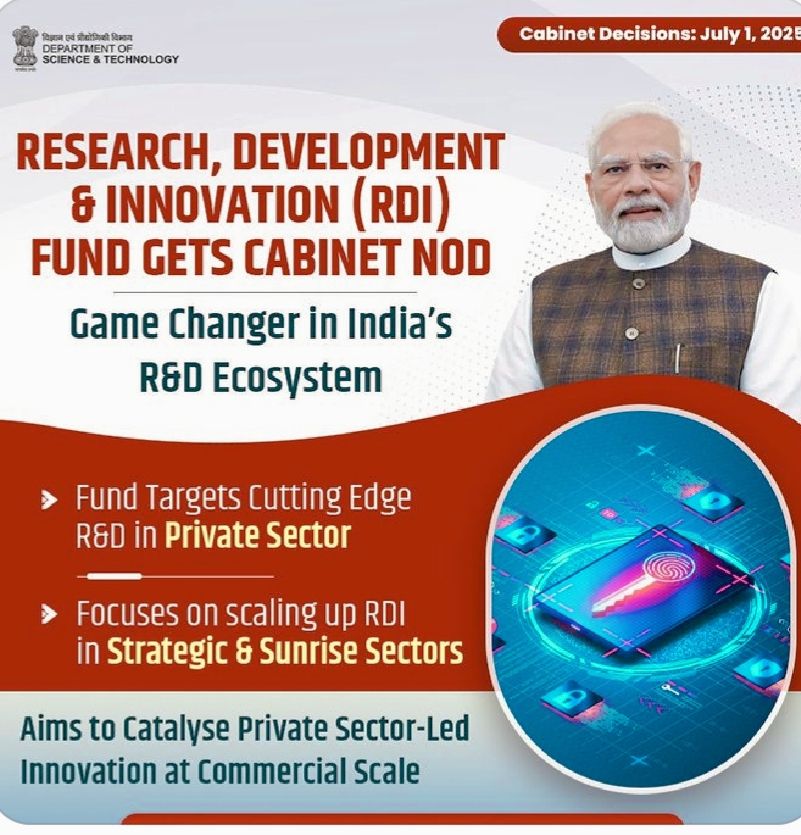
    In the whispering labyrinths of the Godavari delta, a sleeping giant stirs. Konaseema — lush, uncut, almost bashful in its beauty — waits to be seen, not merely admired. It is a place where backwaters curl like silver threads across endless green, where temples meet the tides in a delicate ballet, and where culture, nature, and spirit intermingle with an innocence lost to many tourist-worn lands. If Kerala is the queen of backwaters, Konaseema is the empress that forgot her own coronation.

    The numbers are staggering, the potential even more so. Over 120 kilometers of navigable waterways snake through the region, seven majestic islands sit like emeralds on blue velvet, and a dozen scenic creeks beg for houseboats to glide over them. The Coringa mangroves, India’s second-largest, hold secrets whispered by hundreds of bird species. Hope Island patiently shelters fragile turtle hatchlings. All the elements of a natural wonderland exist — yet they lie wrapped in obscurity, dimmed by silence and administrative indifference.

    Today, Konaseema’s infrastructure looks more like a rough sketch than a masterstroke. No dedicated tourist ferries crisscross the waters. The jetties are functional but far from spectacular. Only three starred hotels speckle the vast canvas. Luxury houseboats, the icons that define Kerala’s allure, are practically non-existent here. The backwaters teem with stories waiting to be told, but without the vessels, guides, and global attention that can weave them into living legends.

    Meanwhile, the environment faces its own siege. Illegal fishponds carve up the mangroves. Eight tons of plastic slither into the waterways daily, choking life at its roots. Tourism, where it exists, buzzes uncontrolled, with motorboats disturbing delicate aquatic ecosystems. And worse still, the efforts to build a unified identity — a Konaseema that the world recognizes, loves, and flocks to — remain fractured, lost between government departments that act like estranged siblings rather than partners in a shared dream.

    But the story need not end in waste and regret. In fact, it can leap — gloriously, ferociously — toward transformation. If Kerala could sculpt its brand from humble beginnings to global adoration, so can Konaseema. And faster.

    The roadmap is clear, ambitious, and wildly possible. Start with five world-class jetties that blend eco-sensitivity with architectural brilliance. Subsidize a fleet of 50 solar-powered luxury houseboats — not noisy polluters, but floating sanctuaries. Install trash barriers that intercept waste before it poisons the heart of the waterways. Birth a brand — sleek, global, digital — a “Konaseema Backwaters” app where bookings, virtual reality tours, and cultural events flow into the palm of every smartphone user on Earth.

    And then, push further. Imagine floating cafés at Vodalarevu where the morning mist and strong coffee mix into poetry. Night kayaking under bioluminescent stars where every paddle stroke births constellations in the water. Picture traditional Kuchipudi dances performed under full moons on open houseboat stages. Think of village homestays, where the scent of fresh paddy, coconut curries, and folklore make every tourist a lifelong storyteller.

    Adventure, too, will find its voice — zip-lining through the mangroves of Coringa, river surfing at Narsapur’s wild bends. In time, a UNESCO Biosphere tag for Coringa could anchor Konaseema firmly on the global eco-tourism map. An international cruise terminal at nearby Kakinada could flood the delta with seekers of beauty and peace. Even a Konaseema Biennale, an art festival afloat on houseboats, could redefine India’s cultural frontier.

    To build this miracle demands money, yes — but also vision and audacity. Central tourism schemes, PPP models, CSR investments from oil giants like ONGC and HPCL — the funds exist, if summoned with conviction. Community participation, Kerala’s secret weapon, must become Konaseema’s beating heart too. Train locals, protect mangroves with iron resolve, regulate houseboats with emission norms sharper than any Green Protocol.

    The targets must be set with ruthless optimism: 10 lakh tourists annually by 2030, 5,000 luxurious hotel rooms, 35,000 new jobs, and a stay duration tripled. Every coconut tree, every ripple on the Godavari, every whiff of banana blossom must be pressed into the service of a larger dream.

    But dreams without urgency wilt. Immediate steps must be taken: a District Collector-led task force, a pilot “Godavari Riviera” stretch at Dindi as the showcase, and an aggressive investor roadshow blitz across Mumbai and Dubai.

    Konaseema is not competing with Kerala merely in backwaters; it is competing in imagination, in willpower, in the ability to translate untouched rawness into world-class wonder. The time to act was yesterday. The second-best time is today.

    Because somewhere between the whispering paddy fields and the gleaming tides, a forgotten Eden is awakening. And if we listen — truly listen — we might just hear Konaseema’s heartbeat racing toward destiny.

    Visit arjasrikanth.in for more insights

←Previous Page
1 … 24 25 26 27 28 … 135
Next Page→

Blog at WordPress.com.


Loading Comments...
 

    • Subscribe Subscribed
      • SOCIAL PERSPECTIVES
      • Join 99 other subscribers
      • Already have a WordPress.com account? Log in now.
      • SOCIAL PERSPECTIVES
      • Subscribe Subscribed
      • Sign up
      • Log in
      • Report this content
      • View site in Reader
      • Manage subscriptions
      • Collapse this bar