Skip to content
    • About

SOCIAL PERSPECTIVES
  • 🥚“The Great Indian Eggquake: A Quiet Sector Became the New Barometer of Economic Stress”🥚

    November 27th, 2025

    Unpacking the Volatility of a Nutrition Powerhouse

    India’s egg market—long perceived as a predictable, even unremarkable corner of the livestock economy—is now experiencing a seismic shift. Rising benchmark prices across major poultry belts have opened a window into deeper structural tensions: supply fluctuations, feed shocks, volatile weather patterns, shifting consumption trends and an increasingly outdated policy framework. With over 14,000 crore eggs produced annually, and a single southern cluster accounting for nearly 90% of India’s exports, price movements are no longer agricultural footnotes; they are indicators of systemic stress within one of the nation’s most nutrition-critical and employment-intensive sectors. What looks like a modest uptick at the retail counter is often a symptom of a much larger and more complex disruption.

    To appreciate the present churn, it is essential to revisit the historical arc of India’s egg economy. In the 1970s and early 1980s, poultry farmers struggled under severe distress. Feed prices surged by over 250%, traders manipulated markets with ease, and predatory stockpiling became an unchecked practice. Thousands of small farmers collapsed under the weight of arbitrary price-setting and exploitative intermediaries. It was against this backdrop that a pathbreaking collective price-discovery platform emerged in 1982—a farmer-led, cooperative-style mechanism aimed at stabilising markets and enhancing bargaining power. For decades, this institution provided predictability, ran nationwide consumption campaigns, and created a unified producer voice. Yet, regulatory scrutiny ensured the platform remained advisory rather than mandatory, leaving farmers exposed to the full turbulence of market forces.

    Today’s price rise must be seen through this layered institutional history. The most immediate trigger is the sharp spike in feed costs, especially maize. Fungal contamination, cyclonic moisture conditions and interstate supply disruptions have sent maize prices climbing sharply. Given that feed accounts for nearly 70% of total production costs, even minor supply shocks multiply into major viability concerns. Production this year may have fallen by 7–10%, even as steady consumption growth tightens the supply–demand balance. Seasonal surges between October and December—driven by bakeries, confectioners, and festival-linked manufacturing—can add 20–30 lakh eggs per month to national demand. Despite retail prices inching upwards, farmer margins remain fragile: an egg costs roughly ₹4.50–₹4.75 to produce, while selling only marginally above ₹6. Profitability remains wafer-thin; volatility defines reality.

    Yet the structural pressures run deeper than feed or seasonality. India’s egg economy is an intricate web linking backyard farmers, commercial layer units, hatcheries, aggregators, transporters, cold-chain operators and processors. Weak aggregation systems, poor cold-chain penetration, inconsistent grading and limited mechanised processing lead to significant post-harvest losses and quality gaps. Adding to the complexity are periodic disease outbreaks—especially avian influenza—which trigger culling, impose internal movement restrictions, and invite international trade barriers. Unlike countries such as the US, Japan or the Netherlands that employ preventive vaccination, robust surveillance and high-biosecurity protocols, India largely follows a reactive disease-control model.

    Limited uptake of HACCP, traceability frameworks and welfare norms further constrains export competitiveness.

    Reimagining the egg sector’s future requires structural reforms paired with targeted interventions. Stabilising feed economics must be the foremost priority. With little access to hedging tools or commodity futures, farmers remain unprotected from feed shocks. Crisis-year MSPs for maize, feed insurance schemes, or long-term procurement contracts can offer predictable input costs. Simultaneously, the processing ecosystem needs urgent modernisation. India vastly under-utilises its potential to produce liquid eggs, pasteurised products and egg powder—high-value, long-shelf-life commodities with substantial export appeal. Existing frameworks like the Animal Husbandry Infrastructure Development Fund (AHIDF) can be leveraged to build aggregation centres, grading hubs, cold-chain systems and processing plants.

    Food safety, disease resilience and traceability need an equally ambitious overhaul. A national roadmap for targeted poultry vaccination, zonal disease-control protocols, and real-time surveillance—drawing from European best practices—can sharply cut outbreak-related losses. Digital traceability systems such as blockchain-enabled supply maps or QR-based tracking can boost consumer trust and open premium markets. Sustainability, too, must enter the core of sectoral planning. As global buyers tighten welfare norms, structured transitions toward improved housing systems, renewable energy use, waste reduction and manure management will become essential for competitiveness.

    Ultimately, the egg is far more than a dietary staple. It is a pillar of rural livelihoods, a vital input for school nutrition programmes, a driver of agro-industrial linkages and a core export asset. Addressing today’s vulnerabilities—feed shocks, disease exposure, weak processing infrastructure, fragmented value chains and inadequate standardisation—can transform India’s vast production base into a resilient, high-value and globally competitive egg economy. With strategic policies, coordinated industry efforts and forward-looking investments, the present turbulence can evolve into a powerful opportunity. India now stands on the brink of turning its current egg-sistential moment into a long-term trajectory of strength, stability and nutritional empowerment.

    Visit arjasrikanth.in for more insights

  • From Milking Volumes to Milking Value in a Billion-Litre Economy

    November 26th, 2025

    White Gold 2.0: The Milky Makeover of India’s Dairy Empire

    India’s dairy industry—long celebrated as the backbone of rural prosperity and nutritional self-sufficiency—is now entering a decisive new phase. The country, which contributes nearly one-fourth of the world’s milk supply, consumes more than a billion litres of milk every single day. What was once an agrarian success story built on cooperative models has evolved into a vast, layered ecosystem of farmers, processors, logistics networks, and brand-driven enterprises. Yet beneath this massive scale lies a story of strain, transformation, and opportunity—where climate pressures, consumer evolution, and the relentless pursuit of value addition are rewriting the script of India’s “white revolution.”

    The financial performance of leading private dairies tells a revealing story. Some firms are posting record-breaking revenues and soaring profits, while others struggle with rising costs and shrinking margins. This uneven growth is no accident—it mirrors deep structural differences in regional sourcing, product portfolios, and operational agility. Milk, deceptively simple in appearance, is an extraordinarily complex commodity—its economics swayed by biological cycles, weather volatility, and logistical precision.

    Traditionally, the second quarter of every financial year marks the “lean season” for milk production. Cattle yields dip in the scorching summer and monsoon months. But this year, nature’s rhythm was violently disrupted. Torrential rains and flooding across multiple states damaged fodder supplies, obstructed transport routes, and cut off milk collection in affected zones. Producers in these regions saw procurement costs spike by nearly six percent compared to last year, but most could not fully pass the burden to consumers. By contrast, companies with diversified procurement networks—spanning multiple climatic regions—managed to sustain steady supply chains and shield their bottom lines.

    This evolving landscape has catalysed a decisive shift from volume to value. The rise of value-added products (VAPs)—curd, paneer, cheese, butter, ice cream, high-protein beverages—has become the new frontier of dairy economics. These products yield margins several times higher than liquid milk and are transforming how companies design their strategies. Many dairies are now investing heavily in modern processing plants, packaging innovation, and cold-chain logistics. For some, VAPs already contribute over half of total revenues, providing insulation against the volatility of raw milk prices.

    Government policy has played an enabling role in this transformation. The rationalization of GST rates—from 12% to 5% on products like butter and cheese—has boosted retail competitiveness, while the exemption of paneer from GST has triggered an urban demand surge. Parallelly, the government’s continued investment in rural dairy infrastructure—through bulk milk coolers, cooperative strengthening, and digital payment systems—has helped preserve the participation of millions of smallholders who form the bedrock of India’s dairy value chain.

    Yet, the challenges are formidable. Climate change has begun to cast a long, destabilizing shadow over the sector. Rising temperatures, erratic rainfall, and fodder scarcity are eroding yields and elevating animal stress levels. Simultaneously, global butter shortages and export pull have pushed up domestic cream extraction, constraining the availability of raw milk for daily consumption. Smaller dairies, with limited financial reserves and narrow procurement bases, are especially vulnerable to these shocks—struggling to stay competitive in a market where scale and stability increasingly dictate survival.

    In this high-stakes environment, brand trust has emerged as the sector’s most valuable currency. Milk is an intimate purchase, deeply tied to perceptions of purity, safety, and consistency. Consumers exhibit remarkable brand loyalty—making market share gains hard-earned and slow. Established brands leverage decades of credibility, vast distribution networks, and emotional connect to command a premium. New entrants, on the other hand, must burn capital on advertising, sampling, and retailer incentives to carve even a modest niche. In many ways, brand equity in dairy has become as precious as the milk itself.

    Looking forward, the future of India’s dairy sector rests on three interdependent pillars. The first is resilience—adopting climate-smart practices, improving cattle breeds, and ensuring feed self-sufficiency to reduce environmental vulnerability. The second is value diversification—deepening investment in innovation-led, high-margin products such as probiotic drinks, whey proteins, and fortified milk variants. The third is technological integration—using digital monitoring tools, IoT-enabled cold chains, and real-time analytics to enhance transparency, efficiency, and profitability.

    India’s dairy landscape today mirrors the broader economy: vast, dynamic, and delicately balanced. The same industry that once transformed rural livelihoods through Operation Flood must now reinvent itself for a globalized, sustainability-driven future. The next revolution in dairy will not be about producing more milk—it will be about producing smarter milk.

    If the twentieth century made India the world’s milk bowl, the twenty-first will decide whether it becomes the world’s innovation hub for dairy. Turning “white gold” into an engine of sustainable growth will demand a fusion of tradition and technology—of the farmer’s resilience and the entrepreneur’s vision. For a nation that quite literally runs on milk, the challenge is clear: to ensure that this lifeline of the Indian economy remains profitable, resilient, and future-ready.

    Visit arjasrikanth.in for more insights

  • 🔥“Three Continents, One Thunderclap: IBSA’s African Debut Shattered the Old Global Order”🔥

    November 25th, 2025

    A New Southern Geometry of Power

    The first-ever IBSA (India Brazil South Africa) summit on African soil was not simply a diplomatic gathering—it was a geopolitical rupture, a moment when the Global South stopped whispering and began speaking with unmistakable force. In South Africa, Prime Minister Narendra Modi delivered one of the most uncompromising calls for systemic global reform heard in recent years. What electrified the moment was not just the message, but the symbolism: India, Brazil, and South Africa—three vibrant democracies from three continents—standing shoulder-to-shoulder and demanding fairness from global institutions built in a world that no longer exists. IBSA returned to the world stage not as a nostalgic coalition, but as a strategic counterweight—one that offers democratic legitimacy, Southern solidarity, and a fresh grammar of global governance. Modi’s core message was blunt: reform is not negotiable; it is overdue.

    At the heart of this mission lies the glaring democratic deficit in the United Nations Security Council. The UNSC remains structurally fossilized in the power map of 1945, handing permanent veto power to a group of nations whose primary qualification was victory in World War II. Modi underscored the absurdity: IBSA nations represent more than one-fifth of humanity, wield immense economic and technological capability, and yet remain excluded from permanent membership.

    This is not historical inertia; it is systemic exclusion. And the price is paid by the developing world, whose security concerns—from proxy conflicts to pandemics—rarely shape the Council’s agenda. Modi asserted that unless the UNSC reforms, it will continue to speak for the world while being increasingly detached from the world.

    On terrorism, Modi’s critique was equally sharp. He denounced the selective global approach where nations categorize threats based on convenience rather than principle. His proposal for an institutionalized NSA-level dialogue among IBSA nations marked a strategic shift—transforming IBSA from a developmental forum into a security coalition capable of intelligence coordination and real-time operational cooperation. It was a signal that IBSA is ready not only to debate global threats but to confront them.

    Modi then expanded the horizon with the proposal of an IBSA Digital Innovation Alliance—a platform designed to democratize digital public infrastructure. India’s success story with UPI, CoWIN, Aadhaar, and cybersecurity frameworks becomes a blueprint for the Global South. Instead of renting expensive proprietary Western digital systems, developing nations can leapfrog using affordable, secure, open-source platforms. In this vision, digital cooperation becomes a tool of empowerment—not dependence—and positions India as the architect of a technology ecosystem rooted in equity.

    The conversation turned futuristic as Modi addressed the risks and promise of artificial intelligence. He called for a human-centric AI ecosystem, warning of the vulnerabilities unregulated generative AI poses for developing nations—from misinformation cascades to data colonialism. His proposal for an IBSA AI Summit next year signals a bold ambition: IBSA wants to help shape the ethical, regulatory, and technological norms of AI before the great powers monopolize them. For the Global South, this is not just desirable—it is essential.

    Climate resilience formed the next pillar of his agenda. Modi highlighted IBSA’s outreach in 40 nations and proposed a partnership focused on climate-resilient agriculture. With droughts, floods, and unpredictable climate events hitting the Global South hardest, this initiative aims to boost food security, strengthen agricultural adaptation, and safeguard livelihoods across tropical regions. IBSA’s shared experiences—India’s precision agriculture, Brazil’s agri-tech innovations, South Africa’s climate modelling—can build a Southern template for resilience. The timing of the summit gives it historic weight. Four consecutive G20 presidencies are being held by Global South nations—three of them IBSA members.

    Modi called this an unprecedented diplomatic alignment, a once-in-a-generation opportunity to rewrite global governance, advance development justice, and secure a more humane globalization. Even as global attention briefly drifted to the US absence from the meeting—linked to Washington’s displeasure over the treatment of an NRI diplomat in Kenya—IBSA kept its focus clear: this was a Southern stage, a Southern moment, and a Southern voice rising.

    The African IBSA summit was not just a policy event—it was a declaration of intent. A message that the Global South will no longer wait politely for inclusion. It will lead, innovate, and define the global order on its own terms. India, Brazil, and South Africa have signalled that their partnership is not merely about cooperation—it is about transformation. And the echo of this moment will travel far beyond Pretoria, into the very architecture of the world order they seek to rebuild.
    Visit arjasrikanth.in for more insights

  • “Docked to Dominate:  India’s Ports Are Becoming the New Brainpower of Global Trade”

    November 24th, 2025

     From ancient sea routes to AI-driven superhubs, India’s maritime gateways are not just moving cargo—they’re engineering a revolution in economic geopolitics.

    In the ever-evolving theatre of global trade, Indian ports have emerged from the shadows to take centre stage, becoming pivotal anchors of economic transformation. Accounting for nearly 95% of the country’s trade by volume and 70% by value, these maritime gateways are no longer just conduits for cargo—they are strategic assets reshaping India’s global standing. As aptly stated by Anurag Bansal, ports are the pulse points of economic momentum, directing trade flows, investments, and international integration.

    India’s maritime journey dates back over four millennia, when ancient ports like Lothal connected the subcontinent to Mesopotamia through flourishing sea routes. Over time, especially during colonial rule, a state-controlled port network emerged to serve a primarily inward-looking economy. However, the liberalisation wave of the 1990s catalysed a transformative shift, demanding modernised port systems that could support the pace and complexity of global commerce. The introduction of the landlord port model allowed private entities to lease terminals and infuse capital into port infrastructure, while the government retained strategic land ownership—ushering in an era of public-private synergy.

    The enactment of the Major Port Authorities Act in 2021 further propelled this momentum, empowering port authorities with autonomy to constitute professional boards, take swift decisions, and function with a commercial mindset. Jawaharlal Nehru Port in Navi Mumbai epitomises this shift, with its container terminals now fully operated by private players—streamlining efficiency and attracting significant investment. The transition to this model of governance reflects India’s maturing port strategy, aligning it with global standards.

    Today’s Indian port resembles a high-functioning economic ecosystem more than a traditional harbour. These port complexes are outfitted with rail corridors, customs facilities, refrigerated warehouses, and digital command centres, enabling seamless cargo handling across multiple verticals. India operates 13 major ports under central administration, and more than 200 non-major ports under state governments and private operators. Private-sector giants such as Mundra, Pipavav, and Krishnapatnam have redefined operational benchmarks, and in FY 2024–25, Indian ports collectively handled an impressive 1,423 million metric tonnes of cargo—720 MMT through major ports and 703 MMT via non-major ones. From coal and crude oil to automobiles and electronics, Indian ports serve as arteries to virtually every sector of the economy.

    Geography plays its part, with the western seaboard offering deep waters and direct access to vital shipping lanes. Yet the eastern coastline, often susceptible to cyclones and infrastructural lag, is catching up through focused investment. States like Andhra Pradesh and Tamil Nadu are leading the charge in upgrading their maritime infrastructure. Still, challenges persist. About 25% of India’s transshipment cargo is routed through foreign ports like Colombo, Singapore, and Jebel Ali due to insufficient draft and operational limitations at home. This external dependency adds to logistics costs and delays, weakening India’s competitive position in global trade chains. New deepwater ports like Vizhinjam in Kerala and Vadhavan in Maharashtra are set to correct this imbalance, aiming to transform India into a transshipment hub in its own right.

    Yet for all the progress, several anchors still weigh down performance. Most Indian ports have limited draft depths of 10–14 metres, preventing access to next-generation mega vessels, which require 16–18 metres. Ship turnaround time in Indian ports averages 2.5 days, well behind the global standard of under a day. Poor last-mile connectivity, bureaucratic red tape, and congested hinterland corridors contribute to India’s high logistics costs, which stand at around 14% of GDP—almost double that of developed nations.

    Efforts to overcome these structural inefficiencies are gaining traction. The Sagarmala and Bharatmala programmes are integrating ports with multimodal logistics networks—roadways, railways, and inland waterways—to enhance connectivity. Modernisation is also being pursued on the digital front. The implementation of the Port Community System (PCS), RFID-based cargo tracking, and AI-driven analytics are transforming operations from analog bottlenecks to smart logistics. Blockchain is being introduced to ensure transparent and tamper-proof documentation, accelerating customs clearance and reducing pilferage.

    Meanwhile, the vision for green ports is materialising across India’s coastline. From electrifying cranes and transitioning to solar and wind energy, to establishing waste treatment facilities and introducing green hydrogen export zones at Paradip and Kandla, sustainability is becoming a central tenet of port planning. Complementing these efforts are Free Trade Warehousing Zones, cruise terminals, and Ro-Ro ferry services, all part of an expanded economic blueprint that transcends traditional cargo functions. Initiatives like the proposed Leather Park in Andhra Pradesh and the port-led industrial clusters under VCIC and CBIC corridors illustrate the expanding mandate of ports as engines of regional industrialisation and employment generation.

    India’s ports are not merely physical gateways—they are geopolitical instruments, economic multipliers, and symbols of national ambition. Their continued evolution demands a relentless focus on deregulation, digitalisation, and global alignment. The future lies in transforming these harbours into high-throughput, low-latency trade enablers, capable of adapting to the increasingly decentralised, data-driven logistics landscape.

    The trajectory is unmistakable. India’s ports are shedding their traditional roles and assuming a broader purpose—as strategic assets that can unlock trade competitiveness, attract foreign investment, and elevate India’s role in global supply chains. The course ahead requires bold reforms, sustained capital infusion, and seamless policy coordination. But as the waves of global commerce grow stronger, India’s ports are not bracing for impact—they’re rising with the tide.

    Visit arjasrikanth.in for more insights

  • THE GREAT ENERGY TRAFFIC JAM: The World Built a Renewable Revolution Without Building the Roads to Run It

    November 22nd, 2025

     The Global Grid Crisis That Threatens the Clean-Energy Century

    The global energy system is undergoing the most seismic transformation since the invention of electricity itself. Solar deserts glitter like new industrial continents, offshore wind farms carve out their own skylines, and giga factories roar with the unstoppable momentum of a world racing toward electrification. Yet beneath this spectacle of innovation lies a contradiction so grave that it threatens the architecture of modern civilisation: the world is generating more electricity than ever—but lacks the wires to move it. Transmission lines, the silent steel lifelines of modern society, have become the single biggest bottleneck between humanity and a sustainable future. We are producing power but failing to deliver it, building generation without building the grid.

    The International Energy Agency’s latest World Energy Outlook delivers the most sobering verdict yet. The dream of limiting global warming to 1.5°C is essentially gone. Even the most optimistic scenario points to 1.65°C, while realistic pathways show global temperatures rising between 2.5°C and 2.9°C by 2100. The core of the crisis is brutally simple: electricity demand is exploding faster than our ability to decarbonise, and the infrastructure meant to support this transition is buckling under its own neglect. We are running a marathon between clean power and climate disaster—and the grid is tripping before the finish line.

    Global electricity demand is surging at a pace unimaginable even five years ago. Consumption has exceeded earlier forecasts by 4% in just one year. Air conditioners, electric vehicles, hyperscale industrial clusters, and—most dramatically—AI-powered data centres are devouring power with unprecedented intensity. By 2025, the world will invest more in data centres than in oil exploration. A single advanced AI data centre in the U.S. now consumes as much electricity as 200,000 homes. Clusters of these centres in the U.S., China, and Europe are triggering localised energy crises, forcing utilities to weigh the absurd question: should power go to factories, homes, or algorithmic training?

    Yet paradoxically, renewable energy production is soaring. Solar and wind factories are expanding so rapidly that many operate at barely half their designed capacity. China has built a green-manufacturing juggernaut—dominating more than 70% of refining capacity for 19 of the world’s 20 critical energy minerals. In some minerals, China controls 99% of processing. The global energy transition, long advertised as the path to decentralised independence, risks replacing dependence on oil with dependence on minerals.

    But the real crisis does not lie in manufacturing or minerals. It lies in the wires. Since 2015, global investment in power generation has soared nearly 70%, reaching almost $1 trillion annually. Yet investment in transmission and distribution has stagnated at around $400 billion. A decade ago, utilities spent 60 paise on grids for every rupee invested in generation. Today they spend less than 40. The consequences are staggering. Nearly 2,800 gigawatts of renewable capacity—more than India’s entire electricity system—now sit idle, waiting for grid connections. In parts of the U.S., new data centres and industrial units wait seven years for access to power.

    The world is producing clean energy it cannot deliver. The grid has become the chokepoint of global progress. To meet rising demand and decarbonisation targets, the world must build 110 million kilometres of new transmission lines—enough to wrap around the Earth 2,750 times—and modernise another 20 million kilometres of ageing networks. This undertaking requires $650 billion every year until 2035, even as the power sector faces a generational workforce crisis. For every young engineer entering the grid sector, 1.4 senior engineers retire, taking with them decades of irreplaceable expertise. Without solving this human-capital collapse, even the best-laid clean-energy plans will falter.

    Amid this global upheaval, India is emerging as the epicentre of the next energy wave. With China’s energy expansion slowing, India is set to become the largest driver of new electricity demand. Rising car ownership, booming industrialisation, AI-driven digitalisation, and an increasingly electrified lifestyle are reshaping the country’s energy trajectory. By 2030, India alone will build 200,000 km of new transmission lines, enough to circle the planet five times. By 2035, renewables will provide more than half of India’s electricity even as total demand surges by 80%. Supported by massive grid-scale battery storage and flexible transmission corridors, India is positioning itself as the world’s most dynamic clean-energy laboratory.

    But India—and the world—now stands at an inflection point. Transmission lines can no longer be treated as mere infrastructure; they must be recognised as the core architecture of the green transition. Steel towers, copper pathways, transformers, and digital grid intelligence are no longer supporting actors—they are the protagonists of the clean-energy era. Humanity’s future will not be determined by how much electricity we can generate but by how efficiently we can move it.

    If generation is the heart of the world’s energy system, transmission is its lifeblood. And right now, the world is bleeding energy it cannot use—an avoidable, urgent tragedy demanding immediate global action.

    Visit arjasrikanth.in for more insights

  • The Silent Siege: India’s Kidneys Are Sounding the Alarm Before the Heart Stops Listening 

    November 21st, 2025

    When One in Ten Indians Lives with Failing Kidneys, It’s No Longer a Hidden Crisis — It’s a National Emergency Waiting to Be Named 

    India’s next major health crisis is unfolding quietly — inside its own people. Chronic Kidney Disease (CKD), once a peripheral concern, has now become a national emergency. According to the Institute for Health Metrics and Evaluation (IHME), India ranks second globally in CKD prevalence, with 138 million cases in 2023, just behind China’s 152 million. That means one in every ten Indians is living with damaged kidneys, many without even realizing it. This silent epidemic has placed India on the brink of a public health catastrophe.

    Globally, CKD was responsible for 1.5 million deaths in 2023, ranking as the ninth leading cause of mortality. In South Asia, it accounts for 16% of the total disease burden, exerting immense pressure on healthcare systems already burdened by diabetes and hypertension. CKD’s insidious nature allows it to progress undetected until irreversible damage occurs, earning it the label of a “silent epidemic.” But the scale and speed of its growth suggest something even more serious — a silent catastrophe that is already reshaping India’s health landscape.

    The IHME study identifies CKD as a “risk multiplier” — a disease that accelerates others. In 2023, it was linked to 12% of all cardiovascular deaths, making it the seventh leading cause of heart-related mortality worldwide. Far from being an isolated illness, CKD magnifies the dangers of diabetes and hypertension, transforming them into deadlier killers. India’s urbanization, sedentary lifestyles, and dietary transitions have only worsened this connection, making CKD not just a byproduct of modern life but one of its most dangerous consequences.

    Dietary and lifestyle patterns play a pivotal role in this crisis. Traditional Indian diets — once rich in fiber, lentils, and vegetables — are being rapidly replaced by high-salt, processed foods. Combined with rising obesity, physical inactivity, and stress, this has created a perfect storm for kidney damage. For low-income populations, the situation is grimmer: limited access to fresh food and healthcare means millions are unknowingly advancing toward renal failure. The country’s nutritional shift is quietly writing a long-term prescription for organ collapse.

    Yet, there remains a narrow window for intervention. Most CKD cases in India are detected at early stages, where timely diagnosis and management can slow or halt progression. Regular health screenings, strict control of diabetes and hypertension, and awareness about dietary habits could prevent millions from entering the costly phase of End-Stage Renal Disease (ESRD). Dialysis and kidney transplants — often costing ₹30,000 a month or more — remain beyond reach for most families, making prevention not just essential but economically non-negotiable.Ultimately, CKD is more than a medical crisis — it is a mirror reflecting India’s health inequity. The urban elite experiment with advanced therapies like GLP-1 agonists for metabolic protection, while the poor struggle to access basic tests. The path forward demands urgent investment in public education, low-cost screening, and integration of kidney care into national programs for diabetes and hypertension. India’s next great health battle won’t be fought in hospitals — it will be fought in homes and kitchens, against the invisible enemies of salt, sugar, and neglect. The real question isn’t whether India can act, but whether it can afford not to.

    Visit arjasrikanth.in for more insights

  • Sheikh Hasina’s Death Sentence Reopens a Region’s Oldest Wounds

    November 20th, 2025

     Verdicts, Vengeance, and the Vanishing of Democracy: South Asia’s Never-Ending Political Thriller
     

    South Asia has once again been dragged back to its most familiar—and most frightening—political script. The death sentence handed to former Bangladesh Prime Minister Sheikh Hasina has not merely ignited debate; it has reopened the region’s deepest psychological vaults.

    Convicted of crimes against humanity linked to the 2024 uprising, tried in India, and now entangled in a cross-border diplomatic storm, Hasina’s fate sits at the intersection of political loyalty, national trauma, and geopolitical fault lines. For many Bangladeshis, the verdict signals long-delayed accountability; for others, it is a chilling replay of a political culture where justice is inseparable from power. For India, her extradition request poses one of the most challenging diplomatic decisions in recent years.

    South Asia’s political history has never followed a peaceful arc. It is written not in ballots but in bullets, coups, trials, and untimely deaths. Pakistan and Bangladesh, in particular, resemble a political thriller that no citizen wishes to endure but cannot escape. The assassination of Pakistan’s first Prime Minister Liaquat Ali Khan in 1951 set a precedent that leadership in the region is rarely relinquished voluntarily. Power is seized, sabotaged, or eliminated. Zulfikar Ali Bhutto’s downfall in 1979—through a military coup followed by a judicial execution—remains one of the starkest examples of how legality can be weaponised. His daughter, Benazir Bhutto, was later assassinated in 2007, reinforcing Pakistan’s position as a polity where political violence is not episodic—it is structural.

    Bangladesh’s political legacy runs parallel but carries its own tragic intensity. The 1975 assassination of Sheikh Mujibur Rahman, the nation’s founding father, along with most of his family, shattered the country’s moral centre. Countercoups, ideological wars, and political vendettas defined the decades that followed. President Ziaur Rahman’s assassination in 1981 further entrenched the belief that power in Bangladesh is a battlefield, not a constitutional office. Even as democracy returned in the 1990s, the retributive culture deepened. The International Crimes Tribunal, while seen by many as a long-overdue correction of 1971’s horrors, became a lightning rod of partisanship. Executions of opposition leaders strengthened perceptions that justice was selective and political in intent.

    Against this backdrop, Sheikh Hasina’s death sentence becomes another chapter in a narrative defined more by revenge than reconciliation. As the daughter of an assassinated leader and the country’s longest-serving Prime Minister, her political journey is inseparable from Bangladesh’s collective trauma. For her supporters, the verdict reflects political targeting. For her critics, it is a long-delayed reckoning. For the region, it is a flashing red signal of institutions once again bending under the weight of politics.

    Why do these cycles persist? Because South Asian politics is existential, not ideological. Institutions remain fragile; personalities dominate; and power transitions are treated as life-or-death contests. In Pakistan, the military has entrenched itself as the final arbiter. In Bangladesh, the Awami League–BNP rivalry has hollowed out trust in electoral and judicial processes. Courts become stages for political combat, not impartial adjudication. Losing power is perceived not as a temporary democratic verdict, but as annihilation. As long as these structural distortions remain, the region remains hostage to its past.

    But alternatives exist. Other nations once trapped in similar cycles have rebuilt themselves through institutional reform, public accountability, and political courage. Germany fortified its democracy through strict constitutionalism. South Africa used truth-telling, not vengeance, to rebuild fractured society. Countries like Colombia and Northern Ireland showed that even long-standing internal conflicts can be softened through dialogue and restorative frameworks. Pakistan and Bangladesh can follow similar paths—but only if they stop recycling old hostilities and start rewriting the rules.

    South Asia’s future demands leaders who exit office, not the world, when times change; verdicts that heal, not harden divisions; institutions that outlast personalities; and political cultures where losing an election does not mean losing existence. For Bangladesh, how the Hasina verdict is handled will determine whether it becomes a step toward accountability or another scar in a long line of political tragedies. For India, the extradition dilemma will test both principle and partnership.

    The next generation of South Asians deserves a politics where headlines celebrate progress, not death sentences; where hope outshouts hysteria; where democracy is not theatre but trust. Breaking the cycle will be painful—but perpetual instability is far costlier. South Asia cannot afford another chapter of blood-soaked politics. It deserves a new narrative—one written not with vengeance, but with vision.

    Visit arjasrikanth.in for more insights

  • Decibels of Devotion: The Age of High-Voltage Faith in India 

    November 19th, 2025

    From cultural vibrance to civic strain,  India’s booming religiosity is redefining coexistence. 

    India has always lived its religion in full view of the world. The fragrance of morning incense drifting across neighbourhoods, the azaan rising over rooftops, and bhajans echoing through public parks have long defined a civilisation that instinctively blends the sacred with the social. Yet, over the past decade, public religiosity has undergone a marked escalation. Navratri dances erupting in airport terminals, Sikh Guru Jayanti processions bringing major avenues to a halt, azaans broadcast on competing loudspeakers, and all-night jagrans vibrating through densely packed colonies reflect a new cultural moment—one where private devotion increasingly manifests as high-volume assertion. Beneath this amplified soundscape lies not only contestation but also a profound human impulse: the need of communities to express identity, maintain continuity, and seek belonging in a rapidly shifting society.

    Public celebration of faith is not new to India, but the scale, frequency, and technological intensity of these expressions have changed significantly. Hindu festivals—from Navratri to Diwali—have expanded into citywide spectacles powered by elaborate lighting, large stages, and high-decibel sound systems. The proliferation of visual symbols such as the “angry Hanuman” decal signals a shift from inward devotion to outward identity expression. Muslim religious practice has also adapted: many mosques now conduct multiple Friday congregations post-COVID to manage crowds more efficiently—a pragmatic reform that has become routine. In culturally refined Kolkata, neighbourhoods like Raja Bazar and Circus Avenue turn into continuous sound chambers during festivals. These changes reflect not merely heightened piety but broader structural forces—urban density, rising mobility, political dynamics, and evolving economic aspirations.

    However, when religious expression flows unchecked into civic spaces, predictable tensions emerge. Emergency services in Delhi routinely face delays as processions immobilise arterial roads. Noise levels frequently surpass statutory limits, disturbing sleep patterns and harming vulnerable groups such as children, the elderly, and patients recovering at home. The environmental fallout—from cracker-driven pollution spikes during Diwali to waste generated by large gatherings—erodes public health. The clash of loudspeakers from temples and mosques creates an acoustic competition that neither tradition nor law endorses. These challenges are not indictments of faith but of inadequate civic management and diminishing social empathy. Authentic devotion enriches society; it does not suffocate it.

    India’s constitutional framework provides a nuanced guide for navigating these complexities. The right to freely profess, practise, and propagate one’s religion is fundamental, but it is not absolute. It is circumscribed by public order, health, morality, and the rights of others. Judicial interpretation has repeatedly differentiated essential practices from non-essential ones. Loudspeakers, for example, are not intrinsic to any faith tradition, even if they have historically served functional purposes. In an era where every individual has access to personal alarms, clocks, and mobile reminders, the functional necessity for public sound amplification stands significantly reduced. What remains essential is mutual respect—a civic duty as much as a moral obligation in a pluralistic society.

    Yet, the landscape is not without hope. Across India, communities are embracing innovation and self-regulation. Festival committees increasingly adopt eco-friendly practices such as clay idols, symbolic immersions, and low-noise celebrations. “Green Diwali” campaigns have gained remarkable traction. Interfaith dialogues and citizen-led agreements on procession timings and routes have reduced conflict in several cities. These bottom-up efforts demonstrate that coexistence cannot be mandated solely by law; it must emerge from collective negotiation and responsible citizenship. India’s spiritual adaptability—its ability to modernise rituals without eroding their essence—remains one of its greatest civilisational strengths.

    The task ahead is to strike a balance between vibrant public faith and functional civic life. Cities must establish designated celebration zones, deploy technology-enabled sound monitoring, and enforce regulations uniformly across communities. Religious organisations must cultivate sensitivity to shared urban spaces. Individuals, too, have a pivotal role—pausing processions to let an ambulance pass, moderating volume levels, or ensuring festivities do not infringe upon another’s peace. India’s public religiosity is not disappearing, nor should it. But as urban spaces grow tighter and lives more interconnected, the aspiration must be to celebrate responsibly rather than loudly.

    Ultimately, the real test of faith lies not in how dramatically it occupies public space but in how thoughtfully it accommodates others. India’s unique genius has always been its ability to harmonise the expansive with the intimate—to transform a neighbourhood lane into a festival ground while remembering that it is, above all, a shared civic space. If we achieve this equilibrium, we will not merely manage the rise of public religiosity; we will transform it into a global model of pluralistic coexistence.

    Visit arjasrikanth.in for more insights

  • Dry Cities, Fractured Futures

    November 18th, 2025

    Tehran, Cape Town, São Paulo, and Chennai Signal a New Era of Water-Driven Instability

    The global water crisis is no longer a distant environmental concern—it has become one of the defining civilizational challenges of the 21st century. From megacities to mountain villages, from oil-rich states to emerging economies, the world is confronting a profound scarcity that threatens stability, health, and human survival itself. This crisis is not rooted in a single failure but in a convergence of planetary forces: climate volatility, relentless urbanisation, groundwater depletion, and the chronic neglect of water infrastructure. The result is an accelerating wave of “Day Zero” scenarios that are reshaping geopolitics and redefining how nations plan for their futures. As extreme weather tightens its grip and populations expand, the question is no longer whether water scarcity will alter the global landscape, but how deeply it will carve into the social, political, and economic fabric of nations.

    Iran’s unfolding emergency captures the severity of this moment with alarming clarity. Tehran—home to more than ten million people—is teetering on the edge of running out of water, with officials warning that without imminent rainfall the capital’s reservoirs could hit critically low levels within two weeks. What once seemed unthinkable for a city with sophisticated aqueducts and mountain-fed catchments has become a stark reality. Nightly water pressure drops to zero, neighbourhoods endure hours without a drop, and authorities scramble to prepare rationing schedules that may soon become unavoidable. Tehran’s crisis reflects not just a meteorological misfortune but a systemic fragility: aquifers drained faster than they recharge, inefficient distribution networks, and climate patterns so erratic that historical rainfall models have lost meaning. The city’s near-collapse reveals how even well-established urban centres, armed with modern engineering, can be humbled by environmental unpredictability.

    The Iranian experience is echoed across continents. Cape Town came dangerously close to shutting off municipal water supplies in 2018 after a historic drought nearly emptied its reservoirs. São Paulo, one of the world’s largest urban economies, witnessed its main reservoir drop below 5% capacity, forcing emergency rationing and political panic. Mexico City, built upon a drained lakebed, now sinks under its own weight as groundwater extraction accelerates subsidence, shattering pipes and magnifying losses from a crippled distribution system. Beijing, suffering from chronic scarcity, relies on one of the world’s most complex and expensive water-transfer projects to move billions of cubic metres of water from southern China to its parched northern plains. And in South Asia, cities like Chennai—where all four main reservoirs ran dry in 2019—experience recurring cycles of flood and drought so violent and unpredictable that they defy conventional planning tools.

    Across these geographies, the patterns are disturbingly similar. Climate change disrupts rainfall, turning predictable monsoons into chaotic bursts of precipitation that evaporate before they replenish rivers. Explosive urbanisation paves over wetlands and natural recharge zones, leaving aquifers gasping for replenishment. Groundwater is pumped at unsustainable rates—India alone extracts more groundwater than China and the United States combined—pushing water tables deeper each year and forcing households to drill wells that tap deeper, older, and often contaminated reserves. Meanwhile, water infrastructure in many cities is too old or too damaged to cope: leaky pipes lose 30–50% of treated water before it even reaches consumers, meaning vast amounts of energy, investment, and stored water simply vanish into the soil. Pollution adds another layer of stress, contaminating rivers with industrial discharge, untreated sewage, and agricultural chemicals, transforming potential water sources into unusable hazards.

    Yet even amid this bleak landscape, some cities have demonstrated extraordinary resilience through innovation and disciplined governance. Singapore, once water-scarce, reinvented itself through recycling, desalination, rainwater harvesting, and a culture of conservation. Tel Aviv turned wastewater into a national asset, recycling nearly 90% of it for agriculture. Melbourne invested in integrated catchment management and stormwater reuse to buffer against intense droughts. These models show that scarcity is not destiny; strategic planning, investment, and adaptive technologies can bend the trajectory toward sustainability.

    However, what makes today’s water crisis particularly perilous is its intersection with social and political pressures. As supplies shrink and demand rises, inequality widens: affluent neighbourhoods secure private tankers and borewells while poorer communities wait in queues, sometimes for hours, for rationed water. Tensions simmer, protests erupt, and governments scramble to maintain public trust. For nations already burdened by economic stress or political instability, water scarcity acts as an accelerant, deepening divides and fuelling migration, conflict, and insecurity. The spectre of large-scale urban evacuation—now openly discussed in Tehran—was once a scenario reserved for war or natural disaster, not daily governance.

    Ultimately, the water crisis reveals a profound truth: humanity is entering an era where the most fundamental resource for life is under unprecedented threat. Technology can help, governance can mitigate, and public awareness can slow the decline—but without decisive collective action, many more cities will inch toward their own Day Zero. The world must treat water not as an infinite commodity, but as a fragile, finite foundation upon which civilisation rests. In the silence of a dry tap lies the loudest warning of our time—a reminder that the future will belong not to the most powerful or prosperous nations, but to those wise enough to manage the simplest of all elements: water.

    Visit arjasrikanth.in for more insights

  • Bihar’s Ballot Earthquake: A Landslide, a Legacy’s End, and a Warning Shot for a Fragmented Opposition

    November 17th, 2025

     A 202-seat political supernova driven by the silent revolution of women voters and a welfare machine that rewrote India’s electoral physics.

    The Bihar election did not simply produce a winner—it detonated a political moment so powerful that it has redrawn India’s electoral map, voter psychology, and the unwritten rules of political legitimacy. This was not an ordinary mandate. It was a seismic shift delivered with mathematical clarity: an NDA sweep of 202 out of 243 seats, signaling not just approval but a wholesale recalibration of public expectation. The state, often framed through cliches of backwardness and inertia, has instead emerged as the crucible of India’s next political grammar—one authored by the most formidable new force in Indian democracy: the empowered woman voter.

    This election registered a historic 71.6% turnout, the highest since 1951, reflecting not only heightened political participation but a deep societal transformation. The surge in women voters was not a sudden awakening; it was the cumulative effect of two decades of targeted welfare—financial inclusion, SHG support, mobility schemes, maternal health interventions, and neighborhood-level infrastructure that directly improved daily life. These were not abstract government announcements; they were lived benefits. Over time, they cultivated a constituency that evaluates politics through experience, opportunity, and dignity rather than caste loyalties or charisma. When this constituency consolidated, the electoral consequences were tectonic.

    The opposition, despite assembling a broad caste coalition and projecting a youthful leadership face, found itself outpaced on every front. Its reliance on constitutional anxiety, historical grievance, and identity mobilization stood in stark contrast to the incumbent’s results-driven governance pitch. Welfare architecture, delivery efficiency, and booth-level discipline operated for the NDA with the precision of a political machine. The opposition had passion; the NDA had organization. The outcome reflected that asymmetry.

    Even the pre-election controversy over the removal of 47 lakh names from the rolls failed to dent voter confidence. The opposition alleged targeted disenfranchisement, while the Election Commission insisted this was routine cleansing of duplicates and deceased entries. Regardless of political narratives, turnout patterns revealed robust participation across demographic segments. Yet, after the results, sections of the opposition attempted to invalidate the mandate by alleging manipulation, clinging to moral outrage rather than confronting structural weaknesses—weak ground presence, fractured messaging, and an inability to articulate a forward-looking agenda.

    Perhaps the most defining transformation, however, lies in Bihar’s shifting leadership axis. Two political titans who shaped the state for more than thirty years receded simultaneously—one due to age and health, the other constrained by legal and political battles. Their retreat marks the end of an era when Bihar’s politics revolved around towering personalities, volatile alliances, and ideological improvisation. What emerges in their place is a more disciplined, institutional, and nationalized political architecture. Power is now anchored in organizational coherence, welfare efficiency, and a stable leadership structure aligned with the national ruling party. This is not merely generational change; it is a structural re-foundation of political legitimacy.

    Nationally, Bihar’s verdict sends shockwaves far beyond the Ganga plains. It represents a significant setback to the broader opposition’s 2029 strategy, revealing a widening gap between opposition discourse and voter aspiration. Bihar’s demographic edge—median age 22—amplified this shift. Young voters rejected alarmist rhetoric, preferring measurable governance, economic mobility, and delivery credibility. Appeals rooted in constitutional fragility or caste nostalgia simply could not compete with the lived experience of welfare, roads, safety, and economic opportunity. This disconnect underscores the opposition’s steep uphill climb in states where it seeks to defend ground, including Tamil Nadu, Kerala, and West Bengal.

    The Congress, in particular, faces a sobering reckoning. The Bihar outcome exposes its organizational fragility: a weakened cadre network, limited vote-transfer efficiency, internal rigidity, and an outdated ideological narrative ill-matched to contemporary aspirations. Its inability to engage backward classes, women, and youth with a compelling social compact risks accelerating its political marginalization. Without serious structural reform, decentralized leadership empowerment, and a national narrative built around opportunity and governance, its role as a credible anchor in alliances will continue to diminish.

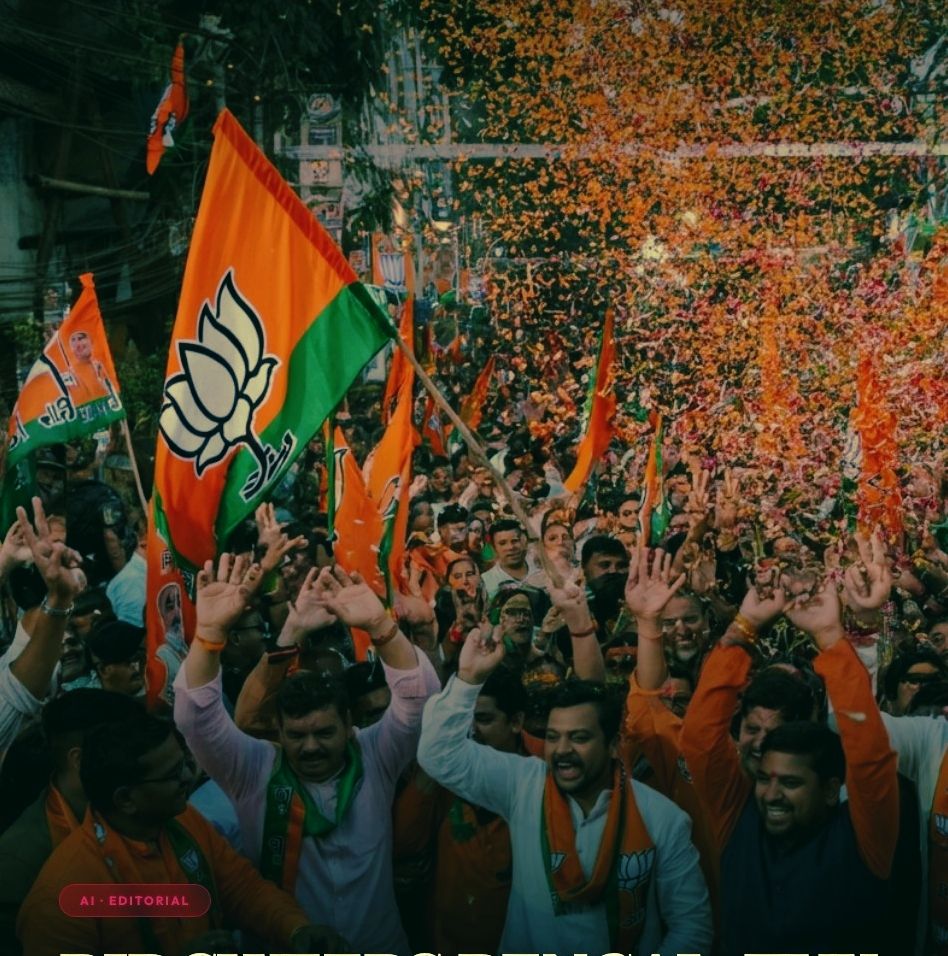
    Ultimately, what unfolded in Bihar is a national political moment disguised as a state election. It announces the arrival of an electorate that rewards delivery, distrusts rhetoric, and increasingly centers its political power within empowered communities—especially women. It shows that welfare is not charity; it is political capital. Delivery is not governance; it is legitimacy. And voters—assertive, aspirational, and acutely aware of their agency—now determine political destiny with unprecedented clarity.

    In the decade ahead, Indian politics will belong to those who can build systems, not slogans; who can deliver outcomes, not excuses; and who recognize that the most disruptive force in Indian democracy is no longer identity or ideology, but the empowered citizen. Bihar has rewritten the script. The rest of India is already reading the next chapter.

    Visit arjasrikanth.in for more insights

←Previous Page
1 … 15 16 17 18 19 … 146
Next Page→

Blog at WordPress.com.

Loading Comments...

    • Subscribe Subscribed
      • SOCIAL PERSPECTIVES
      • Join 106 other subscribers
      • Already have a WordPress.com account? Log in now.
      • SOCIAL PERSPECTIVES
      • Subscribe Subscribed
      • Sign up
      • Log in
      • Report this content
      • View site in Reader
      • Manage subscriptions
      • Collapse this bar