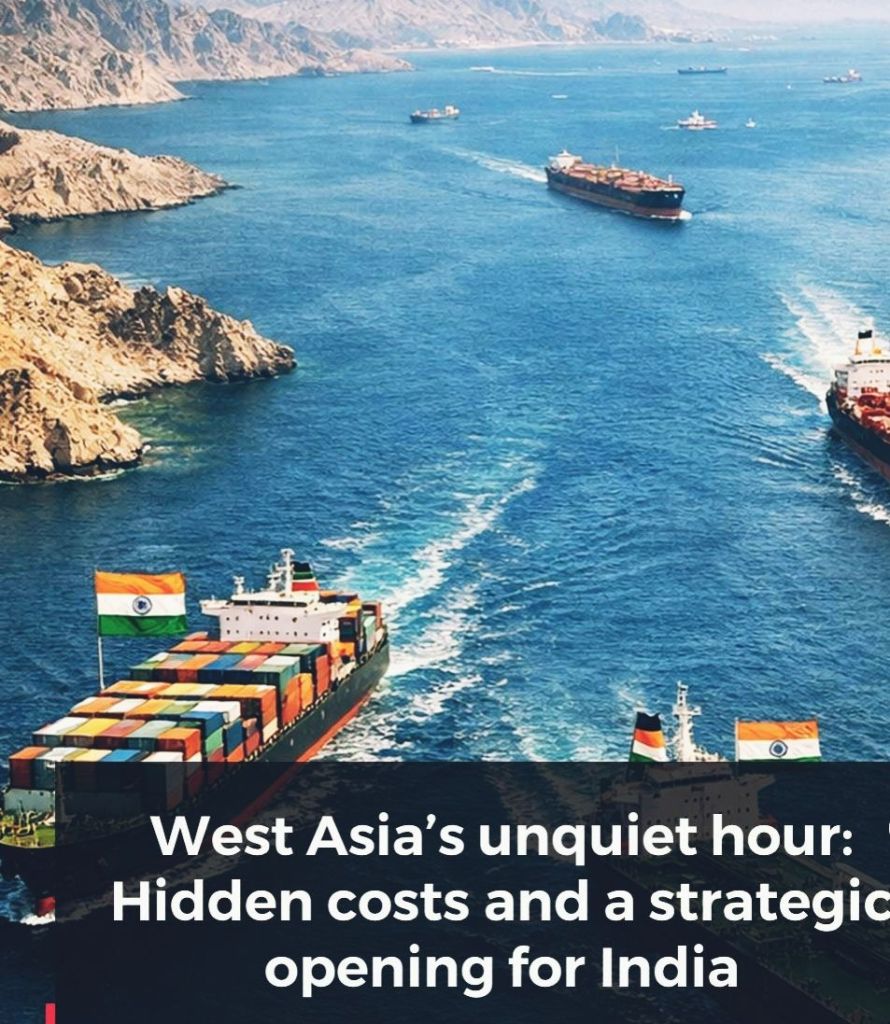
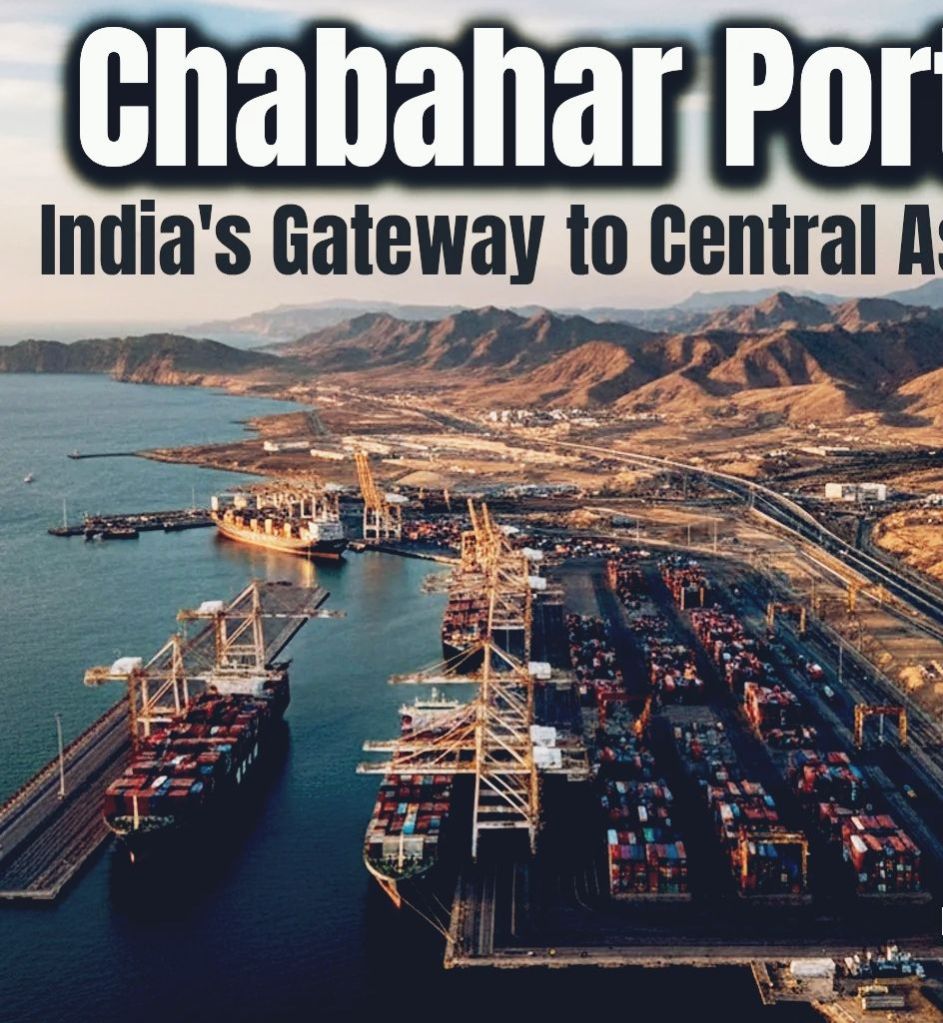
In the global hierarchy of ports, some exist for commerce, some for ambition, and a rare few for national survival. Chabahar belongs to the last category. It is not merely an Iranian port on the Gulf of Oman; it is India’s carefully engineered geopolitical bypass around Pakistan, a strategic counterweight to China’s Gwadar, and a corridor into Afghanistan and Central Asia. Yet in 2026, as the US–Iran conflict escalates and Washington’s sanctions deadline of 26 April 2026 approaches like a guillotine, Chabahar has stopped being a connectivity project and has become a strategic hostage—trapped between war, finance, and geopolitical optics.
India’s investment in Chabahar is rooted in a blunt geographic reality: Pakistan will not provide India transit access to Afghanistan or Central Asia. Without Chabahar, India’s northern outreach collapses into blocked borders and hostile chokepoints. Chabahar was conceived precisely to puncture that wall. It provides India an alternative access route into Afghanistan and onward into Central Asia, turning geography into strategy. This is why Chabahar is not a “port project” in bureaucratic language—it is a geopolitical instrument, a lever of autonomy built in concrete and cranes.
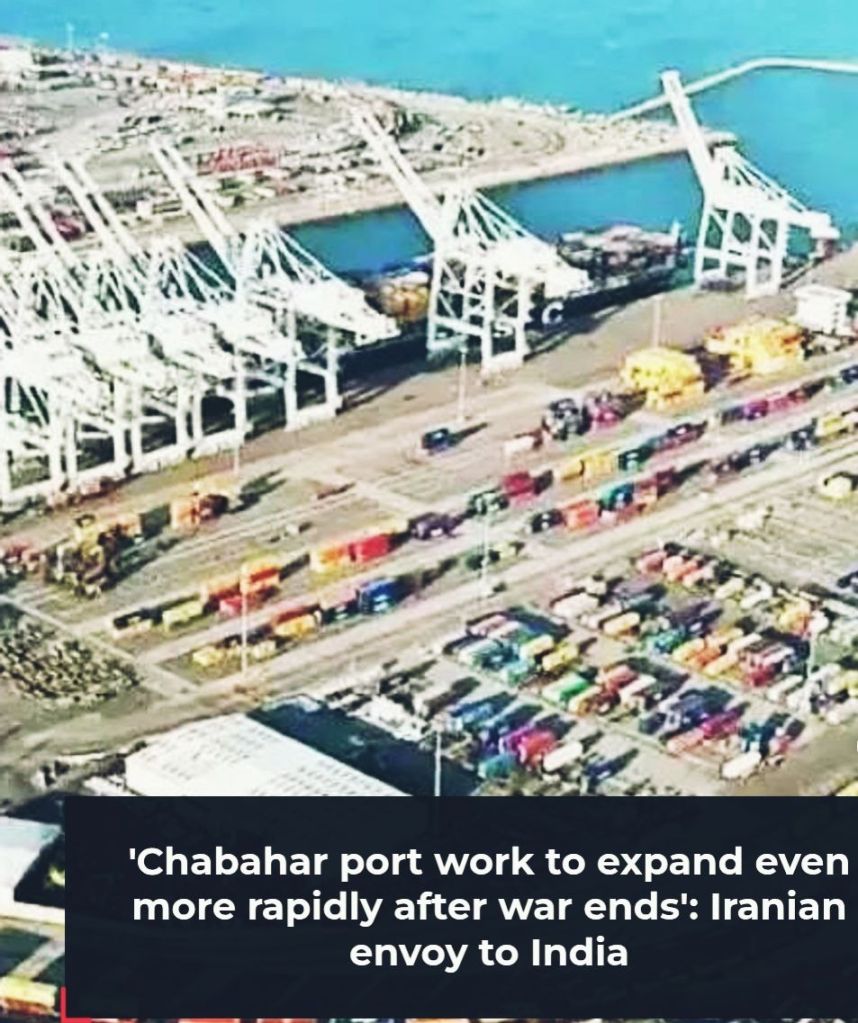
Its location makes the symbolism sharper. Chabahar lies in Iran’s Sistan–Balochistan province, barely 170 km from Gwadar, the China-built port anchoring the China–Pakistan Economic Corridor. This proximity transforms Chabahar into a quiet strategic statement: Gwadar represents China’s maritime encirclement architecture; Chabahar represents India’s refusal to be geographically strangled. In the chessboard of the Indian Ocean, it is a deliberate counter-piece placed beside Beijing’s rook. The port’s relevance expands further because it is central to the International North–South Transport Corridor (INSTC)—a trade route linking India with Iran, Russia, and Europe, potentially cutting transit time by up to 40% compared to the Suez route. In an era where supply chains have become instruments of state power, saving weeks is not efficiency—it is resilience.
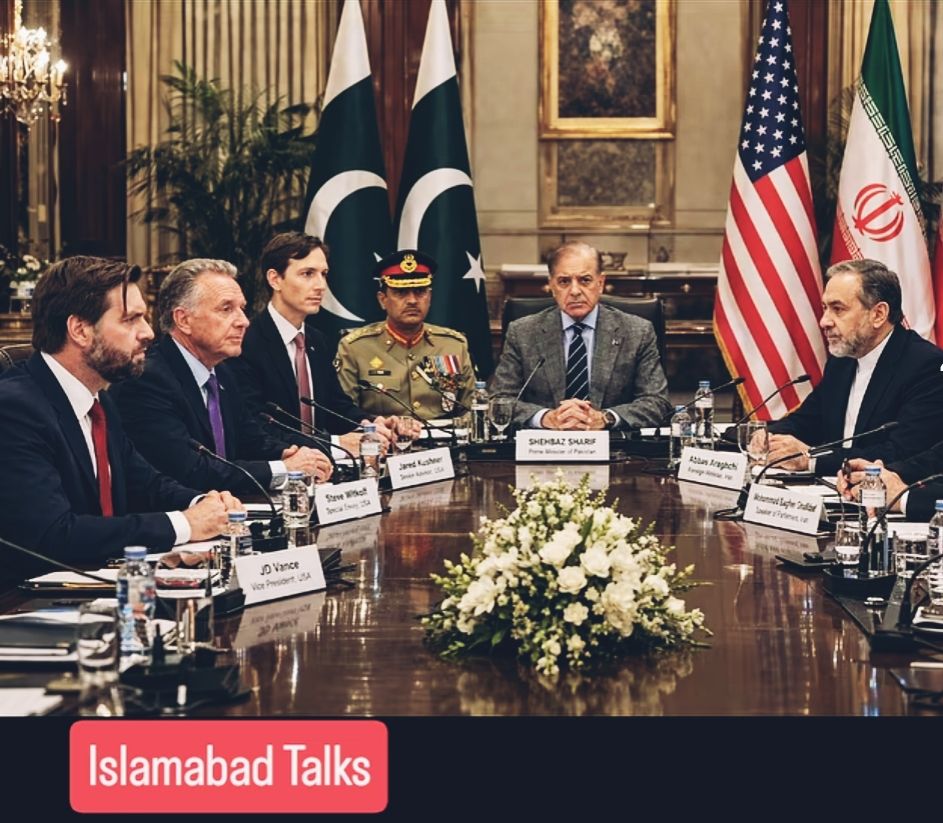
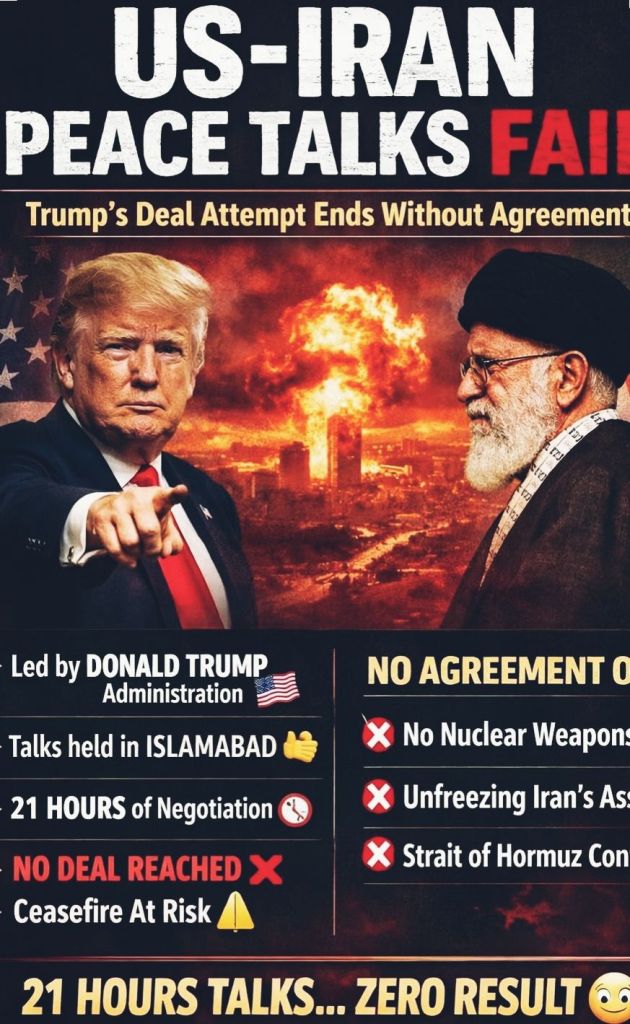
But Chabahar is now caught in a double bind: war and sanctions feeding each other like a self-reinforcing storm. The US decision in September 2025 to revoke the earlier sanctions waiver removed the diplomatic oxygen that once allowed India to operate there under the banner of Afghan reconstruction. India secured only a conditional six-month waiver in October 2025, and that waiver expires on 26 April 2026, turning the calendar itself into a strategic countdown. New Delhi’s response has been cautious and surgical: the February 2026 Union Budget allocated zero funds for Chabahar, the first such omission since 2017–18. This is not necessarily abandonment—it resembles a tactical freeze, meant to avoid leaving financial footprints that could trigger secondary sanctions. In modern geopolitics, budgets are not just fiscal documents; they are strategic signals.
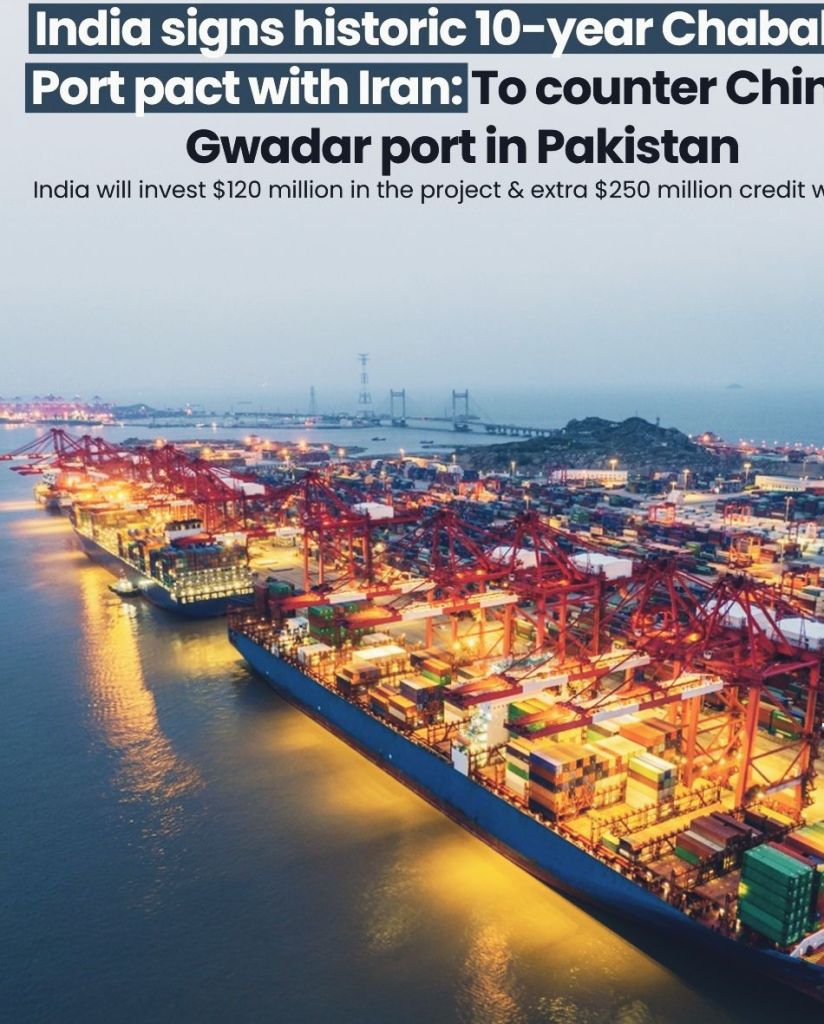
The deeper problem is structural: a port cannot survive on ships alone. Chabahar’s success depends on the arteries feeding it—particularly the Chabahar–Zahedan railway, meant to connect the port to Iran’s interior and to the INSTC. That project remains delayed, and in a wartime environment rail construction becomes vulnerable to funding shocks, security risks, and contractor withdrawal. A port without rail connectivity becomes an impressive lung with no bloodstream. Meanwhile, global shipping lines operate on risk mathematics, not diplomacy. Insurers and vessel operators are increasingly inserting sanctions exclusion clauses, enabling instant withdrawal if OFAC enforcement tightens. Enhanced due diligence—AIS tracking, ownership verification, and SDN screening—has become routine. This means even if India wants to route cargo through Chabahar, vessel availability may shrink because private shipping prefers predictable profit over sanction-triggered catastrophe.
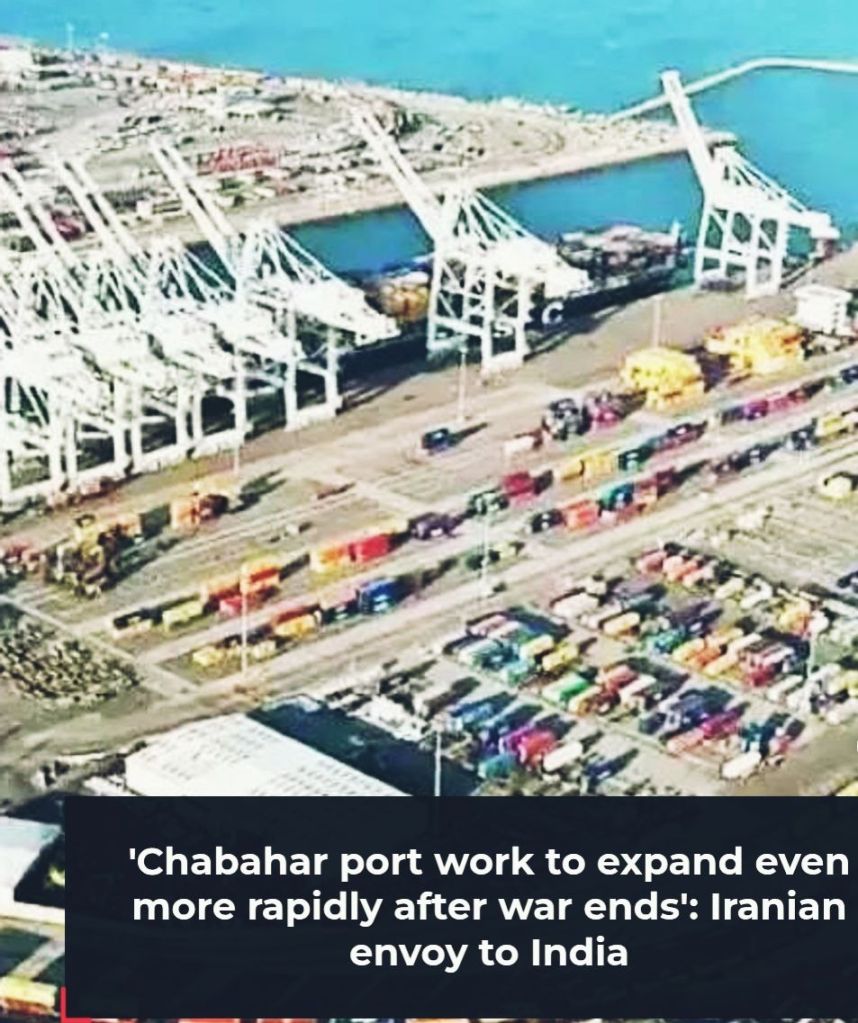
Complicating the picture further is the emergence of IMEC—the India–Middle East–Europe Corridor—which haunts Chabahar’s long-term relevance. If Washington and its allies dominate the post-conflict order, IMEC may become the preferred Western-backed connectivity narrative, relegating Chabahar to an “Iran-linked relic.” In that scenario, Chabahar does not collapse because it fails operationally; it collapses because it becomes geopolitically inconvenient. Tehran remains optimistic, calling disruptions “speed bumps,” expecting rapid expansion after hostilities end. Washington, however, has returned to maximum pressure logic: the Afghan humanitarian argument no longer holds the same political weight after 2021. For the US, any sustained financial activity in Iran looks like strategic leakage.
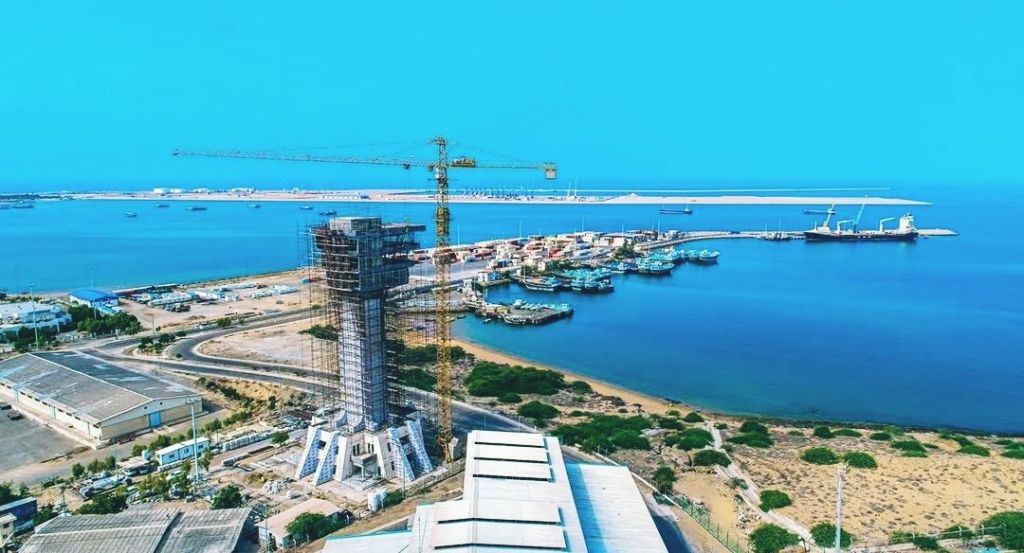
New Delhi therefore sits between two tectonic forces. Abandoning Chabahar would be geopolitically catastrophic, because China would fill the vacuum, turning India’s retreat into Beijing’s expansion. But defying Washington risks secondary sanctions that could hurt India far beyond one port—impacting finance, technology access, and trade credibility. The choice is no longer between a port and a project; it is between strategic autonomy and economic exposure. The only workable approach is controlled survival: keeping Chabahar alive without inviting punishment. This demands legal and operational redesign—minimizing India’s sanction footprint through restructuring, strengthening non-dollar payment mechanisms, and possibly creating sovereign-backed insurance support to offset private insurer withdrawal. Ultimately, Chabahar is India’s geopolitical lifeboat, and in 2026 it is sailing through a sanctions whirlpool, battered by war, financial panic, and global power politics. India’s objective is not immediate triumph, but intelligent endurance—maintaining a skeletal presence, preventing strategic takeover by rivals, and staying ready to expand the moment the guns fall silent. Because if India abandons Chabahar, it will not remain empty. In geopolitics, vacuums are not left unoccupied—they are inherited.
VISIT ARJASRIKANTH.IN FOR MORE INSIGHTS