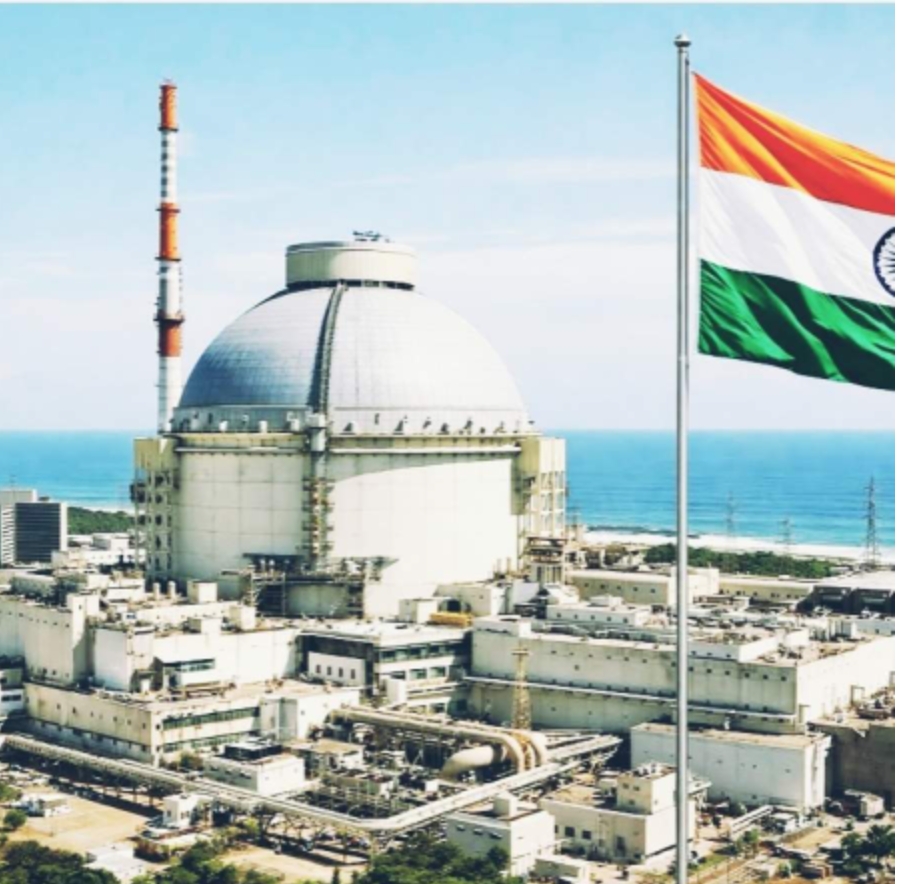
India has officially achieved criticality in the Prototype Fast Breeder Reactor (PFBR) at Kalpakkam. The phrase sounds technical, almost bureaucratic, but criticality is not a routine milestone—it is the moment a machine begins to behave like a controlled star. It marks the establishment of a self-sustaining nuclear chain reaction, where each fission event produces neutrons that trigger further fissions in a stable and continuous loop. In nuclear science, this is the dividing line between a facility that is merely engineered and one that is alive with physics. A reactor that reaches criticality stops being an infrastructure project; it becomes a functioning organism of controlled destruction and controlled power.
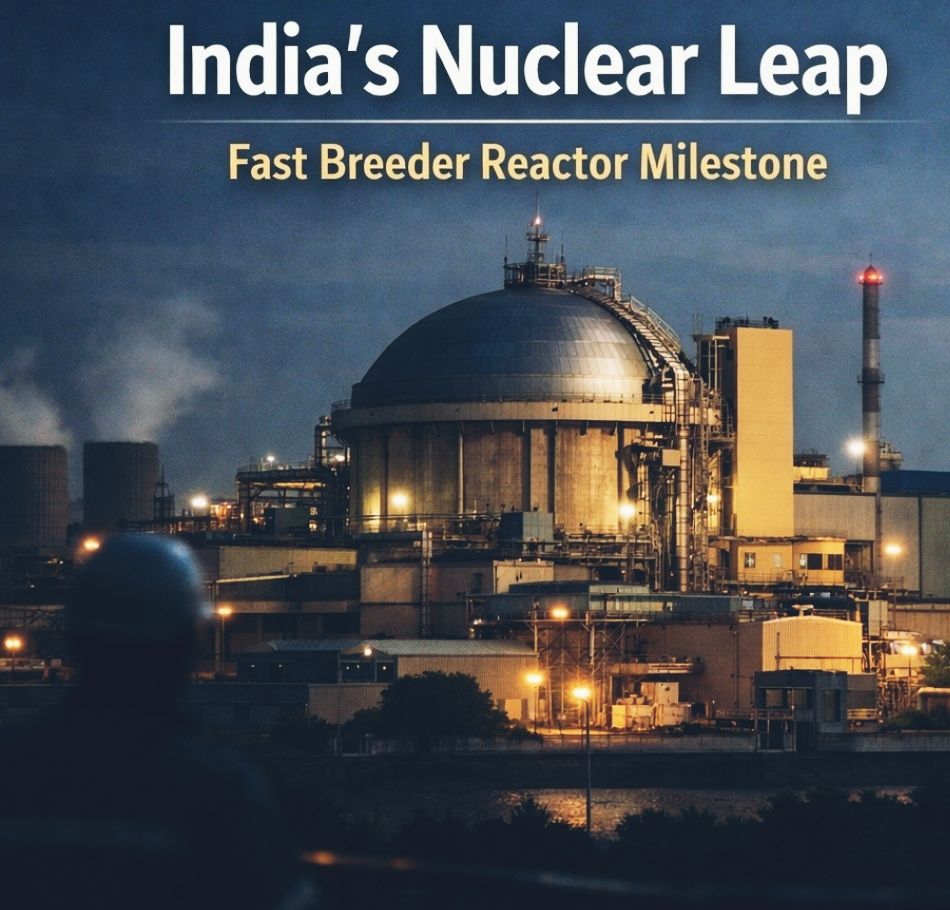
To understand why PFBR matters, one must begin with India’s geopolitical handicap: electricity is the bloodstream of development, but India’s energy ambitions are constrained by fuel insecurity. If India genuinely intends to move toward a developed-economy trajectory by 2047, it must expand reliable base-load power generation at intimidating scale—far beyond the current nuclear capacity of around 8,180 MW. Yet nuclear expansion is not merely about constructing plants; it is about controlling the fuel pipeline that feeds them. That pipeline, for most countries, is uranium. And uranium is precisely where India’s geological reality becomes strategically cruel: India holds only 1–2% of global uranium reserves, making a large uranium-based nuclear future a potential trap of permanent import dependence.
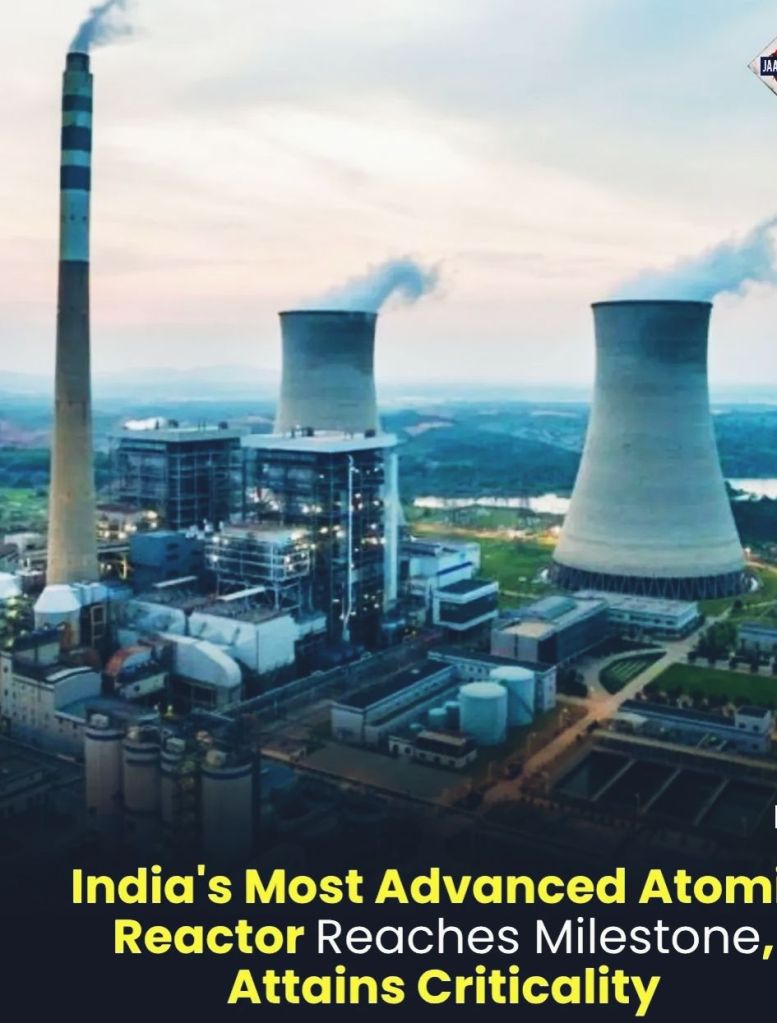
In an era where supply chains are weaponized and sanctions can function like economic chokeholds, uranium dependency is not an energy issue—it is a sovereignty issue. A nation that cannot secure its long-term nuclear fuel supply cannot secure its industrial future. This vulnerability was identified long ago by Dr. Homi Bhabha, who did not design India’s nuclear program as a set of reactors, but as a strategic architecture. His famous three-stage nuclear programme was not merely science—it was geopolitical foresight disguised as physics. It was built around the assumption that India must not merely generate electricity; it must manufacture its own energy destiny.
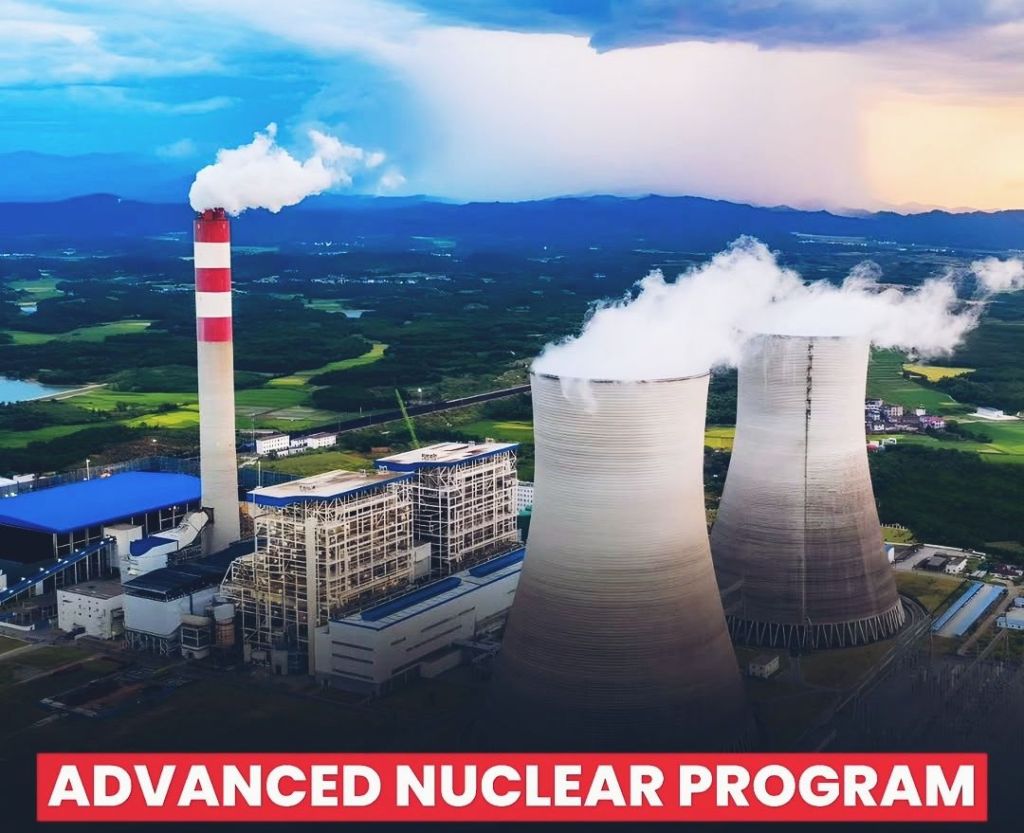
And here comes the twist that makes India unique: while uranium is scarce, India possesses over 25% of the world’s thorium reserves, resting like a buried jackpot along coastal black sands. Thorium looks like a civilizational gift—until one confronts its inconvenient truth: thorium is not fissile. Thorium-232 cannot sustain a chain reaction on its own. It is fertile, not fissile. It cannot power a reactor directly like uranium-235 or plutonium-239. To unlock thorium’s promise, India must first transmute thorium into uranium-233, a fissile isotope capable of sustaining nuclear fission. That transformation requires neutron bombardment and an entire ecosystem of fuel-cycle mastery. Thorium is not fuel; it is potential energy waiting for nuclear alchemy.
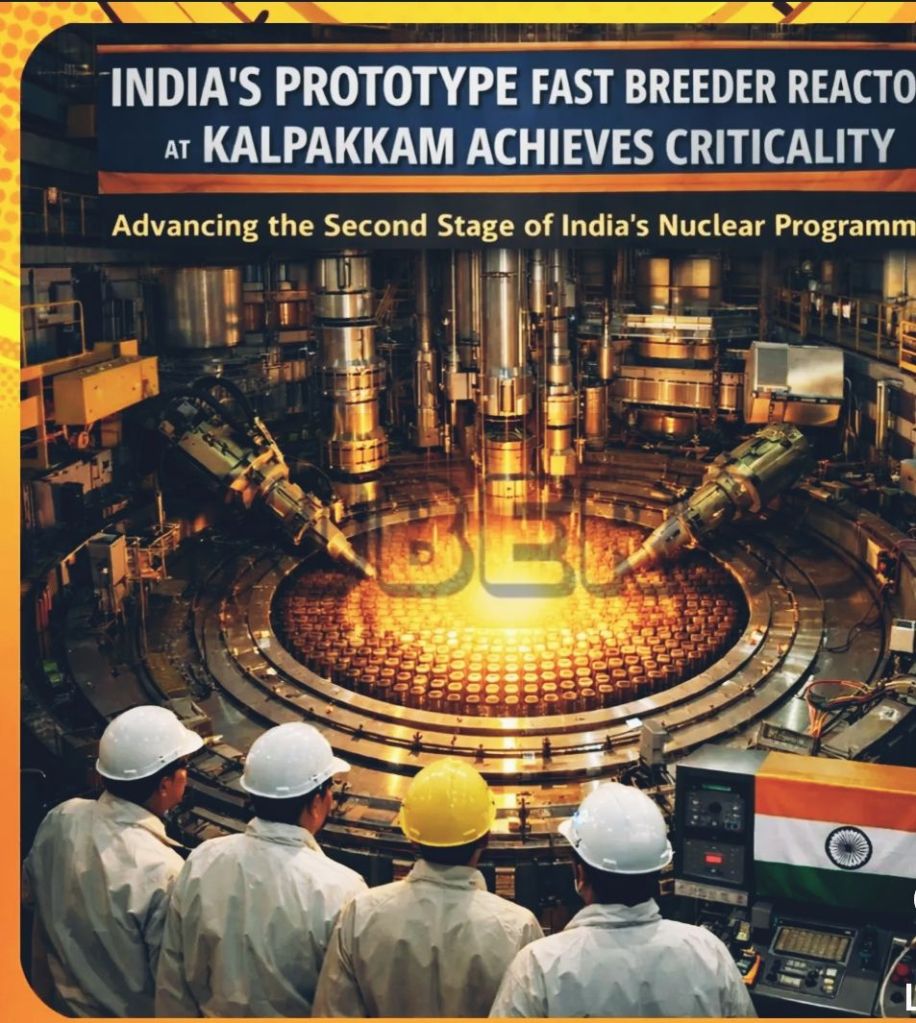
This is where the PFBR becomes not just important but historically central. The fast breeder reactor is the bridge between scarcity and abundance—Stage Two of Bhabha’s blueprint. Stage One uses India’s limited uranium in pressurized heavy water reactors to generate electricity and produce plutonium-239 as a by-product. Stage Two then uses that plutonium as fuel in a fast breeder reactor. Unlike thermal reactors, which slow neutrons using moderators, fast breeder reactors allow neutrons to remain fast and violent—high-energy particles that make breeding possible. The PFBR will generate about 500 MW of electricity, but electricity is only its visible output. Its deeper function is strategic: it converts fertile uranium-238 into additional plutonium-239, effectively producing more fuel than it consumes. It is the closest thing modern engineering has created to a machine that prints its own energy currency.
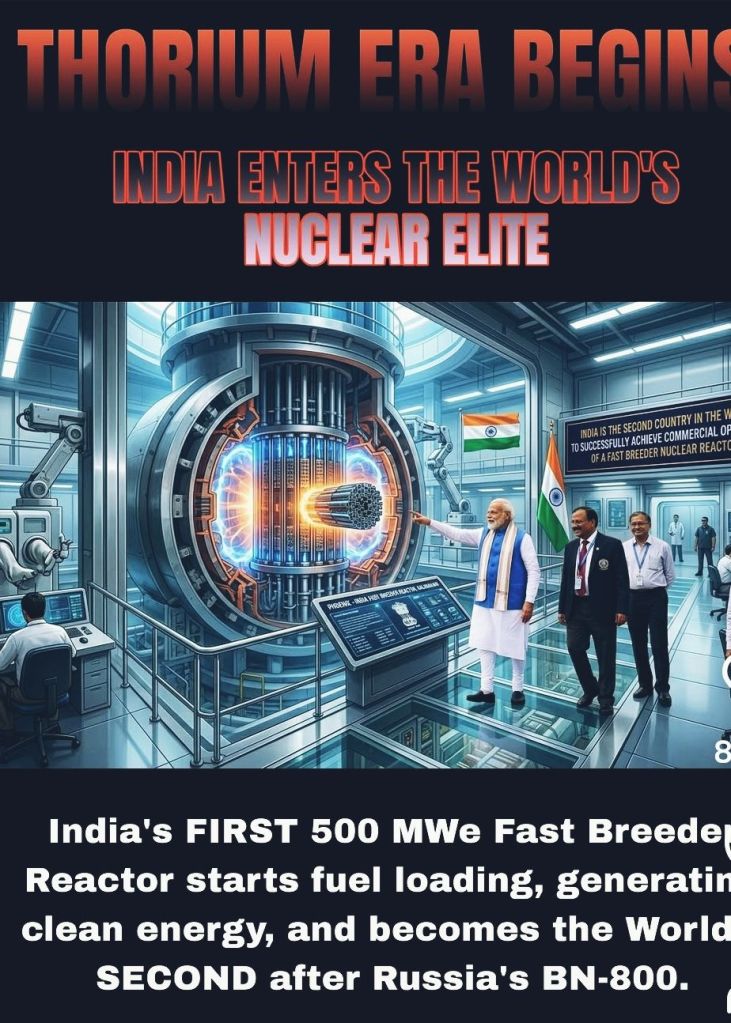
But intellectual honesty demands resisting pure triumphalism. Fast breeder reactors globally have not been miracle machines; they have often been engineering nightmares. The physics is elegant, but the engineering is unforgiving. Water cannot be used as coolant because it slows neutrons. Hence PFBR uses liquid sodium, a superb heat conductor and a terrifying chemical liability. Sodium reacts violently with air and explodes on contact with water, meaning the reactor demands near-flawless sealing systems and absolute containment discipline. Perfection is not a philosophical ideal here—it is a safety requirement. This explains why PFBR has taken decades, with repeated deadline slippages and cost escalation reportedly reaching around ₹8,181 crore. Critics question whether such a technology, delayed and expensive, risks becoming economically obsolete in an era where solar and wind costs have fallen dramatically.
Yet the debate cannot be reduced to unit economics alone. Renewable energy is essential, but it is also intermittent. Grid-scale storage remains a structural challenge, and the supply chains of batteries and rare minerals carry their own geopolitical vulnerabilities. A nuclear reactor, by contrast, delivers 24/7 base-load power, immune to monsoon variability, nightfall, or wind droughts. In strategic terms, base-load electricity is not merely a convenience—it is the invisible foundation of heavy industry, rail freight, defense manufacturing, data centers, and national resilience. India’s investment in PFBR is therefore not just a technological decision; it is a civilizational wager that long-term sovereignty is worth short-term cost.
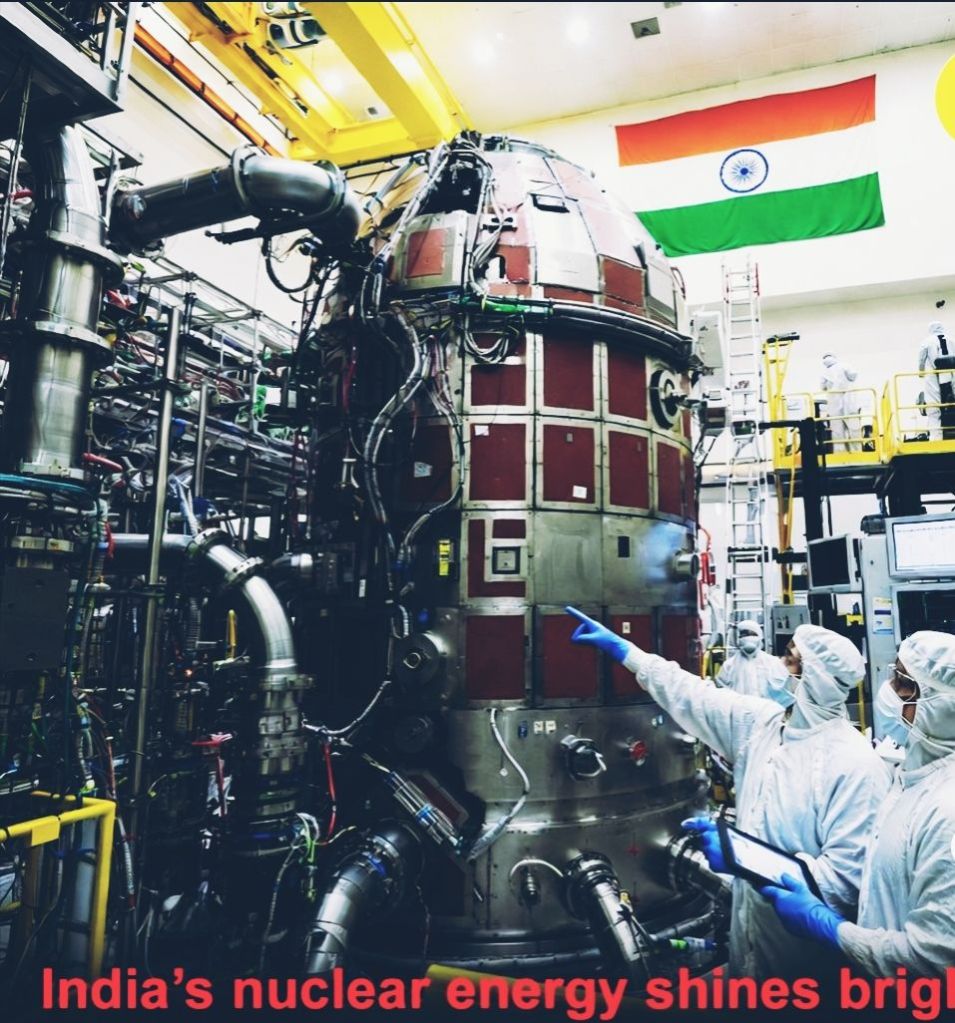
PFBR criticality is thus more than a scientific milestone. It is a declaration that India is attempting to become not merely a consumer of nuclear technology but an architect of the entire fuel cycle. It signals a shift from operating reactors to designing an energy ecosystem that cannot be externally strangled. The sodium sun has ignited at Kalpakkam, and the reactor is no longer a promise trapped in files and foundation concrete—it is alive. Now the real question begins: can India scale this controlled star into an affordable national grid reality, or will PFBR remain a brilliant machine whose greatest output is symbolism? Either way, criticality has rewritten the story. India has crossed the most difficult bridge in its nuclear destiny—and the future will no longer be decided only by how much power it produces, but by how much independence it breeds.
VISIT ARJASRIKANTH.IN FOR MORE INSIGHTS
 SOCIAL PERSPECTIVES