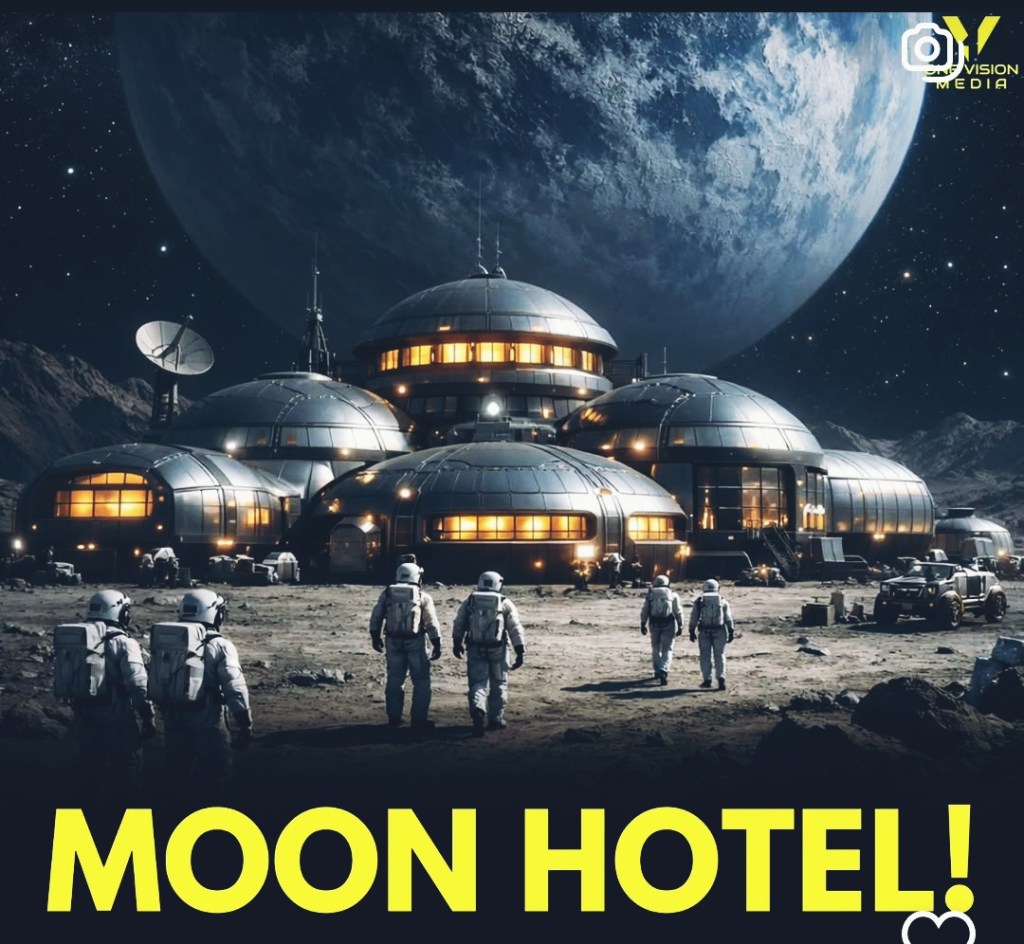
On December 13, 1972, Commander Eugene Cernan stepped off the lunar surface and left behind a sentence that sounded like poetry but behaved like prophecy: “We leave as we came, and, God willing, as we shall return, with peace and hope for all mankind.” For more than fifty years, humanity treated that line as a dignified full stop—Apollo as the climax, the Moon as the museum. But history rarely respects closure. Humans are finally returning to the Moon, not as romantic astronauts chasing glory, but as strategic planners chasing permanence. The lunar surface is no longer being approached as a destination; it is being approached as a platform.
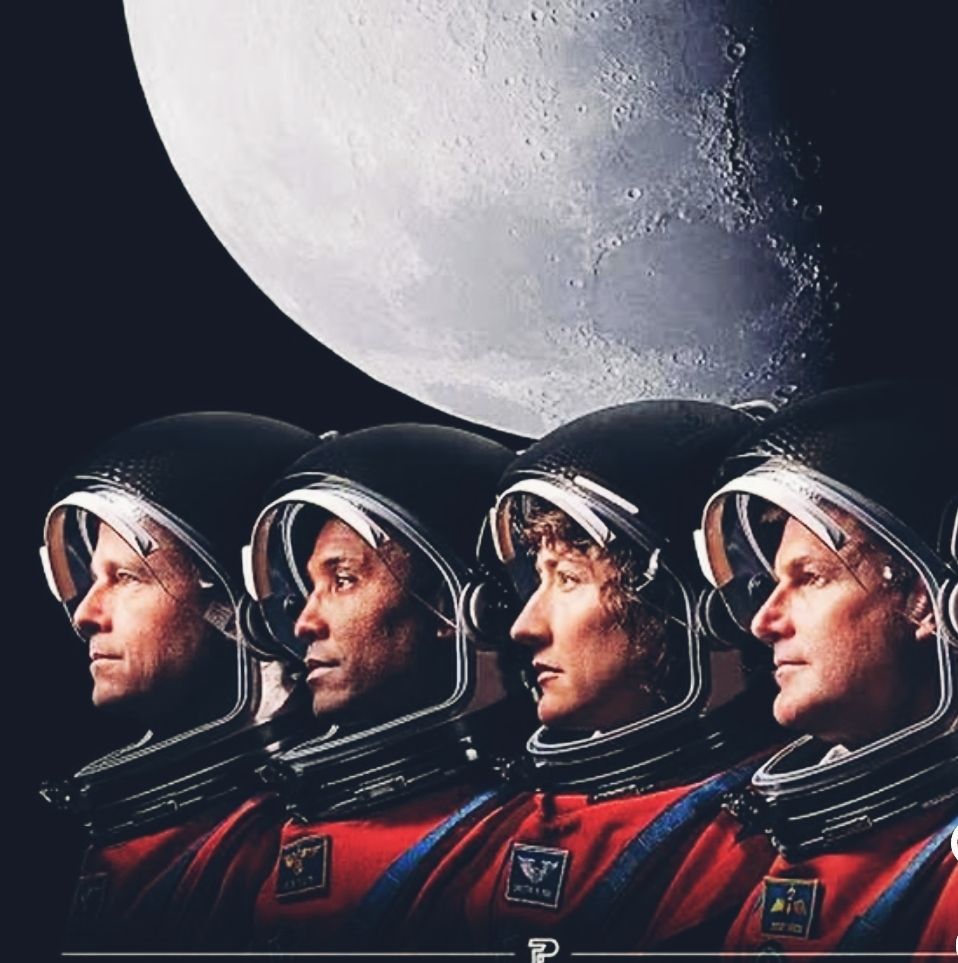
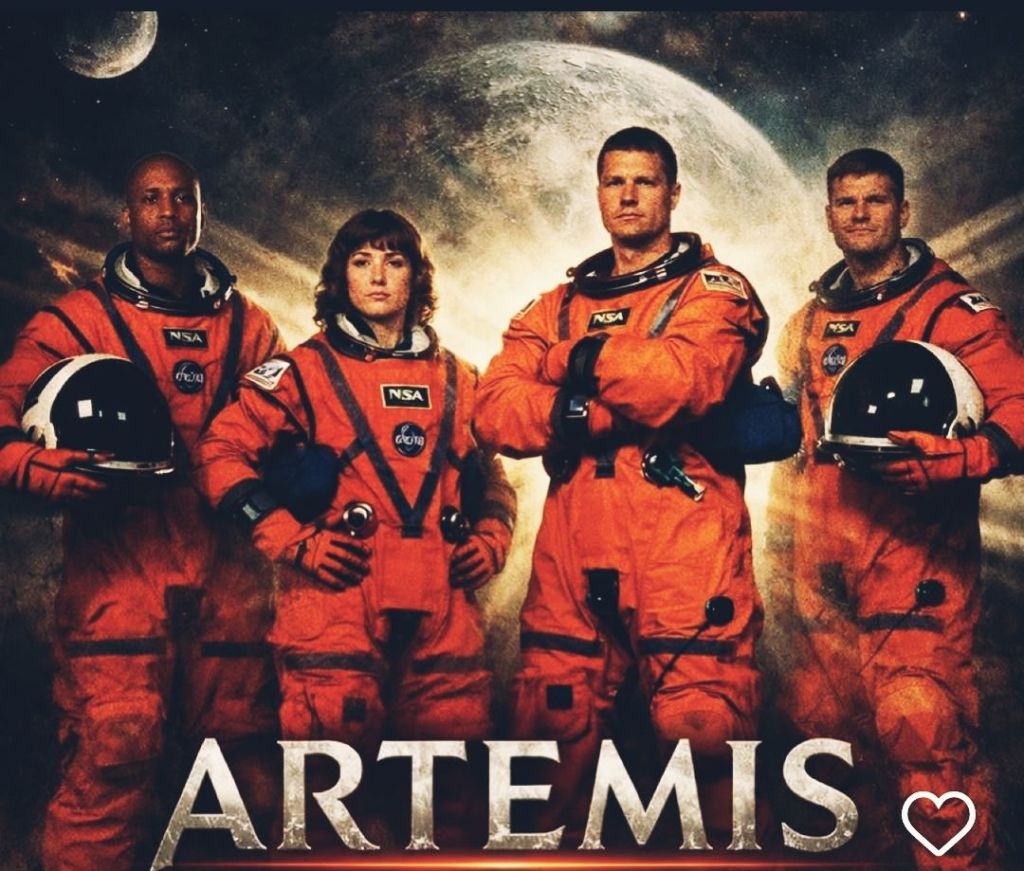
This return, however, is not Apollo 2.0. The modern Moon race is colder, more systematic, and intellectually more ambitious. NASA’s Artemis programme is structured less like a patriotic spectacle and more like an infrastructure blueprint. Artemis II, despite public excitement, is essentially an engineering audit disguised as a mission: a high-stakes test of spacecraft reliability, life-support resilience, deep-space navigation, and human survivability beyond low Earth orbit. The purpose is not to prove that humans can reach the Moon; Apollo already proved that. The purpose is to prove that humans can do it repeatedly, safely, and without turning every mission into a fiscal earthquake.
That economic distinction is crucial. Apollo was a geopolitical theatre where cost was irrelevant as long as the Soviet Union was watching. It consumed around $26 billion between 1960 and 1973—over $300 billion in today’s terms—spent not for profit, but for dominance. Artemis, projected at around $93 billion so far, forces a more uncomfortable question: why return at all? The answer lies in three pillars that redefine the Moon’s role in the human imagination—the Moon as laboratory, the Moon as resource, and the Moon as infrastructure. In other words, the Moon is being repurposed from a symbol into an asset.
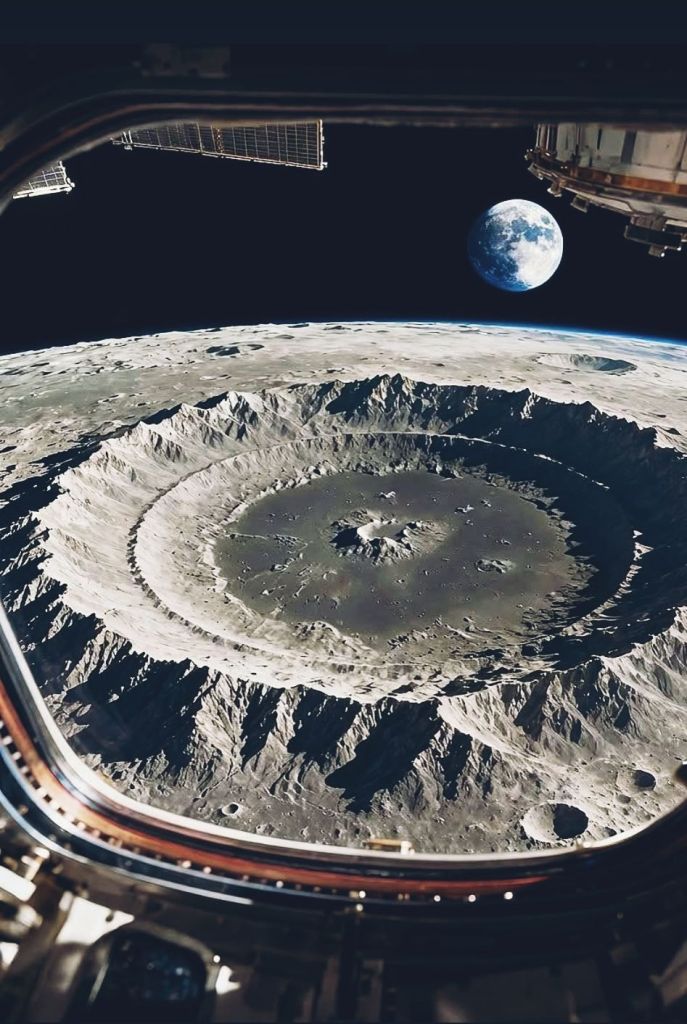
First, the Moon is the nearest deep-space testing ground available. Mars remains a fantasy unless humanity solves the brutal problems of long-duration survival: radiation exposure, psychological isolation, closed-loop life support, repair logistics, and the fragility of human bodies operating in permanent hostility. The Moon is close enough for emergency rescue, yet harsh enough to simulate the physics and psychology of deep-space living. In economic language, it is a controlled-risk environment—expensive, yes, but far cheaper than discovering failure halfway to Mars. The Moon becomes a proving ground where technology can fail without turning failure into extinction.
Second, the Moon is no longer a dead rock. The confirmation of water ice near the south pole has rewritten the economics of space. Water is not merely hydration; it is survival, energy, and mobility. Transporting water from Earth is absurdly expensive—each kilogram launched into space multiplies costs across fuel, payload constraints, and mission design. But water can be split into hydrogen and oxygen, making it rocket fuel. This changes the Moon from a destination into a potential refuelling station. If extraction becomes viable, the Moon stops being the end of a journey and becomes a supply node—an orbital petrol pump that could make Mars missions less heroic and more logistical.
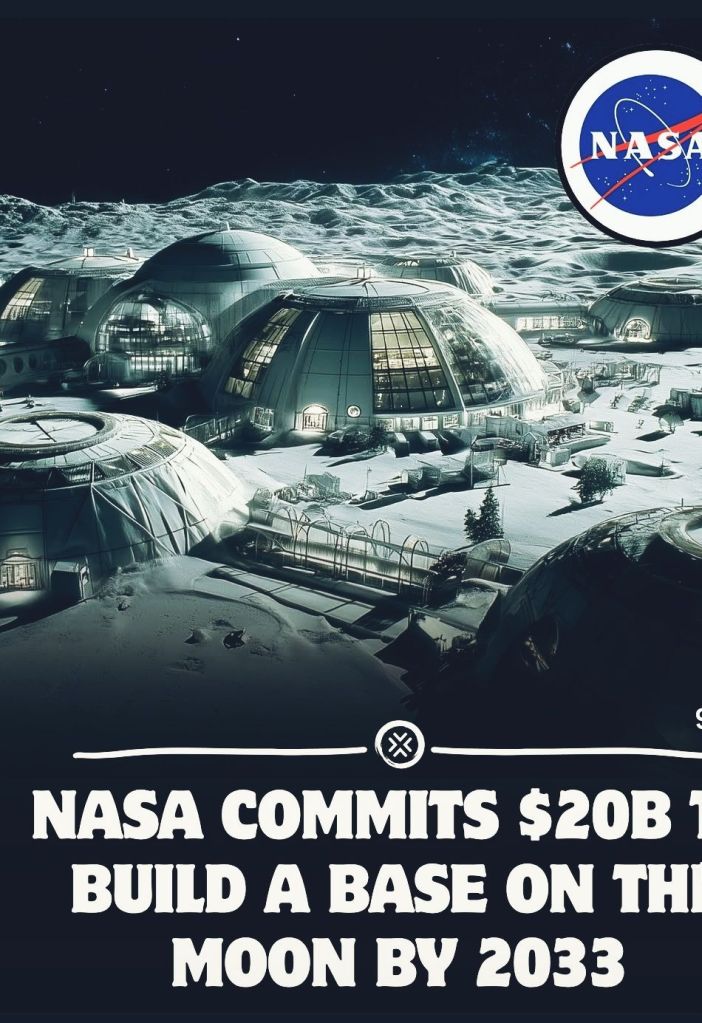
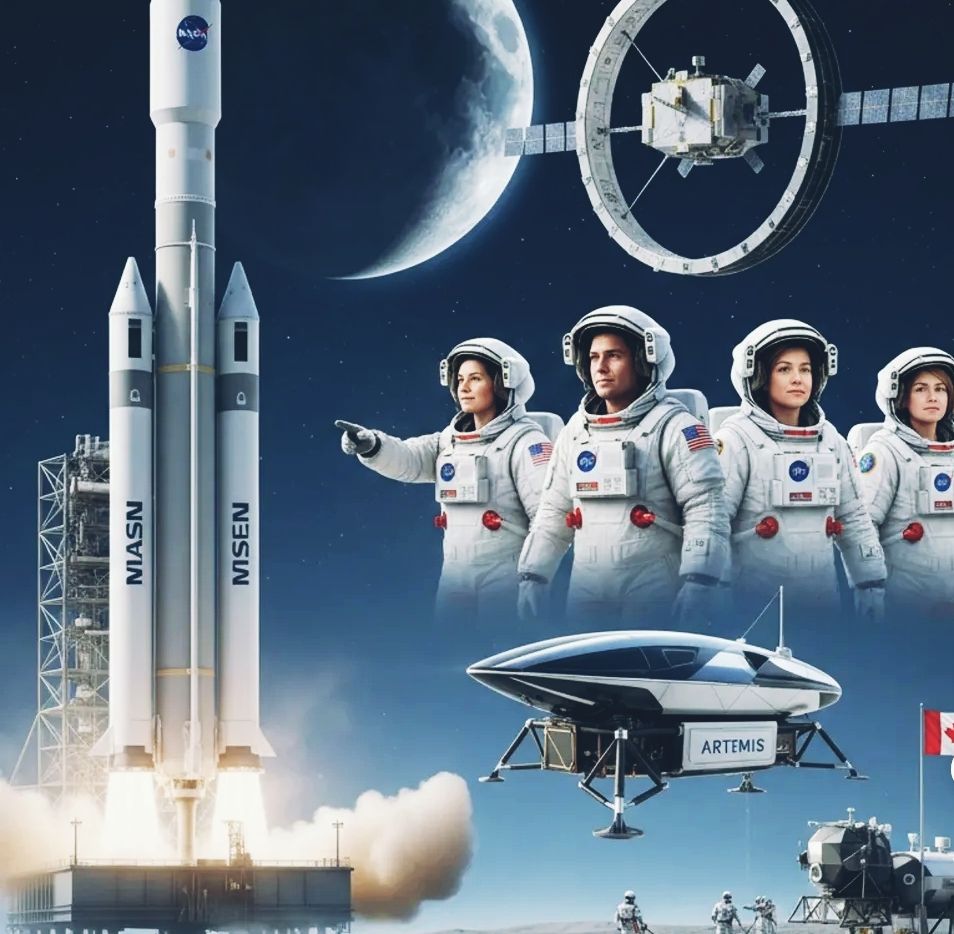
Third, Artemis is fundamentally about infrastructure. It is not about “going back” but about building systems that remain operational beyond Earth—habitats, communication networks, energy grids, transport corridors, landing pads, and supply chains. This is where exploration ends and economics begins. Infrastructure is expensive at birth but powerful in maturity, because it lowers the marginal cost of everything that follows. Just as ports, highways, and railways transformed trade on Earth, lunar infrastructure could transform space travel from rare achievement into repeatable routine. Artemis is not chasing a flag moment; it is chasing a future where the Moon becomes an operating environment.
This is where the conversation turns seductive—and dangerous: resources. The Moon could eventually become a hub for mining, microgravity manufacturing, and deep-space logistics. It contains helium-3, an isotope often described as a potential fusion fuel and valued for advanced technological applications. It also holds regolith rich in titanium, aluminium, iron, and other industrial materials, along with KREEP regions concentrated with potassium, rare earth elements, and phosphorus. In theory, this is a treasure chest. But the brutal truth is that the Moon is not yet a mine. Most deposits are dispersed, extraction is technologically brutal, and profitability remains speculative. On Earth too, resources are only wealth when they can be extracted cheaply, transported efficiently, and sold in a stable market. Space has no mature market yet—only aspirations pretending to be supply chains.
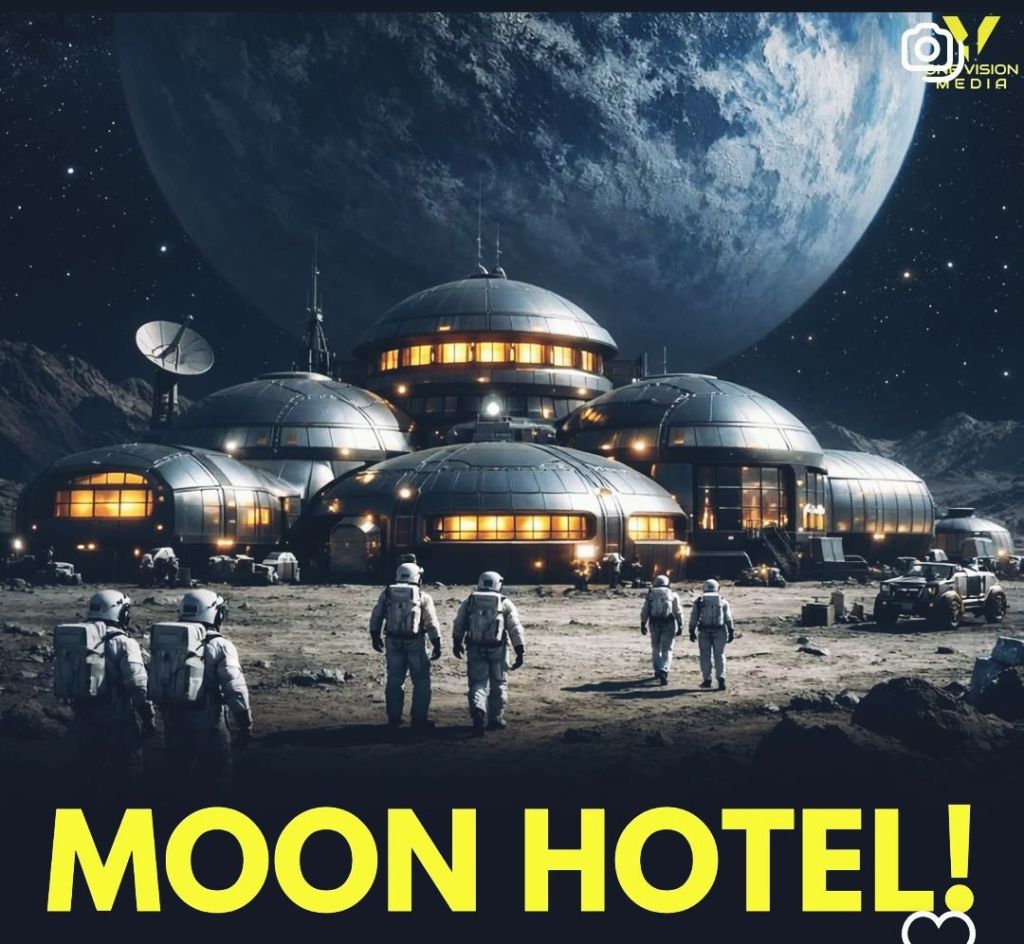
This is the core dilemma of lunar economics: space remains one of the most capital-intensive ventures in human history. Even with reusable rockets lowering launch costs, the investment requirements are enormous and returns uncertain. Building lunar habitats, sustaining repeated missions, and developing industrial extraction systems could easily exceed $1 trillion. Worse, the revenue logic is still incomplete. Apollo did not need a business model because it was funded by ideology. Artemis exists in a world that demands justification beyond pride. That is why Artemis II matters so much: it represents the shift from heroic achievement to sustainable capability. The success of Artemis will not be measured by a single landing—it will be measured by whether costs fall over time, reliability rises, and the Moon becomes operational rather than ceremonial.
The deeper transformation is institutional. Space exploration is moving from government monopoly to a hybrid public-private ecosystem. NASA is no longer trying to build everything; it is positioning itself as an anchor customer, outsourcing risk and innovation to commercial players through fixed-price contracts and milestone-based development. The goal is to avoid the cost-plus inefficiencies that bloated Apollo-era programmes and later trapped the Space Shuttle in financial unsustainability. If Artemis succeeds, the Moon will no longer be humanity’s monument—it will become humanity’s workshop. And if it fails, the Moon will remain what it has been since 1972: a place we once touched, then abandoned, because we could not afford to stay.
Perhaps that is the real mission of the 21st century—not exploration, not science, not even survival. It is proving that human ambition can finally learn to pay its own bills.
VISIT ARJASRIKANTH.IN FOR MORE INSIGHTS
 SOCIAL PERSPECTIVES