
Modern democracies do not always collapse with tanks rolling through capital cities. In the 21st century, collapse often arrives in a more sophisticated form—quiet, psychological, and disguised as ordinary political weather. The new authoritarianism does not necessarily abolish elections; it captures attention. It does not always imprison journalists; it overwhelms them. It does not always suspend courts; it buries accountability beneath an avalanche of spectacle. In today’s American political environment, the most dangerous weapon is no longer military power or electoral manipulation alone. It is narrative control. And few episodes illustrate this more sharply than the apparent migration of public focus from the Epstein scandal ecosystem to the emotionally combustible theatre of confrontation with Iran.

The Epstein files were never an ordinary controversy. They carried the structural potential to become a legitimacy-ending rupture—not merely because of criminal allegations, but because they hinted at a deeper architecture of elite complicity. Scandals of this nature are uniquely lethal because they bypass ideology. Economic debates divide voters. Foreign policy divides voters. But moral corruption involving exploitation and elite networks collapses the psychological distance between citizen and state. It triggers disgust, not disagreement. And disgust is politically irreversible. Once unredacted testimonies, flight logs, institutional cover-up claims, and symbolic artifacts enter public consciousness, the scandal ceases to be “news” and becomes a civilizational indictment—an unmistakable narrative of rot at the summit.

This is where the real danger begins for leadership under scrutiny. Because when legitimacy is threatened at the moral level, truth is rarely the first defence mechanism. Time is. The state’s initial response is often not direct denial, but procedural suffocation. Institutions can be slowed through bureaucratic fog: documents delayed, investigations fragmented, officials reassigned, and legal timelines stretched until public stamina collapses. This is not a conspiracy fantasy; it is a well-documented political technique. Modern governance has mastered the art of exhausting outrage. The objective is not necessarily to disprove allegations. It is to outlast them. In a society governed by short attention cycles, delay becomes victory.

Yet delay alone cannot always neutralize a scandal of existential magnitude. When institutional buffering becomes insufficient, the next weapon emerges—far more powerful and far more dangerous: strategic diversion through external conflict. Political psychology has long recognized the “rally-around-the-flag” effect. When an external enemy is framed as imminent, citizens become conditioned to unify behind leadership, even leadership they distrust. Criticism becomes socially expensive. Skepticism is reframed as weakness. War does not merely dominate the news cycle—it compresses public consciousness into binary categories: patriot versus traitor, loyalty versus sabotage, unity versus betrayal. Scandal fractures society into uncomfortable questions. War heals society into slogans.

The mechanics of diversionary conflict are remarkably consistent across history. First comes an intelligence “reassessment,” where threat perception is inflated through selective briefings, controlled leaks, and dramatic warnings. Dissenting analysts are marginalized, silenced, or removed from visibility. Then the conflict is framed as morally unavoidable—defensive, urgent, and righteous. Once missiles strike, the situation becomes irreversible. At that moment, war ceases to be merely policy; it becomes narrative takeover. The media ecosystem becomes addicted to visuals: fire, retaliation, urgency, breaking-news banners, patriotic framing. Scandal coverage does not end because it is resolved. It ends because it is drowned.
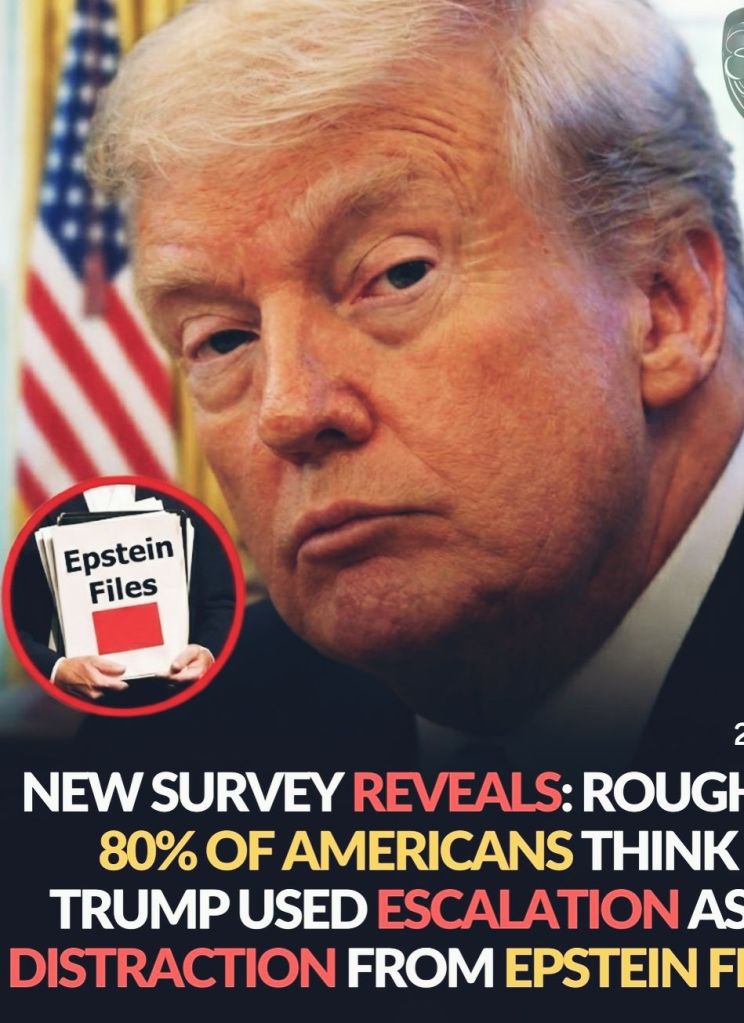
This is the core transformation: a moral crisis is converted into a security crisis. The public is no longer asked, “What did the leader do?” Instead, the public is asked, “Are you with the nation or against it?” Accountability becomes framed as a luxury. Investigations become dismissed as “distractions.” Critics are portrayed as irresponsible voices undermining national morale. This is not accidental messaging—it is narrative entrapment. Once war begins, the leader does not need to defeat the scandal. He only needs to make the scandal politically untouchable.

The consequences of such diversion do not remain confined to American borders. A war with Iran is not a localized confrontation—it is a geopolitical infection. It destabilizes the Strait of Hormuz, triggers energy shocks, inflames proxy networks, and forces regional states into new military calculations. Civilian casualties rise. Humanitarian corridors collapse. Supply chains fracture. Oil volatility fuels inflation across the Global South, pushing fragile economies toward crisis. Under the fog of global distraction, opportunistic authoritarian regimes gain freedom to act. When the world’s most powerful state is militarily occupied and morally compromised, predators everywhere find room to expand. Diversionary war is never simply about protecting one leader—it reshapes the global order into a theatre of instability.
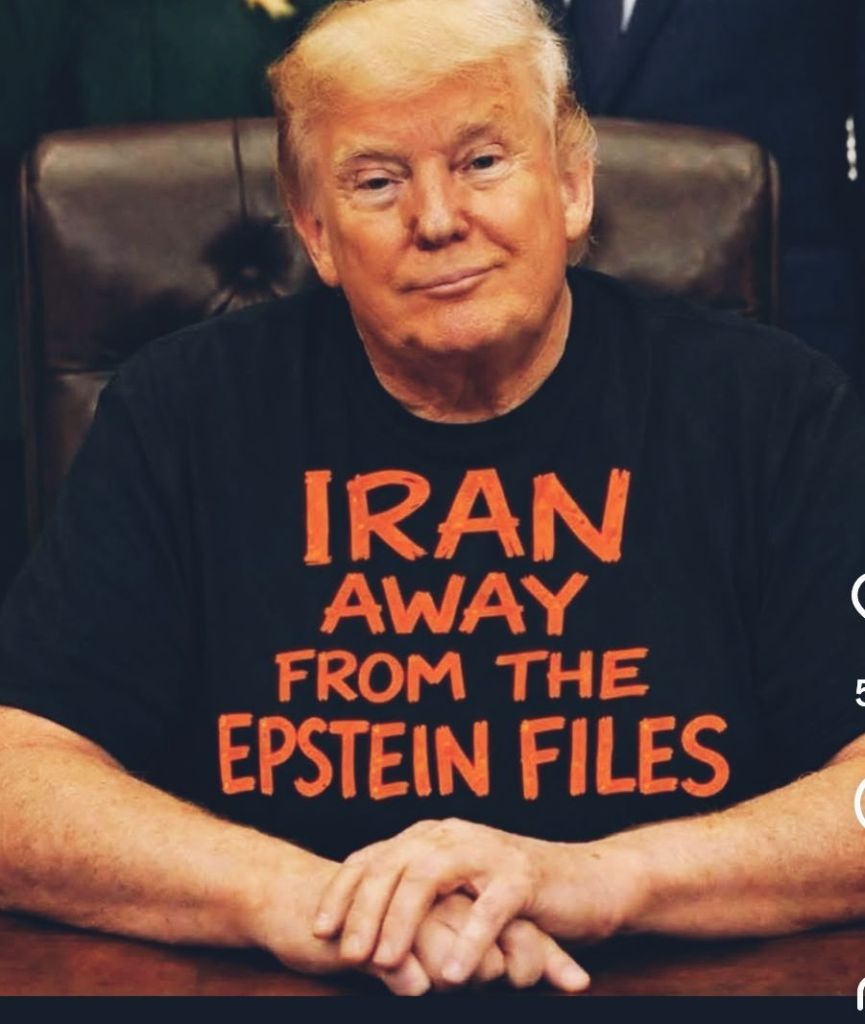
History echoes with this pattern. Leaders facing internal scandal or collapsing legitimacy have repeatedly used military action to seize the public imagination. Sometimes it works temporarily. Sometimes it backfires catastrophically. But the psychological logic remains constant: war provides a moral mask. It transforms the accused into the protector. It converts personal political survival into national survival. It also exploits the cognitive vulnerabilities of modern societies—fragmented media ecosystems, algorithm-driven outrage cycles, partisan information bubbles, and collective fatigue. Many citizens do not abandon accountability because they admire corruption; they abandon it because they are exhausted. Scandal offers endless humiliation. War offers closure. The human mind often chooses the simpler narrative.
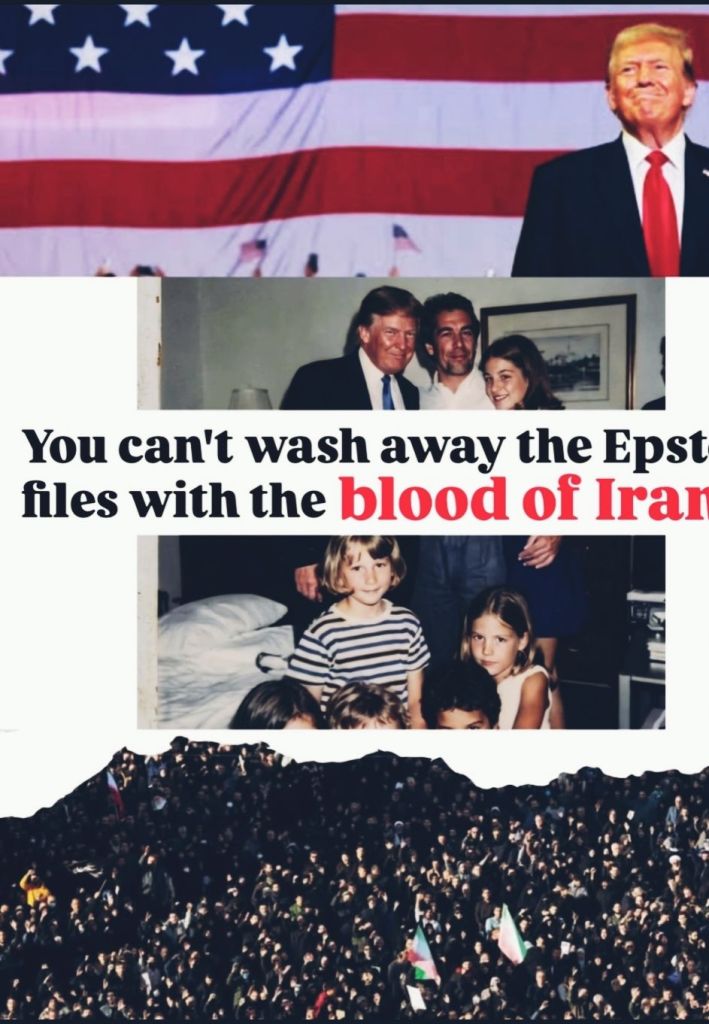
This is where the metaphor of the “Sex Candle Doctrine” becomes brutally relevant: private vice at the top is cleansed through public death at the bottom. The scandal does not disappear because justice is achieved. It disappears because explosions produce louder headlines. Bodies become footnotes. The leader becomes “necessary.” Moral collapse is not corrected—it is converted into theatre. And once this conversion becomes normalized, democracy itself begins to hollow out. Not because elections vanish, but because truth becomes irrelevant under permanent emergency.
The antidote must be structural, not emotional. Democracies cannot rely on personal virtue; they must build institutional firewalls. Independent prosecutors must be legally protected from executive interference. Presidential records must have mandatory disclosure frameworks beyond political discretion. War powers must return to legislative accountability, with automatic parliamentary review after limited hostilities. Media institutions must develop accountability systems that refuse to abandon investigative focus during wartime spectacle. Whistleblower protections must be strengthened so intelligence manipulation can be exposed without career destruction. Most importantly, civic education must teach the mechanics of diversionary conflict so citizens recognize the framing before they become participants in it.
The final warning is simple. Scandal alone does not destroy democracies.

Democracies collapse when scandal is buried under spectacle, when war becomes the easiest hiding place for leaders running out of legitimacy, and when citizens are trained to confuse emotional unity with national health. In such moments, the real battlefield is not only in Tehran, Washington, or the Strait of Hormuz. The real battlefield is inside the citizen’s mind. And the most decisive victory is not military conquest. It is distraction.
VISIT ARJASRIKANTH.IN FOR MORE INSIGHTS
 SOCIAL PERSPECTIVES