
In the restless grammar of Andhra Pradesh politics, where charisma, caste arithmetic, and welfare populism often eclipse institutional depth, the evolution of Nara Lokesh presents a striking counter-narrative: the slow, deliberate construction of legitimacy in a system predisposed to inheritance. What distinguishes this trajectory is not merely transformation but intentionality—the conscious shift from being perceived as an extension of legacy to becoming an independent site of political meaning. In a landscape shaped by towering figures like N. Chandrababu Naidu and the enduring symbolic capital of N. T. Rama Rao, Lokesh’s journey is less about succession and more about redefinition. It is, in essence, an experiment in whether democratic credibility can be engineered through effort, rather than assumed through lineage.

The inflection point of this transformation lies in the aftermath of the 2019 electoral defeat in Mangalagiri—a moment that functioned not as a temporary setback but as a structural rupture. In political psychology, such moments often produce either withdrawal or defensiveness; in Lokesh’s case, they triggered recalibration. The loss dismantled the protective illusion of inevitability and forced a confrontation with the deeper mechanics of voter trust. What followed was not rhetorical repositioning but architectural redesign—a systematic attempt to rebuild political identity from the ground up. This phase revealed a critical shift: from entitlement as a premise to effort as a principle, from positional authority to relational legitimacy.
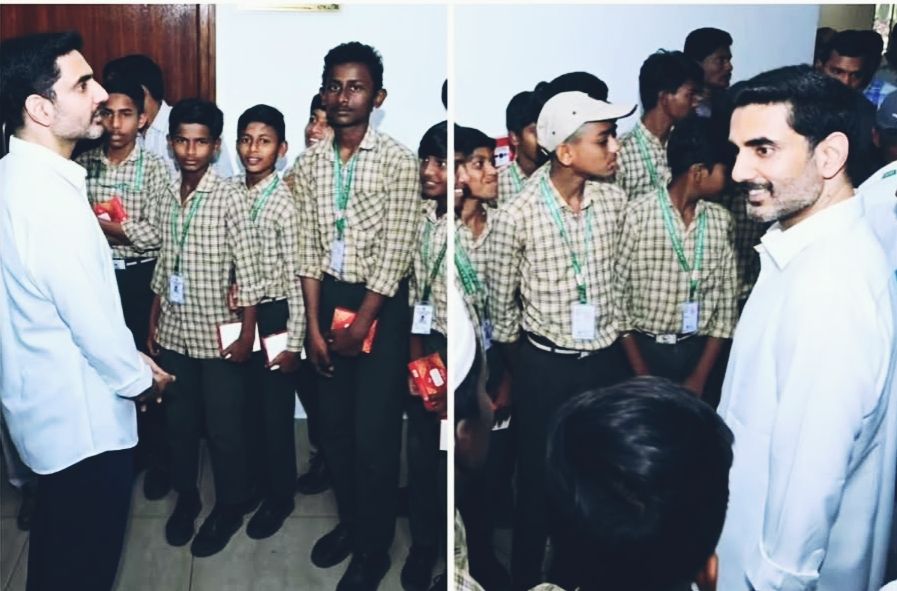
At the core of this reinvention was the now emblematic padayatra, a 400-day political exercise that transcended the conventions of electoral mobilization. Unlike episodic campaigns designed for visibility, this was an exercise in cognitive immersion—what might be described as field-based political education. Each village visited, each grievance recorded, and each conversation sustained functioned as a data point within a larger architecture of governance empathy. The padayatra transformed geography into pedagogy, converting distance into understanding. It was not merely about being seen; it was about learning to see—an inversion that reoriented Lokesh’s political instincts from abstraction to lived reality. In doing so, he accumulated not just visibility but credibility, a far more durable political currency.

Parallel to this grassroots immersion was a subtle yet significant re-engineering of political optics. Language, often underestimated in elite political trajectories, became a strategic instrument. Lokesh’s conscious effort to refine his Telugu—from functional fluency to expressive resonance—reduced the perceptual distance between leader and electorate. In a state where linguistic intimacy is intertwined with political authenticity, this shift carried disproportionate weight. Complementing this was a visible physical transformation, signaling discipline and intent. These were not cosmetic alterations but semiotic interventions—signals embedded in behavior and presentation that recalibrated public perception. The message was implicit yet powerful: transformation is not proclaimed; it is performed.
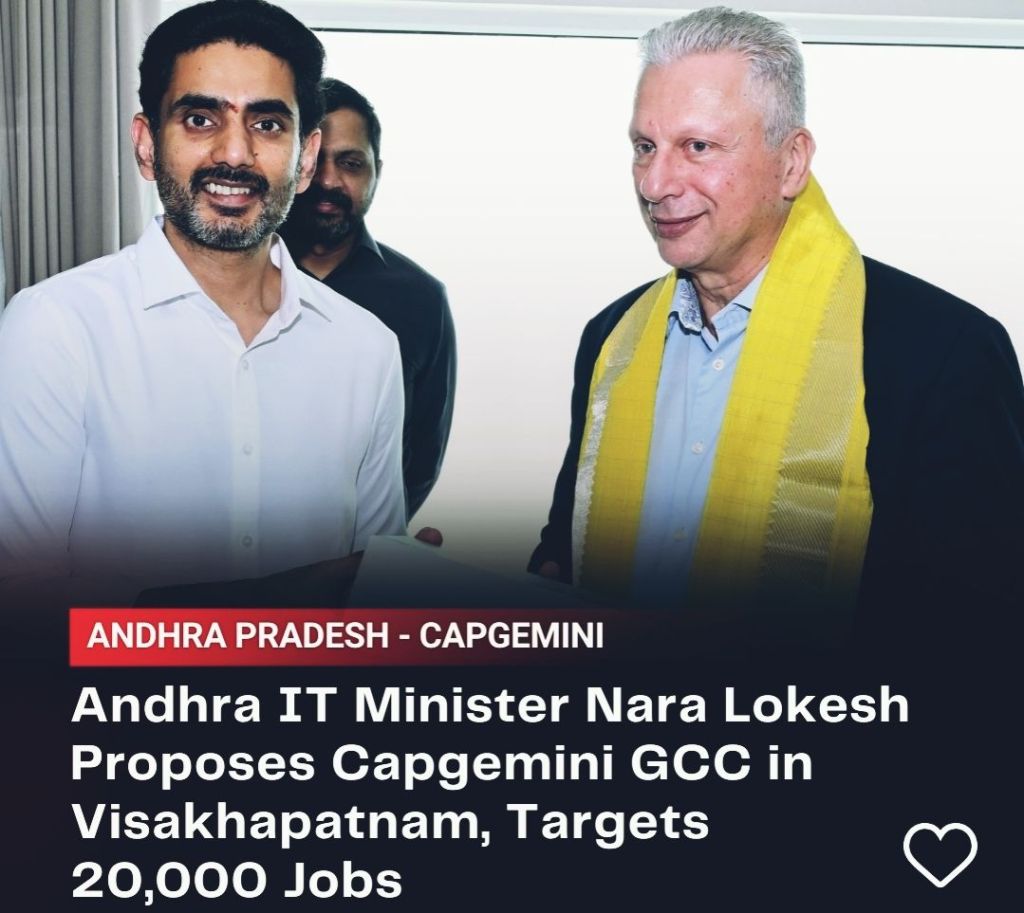
Equally consequential has been Lokesh’s embrace of what may be termed “intimate politics”—a departure from transactional networking toward relational architecture. By engaging legislators, party workers, and their families in informal, culturally grounded settings, he has sought to institutionalize trust rather than merely negotiate allegiance. This approach reimagines politics as a social ecosystem rather than a series of strategic exchanges. It is here that Lokesh diverges most meaningfully from his father’s governance template. While Naidu’s political legacy is anchored in administrative efficiency, technological innovation, and macro-level systems thinking, Lokesh introduces an additional layer: affective connectivity. He does not replace systems with sentiment; he embeds sentiment within systems, creating a hybrid model where governance is both efficient and emotionally legible.
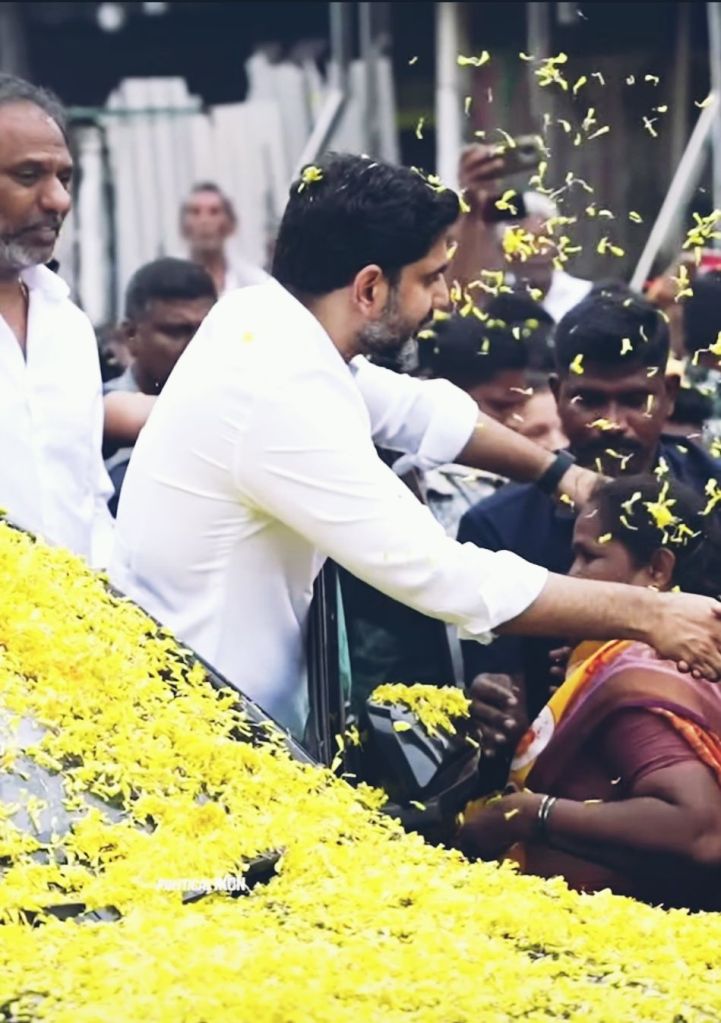
This synthesis extends into his engagement with technology and governance. Lokesh’s emphasis on digital interfaces—real-time grievance tracking, direct citizen communication platforms, and data-driven responsiveness—reflects an understanding that scale in contemporary governance requires technological mediation. Yet, unlike purely technocratic models that risk impersonality, his approach attempts to fuse digital efficiency with human proximity. The result is a hybrid governance imagination: one where technology enables reach, but relationships sustain legitimacy. For a state with a young, aspirational demographic, this alignment of digital fluency with political accessibility positions him as a leader attuned to both present realities and future expectations.
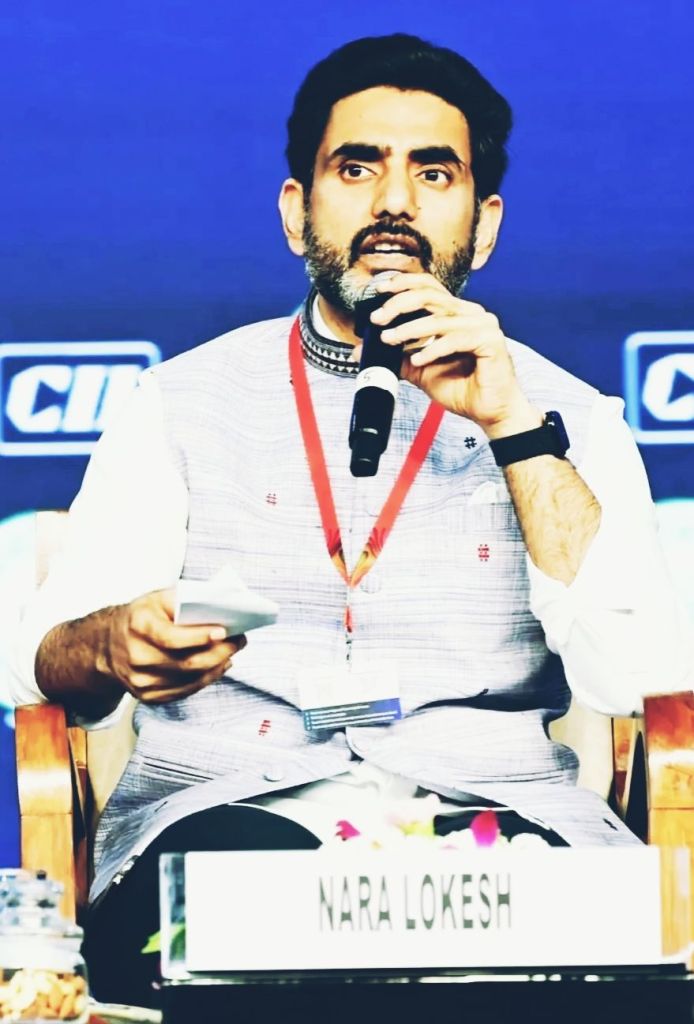
The decisive electoral victory in Mangalagiri in 2024, with a margin exceeding 90,000 votes, serves as empirical validation of this long arc of reinvention. But its deeper significance lies not in the magnitude of victory, but in the nature of its causation. This was not a wave election or a borrowed mandate; it was the cumulative outcome of sustained effort, iterative learning, and strategic humility. Yet, electoral success, while necessary, is insufficient for enduring leadership. The transition from a reformed politician to a transformative leader depends on the ability to convert relational capital into governance outcomes—jobs created, infrastructure delivered, institutions strengthened. It is here that Lokesh’s next test lies.

Ultimately, the question of whether Nara Lokesh is Andhra Pradesh’s next leader is less about succession and more about synthesis. Can he integrate administrative competence, emotional intelligence, and technological adaptability into a coherent governing philosophy? Can he move beyond comparison—with contemporaries like Y. S. Jagan Mohan Reddy—and establish an autonomous political identity? His candid acknowledgment of privilege—what he himself described as having “hit the genetic jackpot”—suggests a rare self-awareness that reframes inheritance as responsibility rather than entitlement. If sustained, this intellectual honesty could become a defining feature of his leadership.

In the final analysis, Lokesh’s journey is not merely a personal transformation; it is a reconfiguration of political possibility. It suggests that in a democracy often sceptical of dynastic continuity, legitimacy can still be constructed through discipline, immersion, and adaptive learning. The heir, in this case, did not simply wait for power; he walked toward it—slowly, deliberately, and with increasing clarity of purpose. Whether that journey culminates in enduring leadership will depend not on the distance he has already covered, but on the depth of governance he is yet to deliver.
VISIT ARJASRIKANTH.IN FOR MORE INSIGHTS
 SOCIAL PERSPECTIVES