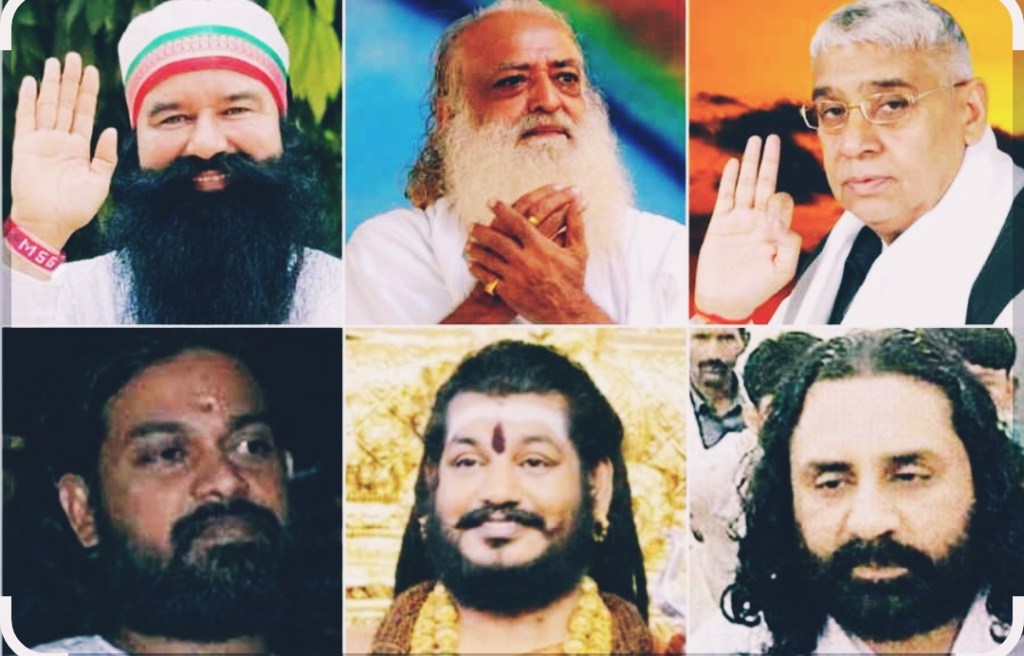
India has never been a stranger to spirituality, but it is increasingly becoming a laboratory of engineered faith. In a civilisation where saints once symbolised restraint, renunciation, and inner discipline, the modern self-styled guru has evolved into a corporate product—part miracle salesman, part cult CEO, part political negotiator. Their rise is not merely a religious phenomenon; it is a governance challenge, a psychological epidemic, and a moral crisis unfolding in full public view. The tragedy is not only that many of these figures become predatory, but that their unchecked empires corrode the trust of ordinary devotees who came searching for healing, meaning, and peace.
Unlike authentic spiritual traditions rooted in parampara, scriptural discipline, and internal accountability, the self-styled guru builds authority almost entirely on charisma. His legitimacy is manufactured through media omnipresence, choreographed crowds, and a personalised theology where he becomes the centre of cosmic meaning. Social media virality functions like a digital temple bell, ringing his name endlessly until the illusion of divinity feels self-evident. In a society where unemployment, illness, loneliness, and family instability generate silent despair, these gurus become emotional recruiters, converting vulnerability into surrender. Faith, which should liberate the mind, becomes a marketplace where insecurity is monetised.
The guru-devotee relationship then becomes the perfect architecture of psychological capture. Devotion is reframed as obedience, doubt becomes spiritual failure, and questioning is equated with sin. The follower is conditioned into a cognitive trap: the guru cannot be wrong, and even if he is wrong, his wrongness must be divine. This is not spirituality; it is metaphysical hostage-taking. Over time, the devotee becomes more invested in protecting the guru’s reputation than in protecting truth itself. That is the signature of cult psychology—where crimes are interpreted as tests of faith rather than violations of humanity, and where the follower defends the predator with a loyalty stronger than self-preservation.
This pattern has repeatedly produced grotesque scandals that resemble criminal empires more than spiritual communities. Gurmeet Ram Rahim Singh constructed a glittering universe of stadiums, schools, and propaganda machinery, only to be convicted for sexual assault and linked to violence and intimidation. Asaram Bapu’s name became synonymous with multiple rape convictions, including a minor. Nithyananda, exposed in scandal and facing charges, fled India and staged the absurd theatre of legitimacy by declaring a fictional “nation” called Kailaasa. These are not accidental deviations; they reveal a deeper ecosystem where religious branding becomes legal camouflage and divine imagery becomes an insurance policy against accountability.
The Maharashtra case of Ashok Kharat illustrates this ecosystem in its rawest and most frightening form. Allegations of rape, drugging, intimidation, and coercion were wrapped in the language of purification and divine touch. His alleged claim—“I am an avatar of God; you are fortunate I touched you; if you speak you will invite God’s wrath”—is not merely arrogance; it is a psychological weapon designed to paralyse victims with metaphysical fear. Fraud, too, becomes theatrical: remote-controlled fake snakes, fake tiger skin, polished tamarind seeds sold as “gems” for ₹10,000. The point was never belief. The point was control. Faith was simply the delivery mechanism through which crime could be normalised.
The danger deepens when such gurus begin to construct private kingdoms within public society. They create parallel systems of surveillance, discipline, propaganda, and punishment, often operating like miniature authoritarian states. Ram Rahim’s alleged use of cameras and microphones across his ashram created an illusion of omniscience—followers believed he knew their conversations, doubts, and sins. Fear becomes spiritualised. Obedience is not enforced through law, but through terror disguised as divine consequence. When crowds begin to believe the guru is above law, the state itself begins to look negotiable—as seen in episodes like the Hathras stampede linked to Bhole Baba, or the violent confrontations around Sant Rampal. These are not isolated tragedies; they are warnings that cult authority can destabilise districts, overwhelm administration, and turn law enforcement into an afterthought.
This ecosystem thrives on patriarchy and money—two forces that have historically shaped exploitation in India. Many godmen preach submission, especially to women: sacrifice ambition, accept suffering as virtue, obey silently. Under the mask of “culture,” they create environments where women’s bodies become institutional property, while the guru positions himself as the guardian of morality even as he violates every moral boundary. Donations flow, land is acquired, luxury multiplies, and religious trust structures enjoy tax privileges that unintentionally subsidise private empires. When journalists or whistleblowers expose wrongdoing, they are met with defamation suits, intimidation, and online mobs. Faith becomes a shield, and the law becomes negotiable.
The way forward is not anti-religious; it is pro-accountability. The Constitution itself permits regulation of the secular dimensions of religious practice under Article 25, while Article 26 allows autonomy only subject to public order, morality, and health. Mandatory registration of religious institutions receiving donations, independent audits, and public disclosure of finances must become standard. A uniform framework for charitable and religious endowments can prevent loopholes that allow self-styled gurus to function as private kingdoms. Fast-track courts for sexual exploitation cases involving religious leaders are essential because delay becomes intimidation. Maharashtra’s Jivhala programme offers a rare example of governance with moral clarity—entry controls, good touch/bad touch education, anonymous complaint systems, and mandatory FIR filing within an hour. India must understand the real lesson: spirituality is not the enemy, but when divinity is manufactured without accountability, the nation does not produce saints—it produces predators in robes, and calls it culture.
VISIT ARJASRIKANTH.IN FOR MORE INSIGHTS
 SOCIAL PERSPECTIVES