
In March 2025, during a pointed intervention in the Rajya Sabha, Raghav Chadha described recent banking amendments as “paper reforms,” arguing that they failed to confront a deeper structural asymmetry. His critique pierced beyond partisan theatre. Banks, he reminded Parliament, are not mere repositories of capital; they are democratic infrastructure—custodians of pensions, scholarships, farm credit, and household savings. Yet the everyday experience of citizens suggests a disquieting paradox. While policy rhetoric celebrates financial inclusion, the architecture of access remains stratified. For the privileged, banking operates as a seamless concierge service; for the ordinary depositor, it resembles a procedural labyrinth. The issue is not isolated inconvenience but systemic inequality embedded within design, discretion, and delivery.
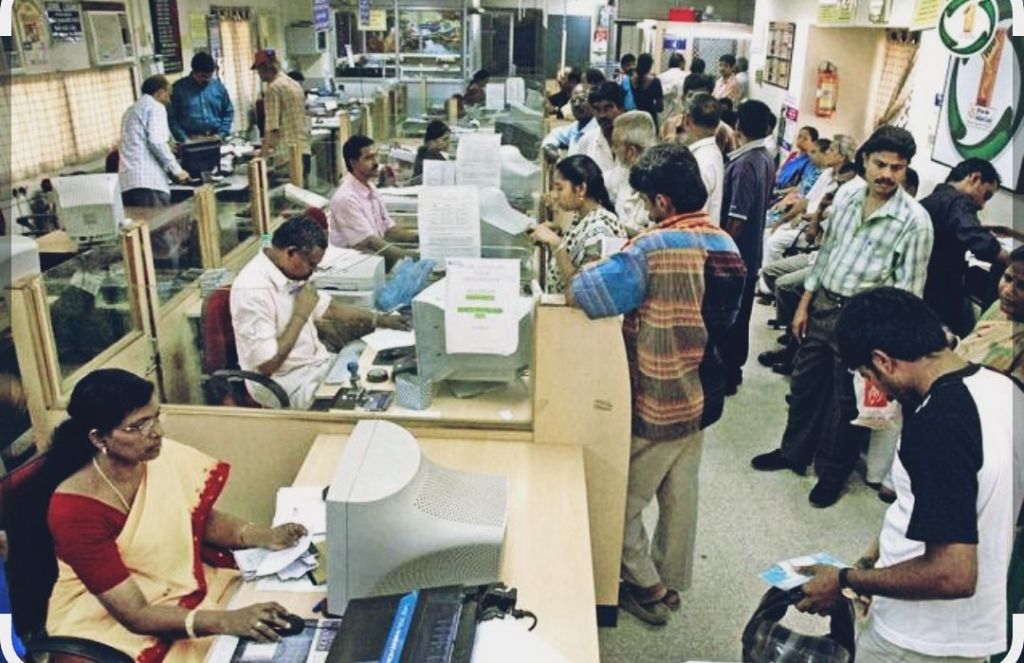
The asymmetry is visible first in space. In many semi-urban and rural branches, infrastructure signals institutional fatigue—long queues, outdated facilities, overburdened staff. For pensioners, small traders, and farmers, banking still requires physical presence, manual documentation, and repeated visits. Meanwhile, the digitally adept urban elite interact through private lounges, relationship managers, and priority helplines. This spatial divide produces a psychological one: dignity correlates with account size. Where dependence on public banking is greatest, service quality is often weakest. Financial inclusion, in this sense, becomes numerical—counting accounts opened—rather than experiential, measuring ease, respect, and efficiency in service delivery.
Procedural complexity compounds this divide. Know Your Customer (KYC) norms, indispensable for financial integrity, frequently translate into bureaucratic barricades. Dormant account reactivation, address updates, or minor discrepancies can trigger cycles of photocopies and inconsistent instructions. Centralized KYC frameworks promise standardization but remain uneven in execution. For high-net-worth clients, however, compliance is navigated by dedicated staff who interpret, expedite, and anticipate regulatory requirements. Thus, friction is not eliminated; it is redistributed. The rulebook remains identical, yet its burden is asymmetrical. Compliance becomes abrasive for the ordinary citizen and lubricated for the influential—an inversion of the egalitarian premise on which public banking was built.

Financial thresholds further illuminate the hierarchy. The removal of penalties for non-maintenance of minimum balances in some public sector banks acknowledged economic realities. Yet when private institutions raise urban minimum balance requirements to figures that immobilize months of income for middle-class earners, liquidity morphs into compulsion. Regulatory silence on such thresholds leaves consumer vulnerability unaddressed. For affluent clients, minimum balances are trivial benchmarks; for modest earners, they are coercive anchors tying up scarce savings. Simultaneously, credit markets reveal another squeeze: relatively high lending rates for homebuyers, students, and MSMEs coexist with deposit returns that often trail inflation. In theory, spreads reflect risk-based pricing. In practice, scale and negotiating power frequently secure preferential restructuring or concessions for large borrowers, while smaller clients face rigid enforcement.

Bundled financial products expose perhaps the most subtle asymmetry. Home loan insurance, investment-linked add-ons, and cross-sold financial instruments are frequently presented as “standard practice,” blurring the boundary between advice and obligation. While insurance can legitimately protect families, its positioning within the approval process often exerts implicit pressure. Borrowers with adequate life coverage may not require additional policies, yet smoother processing can appear contingent on acquiescence. Regulators have signaled that loans must not be conditional upon ancillary purchases and that suitability norms should govern product recommendations. Digital interfaces are being scrutinized for “dark patterns”—pre-ticked boxes and obscured opt-outs. These steps are significant, but enforcement, not proclamation, will determine whether transparency becomes habitual rather than rhetorical.

Cyber fraud introduces a further fragility. Rising digital transactions have been accompanied by escalating fraud cases, eroding depositor confidence. While victims navigate protracted grievance mechanisms, inter-bank collaboration on fraud detection remains limited by data-sharing constraints. Globally, privacy-enhancing technologies enable institutions to share risk signals without compromising personal data—a principle elegantly summarized as “share the signal, not the file.” Absent comparable architectures, institutional silos persist while fraudsters exploit systemic gaps. The citizen bears the cognitive and financial cost of navigating fragmented redressal systems.
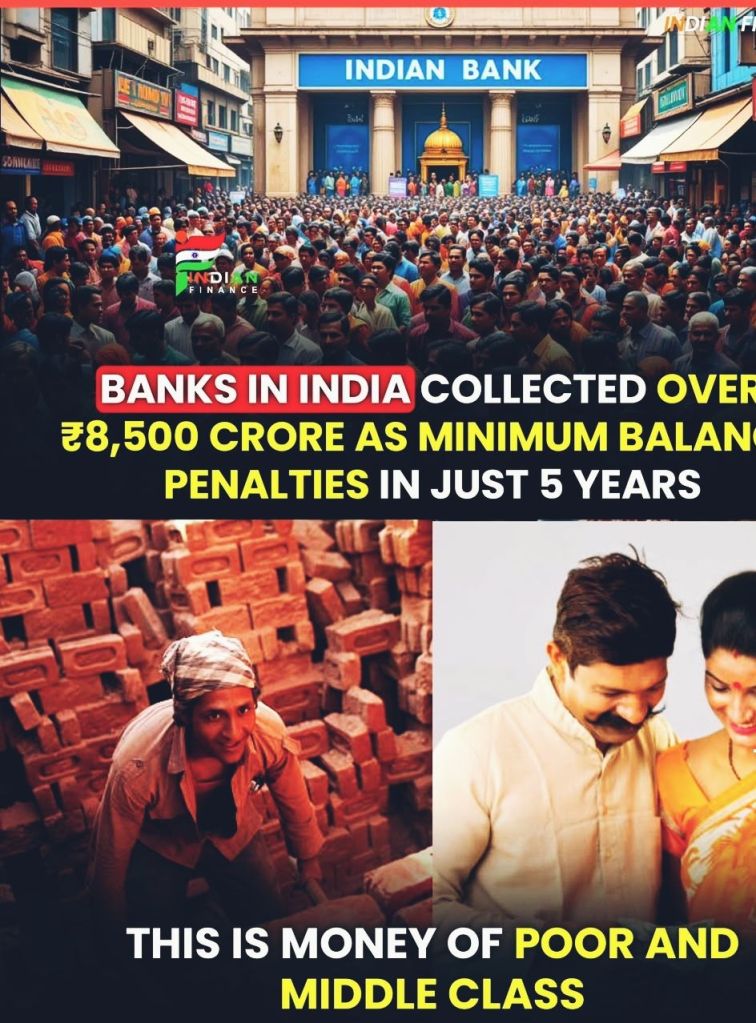
What emerges is not a narrative of malevolence but of structured inconvenience. Complexity concentrates downward; convenience concentrates upward. The republic’s financial arteries transmit liquidity unevenly, reinforcing social stratification. Corrective reform requires more than incremental circulars. A binding Financial Consumer Protection Code—embedding suitability mandates, capping punitive charges, enforcing transparent grievance timelines, and modernizing branch infrastructure—is imperative. Regulatory courage must complement digital innovation, ensuring that competition reduces spreads and elevates service standards. Above all, empathy must be institutionalized as operational doctrine rather than public relations rhetoric.

Raghav Chadha’s parliamentary intervention ultimately foregrounded a democratic question: if banks are indeed pillars of the republic, can they justify a velvet rope economy within a constitutional order premised on equality? Financial inclusion must mature from numerical expansion to experiential equity. Otherwise, India risks sustaining a paradox where the aam aadmi queues beneath rusted fans while the privileged glide through glass corridors—each inhabiting a different republic within the same banking system.
VISIT ARJASRIKANTH.IN FOR MORE INSIGHTS
 SOCIAL PERSPECTIVES