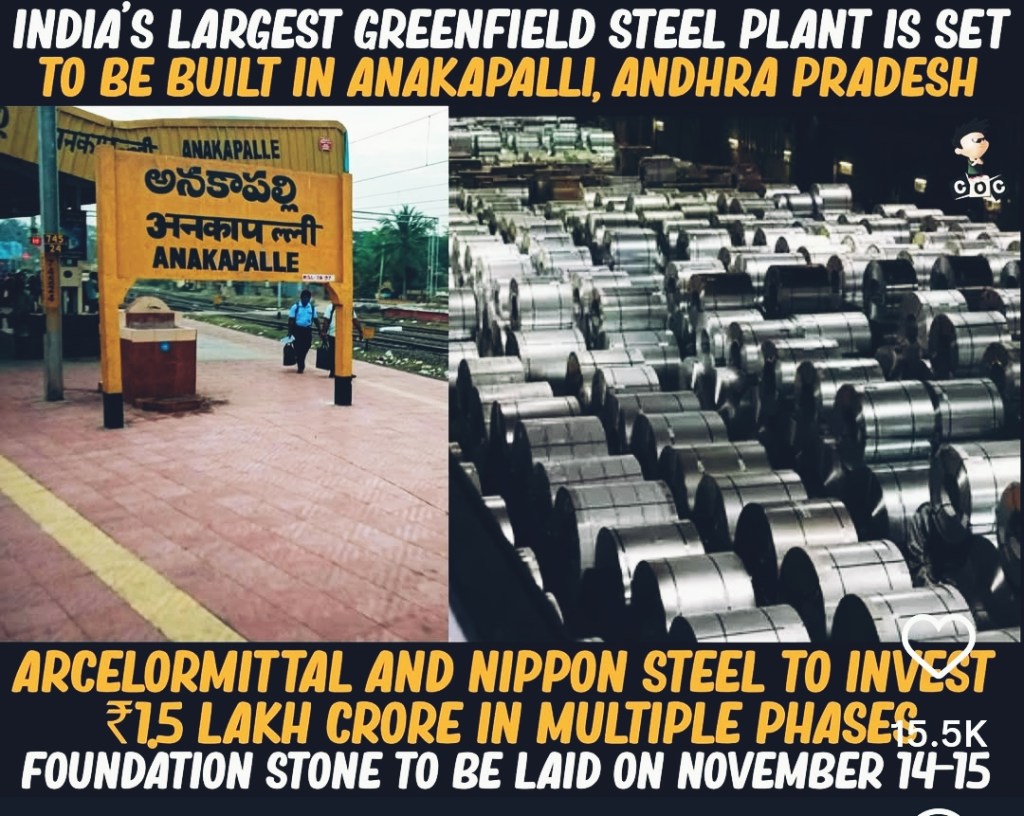
In the evolving grammar of global development, few regions display the audacity to reimagine themselves in real time. Andhra Pradesh stands out as a compelling example of such reinvention—where governance is not merely administrative, but strategic; not reactive, but anticipatory. What began as a calibrated industrial push under the leadership of N. Chandrababu Naidu—notably with the successful induction of Kia Motors—has now matured into a comprehensive industrial transformation that repositions the state within India’s economic architecture.
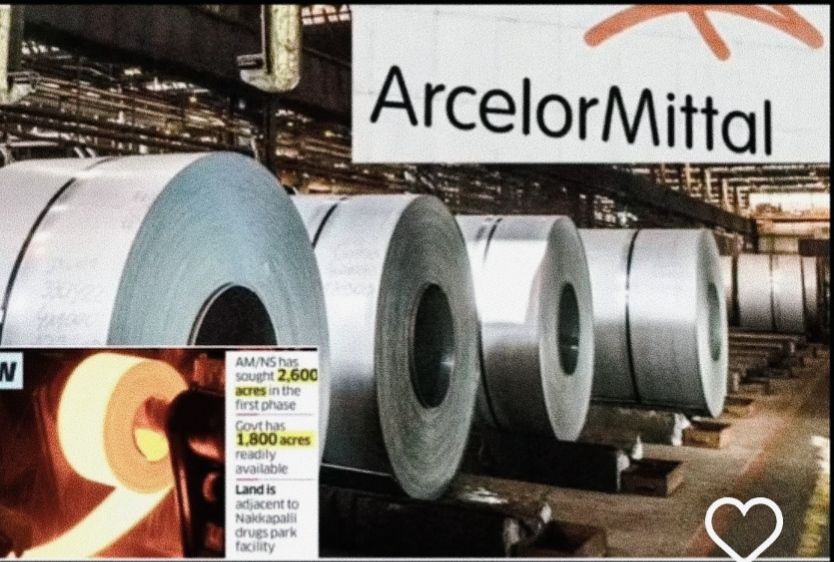
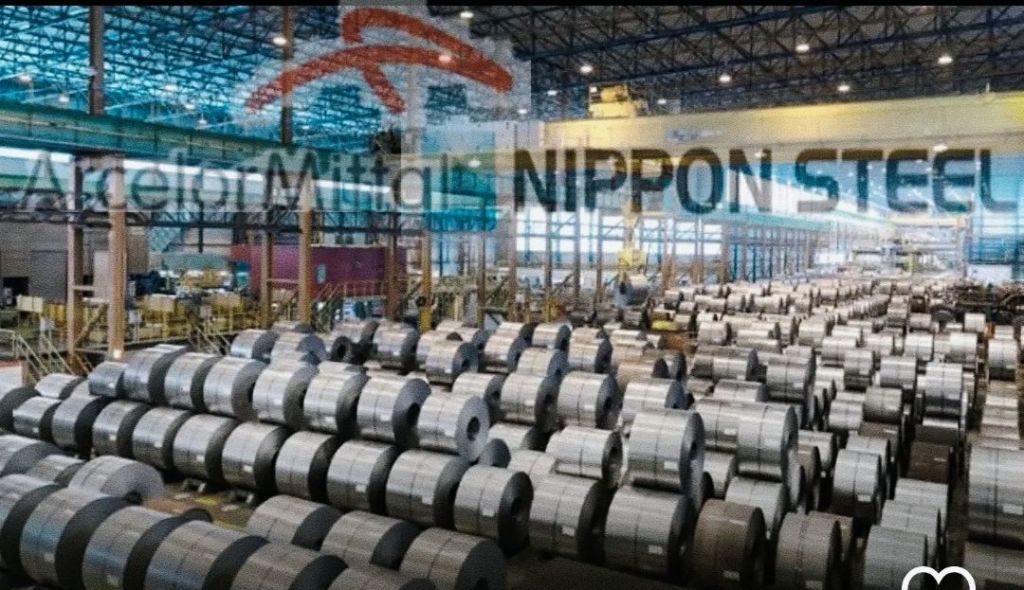
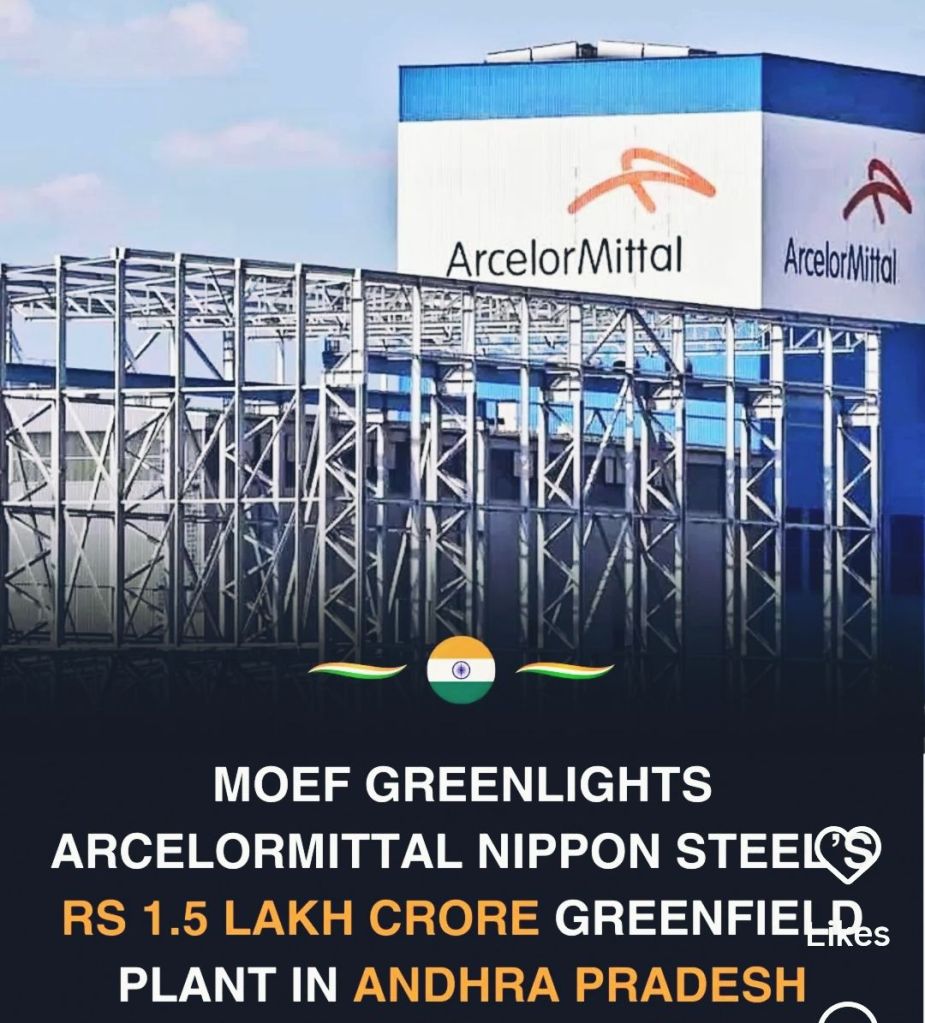
The entry of ArcelorMittal and Nippon Steel through their joint venture, ArcelorMittal Nippon Steel (AM/NS), represents a tectonic shift in industrial geography. With an investment of ₹1.5 lakh crore and a planned capacity of 24 million tonnes per annum, the Rajayyapeta facility in Anakapalli district is among the largest integrated steel plants globally. This is not incremental industrialization but structural economic re-engineering, signaling a decisive move toward a manufacturing-led growth paradigm.
At the centre of this transformation lies Visakhapatnam—a city historically anchored in maritime trade and heavy industry, now undergoing a strategic reinvention. Emerging simultaneously as a data centre hub and a manufacturing powerhouse, Visakhapatnam exemplifies a rare convergence of digital infrastructure and industrial production. The Vizag–Anakapalli corridor is thus evolving into a hybrid economic ecosystem where technological modernity coexists with industrial scale.

What distinguishes this transformation is not merely its magnitude, but the precision of its orchestration. The Government of Andhra Pradesh has demonstrated institutional coherence in aligning land acquisition, environmental clearances, logistics infrastructure, and investor facilitation within compressed timelines. The allocation of over 2,200 acres, coupled with swift regulatory approvals and the development of a captive port ecosystem, reflects a governance model that prioritizes execution, thereby redefining the state’s role from regulator to enabler.
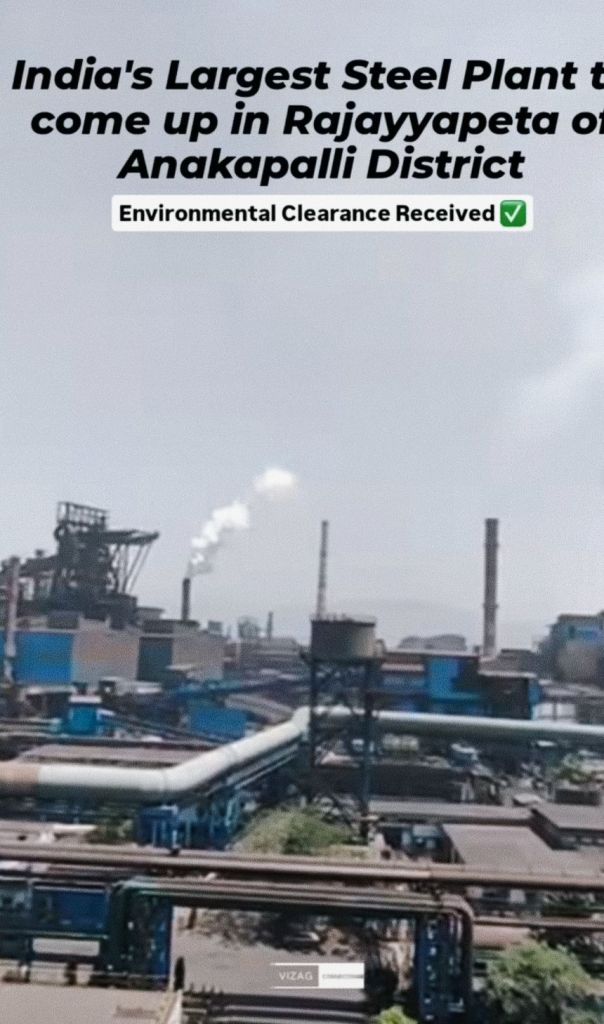
The AM/NS project itself embodies next-generation industrial design. Anchored in advanced, energy-efficient, and low-emission technologies, it aligns with global sustainability benchmarks while ensuring high productivity. Its diversified product portfolio—from hot rolled coils to specialized auto-grade steel—positions it within high-value manufacturing segments. Complemented by integrated logistics such as the DL Puram captive port and slurry pipeline networks, the project represents a cohesive and resilient industrial architecture.
Beyond infrastructure and investment, the project’s most enduring impact will be socio-economic. With an estimated employment potential approaching one lakh jobs, it is poised to transform livelihoods across north coastal Andhra Pradesh. While challenges related to land acquisition, rehabilitation, and environmental stewardship persist, the state’s evolving approach reflects a conscious effort to balance growth with inclusivity. Ultimately, Andhra Pradesh is not merely attracting capital—it is curating an ecosystem of development, signaling a transition toward a future where industrial ambition and human progress advance in tandem.
VISIT ARJASRIKANTH.IN FOR MORE INSIGHTS
 SOCIAL PERSPECTIVES