
Few social welfare programmes in the developing world have carried the moral ambition and legislative audacity of the Mahatma Gandhi National Rural Employment Guarantee Act. Enacted in 2005, the law introduced a radical proposition for rural India: a legally enforceable right to employment. Every rural household willing to undertake unskilled manual work was guaranteed up to one hundred days of wage employment each year. Unlike conventional welfare schemes that function through administrative discretion, the programme was conceived as a rights-based framework in which citizens could legally demand work and the state was obligated to provide it. The legislation sought to transform welfare from a charity-like benefit into an enforceable entitlement. Over two decades the programme generated billions of person-days of employment, expanded rural purchasing power, and offered millions of marginalized workers—especially women, Scheduled Castes, and tribal communities—a measure of economic security. Yet beneath this transformative ambition lies a more complex reality: a visionary law repeatedly constrained by procedural bottlenecks, institutional inertia, and structural weaknesses that prevented its founding promise from being fully realized.
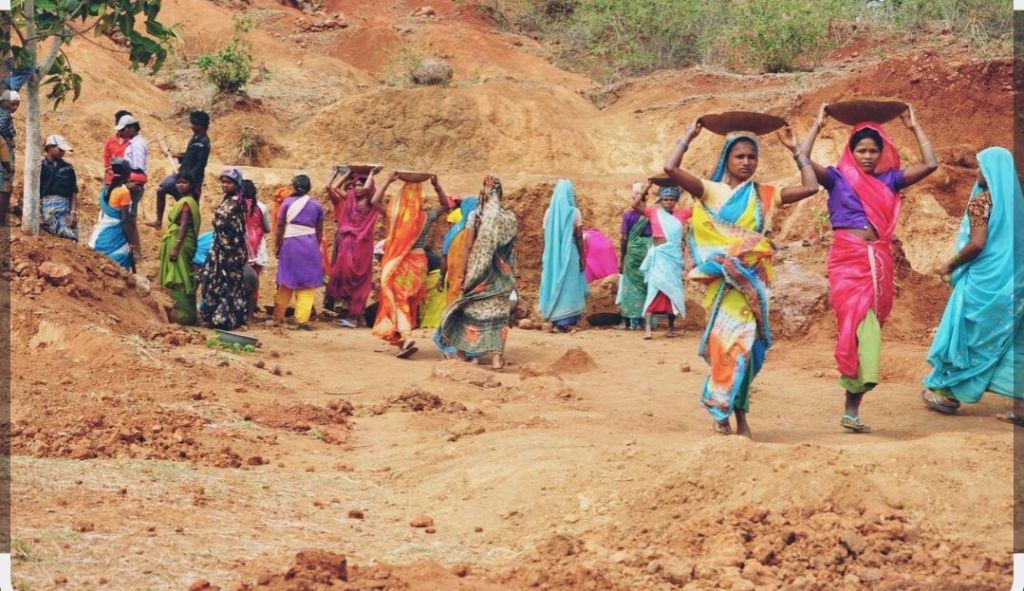
At its conceptual core, the programme was built on a demand-driven architecture rarely seen in welfare policy. Rural households could submit requests for employment at local administrative offices, and work had to be provided within fifteen days. If the government failed to provide employment within that period, workers were legally entitled to unemployment allowance. This mechanism represented a profound shift in the relationship between citizen and state. Instead of passively waiting for welfare benefits, rural workers were empowered to claim employment as a right. The framework also mandated timely wage payments, decentralized planning through village assemblies, and social audits conducted by local communities to ensure transparency. In theory, the architecture represented one of the most sophisticated social protection models in the developing world—combining income support, grassroots democracy, and rural infrastructure development within a single legislative framework.

However, the practical implementation of this ambitious design encountered persistent operational challenges. Among the most visible has been the chronic delay in wage payments. The law mandates that workers must be paid within fifteen days of completing their work. In practice, payments across many regions have frequently been delayed for weeks or even months. For labourers living at the edge of subsistence, such delays undermine the programme’s central purpose. A guaranteed job means little if the income from that work arrives long after the household’s immediate needs have passed. Administrative records have repeatedly shown large backlogs in pending wage payments, sometimes amounting to thousands of crores nationally. These delays arise from multiple points in the payment chain—fund release procedures, banking bottlenecks, and digital transaction failures—each adding layers of uncertainty to a scheme meant to provide financial predictability.
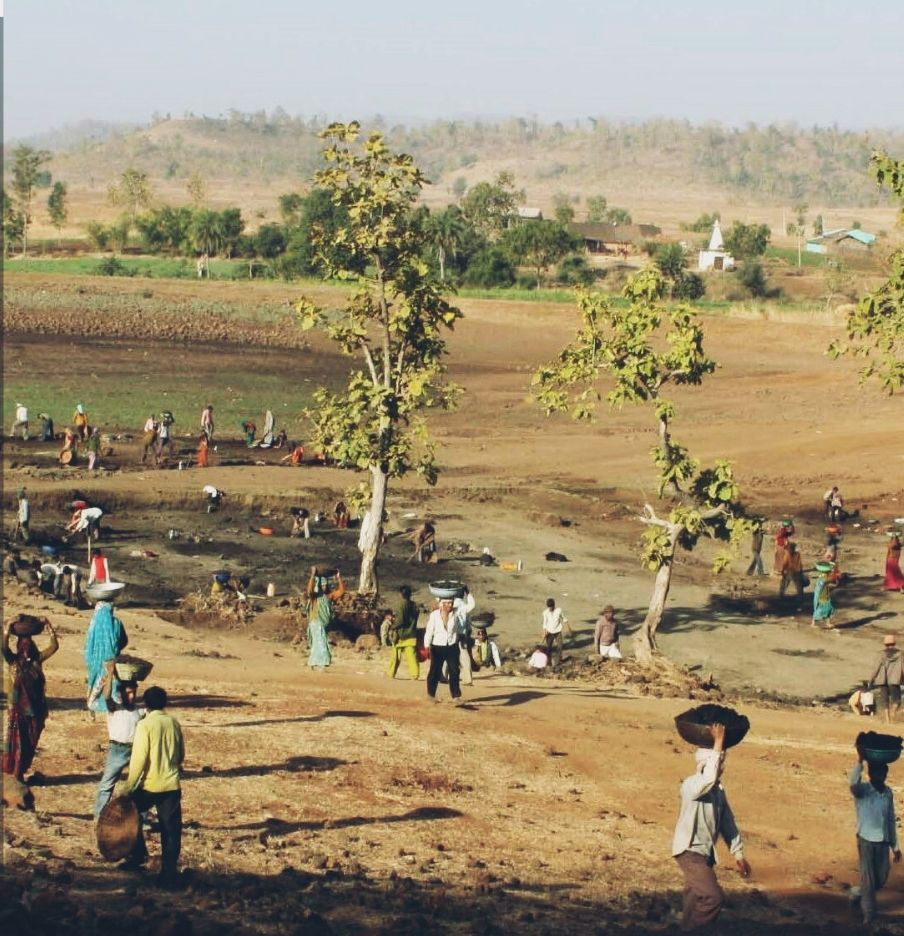
Equally problematic has been the relationship between programme wages and prevailing labour market conditions. In several states the wage rates offered under the employment guarantee programme have remained lower than statutory minimum wages or local agricultural wages. Rational workers therefore gravitate toward better-paying private employment whenever it is available. When public employment pays less than the market, the programme loses credibility as a reliable safety net. Instead of serving as a dependable buffer during economic distress, the scheme sometimes becomes a residual option for workers who cannot find alternative employment. This wage disparity not only reduces participation but also weakens the programme’s ability to influence rural labour markets and improve overall wage standards.
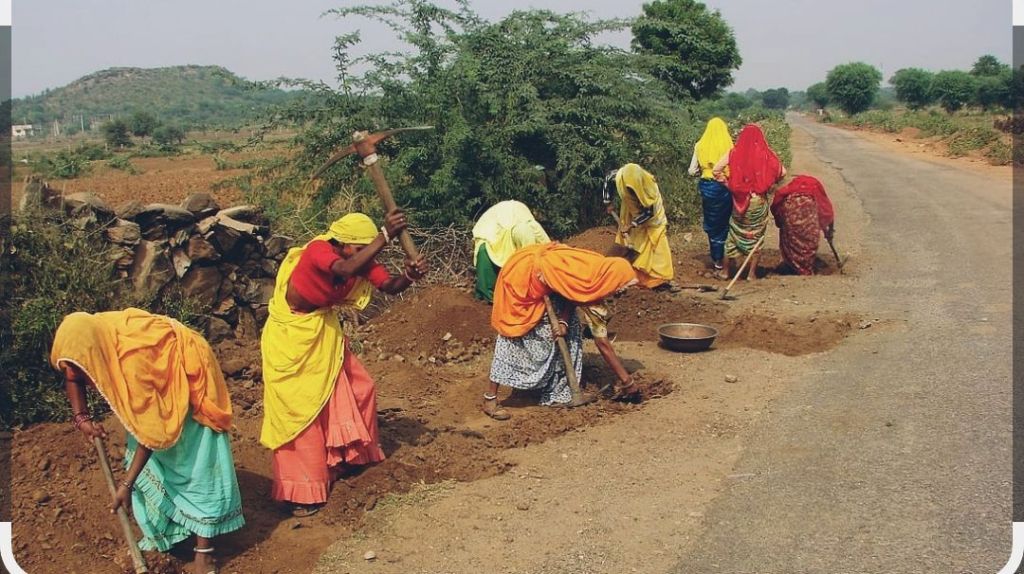
Administrative capacity at the grassroots level has also posed a structural constraint. The programme depends heavily on village governments to identify projects, prepare technical estimates, supervise worksites, and maintain records. Yet many local administrations operate with limited staffing and minimal technical expertise. The shortage of engineers, planners, and trained supervisors has often resulted in poorly designed projects or delays in execution. While the programme has created millions of rural assets—including ponds, irrigation channels, rural roads, and soil conservation structures—the quality and durability of these assets vary widely across regions. In some areas, development works have degenerated into repetitive earth-moving exercises that provide temporary employment but produce limited long-term economic value.

Another critical weakness has been the gradual erosion of the programme’s demand-driven character. Although the law allows any household to request work, administrative practices in many regions have effectively transformed the scheme into a supply-driven programme. Employment is often offered according to available budgets or administrative convenience rather than genuine worker demand. In numerous instances, job requests are never formally recorded, and villagers are discouraged from submitting written applications that might create legal obligations for local authorities. Without documented demand, the accountability mechanism embedded in the law collapses, and the programme’s rights-based foundation becomes largely symbolic.

Concerns about leakages and irregularities have further complicated implementation. Periodic audits have revealed instances of inflated material costs, ghost beneficiaries listed on muster rolls, and the informal involvement of contractors despite explicit legal prohibitions. Although the total scale of financial misappropriation remains relatively small compared with the programme’s overall expenditure, such irregularities weaken public trust and expose weaknesses in oversight mechanisms. Social audits—designed as the programme’s most powerful accountability instrument—have been implemented unevenly across states, limiting their ability to consistently detect and correct irregularities.

Technological reforms introduced in recent years have attempted to address these governance challenges but have also generated new complications. Digital attendance systems, biometric authentication, and Aadhaar-linked electronic payments were designed to improve transparency and reduce corruption. Yet in rural regions with limited internet connectivity and low digital literacy, these mechanisms have sometimes created unintended barriers. Workers unable to complete biometric authentication or navigate digital platforms often face delays in receiving wages despite having completed their work. The paradox of digital governance thus becomes clear: technologies designed to enhance efficiency can, in fragile administrative environments, inadvertently exclude the very citizens they are meant to serve.

Despite these shortcomings, the rural employment guarantee programme remains one of the most ambitious social protection experiments ever undertaken in a democratic developing economy. When implemented effectively, it has raised rural wage levels, strengthened labour bargaining power, and provided a crucial buffer during economic shocks such as droughts, agricultural downturns, and financial crises. More broadly, it has demonstrated that large-scale public employment programmes can function as instruments of both social protection and rural development.

The deeper lesson from two decades of experience is not that the idea of an employment guarantee was flawed, but that rights-based legislation demands equally robust administrative capacity and institutional accountability. Laws can declare rights, but procedures determine whether those rights reach citizens. The enduring challenge for India’s rural employment architecture therefore lies not merely in expanding budgets or redesigning schemes, but in strengthening the governance systems that translate legislative ambition into everyday reality. Only when administrative efficiency matches the moral vision of the law can the promise of guaranteed work evolve from a bold legislative experiment into a dependable lifeline for millions of rural households.
VISIT ARJASRIKANTH.IN FOR MORE INSIGHTS
 SOCIAL PERSPECTIVES