
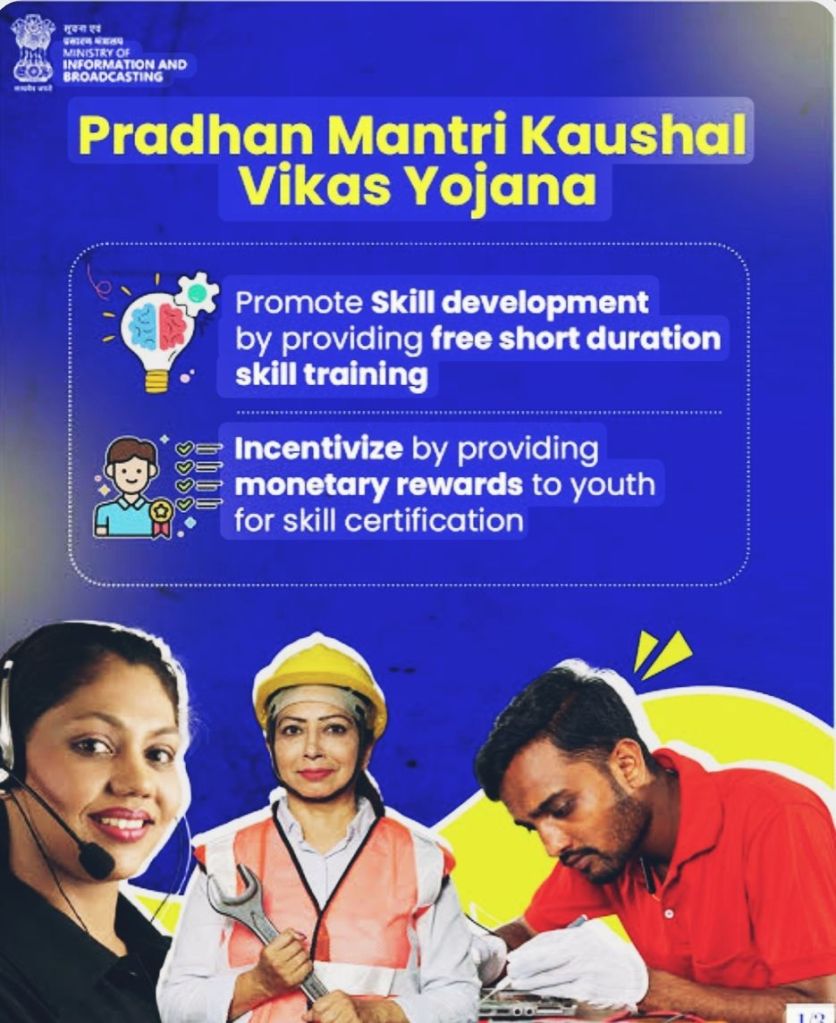
In 2015, India embarked on one of the most ambitious workforce transformation experiments in its modern economic history. A nationwide skilling initiative was conceived as the central pillar of a broader mission to convert the country’s vast youth population into a dynamic engine of economic growth. The timing appeared ideal. With millions of young people entering the labour force every year, India seemed poised to capitalise on what economists describe as a “demographic dividend.” If effectively trained and absorbed into productive sectors, this expanding workforce could propel industrial expansion, technological innovation, and global competitiveness. The programme promised to bridge the persistent gulf between formal education and employability by equipping young citizens with industry-relevant capabilities. Yet nearly a decade later, the experience reveals a sobering lesson in public policy: when ambition is not matched by strong governance, scale can generate impressive numbers without producing meaningful transformation.

On paper, the architecture of the programme appeared formidable. A national skill development ecosystem supported by regional missions was tasked with delivering short-term vocational training across a wide spectrum of industries. The initiative also introduced mechanisms to recognise prior learning, allowing individuals who had acquired skills informally to obtain formal certification and improve their labour market prospects. Over successive phases, the programme expanded rapidly, establishing thousands of training centres and certifying millions of candidates. These figures projected the image of a rapidly growing skill ecosystem capable of reshaping India’s employment landscape. Yet the fundamental metric of success for any skilling initiative is not the number of certificates issued but the number of sustainable livelihoods created.
Official figures presented in the national legislature in 2026 revealed a disquieting reality. Only about 21.96 percent of roughly 11.1 million certified candidates were reported to have secured employment. Even this modest figure has been the subject of scrutiny. A performance audit conducted by the national audit authority identified serious deficiencies in the verification of job placements. Supporting documentation for employment claims was often incomplete, inconsistent, or altogether absent. In several regions, placement data uploaded to official digital portals could not be independently validated, raising concerns that employment outcomes may have been overstated or inadequately monitored.
The disappointing outcomes reflect a deeper structural flaw that has long haunted skill development efforts: the disconnect between training programmes and the realities of labour market demand. Many training centres concentrated on a limited cluster of job roles such as retail assistants, data entry operators, and tailoring technicians—occupations already saturated in many local economies. These decisions were frequently taken without credible analysis of regional skill shortages or industry demand. Nearly forty percent of all certifications were concentrated in only a handful of occupational categories, ignoring the vast diversity of economic opportunities across the country. In some instances, sectors that had previously demonstrated stronger placement outcomes were inexplicably removed from subsequent training cycles. Over time, what began as an economic intervention gradually degenerated into a bureaucratic exercise driven by certification targets rather than employment outcomes.

Even more troubling than inefficiency were the systemic irregularities uncovered within the programme’s operational framework. Audit findings revealed widespread anomalies in beneficiary records. In nearly ninety-four percent of cases, bank account details were missing, incomplete, or replaced with placeholder entries such as zeros or “N/A.” Contact information frequently appeared fabricated, with generic email addresses or repetitive numerical sequences used across multiple records. Such irregularities fundamentally undermine the credibility of digital governance systems, particularly direct benefit transfer mechanisms designed to ensure transparency and financial accountability.

Further investigations revealed instances that suggested deliberate manipulation of training documentation. In one striking case, a private training entity was reported to have certified more than thirty-three thousand trainees across multiple regions. Subsequent scrutiny revealed that identical photographs had been repeatedly submitted as evidence of different training batches and candidate groups. When verification attempts were made, investigators discovered that the firm had ceased operations years earlier. This episode exposed a deeper vulnerability in large-scale programmes: when monitoring frameworks fail to evolve alongside administrative expansion, systems designed to empower citizens can become susceptible to exploitation.

Oversight mechanisms intended to prevent such abuses also proved alarmingly weak. Biometric attendance systems introduced to verify trainee participation were either absent or non-functional in numerous training centres. Field inspections revealed facilities that were closed during scheduled training hours, casting doubt on whether training activities had taken place at all. Even inspection reports themselves appeared questionable, with records indicating that officials had supposedly visited training centres located in different states on the same day—an administrative impossibility that further eroded confidence in the monitoring framework. Combined with instances of unutilised funds and unreliable beneficiary data, the programme gradually evolved into a paradox: significant public expenditure and impressive certification statistics coexisted with weak employment outcomes and fragile institutional credibility.

Yet the broader lesson emerging from this experience is not one of failure alone, but of urgent reform. India’s skilling challenge cannot be addressed through mass certification or numerical targets. Genuine skill development requires deep alignment with regional economic needs, rigorous training standards, credible monitoring systems, and independent verification of outcomes. Successful initiatives across various regions demonstrate that programmes built around strong industry partnerships, longer training durations, and sector-specific expertise can significantly improve employment outcomes. India’s demographic dividend remains one of its most powerful strategic assets. The aspirations of millions of young citizens enrolling in skill programmes demand more than symbolic certificates—they require training that translates into real capabilities, dignified employment, and meaningful participation in the nation’s economic future. Without stronger governance, accountability, and market alignment, the country risks producing credentials in abundance while the promise of employment remains an elusive mirage.
VISIT ARJASRIKANTH.IN FOR MORE INSIGHTS
 SOCIAL PERSPECTIVES