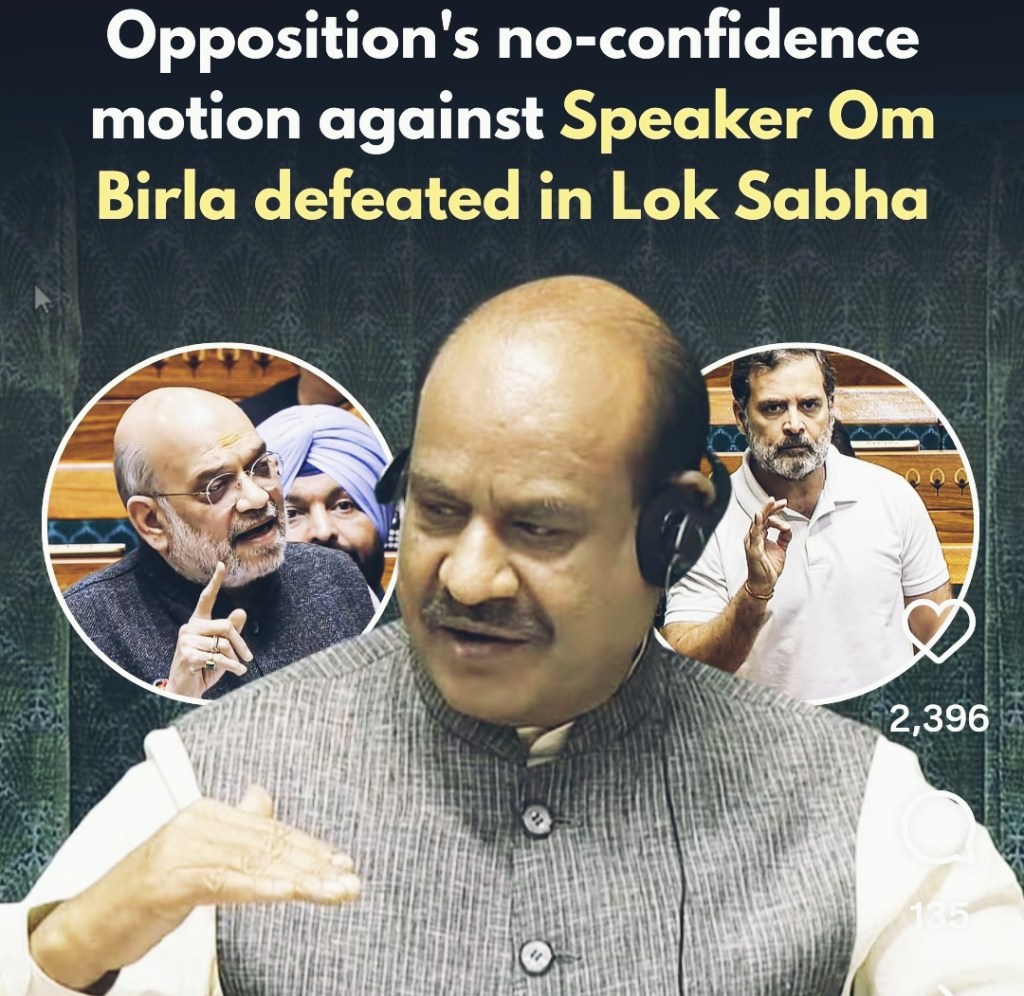
Democracy is often imagined as a grand conversation—an arena where disagreement is not merely tolerated but institutionalized through debate, persuasion, and procedure. Yet the vitality of such a system depends less on the loudness of its arguments than on the integrity of its institutions. Recent events inside the Lok Sabha offer a revealing moment of reflection. What unfolded during the dramatic attempt to remove the Speaker was not merely a procedural skirmish; it was an illuminating glimpse into how democratic architecture begins to strain when trust between the government and the opposition begins to erode. When the institutional referee itself becomes a subject of political contention, the health of parliamentary democracy inevitably comes under scrutiny.
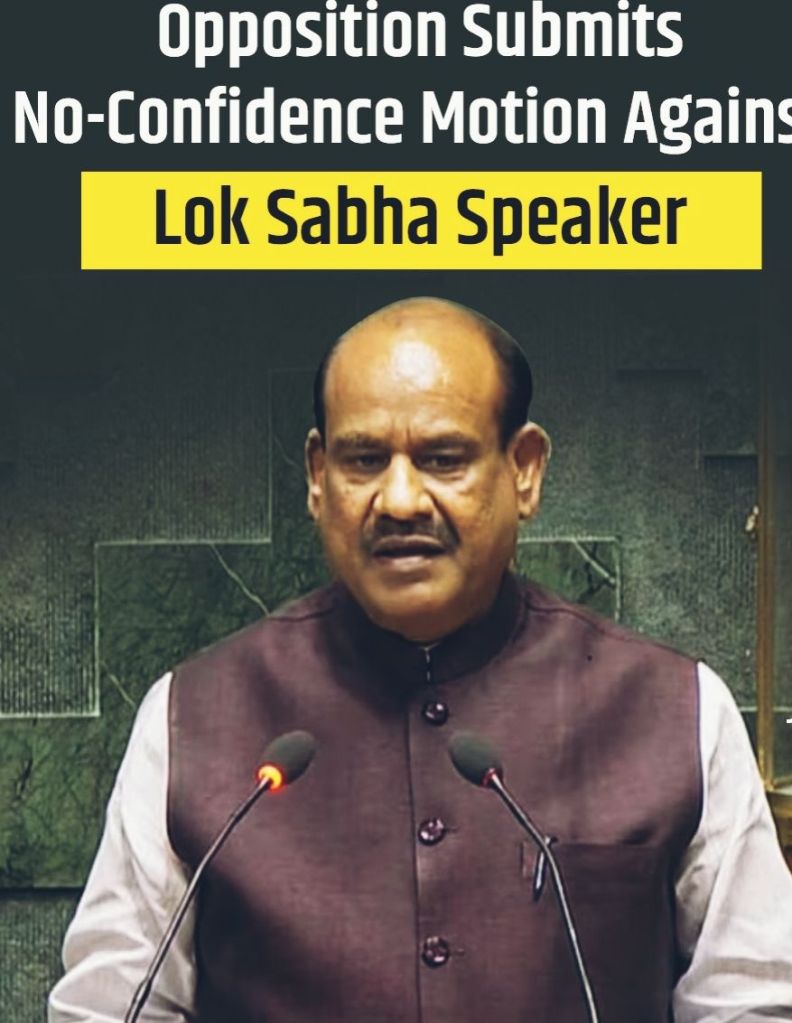
The immediate trigger was a rare parliamentary motion targeting the office of the Speaker, held by Om Birla. Within India’s constitutional design, the Speaker occupies one of the most delicate positions in governance. Although elected from a political party, the Speaker is expected to transcend partisan loyalties and function as the neutral guardian of parliamentary procedure. Under the Constitution of India, the removal of a Speaker requires a resolution supported by a majority of the House, preceded by formal notice and backed by at least fifty Members of Parliament before it can even be debated. These safeguards were intentionally designed to preserve the dignity and independence of the office, ensuring that the Speaker’s authority does not become hostage to momentary political passions.
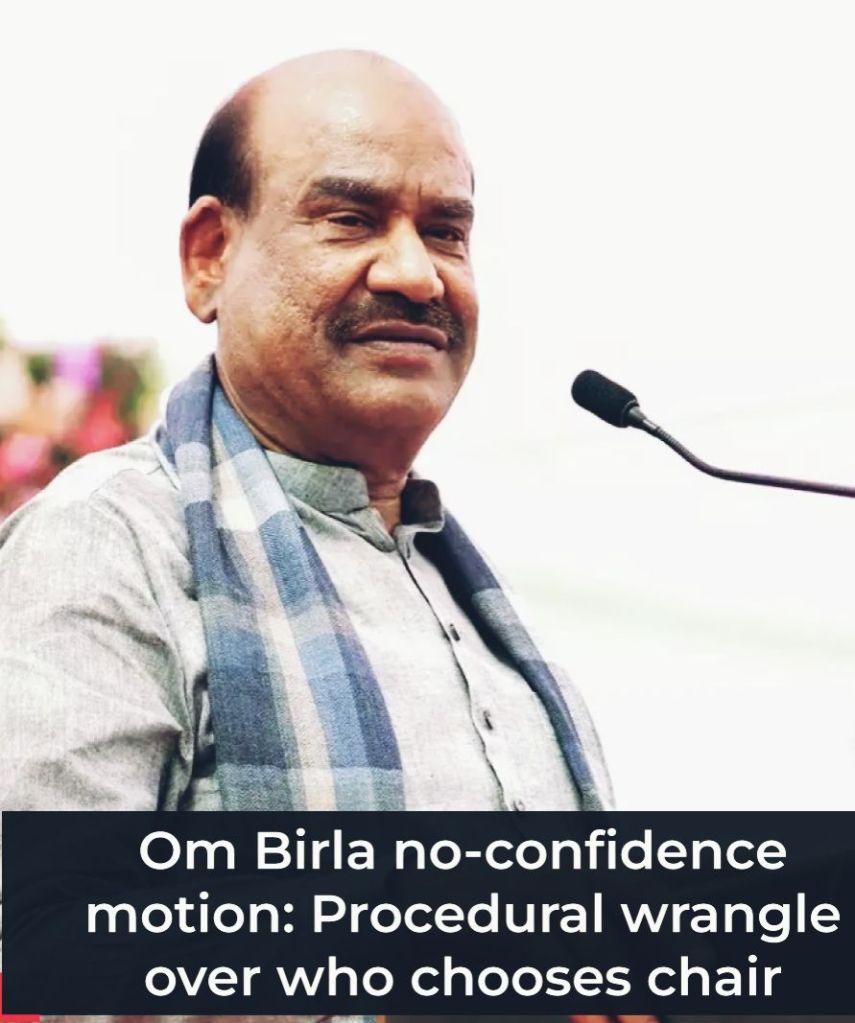
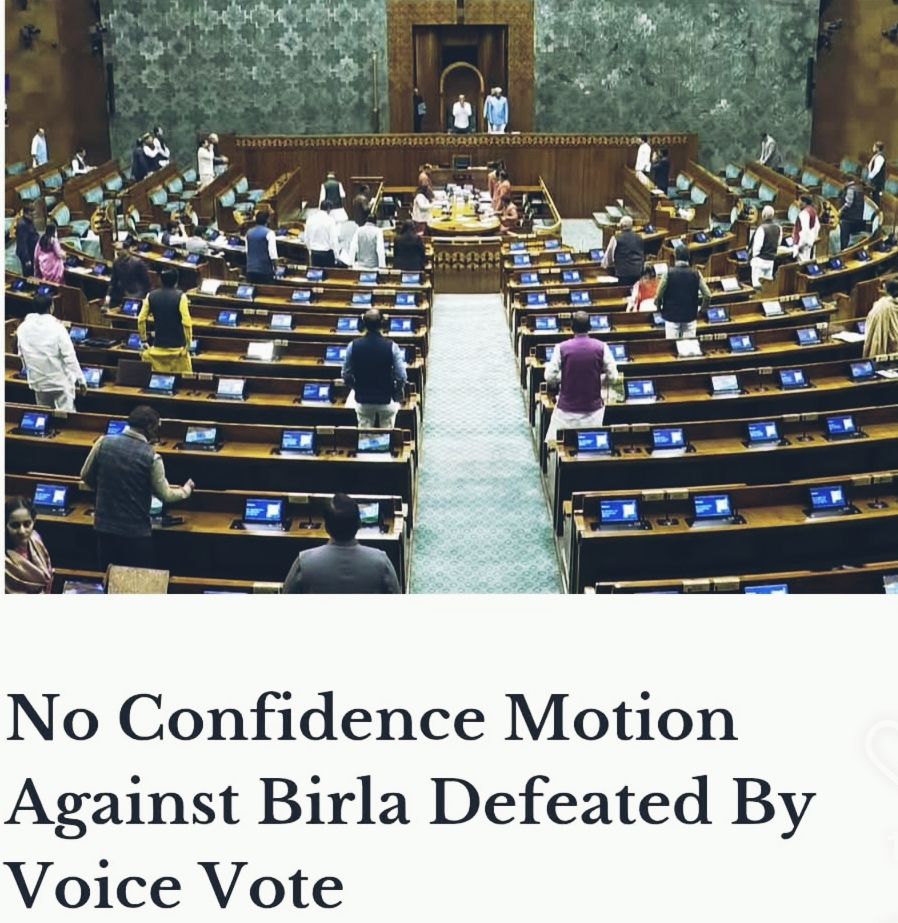
Yet in this instance, the outcome of the motion was never truly in doubt. The ruling National Democratic Alliance commanded a clear numerical majority in the House, while opposition parties within the INDIA bloc lacked the arithmetic strength to alter the final result. When the vote was ultimately conducted through a voice vote rather than a recorded electronic division, the government’s numerical advantage translated into a powerful auditory display. Parliamentary democracy occasionally carries theatrical overtones, and voice votes illustrate this phenomenon vividly. In a chamber echoing with slogans, interruptions, and partisan enthusiasm, whoever commands the louder chorus appears to prevail. The ritual of procedure, while constitutionally valid, often mirrors the dramatic instincts of political contest.
However, the controversy was never solely about numbers. The opposition framed the motion as a protest against what it perceived as the gradual erosion of neutrality in the Speaker’s office. The Leader of the Opposition, Rahul Gandhi, articulated concerns that opposition voices were increasingly curtailed during debates. According to several members, attempts to raise politically sensitive issues were interrupted, and microphones were occasionally switched off while opposition leaders such as Shashi Tharoor attempted to address the House. For critics, these incidents symbolized a deeper institutional shift in which the legislative chamber risked transforming from a forum of scrutiny into a space where procedural control determined who could speak and who could not.
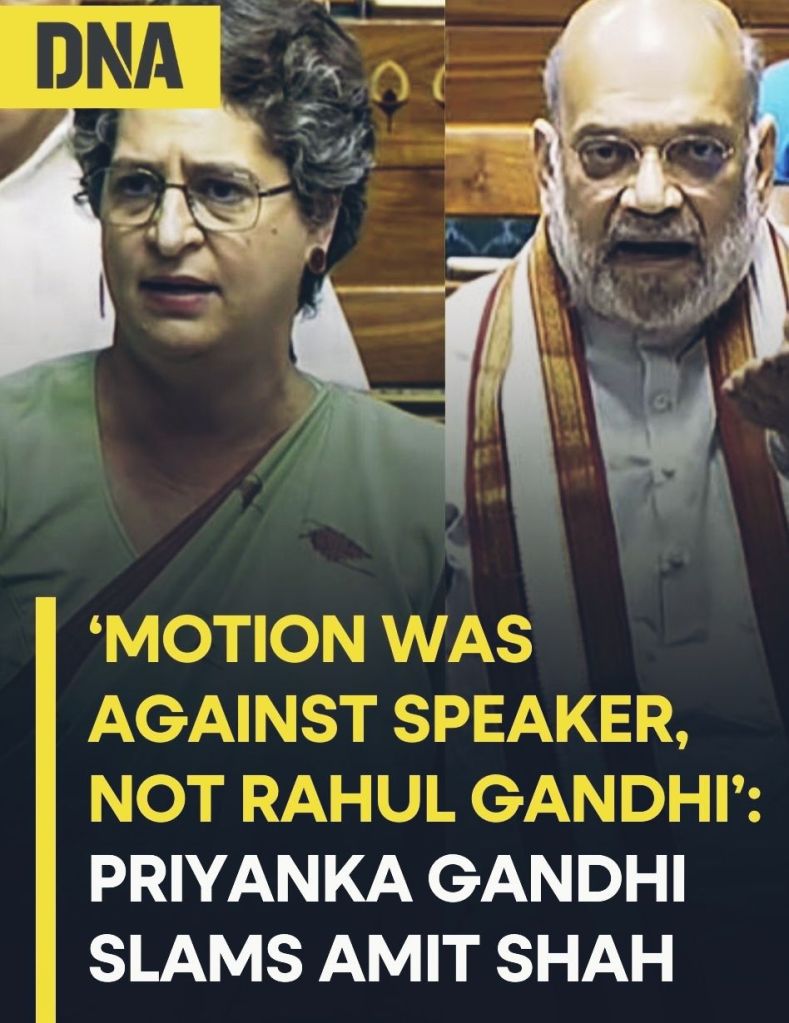
The government’s narrative, however, presented a starkly different interpretation. Senior leaders, including Amit Shah, defended the authority of the Speaker and argued that disciplinary measures were necessary responses to repeated disruptions by opposition benches. From the government’s perspective, the core challenge facing Parliament was not censorship but disorder. Protests, slogan shouting, and interruptions had frequently disrupted proceedings, compelling the Chair to enforce rules more firmly in order to preserve legislative discipline. In this narrative, strong procedural intervention was not a sign of bias but a safeguard for institutional functioning.
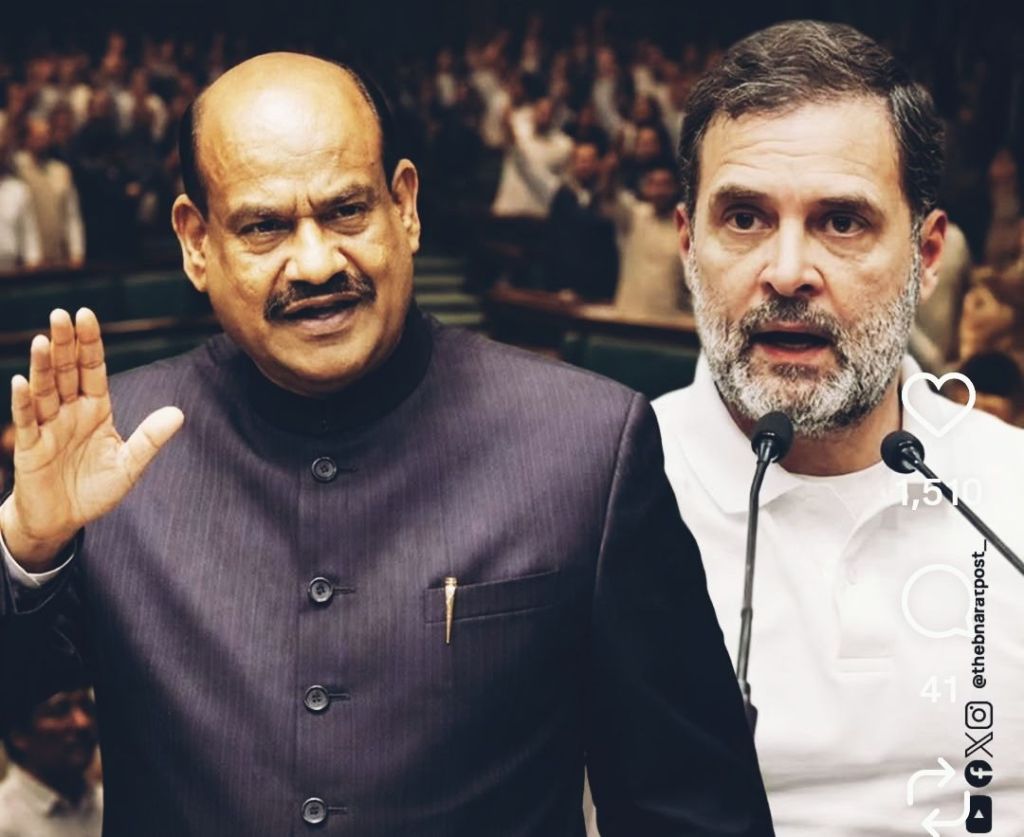
This clash of narratives reveals a deeper structural dilemma within modern parliamentary democracy. The presiding officer must possess enough authority to maintain order while simultaneously commanding the trust of all political sides as a neutral arbiter. Once that delicate balance weakens, every procedural decision becomes politically charged. The opposition interprets discipline as suppression, while the government interprets protest as obstruction. The resulting cycle becomes self-reinforcing: disruptions invite stricter enforcement, and stricter enforcement fuels further protest. Gradually, the chamber designed for deliberation begins to resemble a battleground of competing interpretations of fairness.
Compounding this tension is a structural anomaly within the parliamentary framework itself—the prolonged vacancy in the office of the Deputy Speaker. By convention, debates concerning the removal of the Speaker are presided over not by the Speaker but by the Deputy Speaker. Yet the absence of this crucial office has created an institutional gap in the functioning of the Lok Sabha. When the responsibility falls instead to a member from the panel of chairpersons, even a technically valid arrangement can generate perceptions of partiality. In a democracy, perceptions often matter nearly as much as procedures, for legitimacy ultimately rests on public trust.
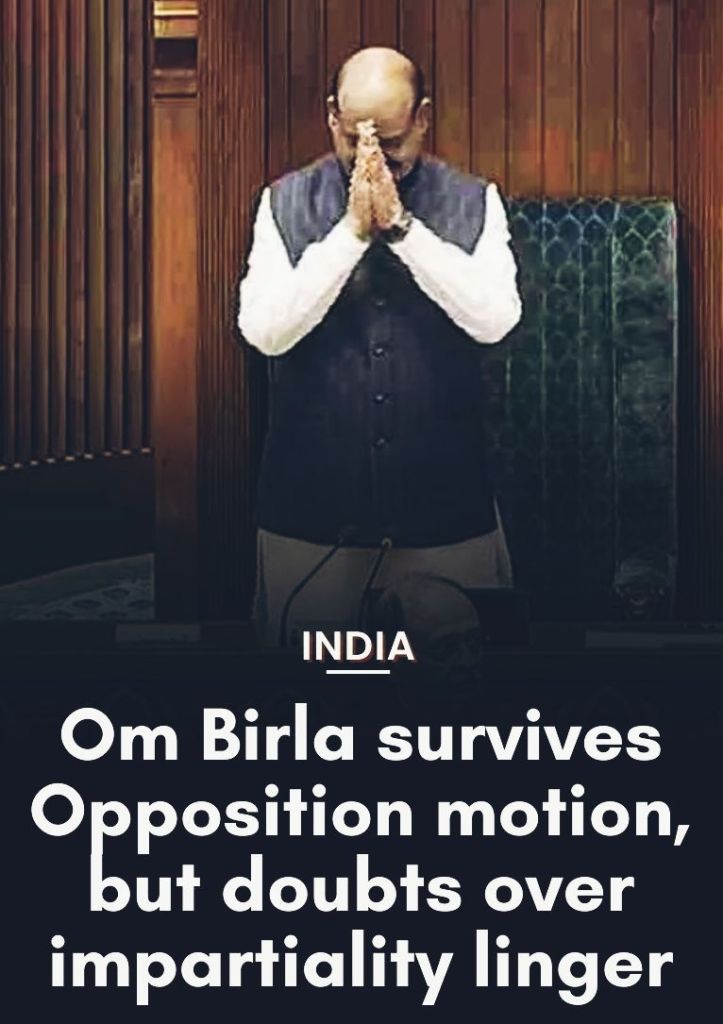
The broader lesson emerging from this episode is both sobering and instructive. Democracy is not sustained solely by elections or numerical majorities; it also relies on unwritten norms—mutual restraint, respect for institutional roles, and a shared commitment to preserve the credibility of deliberative forums. As parliamentary debates increasingly intersect with the hyper-amplified world of television and social media, the temptation to transform legislative proceedings into performative spectacles grows stronger. Yet the resilience of democratic institutions depends on the willingness of political actors to treat parliamentary rules as guardians of the republic rather than instruments of temporary advantage. Only when that spirit is restored can the theatre of democracy once again serve its highest purpose: illuminating national choices rather than drowning them in noise.
VISIT ARJASRIKANTH.IN FOR MORE INSIGHTS
 SOCIAL PERSPECTIVES