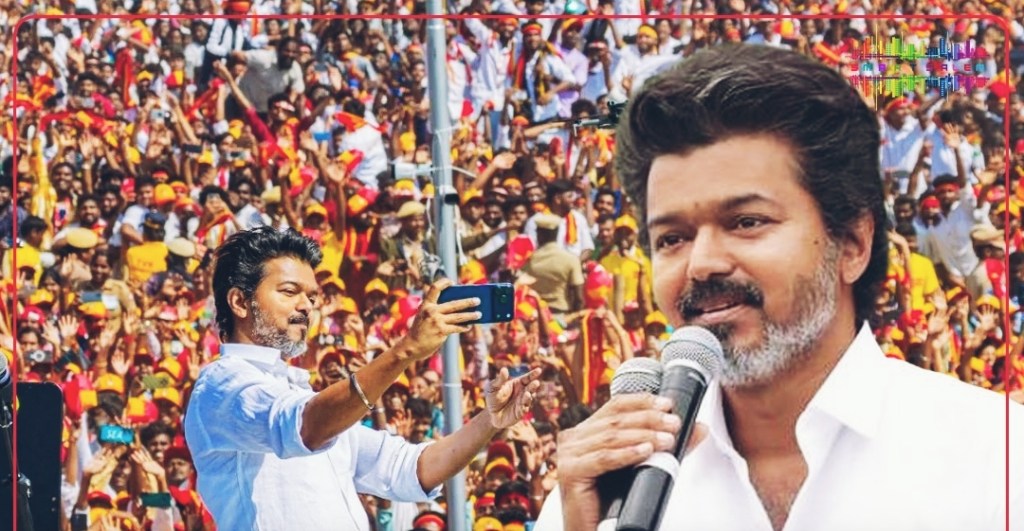
For more than half a century, Tamil Nadu’s electoral universe has revolved around two colossal gravitational forces—the Dravida Munnetra Kazhagam and the All India Anna Dravida Munnetra Kazhagam. These Dravidian titans have consistently commanded nearly 70–80 percent of the vote share, transforming elections into cyclical referendums within a stable yet rigid duopoly. The entry of actor-turned-politician Vijay and his fledgling formation, Tamilaga Vettri Kazhagam (TVK), represents perhaps the most consequential political disruption in a generation. The central question confronting Tamil Nadu is not whether Vijay commands popularity—his cinematic charisma is beyond dispute—but whether such popularity can be translated into durable political architecture within a system that rewards organisation, ideological signalling, and booth-level discipline far more than spectacle.
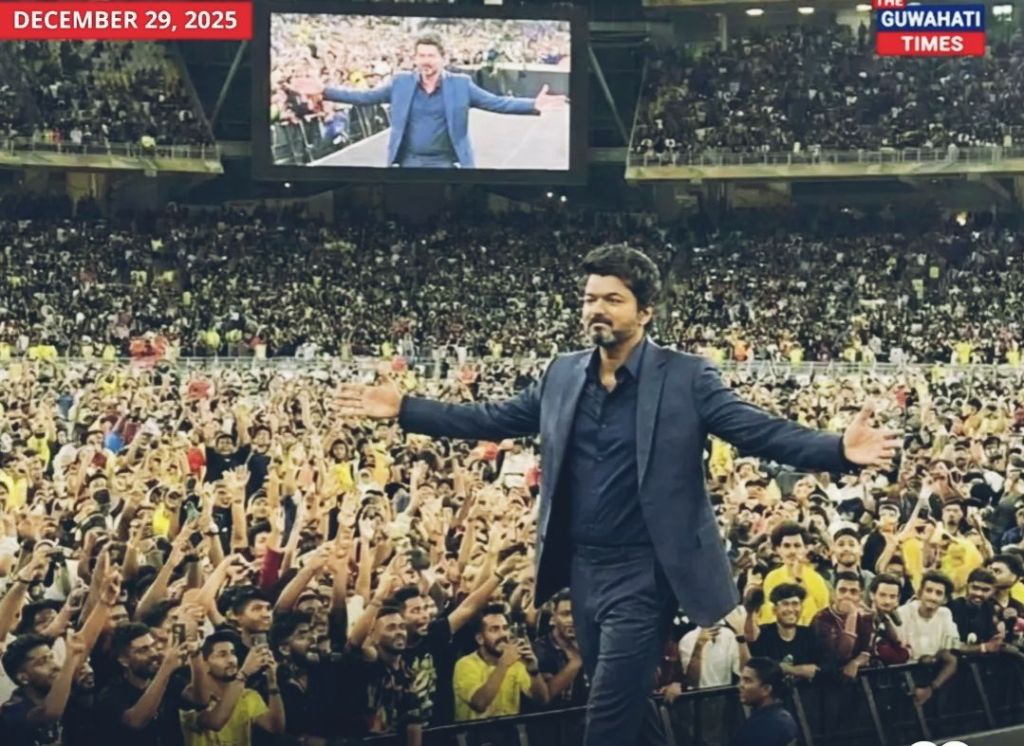
Tamil Nadu’s politics has long shared a symbiotic relationship with cinema. The legendary M. G. Ramachandran demonstrated that cinematic mythology, when fused with welfare populism and an organised cadre base, could generate an enduring political edifice. His successor J. Jayalalithaa institutionalised that legacy by combining administrative consolidation with a commanding political personality that bordered on monarchical authority. Yet history also records the failures of several cultural icons whose immense popularity failed to translate into electoral permanence. Vijay’s political moment differs both in texture and timing. His appeal is not rooted in nostalgia but in contemporary resonance—digitally amplified, socially networked, and anchored among younger voters who matured alongside his cinematic persona. In a demographically dynamic state where first-time voters increasingly influence outcomes, such generational connectivity may prove decisive.
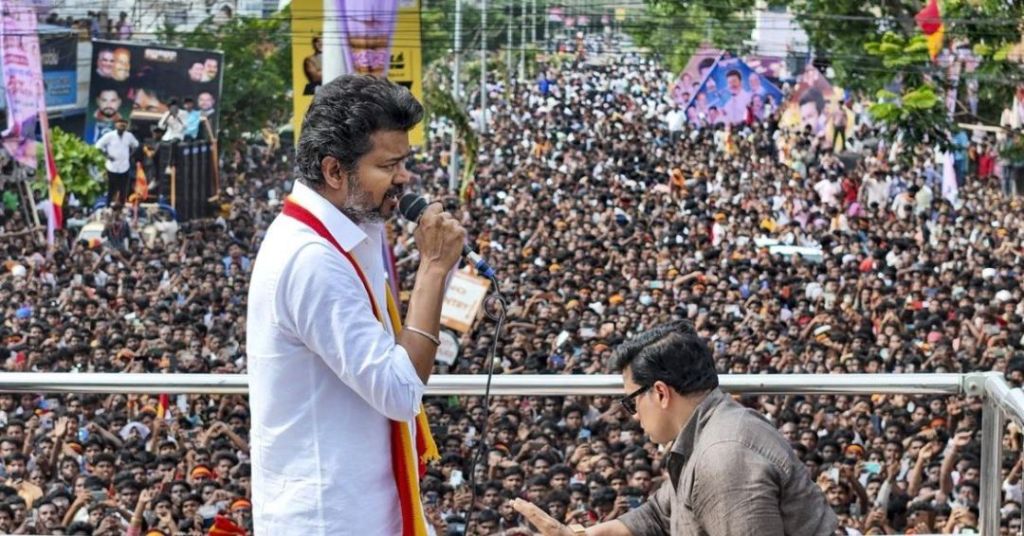
However, fandom does not automatically evolve into franchise. The rallies of the Tamilaga Vettri Kazhagam are marked by a distinctive performative intensity: crowds gather as much for proximity to the star as for political discourse. Politics, in this context, risks transforming into an experiential spectacle. While this energy unsettles entrenched parties, it also exposes a structural vulnerability. Tamil Nadu’s electoral arithmetic privileges meticulous micro-organisation—booth committees, caste equations, welfare delivery networks, and relentless grassroots coordination. Visibility creates momentum; organisation secures victory. The decisive test for Vijay will therefore lie in converting emotional mobilisation into a disciplined electoral machinery capable of translating applause into votes across thousands of polling booths.
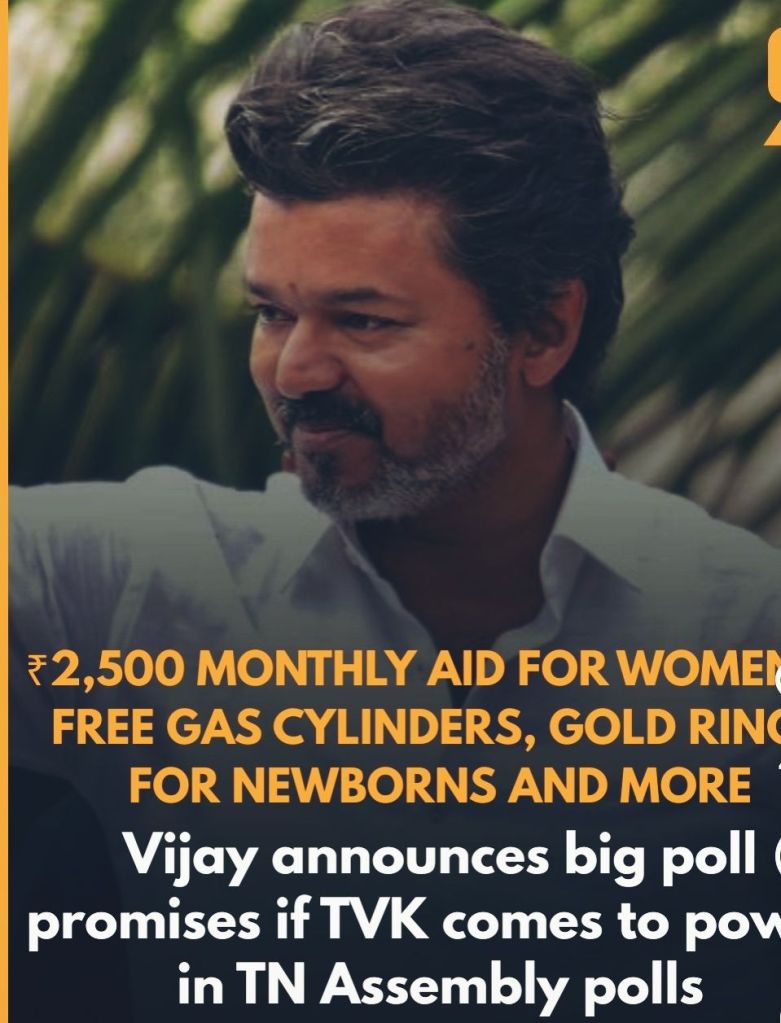
Strategically, Vijay has attempted a careful triangulation within Tamil Nadu’s evolving political landscape. His party critiques the governance record of Chief Minister M. K. Stalin and the ruling Dravida Munnetra Kazhagam while simultaneously maintaining distance from the ideological thrust of the Bharatiya Janata Party. This positioning attempts to exploit a moment of political fluidity characterised by mild anti-incumbency, leadership uncertainties within the All India Anna Dravida Munnetra Kazhagam, and the relatively limited expansion of the BJP’s social base in the state.
Analysts suggest that even a modest vote share of 15–20 percent could disrupt established calculations within Tamil Nadu’s first-past-the-post electoral framework. Crossing the 25 percent threshold would fundamentally recalibrate coalition arithmetic. Anecdotal evidence from constituencies already reveals subtle generational fissures within households—traditional party loyalties coexisting with a solitary “Vijay vote,” signalling deeper psychological churn within the electorate.
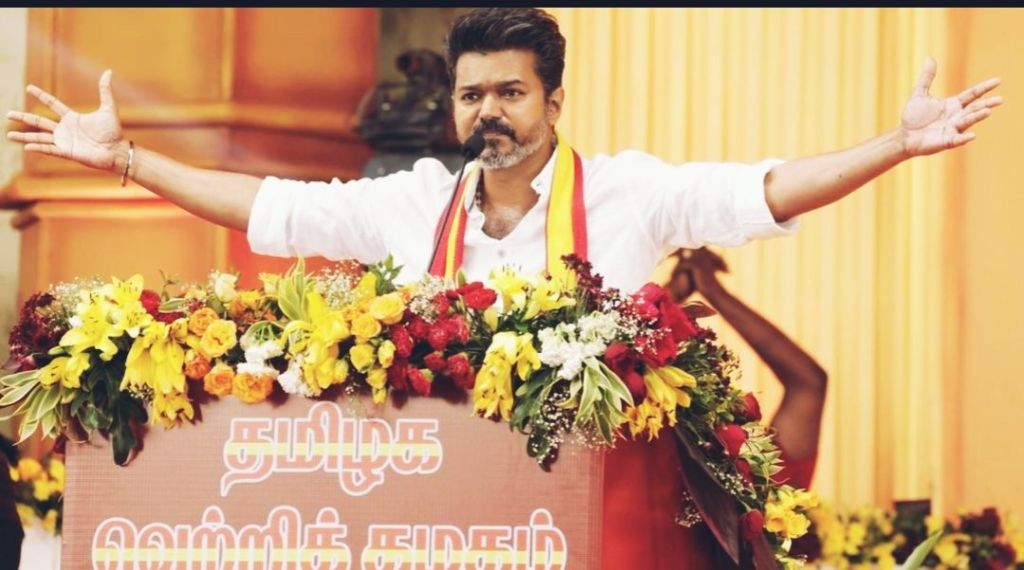
Demographically, the nucleus of TVK’s support appears strongly youth-centric. Many supporters belong to a generation that encountered Vijay not merely as an entertainer but as a cinematic moral protagonist embodying justice, dignity, and resistance to corruption. The ethical vocabulary of his films seamlessly migrates into political expectations. Yet emotional loyalty cultivated through cultural affinity rarely translates automatically into ideological coherence. On election day, voters weigh a complex calculus involving caste alignments, welfare delivery records, local candidate accessibility, and alliance viability. For TVK, therefore, the imperative is institutionalisation: transforming fan clubs into structured political cadres, converting social media enthusiasm into sustained grassroots outreach, and evolving charitable networks into organised electoral logistics capable of operating effectively at the booth level.
Alliance arithmetic presents both opportunity and hazard. Tamil Nadu’s electoral history reveals that coalitions are frequently less ideological than arithmetical mechanisms designed to optimise vote transfer. For a new entrant like TVK, premature alliances could dilute the insurgent authenticity that currently energises its supporters. Conversely, rigid isolation might restrict geographic penetration in a state where alliances often determine victory margins. Political maturity will be measured not by rhetorical flourish but by calibrated negotiation—balancing outsider appeal with pragmatic engagement, managing seat-sharing dynamics, and demonstrating strategic patience across electoral cycles.
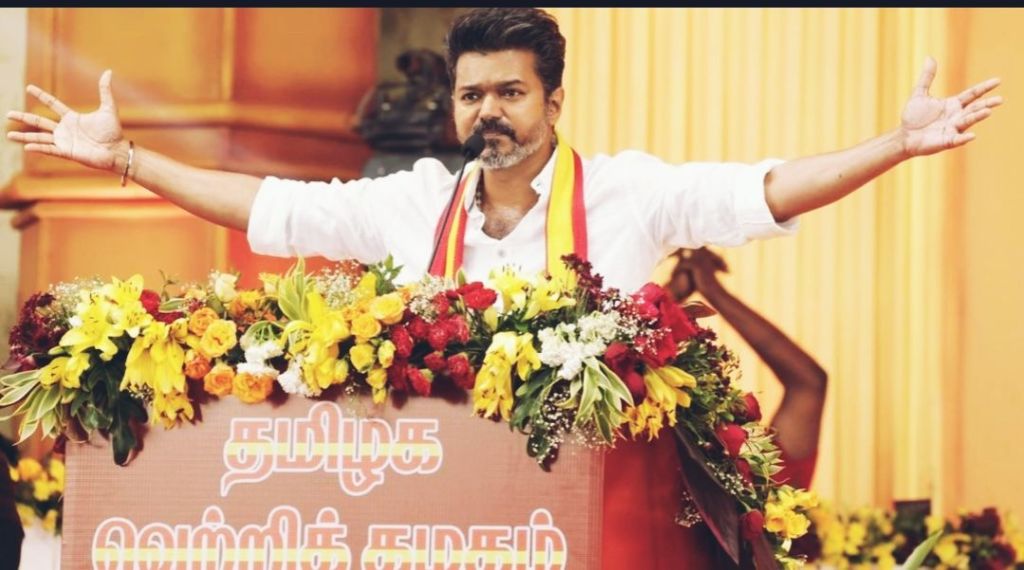
Ultimately, Vijay’s political emergence signals something deeper than a celebrity’s ambition—it reflects a psychological inflection within Tamil Nadu’s electorate. Voters increasingly appear willing to interrogate the inherited binaries of Dravidian politics. Whether this moment evolves into structural realignment depends on a single transformation: the conversion of charisma into credibility. If Tamilaga Vettri Kazhagam succeeds in embedding its cultural radiance within resilient organisational foundations, Tamil Nadu may witness the first substantive recalibration of its Dravidian order in half a century. If not, Vijay risks becoming yet another luminous interlude in a political theatre where spectacle is plentiful—but enduring power ultimately belongs to structure.
VISIT ARJASRIKANTH.IN FOR MORE INSIGHTS
 SOCIAL PERSPECTIVES