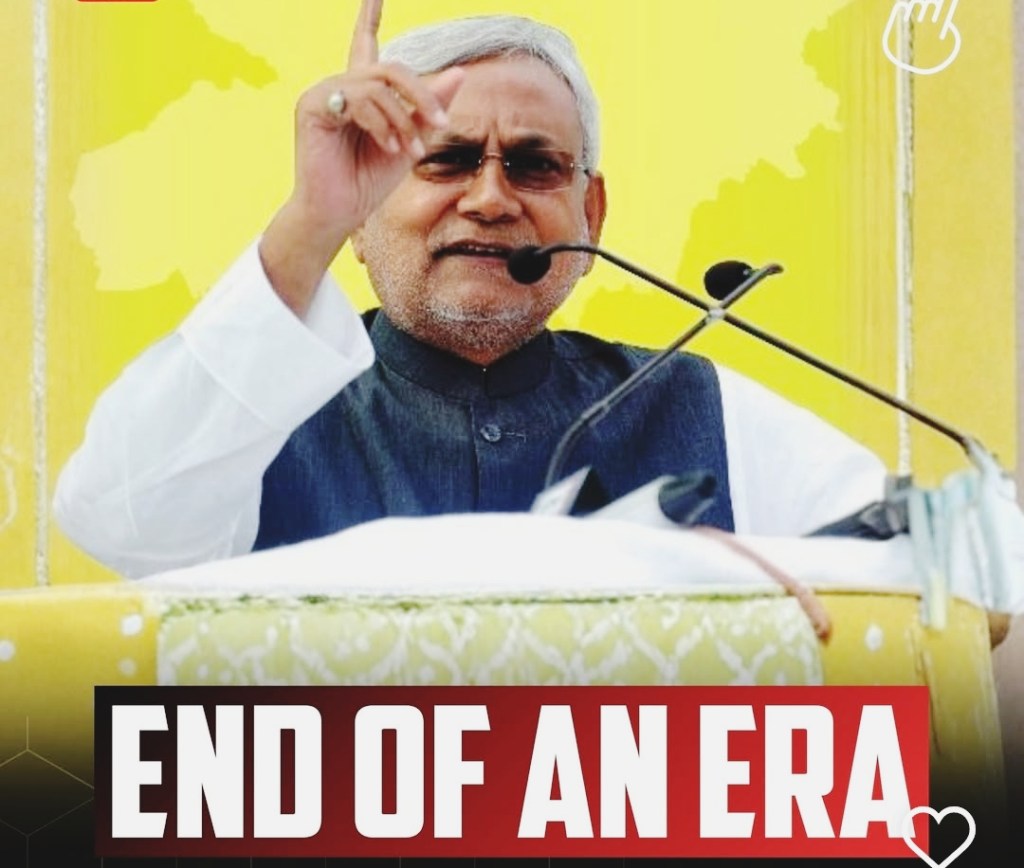
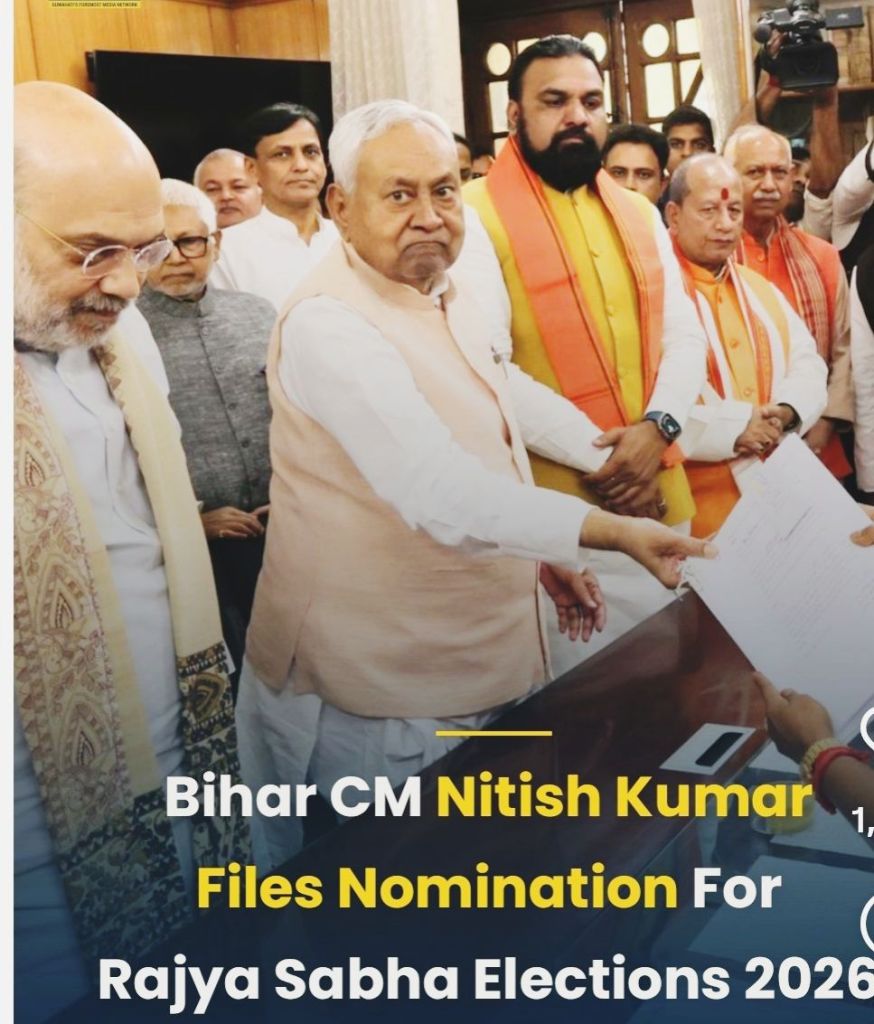
In the grand theatre of Indian politics, many leaders blaze briefly like meteors—spectacular but fleeting. A few endure like constellations, shaping the political sky for decades. And then there is Nitish Kumar, a political artisan who not only survived the turbulence of coalition politics but frequently appeared to engineer the weather itself. His decision to file nomination papers for the Rajya Sabha marks more than a personal transition; it represents a symbolic turning point in Bihar’s political narrative. For over three decades, Bihar’s electoral logic, governance style, and alliance structures were deeply intertwined with Kumar’s political craft. His shift toward the national legislature signals the gradual twilight of a political epoch that he both inherited and reshaped.
The timing of this move has unsettled observers across the political spectrum. In a 243-member Bihar Assembly, the Janata Dal (United) holds only 43 seats, far fewer than its principal ally, the Bharatiya Janata Party, which commands 89 seats. The arithmetic of power had long hinted that the balance within the coalition was shifting. The question was never whether Nitish Kumar would eventually step aside, but when he would choose to orchestrate the transition. True to his political temperament, he preserved suspense until the final moment, sustaining the aura of strategic unpredictability that has long defined his leadership.
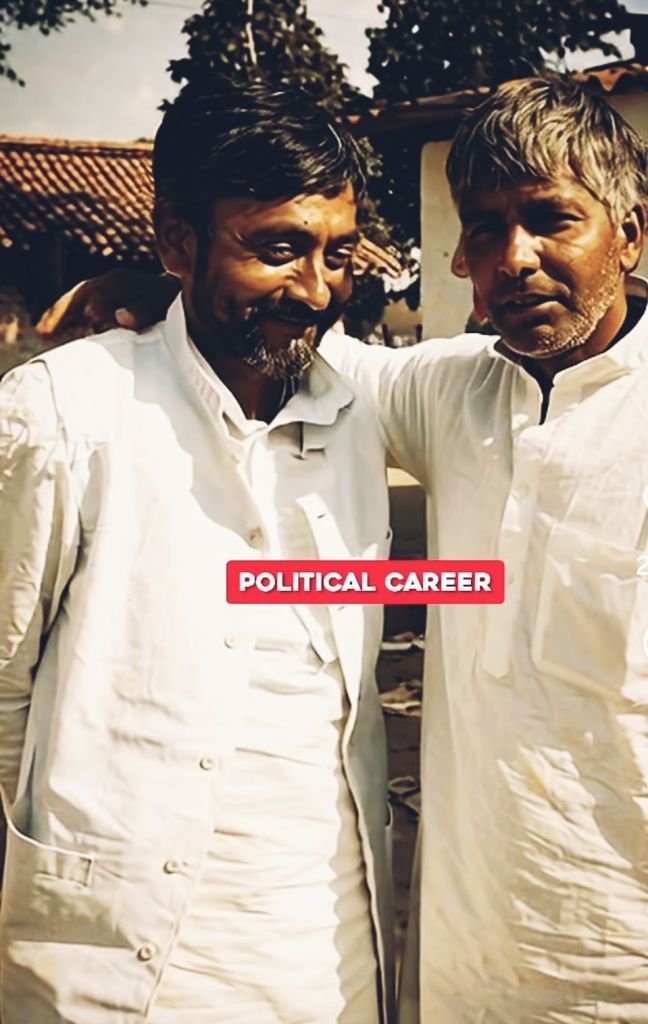
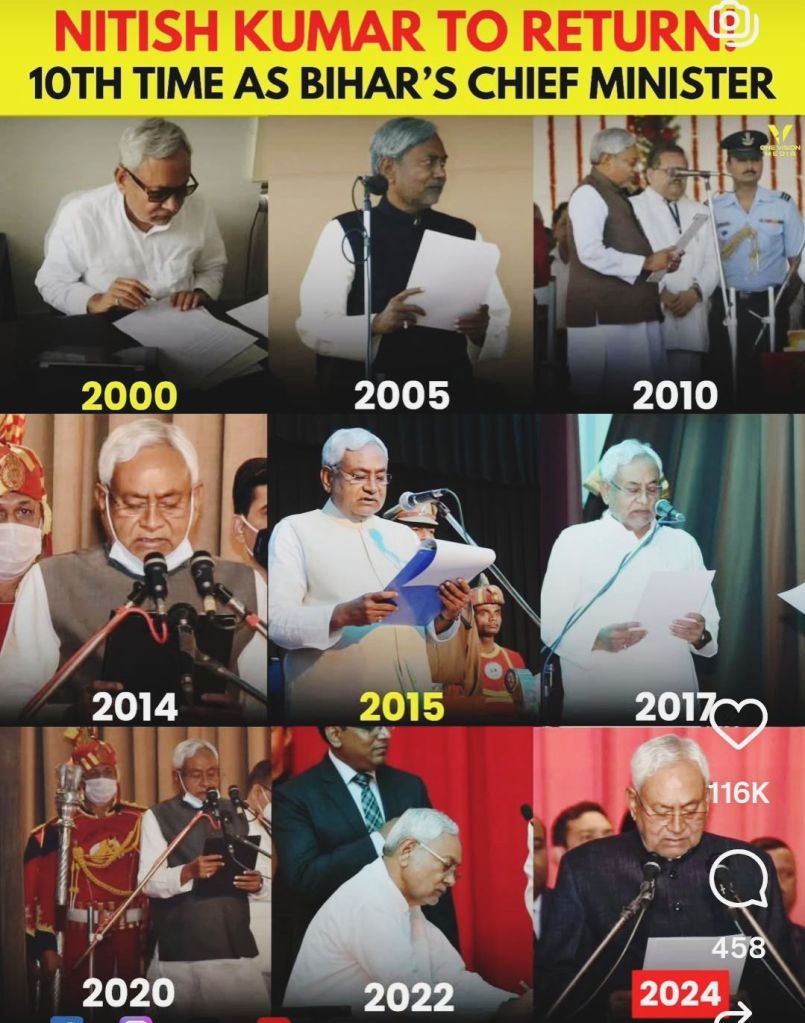
This calibrated unpredictability forms the central grammar of Kumar’s politics. Sworn in as Chief Minister ten times, he perfected the art of navigating volatile mandates and fragile coalitions. His political journey began in the socialist ferment inspired by Jayaprakash Narayan, eventually intersecting—and competing—with the formidable influence of Lalu Prasad Yadav. Over decades marked by ideological realignments and shifting alliances, Kumar displayed a rare blend of ideological inheritance and pragmatic adaptation. For him, survival was never merely defensive; it became a form of political craftsmanship in which timing, restraint, and calculation were elevated to strategy.
Yet politics ultimately obeys the passage of time as much as the brilliance of its practitioners. In recent months, murmurs about declining political energy and reduced public engagement have circulated quietly within administrative and party circles. Access to the Chief Minister reportedly became tightly regulated, media interactions infrequent, and public appearances increasingly scripted. Such developments are not unusual for veteran leaders approaching the end of long tenures, yet they subtly reinforced the perception that Bihar’s governance apparatus had begun operating more through institutional inertia than through the personal command that once characterised Kumar’s leadership.
Inside the JD(U) itself, the question of succession has gradually emerged from whispers into open speculation. Occasional discussions regarding the possible political entry of Kumar’s son, Nishant Kumar, have lacked clarity and formal articulation. For a party whose identity has long been inseparable from a single individual, the prospect of a post-Nitish future introduces both anxiety and strategic ambiguity.
Personality-driven parties often confront a fundamental dilemma: whether organisational identity can survive beyond the gravitational pull of their founding leader.
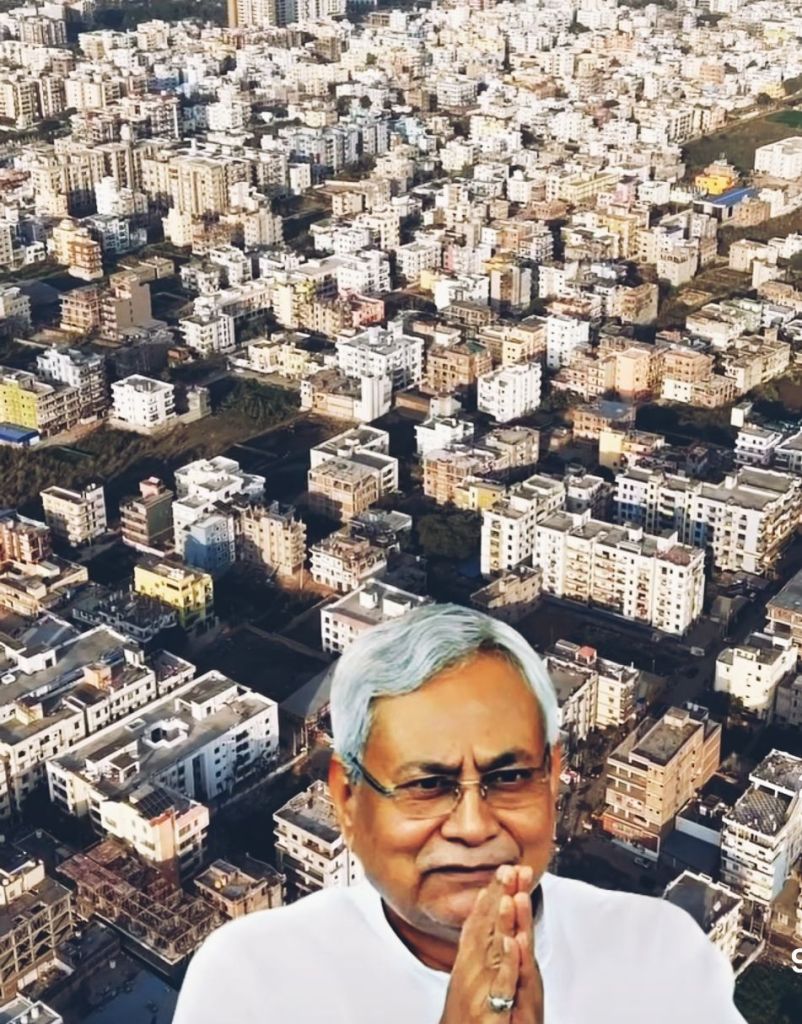
The arc of Nitish Kumar’s career remains remarkable by any political standard. After early electoral setbacks during the 1970s and early 1980s—when he reportedly contemplated leaving politics altogether—his trajectory eventually evolved into one of the longest and most consequential leadership tenures in modern Indian state politics. When he consolidated power in 2005, Bihar was widely portrayed as a symbol of administrative breakdown. Over the following two decades, Kumar attempted to reconstruct governance through improved law enforcement, expansion of infrastructure, and social welfare initiatives such as the bicycle scheme for girls’ education. These measures reshaped public perception and earned him the enduring sobriquet “Sushasan Babu.”
At the heart of this governance model lay an attempt to reconfigure Bihar’s social contract. By mobilising women, extremely backward classes, and marginalised communities, Kumar expanded the political constituency of governance itself. This coalition-building strategy not only stabilised his rule but also altered the relationship between state institutions and citizens. For many Biharis—particularly women and historically disadvantaged groups—the Nitish era symbolised a transition from the politics of spectacle to a politics anchored in administrative delivery.
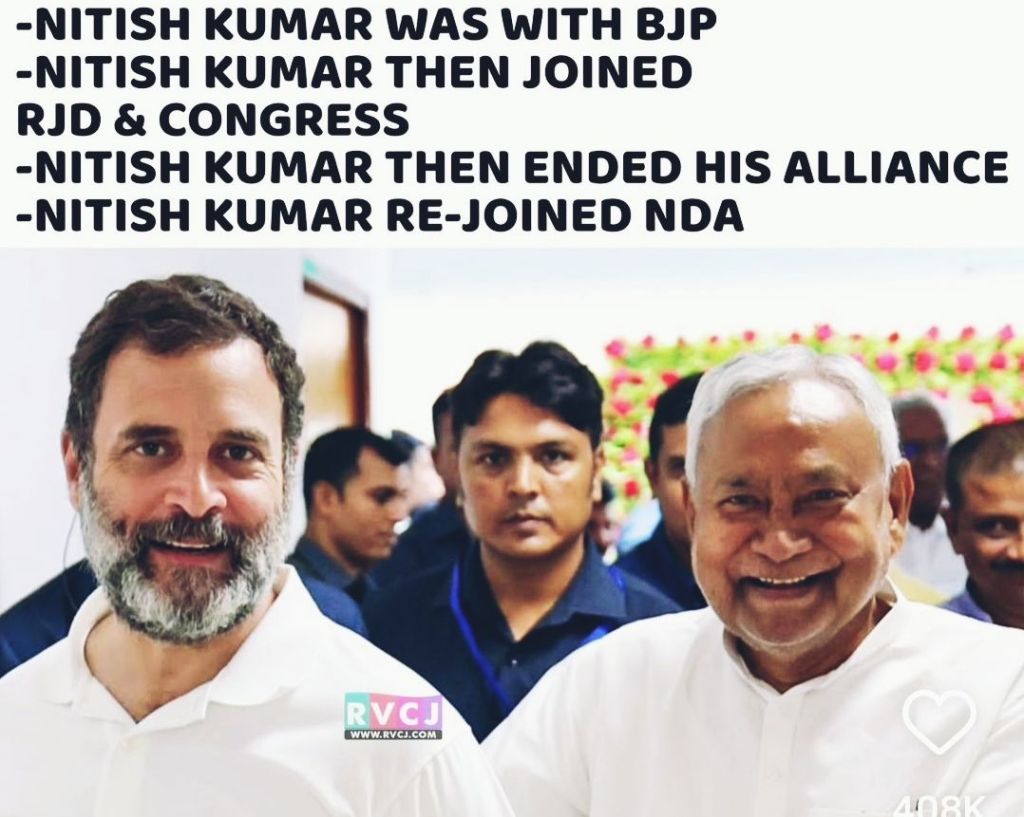
Yet structural realities eventually constrain even the most skilful strategists. Bihar’s electoral landscape has long revolved around three major poles: the JD(U), the BJP, and the Rashtriya Janata Dal. Alliances between any two of these forces could decisively defeat the third, and Nitish Kumar mastered the tactical geometry of this triangular contest. By shifting alliances with remarkable timing, he repeatedly redrew Bihar’s political map and preserved his centrality within it.
Today, however, that equilibrium appears to be gradually eroding. The BJP’s expanding electoral strength across the Hindi heartland has reduced its strategic dependence on Kumar’s leadership. The long-held ambition of installing a BJP Chief Minister in Bihar no longer seems remote. Kumar’s movement toward the Rajya Sabha may therefore accelerate a generational shift within the state’s political hierarchy, opening space for new leadership configurations and ideological contests.
For the opposition—particularly figures such as Tejashwi Yadav—this transition presents both opportunity and uncertainty. Nitish Kumar’s carefully cultivated support base among women, Mahadalits, and extremely backward classes remains politically influential. Whether these voters remain loyal to the JD(U), migrate toward the BJP, or consolidate behind the RJD will significantly shape Bihar’s next electoral cycle and its evolving political narrative.
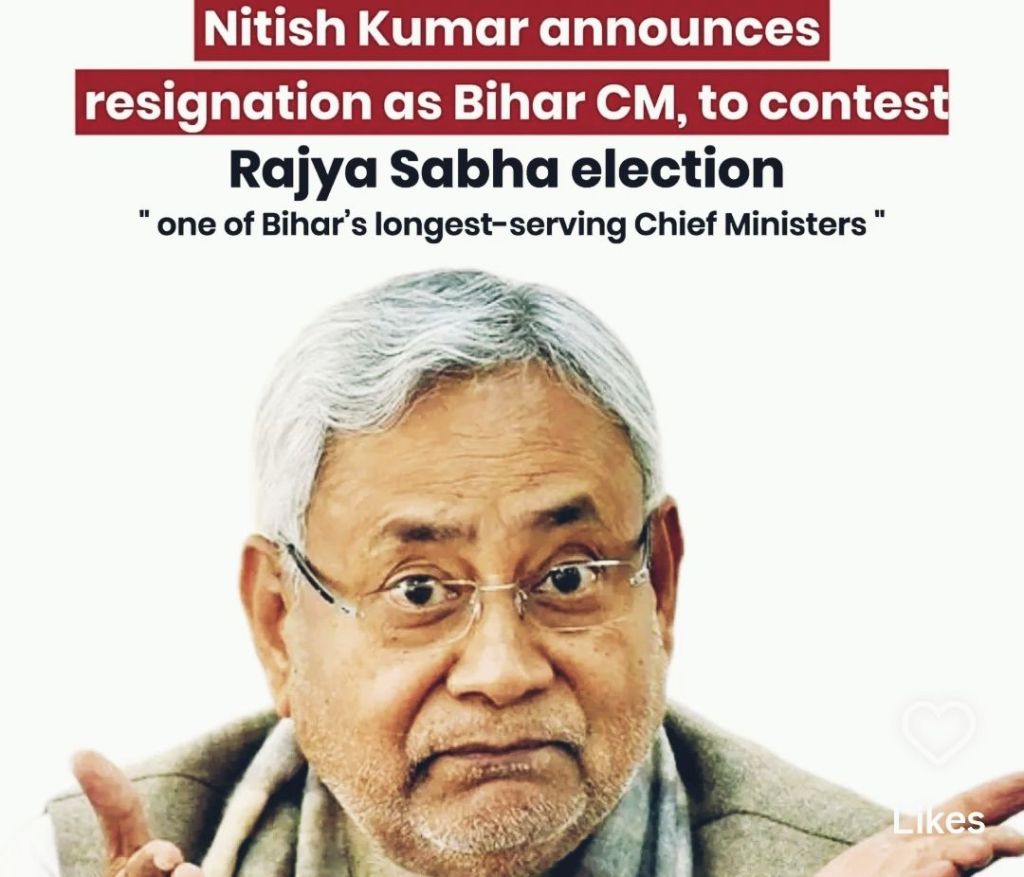
The symbolism of this moment extends beyond the arithmetic of alliances. For over thirty years, Bihar’s politics revolved around the rivalry between Lalu Prasad Yadav and Nitish Kumar—a bipolar drama that defined the state’s ideological debates and electoral battles. As Kumar moves toward the Rajya Sabha, that long-standing political duel approaches its twilight. The stage is gradually being cleared for a new generation of leaders and perhaps a different ideological conversation about Bihar’s future.
For Nitish Kumar himself, the Rajya Sabha offers a dignified transition rather than a dramatic retreat. After decades spent managing one of India’s most politically intricate states, a parliamentary role allows him to remain intellectually engaged with national politics without bearing the daily administrative burdens of governance. It is, fittingly, the final strategic pivot of a leader who treated reinvention as an art form.
History will likely remember him through a dual lens: as the reformer who attempted to rebuild Bihar’s governance architecture and as the tactician who repeatedly reshaped alliances to retain power. As he gradually steps away from the centre stage of Patna’s politics, a lingering question drifts across the Gangetic plains: is this the graceful retirement of a master strategist—or the quiet closing of an era that ultimately outlived its own architect? Either way, Nitish Kumar has once again managed to choreograph the narrative of his own transition. In Bihar’s endlessly dramatic political theatre, even the curtain call appears meticulously scripted.
VISIT ARJASRIKANTH.IN FOR MORE INSIGHTS
 SOCIAL PERSPECTIVES