
In the grand amphitheatre of Indian macroeconomics—where quarterly GDP growth is celebrated like a national carnival and fiscal deficit targets are worn as emblems of rectitude—Raghav Chadha has emerged as an unlikely but persistent auditor of the everyday citizen. His parliamentary interventions do not merely dispute figures; they interrogate the ethical scaffolding beneath them. For Chadha, economics is not a sterile choreography of ratios and revenue curves. It is the lived mathematics of pay slips, bank balances, EMIs, school fees, hospital invoices, and grocery receipts. His central proposition is disarmingly simple yet structurally profound: a republic that taxes like an advanced economy but delivers public goods like a struggling one risks rupturing the fiscal covenant between state and citizen. Growth without distributive integrity, he suggests, becomes spectacle—impressive in projection, fragile in substance.

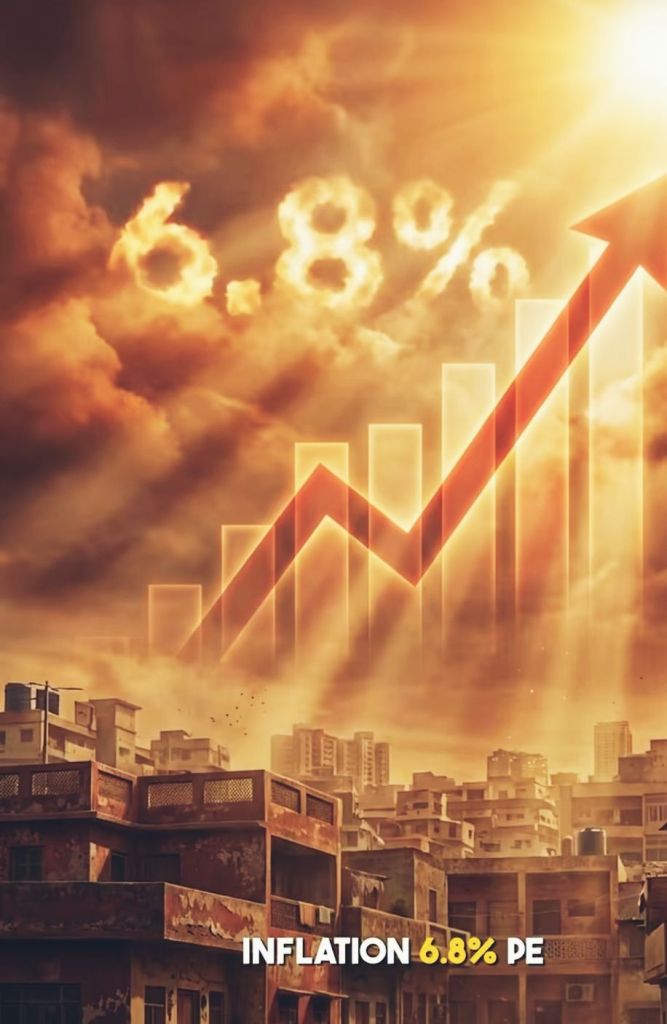
At the core of his critique lies the architecture of taxation. The symbolic inflection point he has repeatedly underscored in the Rajya Sabha is that personal income tax collections—hovering around ₹11 lakh crore—have overtaken corporate tax collections of approximately ₹9.8 lakh crore. This inversion is not a mere statistical curiosity; it marks a structural recalibration of who finances the state. The salaried middle class, already navigating GST on consumption, stamp duties on property, fuel levies, and a cascade of indirect imposts embedded in daily transactions, now bears a disproportionate share of direct taxation. Chadha’s oft-cited formulation—“we pay taxes like England to receive services like Somalia”—is intentionally provocative, yet it encapsulates a growing perception of asymmetry. When inflation oscillates between 6–7 percent and the standard deduction remains static, government employees are cushioned through Dearness Allowance while private-sector professionals internalize the shock. The consequence is not merely financial compression but civic fatigue: aspiration is taxed, while social security is privatized.

This pressure on disposable income converges with a deeper wage paradox. Chadha has flagged an estimated 16 percent contraction in real wages between FY18 and FY26, a statistic that unsettles the celebratory tone surrounding headline GDP expansion. Nominal increments mask real erosion. In the absence of inflation-indexed salary frameworks—such as Belgium’s statutory wage adjustment or the United States’ Cost of Living Adjustment—Indian private-sector workers inhabit a marketplace where essentials inflate faster than incomes. Consumption, accounting for nearly 60 percent of GDP, increasingly relies on credit rather than earned surplus. Retail loans swell; savings buffers erode. An economy sustained by leverage instead of liquidity invites vulnerability. His proposal for an Inflation-Linked Salary Revision Act is therefore not rhetorical flourish; it represents a demand-side recalibration rooted in macroeconomic prudence. Sustainable growth, he contends, requires resilient pay-checks.
Parallel to income stress runs the anxiety of financial insecurity. During debates on banking reforms, Chadha highlighted over 36,000 reported banking frauds within a single year, including cyber losses exceeding ₹2,000 crore and a pronounced spike in UPI-related fraud. Fixed deposit rates of roughly 6.5 percent against comparable inflation translate into negative real returns for retirees. Meanwhile, education and housing loans priced between 8.5 and 13 percent weigh heavily on young borrowers. Add to this an estimated ₹7,500 crore annually in opaque banking charges and the closure of thousands of rural branches, and the structural imbalance becomes evident: savers lose purchasing power, borrowers pay a premium, and institutional trust attenuates incrementally. Chadha’s call for banks to earmark at least 10 percent of IT budgets for cybersecurity, rationalize hidden charges, and institutionalize stronger grievance redressal mechanisms rests on a foundational principle—financial inclusion devoid of financial protection is incomplete citizenship.
Fiscal transparency forms another pillar of his critique. Official debt-to-GDP ratios hover around 56 percent, yet when off-balance-sheet liabilities—particularly those of public sector entities—are consolidated, the figure approaches 60 percent, translating to nearly ₹17 lakh crore in what he terms “shadow debt.” This is not alarmism; it is intergenerational arithmetic. Deferred liabilities mature eventually, compelling future taxpayers to service yesterday’s opacity. Such fiscal obfuscation transforms short-term political convenience into long-term citizen burden. Chadha’s advocacy for consolidated public sector accounting seeks not confrontation but credibility—a sovereign ledger that reflects total obligation rather than curated fragments.
On public expenditure, his stance is neither reflexively oppositional nor ideologically rigid. He has acknowledged the strategic logic behind capital expenditure rising to approximately ₹12 lakh crore, nearly 4.4 percent of GDP, while questioning why public health spending lingers near 2 percent of total expenditure—well below the National Health Policy aspiration of 2.5 percent of GDP. Highways catalyze commerce; hospitals preserve human capital. When out-of-pocket medical costs push families below the poverty line, infrastructure dividends are partially neutralized. His proposed five-year capex roadmap accompanied by matching grants to states reflects an integrated vision: physical infrastructure and social infrastructure must evolve symbiotically. Concrete without care breeds asymmetry; balanced investment cultivates resilience.

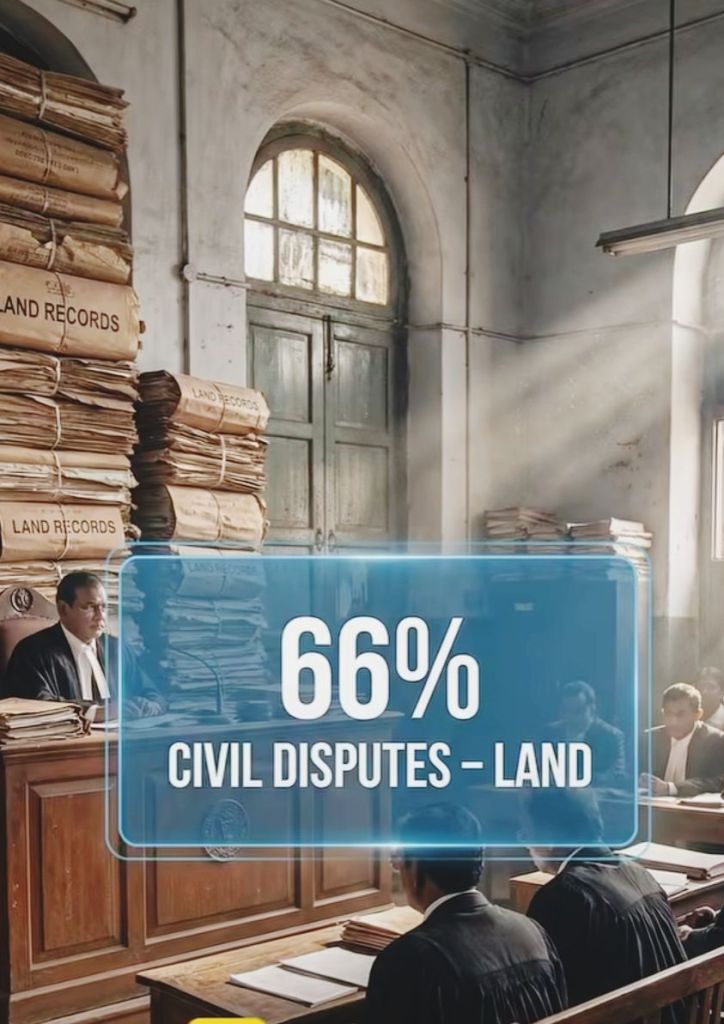
Chadha’s reformist lens extends into governance modernization. With nearly two-thirds of civil disputes linked to land and transaction costs ranging between 6–8 percent of property value, he has advocated blockchain-enabled land registries inspired by international precedents. In the sphere of Virtual Digital Assets, he has critiqued India’s paradoxical framework of 30 percent taxation alongside regulatory ambiguity—a combination that reportedly redirected ₹4.8 lakh crore in trading volume and over 180 startups offshore. His aphorism—“regulation is protection; prohibition is not”—captures a broader thesis: innovation flourishes within clarity, not uncertainty. Technological modernization, in his formulation, is not cosmetic digitization but institutional credibility encoded in systems.

Across these interventions runs a coherent intellectual thread: economics must be re-anchored in lived experience. The middle class—the silent stabilizer of democratic continuity—cannot remain indefinitely compressed between elevated taxation, stagnant real wages, insecure savings, and underfunded public goods. Chadha’s economic philosophy does not repudiate growth; it demands distributive coherence. It does not resist reform; it insists reform be citizen-centric. In an era of GDP theatrics and fiscal grandstanding, his insistence on pay-check dignity, transparent accounting, and accountable governance reframes the debate from aggregate triumphalism to household resilience. The ultimate metric of prosperity, he implies, is not the velocity of expansion but the vitality of the median citizen. When the republic’s balance sheet reflects not only revenue extraction but human empowerment, growth transcends spectacle—and dignity becomes the most credible macroeconomic indicator.
VISIT ARJARIKANTH.IN FOR MORE INSIGHTS
 SOCIAL PERSPECTIVES