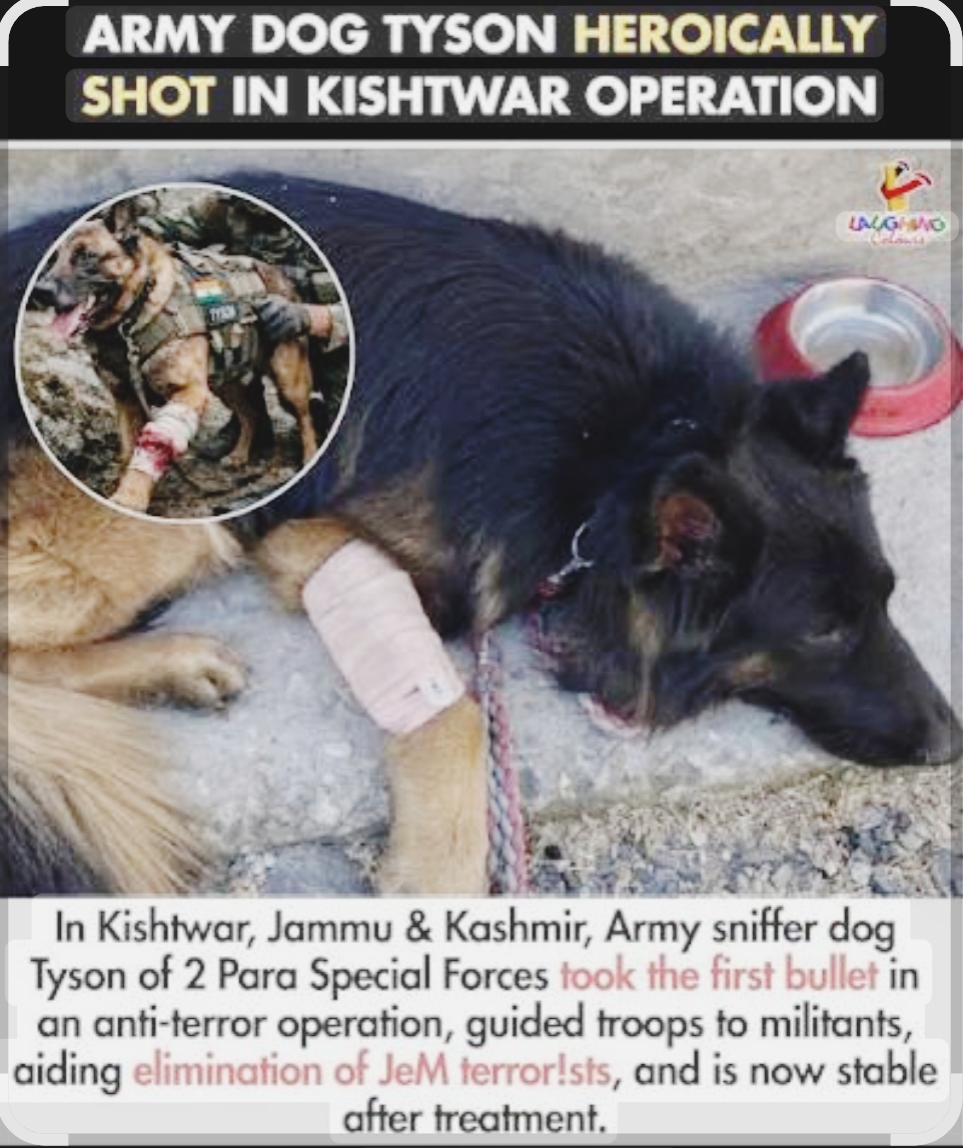
Modern warfare is shedding its old skin. Drones hover above, satellites map below, and somewhere inside the lethal geometry of a forest hideout, a German Shepherd named Tyson crawls forward before any soldier dares to. On 22 February 2026, during Operation Trashi-I in the Passerkut area of Kishtwar’s Chatroo belt, a K9 from the Indian Army’s 2 Para (Special Forces) entered what soldiers grimly call a “fatal funnel” — the narrow entry where the probability of hostile fire peaks. Tyson was shot in the leg when militants opened fire from concealment. Yet that very panic fire exposed their coordinates. Within minutes, coordinated action by the Jammu and Kashmir Police and the Central Reserve Police Force neutralised three terrorists, including a senior operative of Jaish-e-Mohammed.
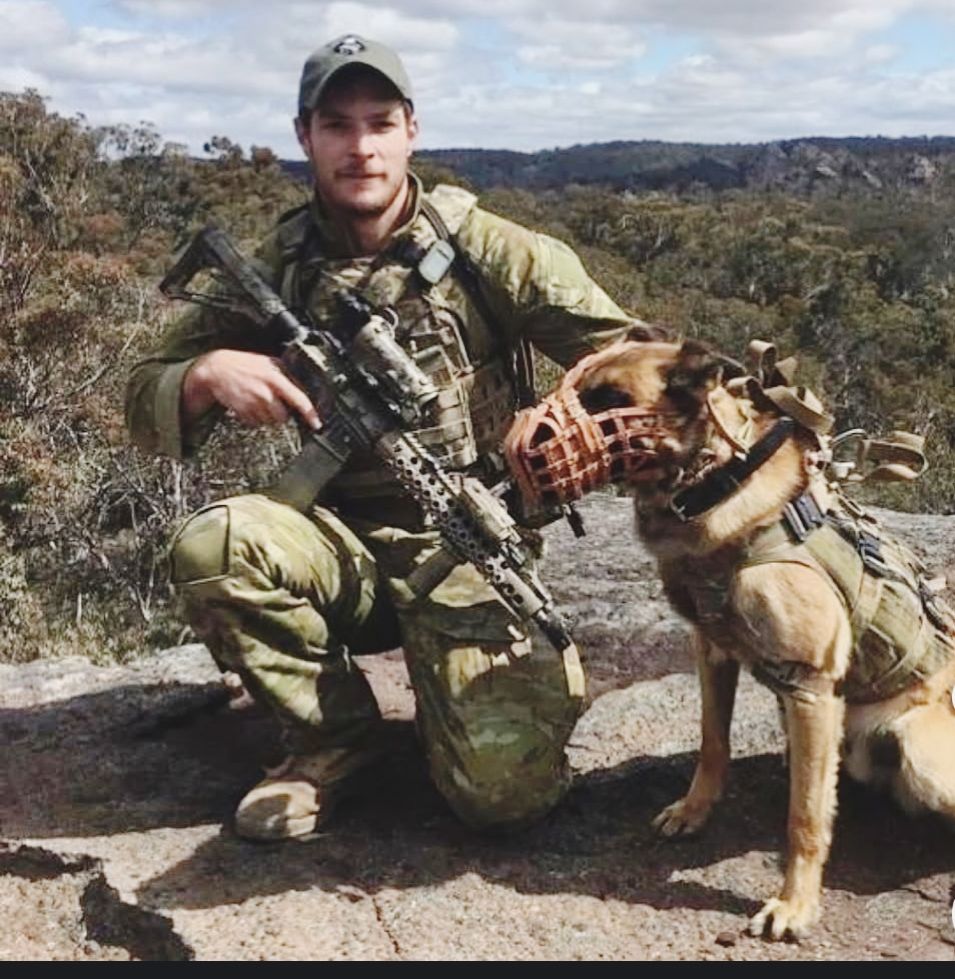
Tactically decisive. Strategically instructive. The battlefield’s first mover is increasingly canine.
To appreciate this shift, one must understand the physics of counter-insurgency. Forests, caves, and improvised structures compress sightlines and magnify uncertainty. The first human through a doorway absorbs disproportionate danger. Military innovation has long attempted to mitigate this exposure through shields, robotics, and aerial reconnaissance. Yet none combine mobility, olfactory precision, and instinctive threat detection like a trained dog. A German Shepherd or Belgian Malinois detects scent signatures imperceptible to humans, senses micro-movements, and navigates treacherous terrain with fluid adaptability. In such environments, canines are not ceremonial mascots; they are tactical force multipliers embedded in doctrine.

This evolution is neither isolated nor accidental. The 2011 raid that eliminated Osama bin Laden deployed a Belgian Malinois trained for assault and detection. Across conflict theatres, military working dogs have identified improvised explosive devices that would otherwise devastate patrols and convoys. Their olfactory system — tens of thousands of times more sensitive than that of humans — transforms invisible threats into actionable intelligence. In asymmetric warfare, where adversaries weaponise concealment and terrain familiarity, the ability to convert scent into strategy is decisive.
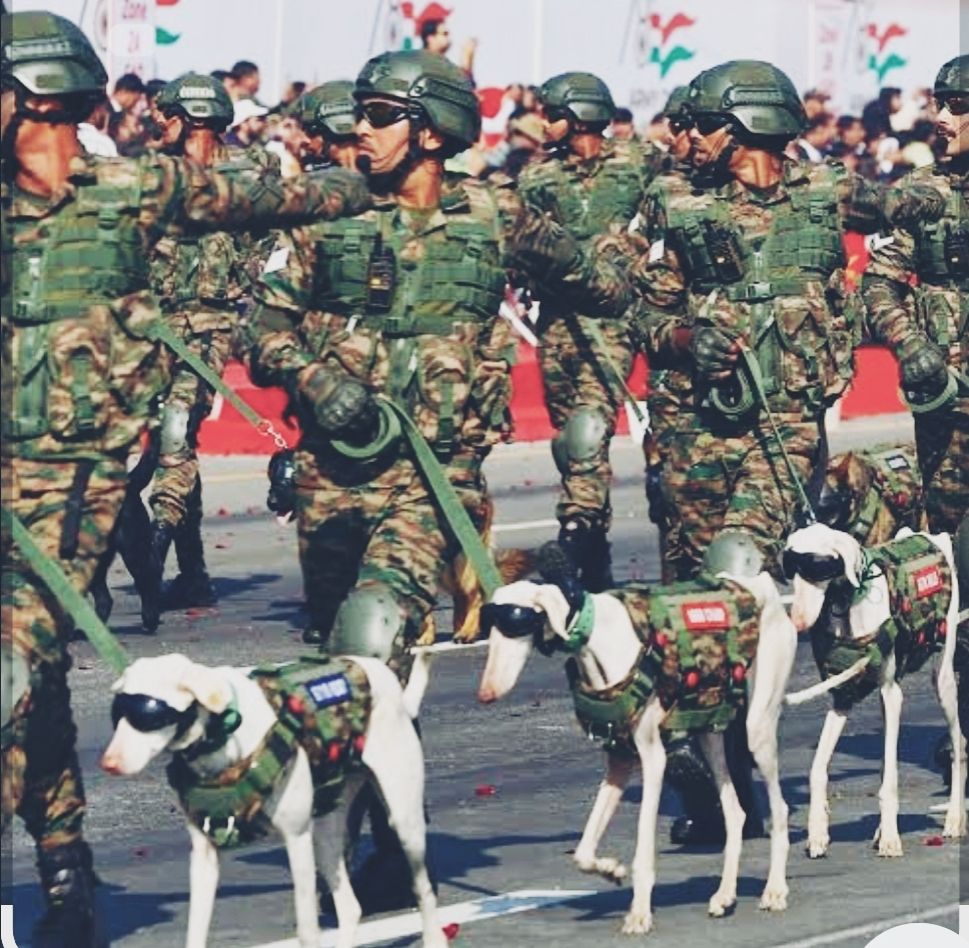
India’s operational landscape — mountainous infiltration corridors, dense woodland belts, and urban safehouses — has accelerated this doctrinal recalibration. In Kishtwar, Tyson’s injury was not incidental; it was intrinsic to operational logic. When a militant fires at a dog, he relinquishes concealment. In counter-terror combat, revelation equals vulnerability. Seconds shrink into advantage. The dog becomes both detector and disruptor, collapsing the time between suspicion and engagement.
This reliance does not romanticise sacrifice. The loss of K9s like Phantom in 2024 and Kent in 2023 underscores the cost embedded in this doctrine. These animals absorb bullets meant for soldiers, operating without ideology — guided only by training and the bond with their handlers. Their service compels an ethical reckoning within modern militaries. Increasingly, structured rehabilitation, medical evacuation, and post-retirement adoption frameworks acknowledge that these sentient assets are also veterans. Operational necessity is gradually being aligned with moral responsibility.

Beyond assault roles, canines dominate detection, tracking, and perimeter security. Explosives detection dogs remain indispensable in convoy movements and sanitisation drills.
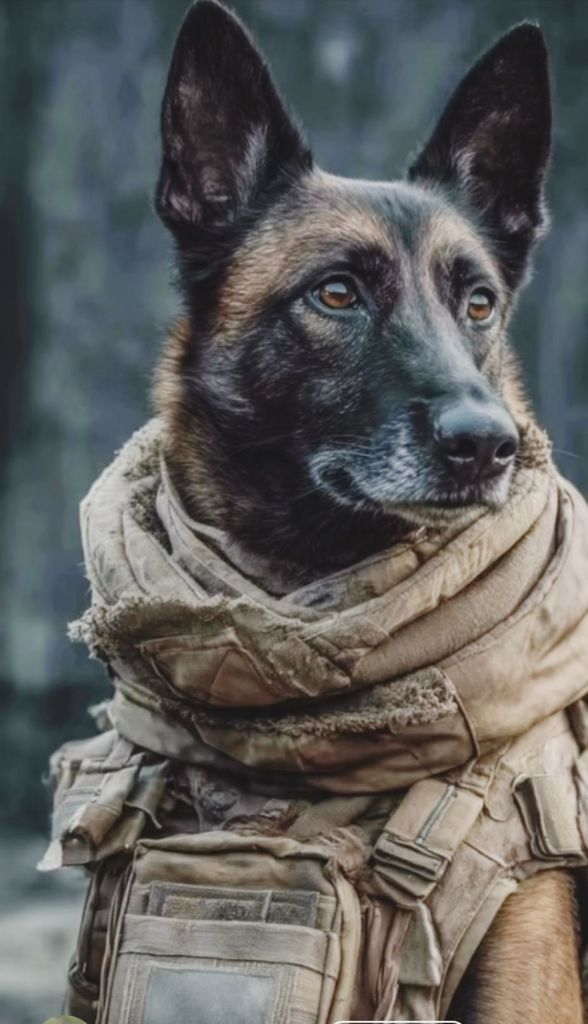
Man-tracking units follow molecular scent trails across days and rugged terrain, transforming pursuit from conjecture into calibrated probability. While drones extend the eye of the state, dogs provide its nose — grounding aerial intelligence in tactile certainty. The future battlefield will integrate robotics and AI-driven systems, yet the canine remains uniquely hybrid: biological sensor, psychological deterrent, and tactical scout. Tyson’s crawl into darkness was not merely an episode of bravery; it was doctrine embodied. As long as terror hides behind narrow doorways and beneath forest canopies, the first silhouette advancing into uncertainty may not be human. It will be a soldier on four legs — redefining the grammar of engagement, one pawprint at a time.
VISIT ARJASRIKANTH.IN FOR MORE INSIGHTS
 SOCIAL PERSPECTIVES