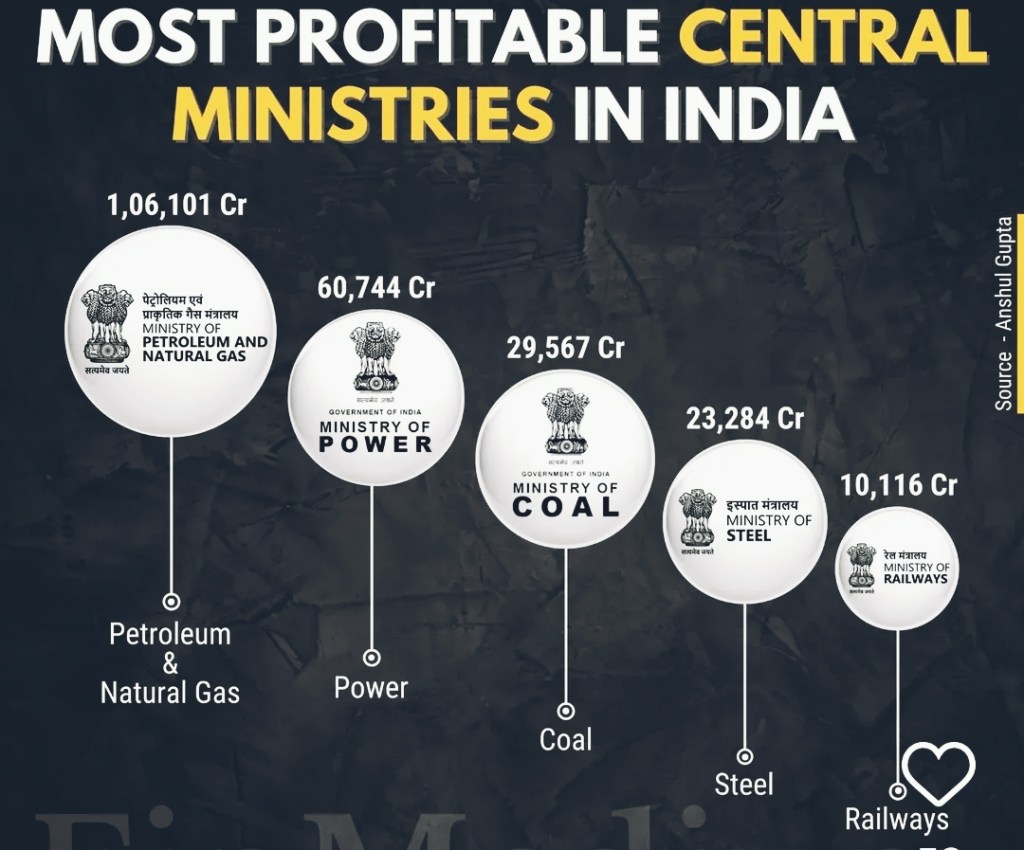
Democracies revere elections but neglect evaluation. Governments are voted in and voted out amid spectacle and rhetoric, yet between these defining moments stretches a vast accountability vacuum. The paradox is unmistakable: individual civil servants are increasingly assessed through file-disposal metrics, biometric attendance, and digital dashboards, while entire ministries—commanding billions in public funds—operate without structured, comparative scrutiny in the public domain. The confusion arises from conflating employee appraisal with institutional performance and mistaking electoral verdicts for continuous accountability. A mandate is not a management audit.

A clerk’s output can be timed; a department’s mandate cannot. Ministries operate in multidimensional arenas where growth must be reconciled with sustainability, welfare with fiscal prudence, speed with procedural integrity. Unlike an employee, whose deliverables are defined and attributable, ministerial outcomes are mediated by economic cycles, climate disruptions, geopolitical volatility, and citizen behavior. Reducing such complexity to a simplistic letter grade invites what behavioral science terms negativity bias—where a single visible failure eclipses numerous incremental successes. Yet the absence of structured comparison breeds opacity.
What is not measured resists improvement; what is not disclosed erodes trust. The deeper accountability deficit lies at the ministerial level. Political executives are shielded by collective cabinet responsibility and judged episodically at elections. But elections are blunt instruments. Voters adjudicate ideology, identity, and macro-narratives—not whether immunization coverage rose by three percentage points or whether infrastructure projects were delivered within cost and time. Unlike corporate CEOs reviewed quarterly by boards, ministers face no institutionalized, data-driven performance hearing between electoral cycles. The asymmetry is stark: bureaucrats are monitored; ministers are mythologized.
Global governance experiments illuminate alternatives. The United Arab Emirates’ Injazati framework aligns employee objectives with ministerial strategy through outcome-based metrics. Brazil’s Comptroller General institutionalizes real-time audit transparency. Jordan’s King Abdullah II Centre for Excellence evaluates leadership, innovation, and digital transformation beyond budgetary arithmetic. The Balanced Scorecard literature demonstrates that when adapted to public-sector constraints, it strengthens strategic alignment and transparency. Brazil’s Participa+ platform illustrates how digital participation can transform passive taxpayers into informed evaluators. These models collectively suggest that accountability can be architectural, not episodic.
India and comparable democracies could institutionalize a Public Value Scorecard—a composite dashboard published annually for every ministry, weighted across three axes.
Operational Efficiency would assess budget utilization quality, procurement cycle times, and project variance. Strategic Outcomes would align with national key performance indicators—poverty reduction, literacy, health coverage, carbon intensity, infrastructure throughput—verified independently to deter creative accounting. Citizen Trust and Feedback would measure grievance redress timelines, complaint resolution rates, and participatory engagement metrics. Such a scorecard would not summarily punish ministers; it would mandate structured testimony before parliamentary committees, with “Performance Watch” classifications triggering corrective disclosures. The discipline would be reputational and systemic, not theatrical.

The benefits are profound: depoliticized debate anchored in evidence rather than anecdote; fiscal rationality linking incremental budgets to demonstrated outcomes; early-warning systems detecting slippage before schemes collapse; and renewed public trust rooted in disclosed compliance rather than ornamental charters. Risks—metric gaming, data overload, performative compliance—are real but manageable through triangulation of statistical evidence and citizen sentiment. Accountability is not humiliation; it is stewardship. Democracy’s durability depends less on the drama of elections than on the discipline of disclosure. When ministries stand before the republic with transparent scorecards—efficient, outcome-aligned, and publicly accountable—governance evolves from episodic legitimacy to continuous credibility.
Visit arjasrikanth.in for more insights
 SOCIAL PERSPECTIVES