Reliance Jio did not merely enter India’s telecom market; it blew it open. Data prices crashed, smartphones became purposeful tools rather than status symbols, and a billion Indians stepped decisively into the digital century. Missed calls gave way to video calls, village entrepreneurs found global customers, and “Digital India” briefly escaped the confines of PowerPoint optimism to become lived reality. It was a private-sector disruption with public-good consequences. But revolutions, when left unchecked, have a habit of turning inward. Somewhere between conquest and complacency, Jio’s once-celebrated disruption began consuming its own credibility.
Today, India’s largest telecom operator charges premium, market-aligned prices while delivering an experience eerily reminiscent of a dilapidated government office: opaque processes, diffused responsibility, ritualistic assurances, and a customer who must wait patiently, pay promptly, and complain softly. The branding screams “world-class 4G and 5G”; the lived reality whispers mediocrity. The contradiction is stark. Customers prepay for uninterrupted connectivity, yet outages routinely stretch from hours into days—unannounced, unexplained, and un-apologised for. Speeds fluctuate with impunity, mocking the promise printed on the SIM card. Maintenance appears random and customer time economically irrelevant. When the network collapses, so does the illusion of a premium private utility. What remains is silence—both digital and institutional.
That silence becomes oppressive when customers seek help. Jio’s IVRS system has evolved into a masterclass in how automation, when weaponised against accountability, can dehumanise service. Endless menu loops, irrelevant options, and the near-impossibility of reaching a human being turn a basic grievance into a psychological endurance test. Complaints are logged reluctantly, tracked poorly, and escalated slowly. Call-backs are promised with ceremonial sincerity and quietly forgotten. When a human agent is finally reached, they are often under-trained, under-empowered, and unable to explain what failed—or when it will be fixed. The system feels designed not to resolve problems, but to exhaust complainants into surrender.
Rectification, when it arrives, is stripped of accountability. Services flicker back after days, but bills remain untouched. Prepaid plans expire on schedule even if connectivity was unusable for half their validity. Postpaid customers are charged in full, outages notwithstanding. There is no automatic credit, no transparent refund logic, no acknowledgement that money was collected for a service not delivered. The customer absorbs 100 percent of the risk; the corporation absorbs none. This is not efficiency—it is monopoly behaviour cloaked in corporate vocabulary.
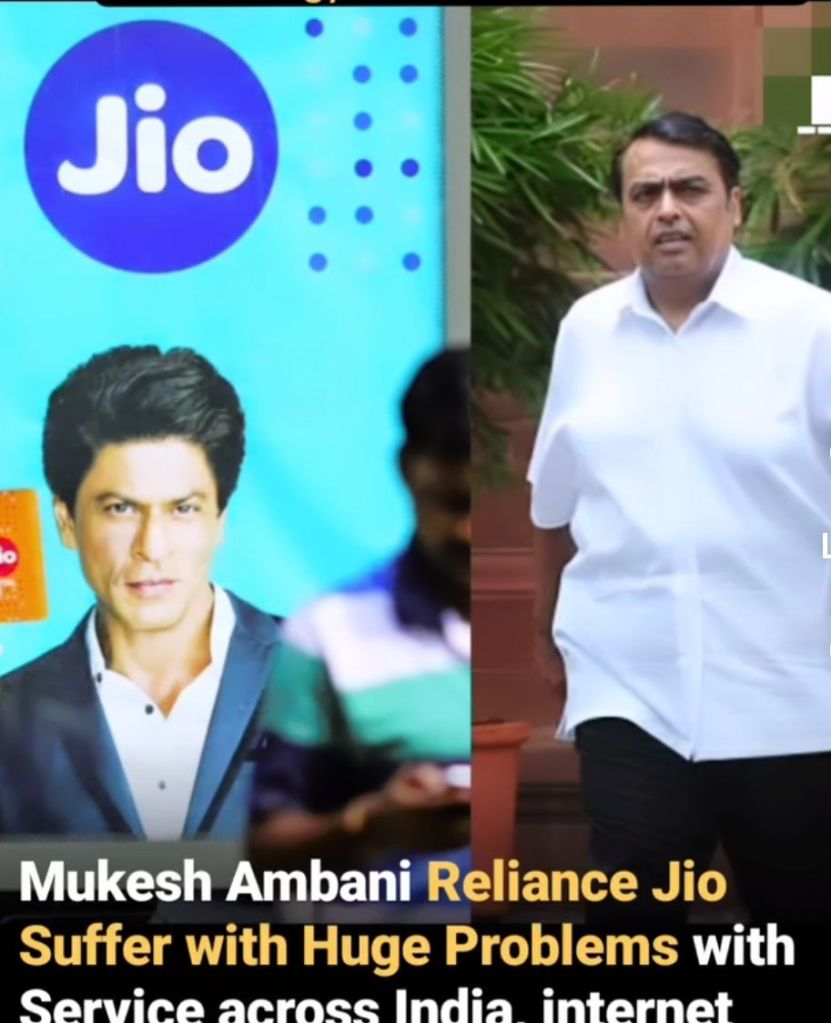
The decay is structural. Jio scaled faster than its support systems. A vast subscriber base is serviced by a thin, overstretched human interface. Automation became a cost-cutting substitute for responsibility. Last-mile infrastructure, particularly in non-metro and dense urban pockets, appears under-invested relative to load. Internally, silos thrive—billing deflects to technical teams, technical teams hide behind vague “area issues,” and customer care floats helplessly in between. There are no consumer-facing SLAs, no guaranteed resolution timelines, and no visible metrics linking executive performance to customer satisfaction.
The consequences are tangible. Professionals lose productive hours, students miss classes, small businesses lose orders and credibility. Customers pay for data never consumed, time never recovered, and stress never consented to. Trust erodes quietly. The brand that once symbolised empowerment now feels extractive—aggressively upselling new plans and digital add-ons while the core service falters. This is monetisation without obligation, revenue without responsibility. What makes the decline especially galling is its resemblance to the worst stereotypes of government agencies—procedural mazes, delayed responses, zero compensation for inconvenience. The difference is that government services are at least priced accordingly. When a private corporation charges like a global leader but delivers like a neglected public office, the betrayal cuts deeper.
None of this is irreparable. Immediate access to human agents, proactive outage alerts, and automatic service credits would restore basic dignity. Medium-term reforms—unified customer-care platforms, AI-driven network monitoring, and KPIs tied to first-contact resolution—could rebuild trust. Long-term, Jio needs a cultural reset where customer experience is a boardroom metric, not a marketing slogan. Human support must be treated as infrastructure, not overhead.
India is now too digitally dependent to tolerate telecom giants behaving like absentee landlords. When connectivity fails, livelihoods stall. If companies wish to charge like world-class providers, they must serve like one. Otherwise, they risk becoming exactly what they once mocked—large, powerful, unavoidable, and profoundly unconcerned with the citizen on the other end of the line. The market is patient, but it is not infinitely forgiving. You can chew beyond your capacity only for so long before customers stop swallowing the story.
Visit arjasrikanth.in for more insights
 SOCIAL PERSPECTIVES