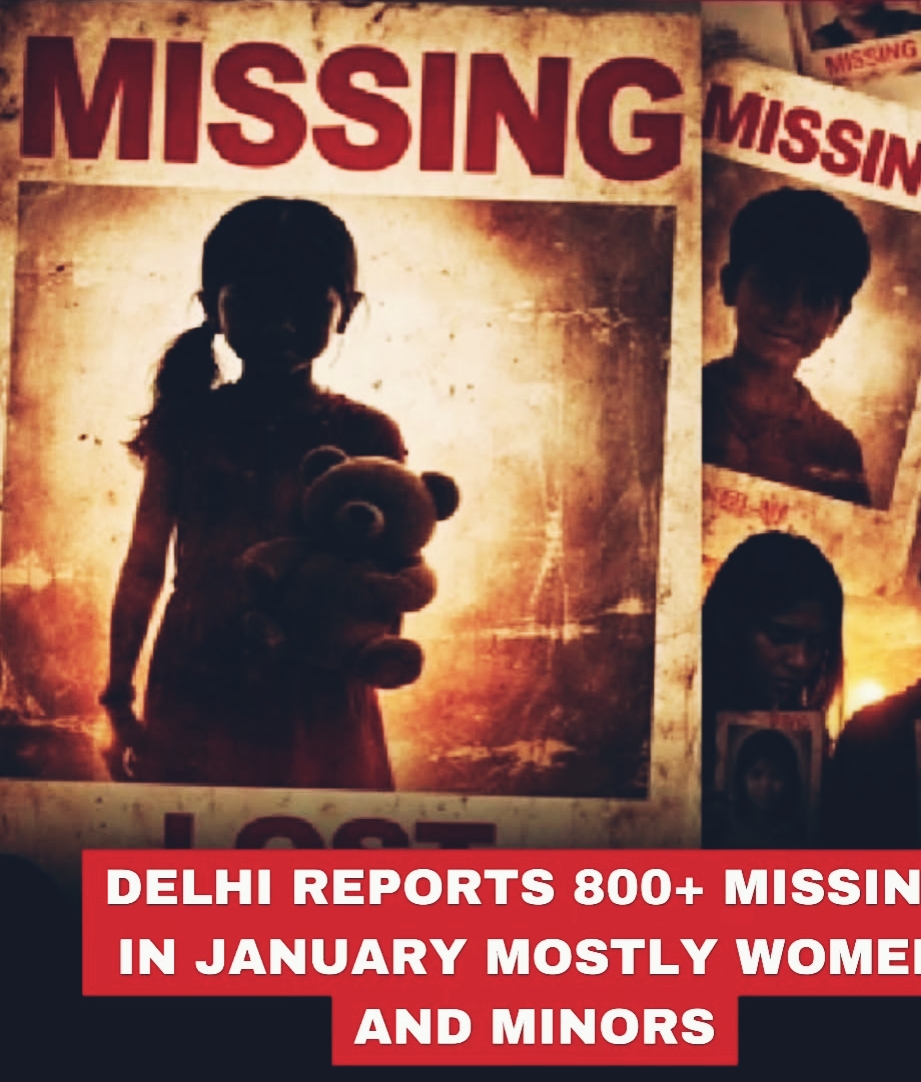
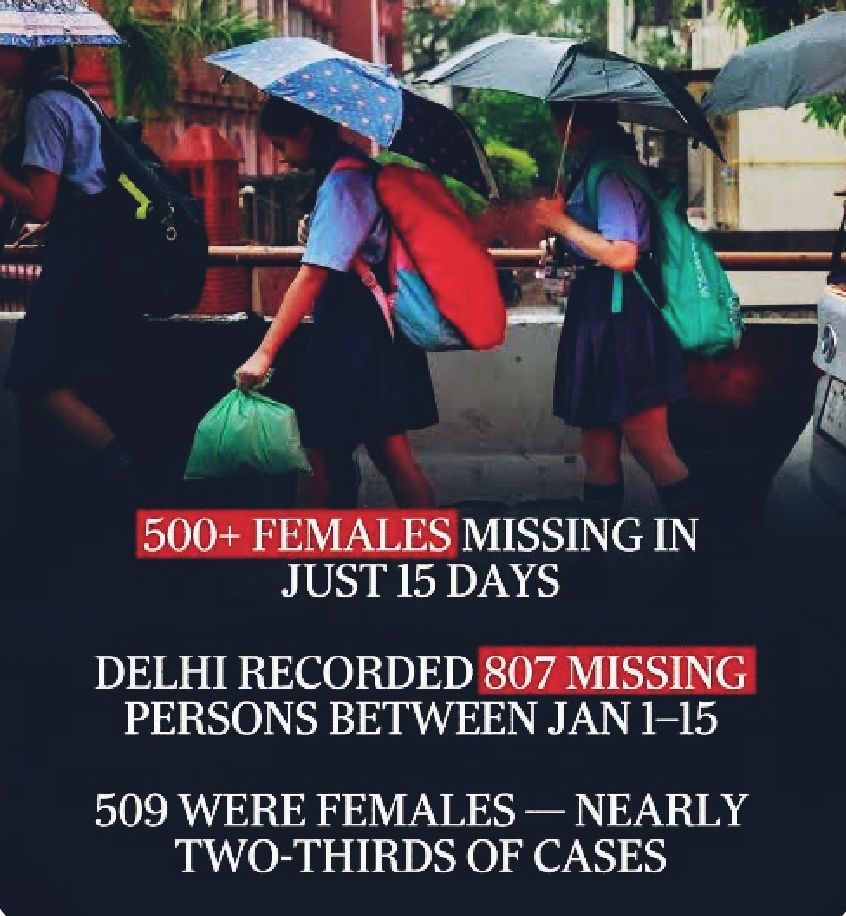
Between January 1 and January 15, 2026, more than 800 people reportedly disappeared in Delhi — an average of 54 individuals each day, a human absence marking the city’s rhythm roughly every twenty-seven minutes. Statistics often arrive devoid of emotional gravity, dissolving into fleeting headlines. Yet behind these numbers lies a layered urban crisis shaped by gendered vulnerability, economic inequality, institutional fragmentation, and the quiet erosion of child safety. What appears as isolated missing-person reports reveals a deeper structural pattern, where modern metropolitan life can conceal human fragility behind administrative language and routine news cycles.
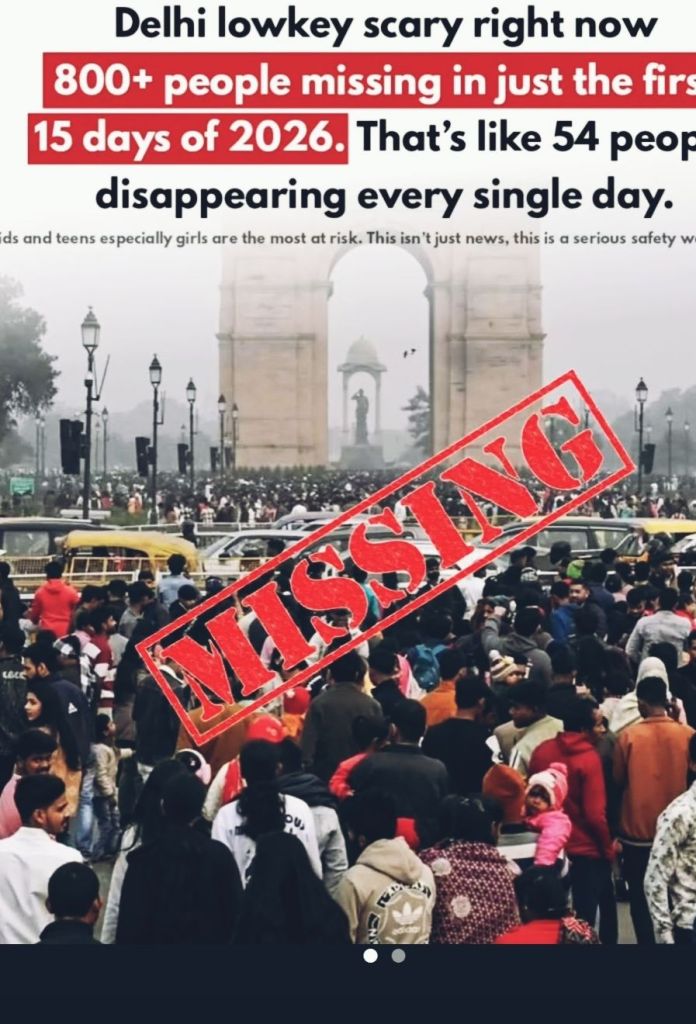
The scale of the challenge is neither sudden nor accidental. Across India, over 121,000 children were reported missing in a single year, with tens of thousands remaining untraced — a demographic void comparable to a small town fading from official records. Delhi’s identity as a migration hub and transit corridor intensifies this vulnerability. Rapid population churn, informal employment, and dense settlements create conditions where individuals can disappear into anonymity, particularly in peripheral neighbourhoods where institutional presence struggles to keep pace with urban expansion.
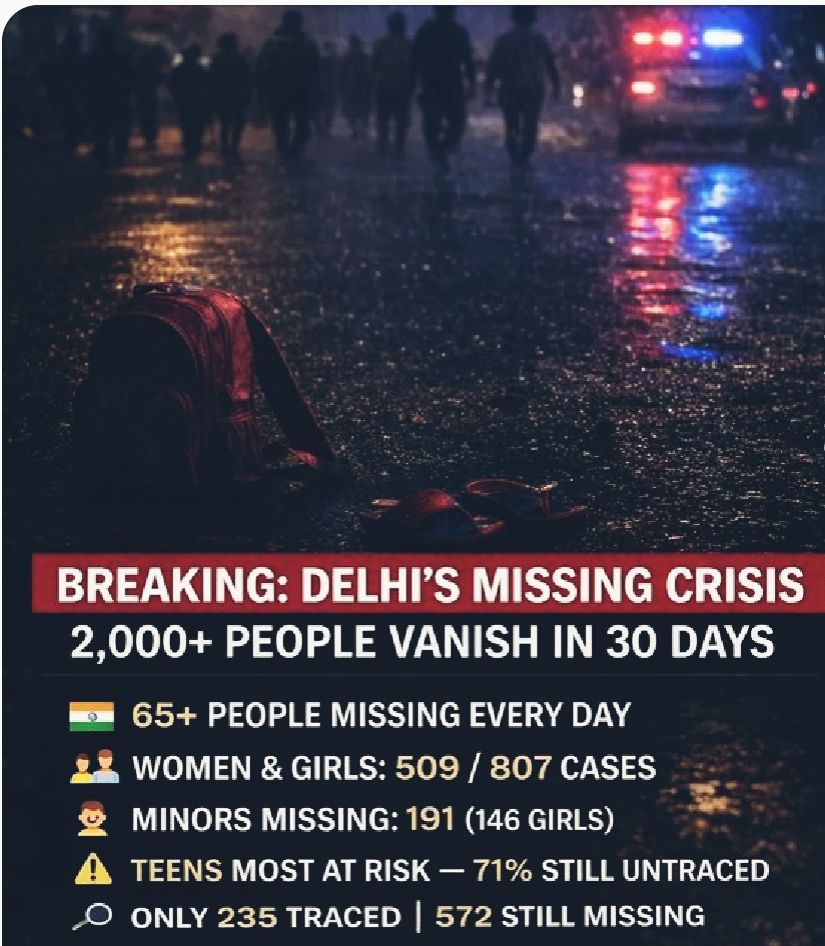
Geography within the capital underscores how risk is unevenly distributed. Northern and north-eastern districts frequently record higher numbers of missing children compared to central zones, reflecting the intersection of housing instability, economic stress, and migration pressures. Families navigating precarious livelihoods often face reduced supervisory capacity, while children growing up amid uncertainty encounter emotional and social challenges that policing alone cannot address. The crisis therefore extends beyond law and order; it mirrors developmental disparities embedded within the city’s spatial design.

Gender patterns deepen the urgency. In many datasets, girls constitute a significant majority of missing child cases, with adolescent girls emerging as particularly vulnerable. This imbalance reflects broader systemic pressures — trafficking risks, domestic exploitation, unequal social norms governing mobility, and the invisible weight of gendered expectations. Simultaneously, research suggesting that a large proportion of traced children leave voluntarily complicates conventional narratives. Academic stress, fear of punishment, family conflict, and mental health pressures indicate that disappearance is often an expression of distress rather than solely a criminal event.
The mechanics of disappearance further reveal overlooked vulnerabilities.
Many cases occur during everyday transitions — journeys between home, school, and tuition — transforming ordinary commutes into fragile moments of risk. Institutional responses remain extensive yet fragmented across legal frameworks, policing protocols, and welfare mechanisms. Technological interventions such as facial recognition and digital tracking promise efficiency but also raise concerns about privacy, accuracy, and the danger of replacing human engagement with algorithmic certainty. Recovery frequently marks the administrative closure of a case, even though reintegration, counselling, and long-term support remain essential to prevent recurrence.
Delhi’s missing persons crisis ultimately exposes a broader governance dilemma. Beyond visible numbers lie unreported cases shaped by stigma, fear, or mistrust of authorities, suggesting that official statistics capture only a portion of reality. Addressing the issue demands integrated policy thinking — safer urban mobility, school-based mental health systems, community vigilance networks, and coordinated inter-agency action that moves beyond reactive enforcement. A city that loses someone every twenty-seven minutes stands at a moral crossroads: progress cannot be measured only by how quickly individuals are traced, but by whether the social architecture evolves to ensure fewer children feel compelled to vanish in the first place.
Visit arjsrikanth.in for more insights
 SOCIAL PERSPECTIVES