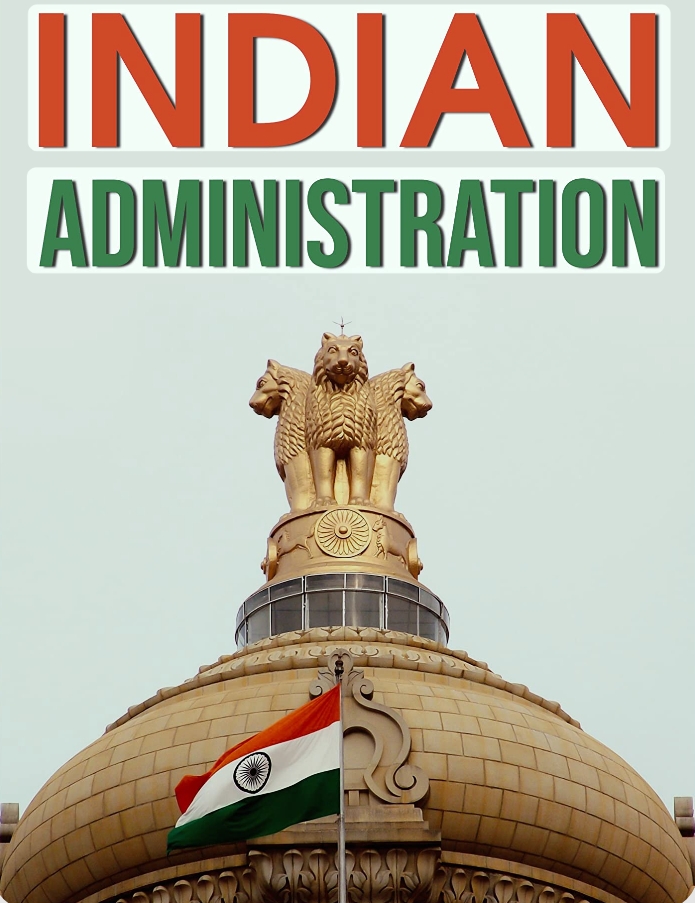
Every system of governance resembles a pyramid — not only in hierarchy but in philosophy. Strength is expected to rise from the base, coherence from the middle, and direction from the summit. Yet contemporary administrative culture increasingly inverts this logic. Authority gathers at the apex while operational responsibility cascades downward without equivalent empowerment. What emerges is a structure that appears decisive and unified from a distance but remains internally brittle — a pyramid where instructions descend with speed, yet accountability struggles to travel upward.
Institutional controversies in recent years reveal more than procedural failures; they expose structural distortions embedded within governance itself. When decision-making becomes excessively centralized, supervisory bodies and intermediate institutions risk drifting into symbolic roles rather than functional ones. Frameworks originally designed to distribute authority gradually evolve into conduits for transmitting directives. Governance then shifts from preventive vigilance to reactive crisis management, responding to breakdowns rather than anticipating them.

The appeal of centralization is understandable. Leadership often seeks uniformity, rapid execution, and visible control in environments shaped by public scrutiny and political urgency. Direct engagement with operational layers can appear efficient, particularly when delays are perceived as institutional inertia. However, organizational theory consistently demonstrates that bypassing intermediary structures erodes long-term resilience. Middle layers are not administrative redundancies; they are the connective tissue of governance, translating policy into practice, filtering ground realities, and preserving procedural continuity. When this layer loses autonomy, enforcement weakens and institutional memory begins to fade.

The consequences unfold quietly but decisively. Field officers become executors rather than interpreters of policy, unsure whether to rely on established norms or shifting directives from above. Supervisory mechanisms lose the confidence to question irregularities because authority no longer resides within their domain. Over time, systems develop blind spots, particularly in procurement, monitoring, and compliance. Issues remain latent until they escalate into public crises, revealing how fragile oversight becomes when governance is compressed into a narrow command structure.
Beyond structure lies a psychological dimension rarely acknowledged. Persistent top-down administration cultivates dependency. Officers begin to seek validation for routine decisions, not out of incapacity but as a rational response to concentrated authority. Initiative at the grassroots gradually diminishes, while leadership at the summit inherits an unsustainable burden of micro-management. The paradox becomes evident: as power grows stronger at the top, the institutional foundation grows weaker beneath it. A pyramid cannot sustain stability if its middle layers are hollowed out.

Administrative sociology often describes this phenomenon as authority compression — the collapse of multiple decision nodes into a single locus of control. While intended to produce clarity, it frequently generates ambiguity. Without empowered intermediaries, accountability becomes diffuse and abstract. Systems begin to depend on personalities rather than processes, making governance vulnerable to individual variability rather than institutional strength. Even well-designed safeguards struggle to function because the ecosystem required to sustain them has been quietly weakened.

Equally significant is the erosion of collective wisdom. Traditional governance evolved through layered deliberation, where policies were refined through multiple institutional perspectives before implementation. This process acted as an internal corrective mechanism, allowing risks to surface early and adjustments to occur organically. When governance becomes excessively top-heavy, deliberation contracts. Decisions may appear swift and decisive, but they often lack the contextual nuance that emerges from collaborative institutional dialogue.
The expectation that a weakened base can still uphold a strong administrative pyramid reflects a misunderstanding of how institutions endure. Efficiency is not achieved by eliminating friction entirely; it emerges from channeling friction productively. Middle institutions exist not to delay governance but to test assumptions, validate compliance, and ensure continuity. Reducing them to procedural signatories strips the system of its internal checks and balances, leaving it vulnerable to unforeseen disruptions.
Restoring equilibrium requires redefining the meaning of strong leadership. Strength does not lie in centralizing every decision but in cultivating distributed authority anchored in transparent accountability. Vision may originate at the top, but execution must remain rooted in empowered institutional layers. Technology and data analytics can enhance oversight, yet they cannot replace human agency embedded within functioning administrative tiers. Governance must be designed to outlast individuals, relying on processes rather than proximity to power.
Cultural transformation is equally essential. Officers across levels must feel accountable not only to hierarchical superiors but to institutional integrity and public trust. Clear delineation of roles — who formulates, who supervises, who executes — restores ownership across the pyramid. When responsibility is shared rather than concentrated, governance becomes adaptive, capable of preventing crises rather than merely responding to them.
Ultimately, the lesson extends beyond isolated institutional failures. A pyramid derives strength from balance, not height. Concentrated authority may create the illusion of control, but without empowered foundations and functional middle layers, that control remains fragile. Sustainable governance demands an internal spine — a structure where authority flows with responsibility, where each layer exercises meaningful agency, and where leadership guides without eclipsing the institutions that sustain it. Only then can the pyramid stand not merely tall, but stable.
Visit arjasrikanth.in for more insights
 SOCIAL PERSPECTIVES