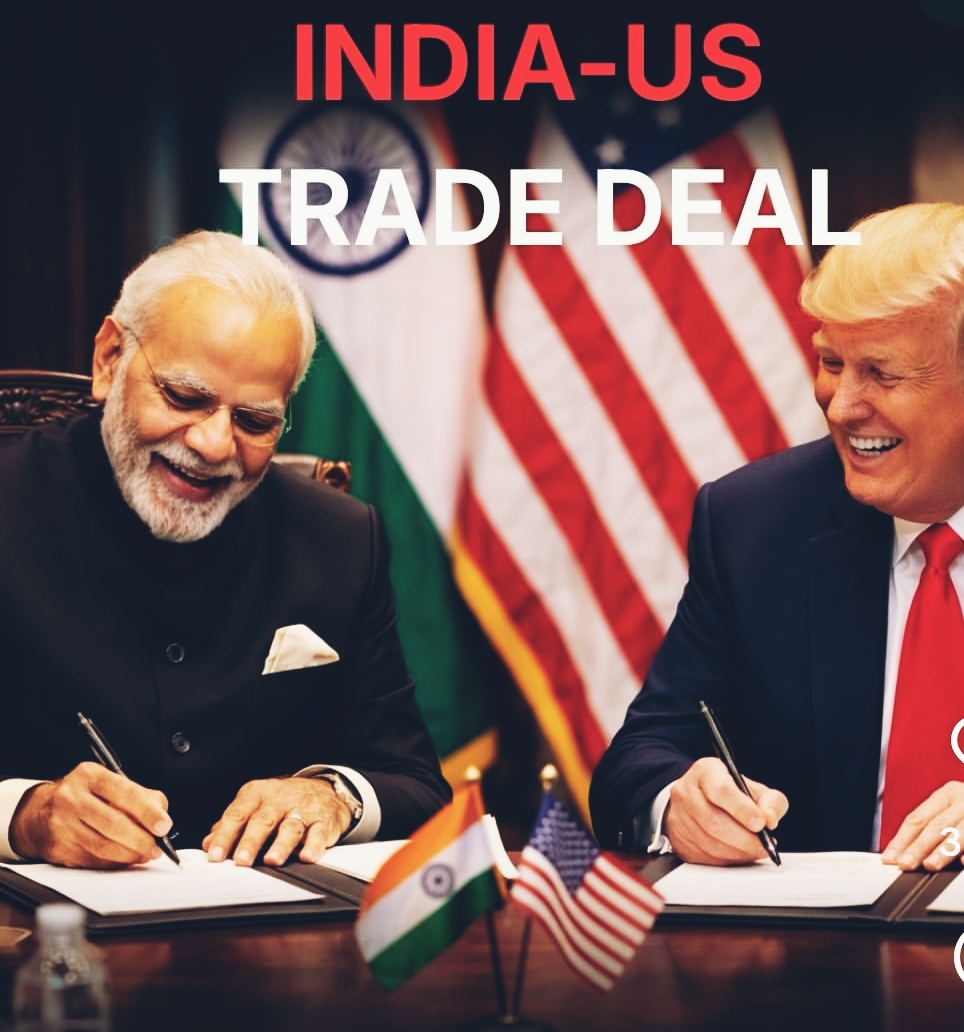
The recently proposed Indo-US trade arrangement, announced with dramatic flourish after a high-profile conversation between Donald Trump and Prime Minister Narendra Modi, captures the evolving grammar of twenty-first-century commerce—where geopolitical signalling often arrives before legal architecture. Washington’s indication of reducing tariffs on select Indian goods to nearly 18 percent, coupled with expectations that India could expand purchases of American products worth up to $500 billion while reconsidering elements of its energy sourcing, signals more than a trade negotiation; it reflects the transformation of economic diplomacy into strategic choreography. Yet beneath the celebratory narrative lies an unresolved question: in the absence of a binding treaty, enforceable timelines, or transparent institutional framework, is this an economic breakthrough or merely a political understanding framed by urgency and asymmetry?
The structural design of the arrangement raises concerns about balance. While the United States appears to preserve key tariff barriers, India may be expected to open significant segments of agriculture, pharmaceuticals, and digital commerce. Such asymmetry challenges the spirit of multilateral trade norms, particularly the most-favoured-nation principle that traditionally anchors global commerce. Unlike India’s rule-based engagements with the European Union or Australia, this emerging framework leans heavily on political discretion rather than legal reciprocity. The broader pattern in recent US negotiations—conditional tariff adjustments tied to strategic concessions—suggests that predictability is gradually yielding to bargaining power, leaving partner economies navigating a landscape defined as much by politics as by economics.
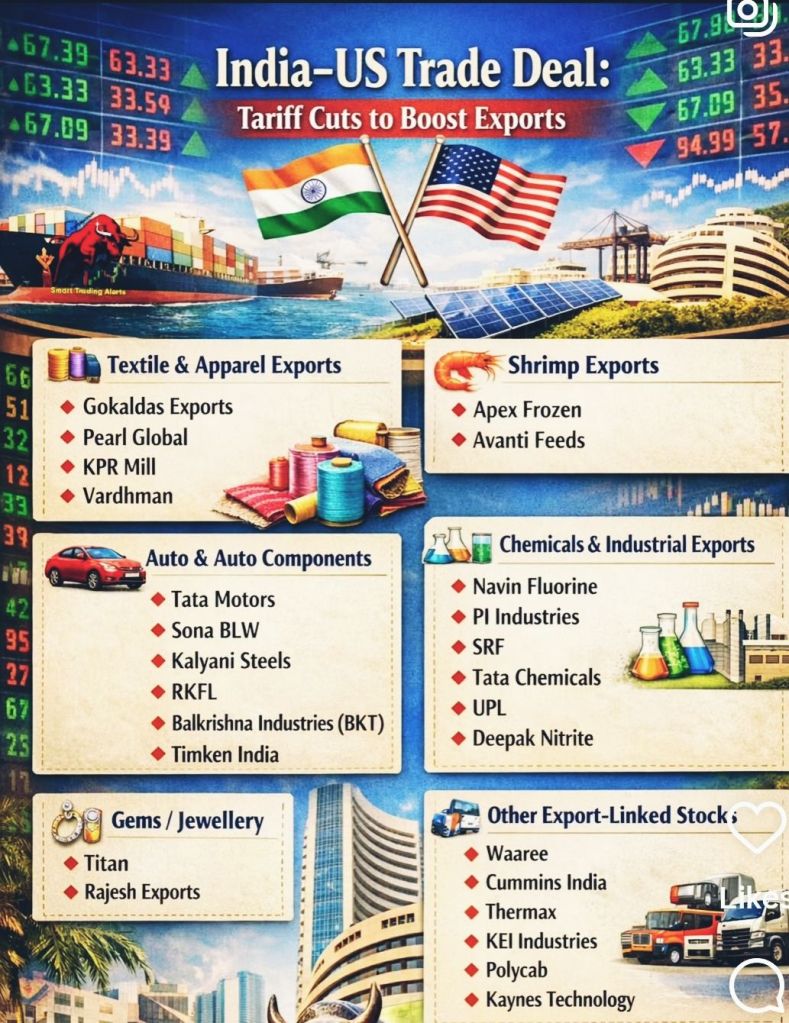
The ambitious $500-billion trade target illustrates both aspiration and ambiguity. Current bilateral trade levels fall significantly short of this benchmark, implying that defence procurements, aviation deals, and high-technology imports may be folded into the definition of trade itself. Advocates argue that such acquisitions could accelerate India’s technological transformation, deepen supply-chain integration, and expand collaboration in semiconductors, clean energy, and advanced defence platforms. Critics, however, warn that an import-heavy expansion risks entrenching a consumption-driven imbalance unless accompanied by domestic value creation and industrial upgrading. The figure thus functions less as an immediate policy objective and more as a symbolic horizon—an economic narrative designed to signal strategic convergence.
Agriculture remains the most politically sensitive frontier. American exporters have long sought greater access to India’s market for dairy, cotton, nuts, and rice—sectors shaped by heavy subsidies in the United States and fragile livelihoods in India. Even calibrated tariff concessions could introduce price distortions capable of unsettling India’s minimum support price framework and the socio-economic equilibrium of rural communities. Negotiators therefore face a delicate balancing act: maintaining diplomatic goodwill while safeguarding domestic stability. Instruments such as phased tariff reductions, minimum import price safeguards, or tightly defined quotas may emerge as compromise pathways, yet each carries potential risks of market volatility and political backlash.
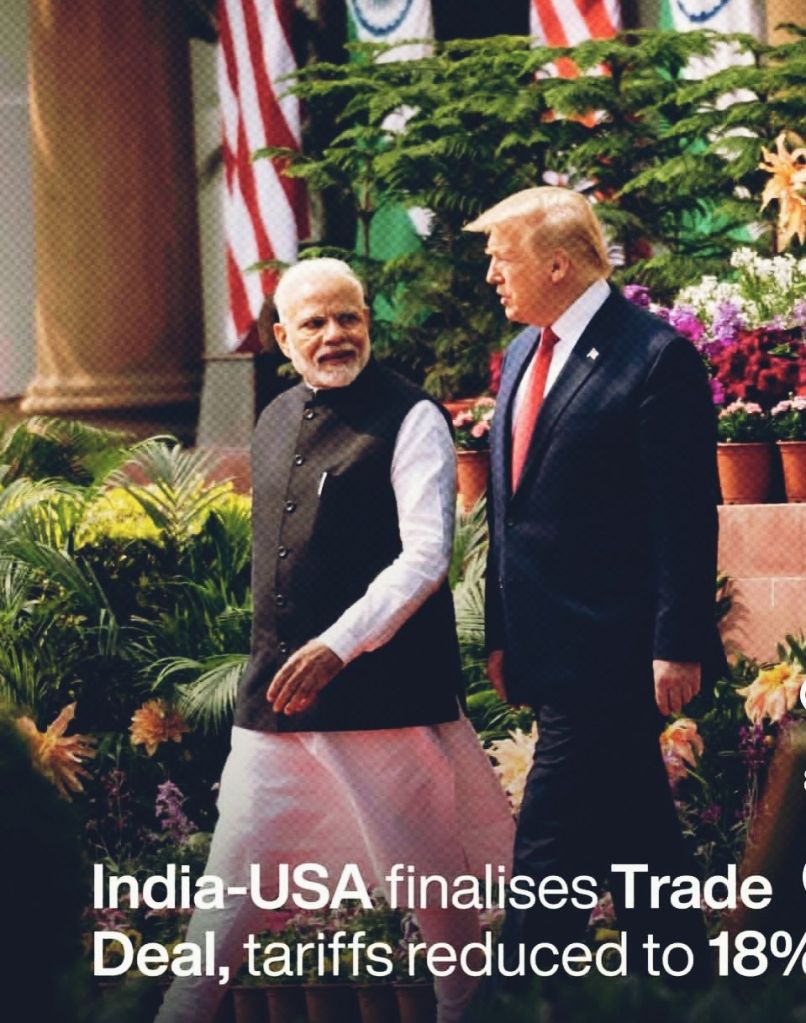
Equally consequential are negotiations unfolding in pharmaceuticals and the digital economy—domains where trade policy intersects with sovereignty and developmental strategy. American pharmaceutical stakeholders have consistently advocated stronger intellectual property protections, including potential revisions to provisions like Section 3(d) of India’s Patent Act and longer data exclusivity periods. Such shifts could challenge India’s globally competitive generic drug ecosystem and reshape access to affordable healthcare. In the digital sphere, debates over equalisation levies, cross-border data flows, and permanent moratoriums on customs duties for electronic transmissions reflect deeper ideological differences over the governance of the digital commons. Concessions in these areas may not merely affect trade balances; they could influence the trajectory of India’s innovation architecture and regulatory autonomy for decades.
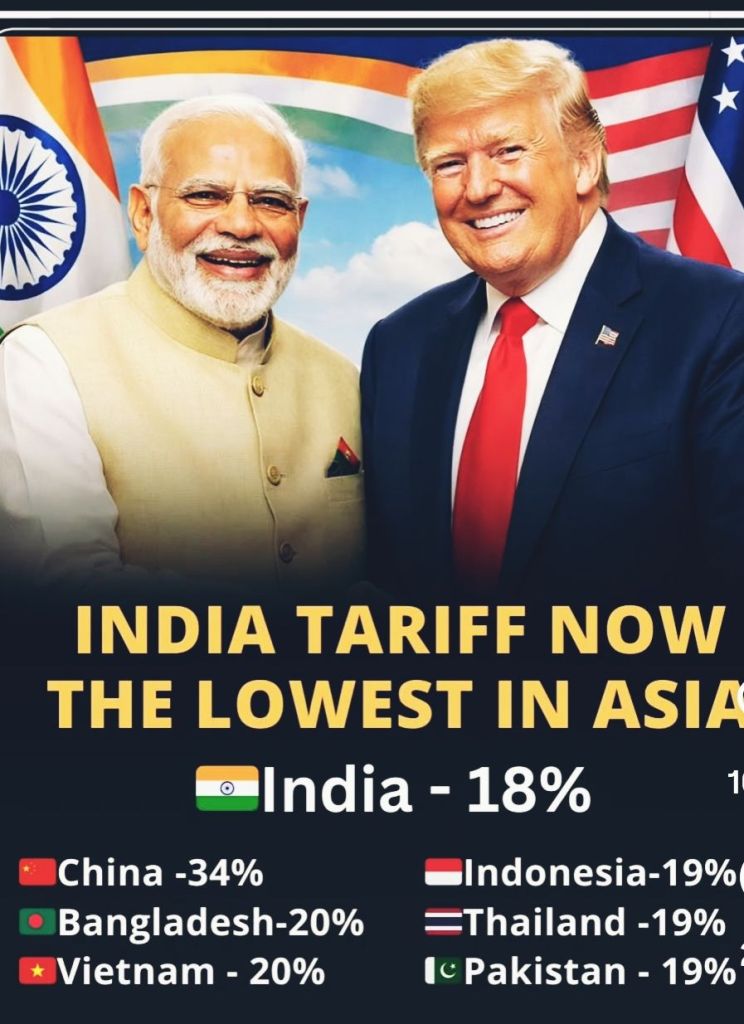
Beyond sectoral negotiations, the agreement carries profound geopolitical resonance. Reduced US tariffs may offer India a modest edge over China in select American markets, yet that advantage appears fragile amid rising competition from emerging manufacturing hubs such as Bangladesh, Indonesia, and Thailand. More importantly, the absence of a robust dispute-settlement mechanism introduces uncertainty about enforceability, particularly if future political transitions in Washington recalibrate priorities. In a world where trade agreements increasingly function as instruments of strategic alignment rather than purely economic contracts, the Indo-US arrangement reflects a broader shift: commerce as a language of power.
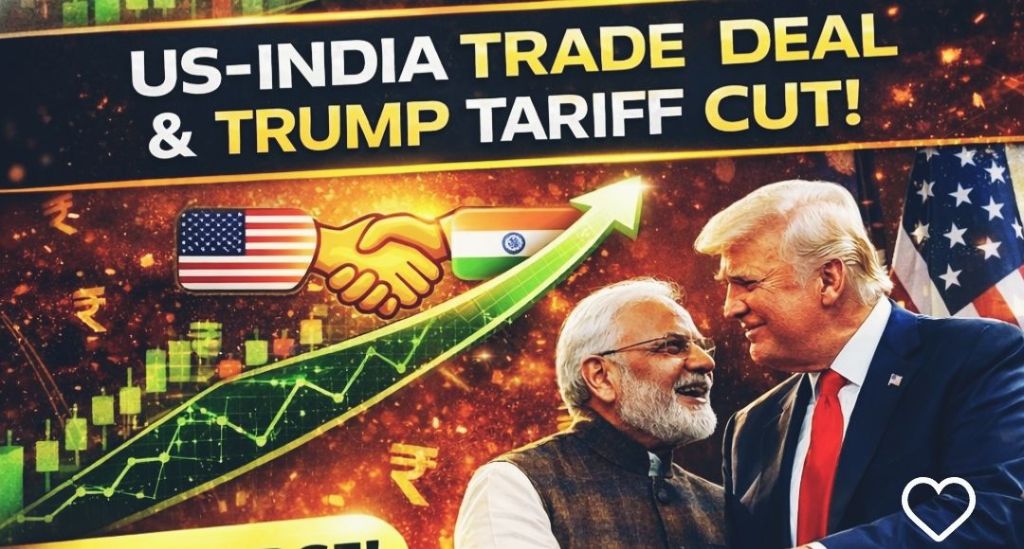
Ultimately, this evolving understanding stands at the intersection of ambition and caution. It promises technological collaboration and strategic proximity, yet also exposes the risks of asymmetric integration and policy vulnerability. Whether it matures into a durable framework that strengthens India’s economic sovereignty or becomes a cautionary example of geopolitics outpacing governance will depend less on headline announcements and more on the invisible architecture of rules, safeguards, and reciprocity that eventually define its contours.
Visit arjasrikanth.in for more insights
 SOCIAL PERSPECTIVES