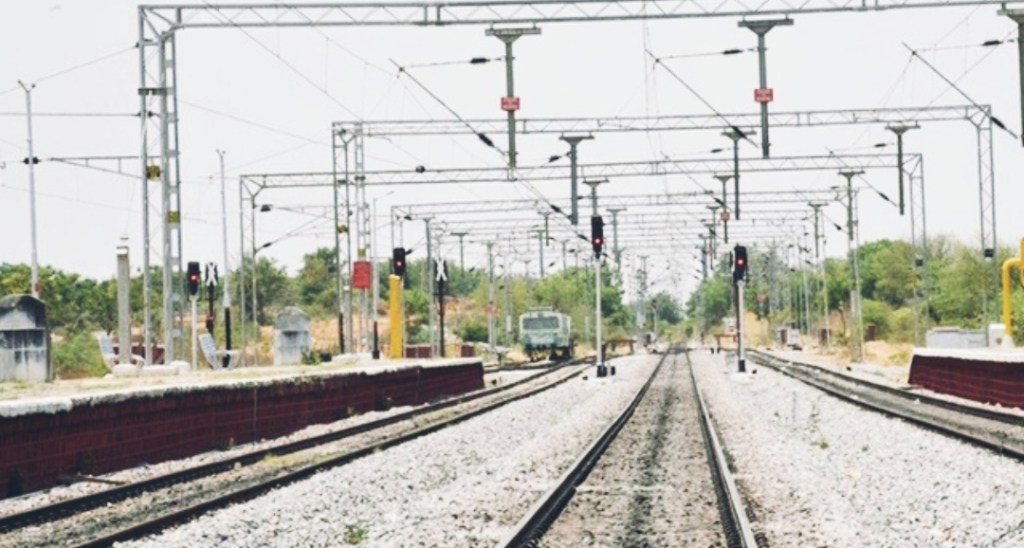
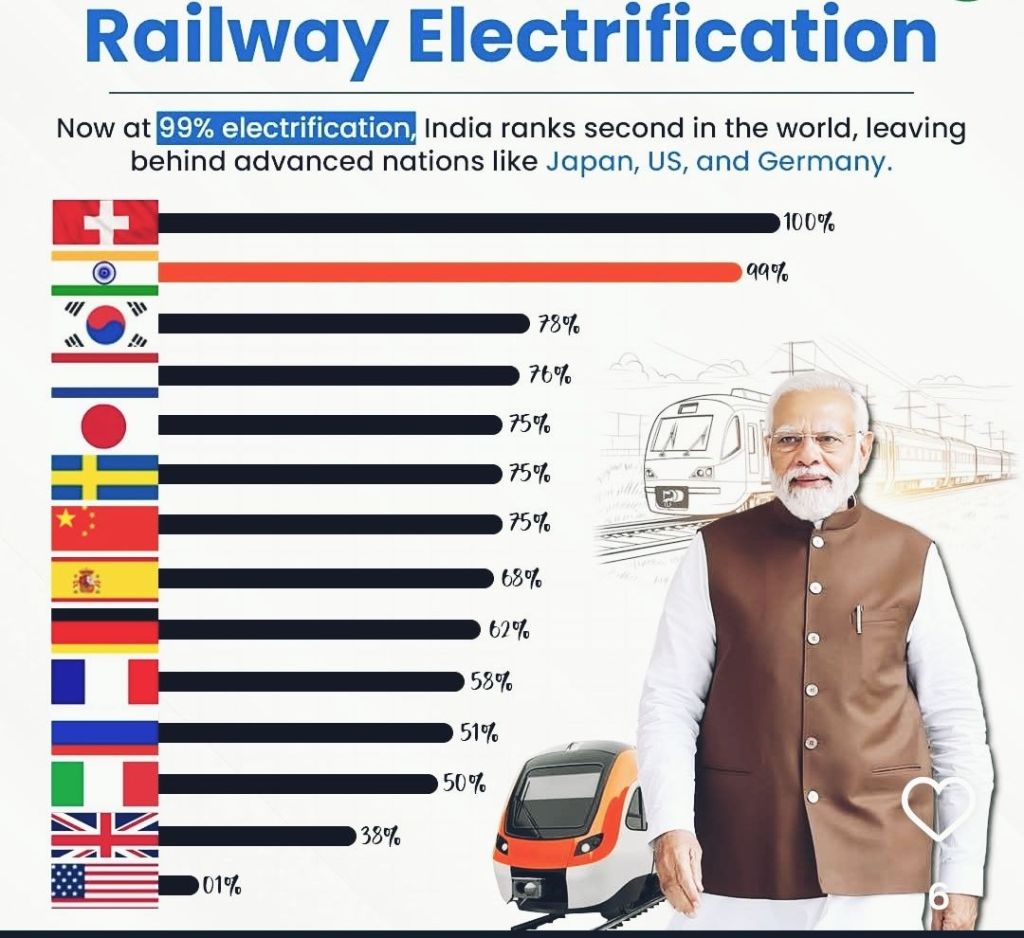
If Indian Railways were to halt for even a day, India would not merely slow down—it would seize up. Nearly 6.9 billion passengers and 1.58 billion tonnes of freight traverse its 69,000-km network every year, stitching together labour, markets, and industry into a single circulatory system. What has changed—almost unnoticed by the public—is the energy bloodstream that powers this machine. By early 2025, close to 99% of the broad-gauge network stood electrified, completing a once-unthinkable shift from one of the world’s largest diesel consumers to one of India’s largest electricity buyers. This was not a technical upgrade; it was a structural rewiring of the railway economy—and by extension, the Indian economy.
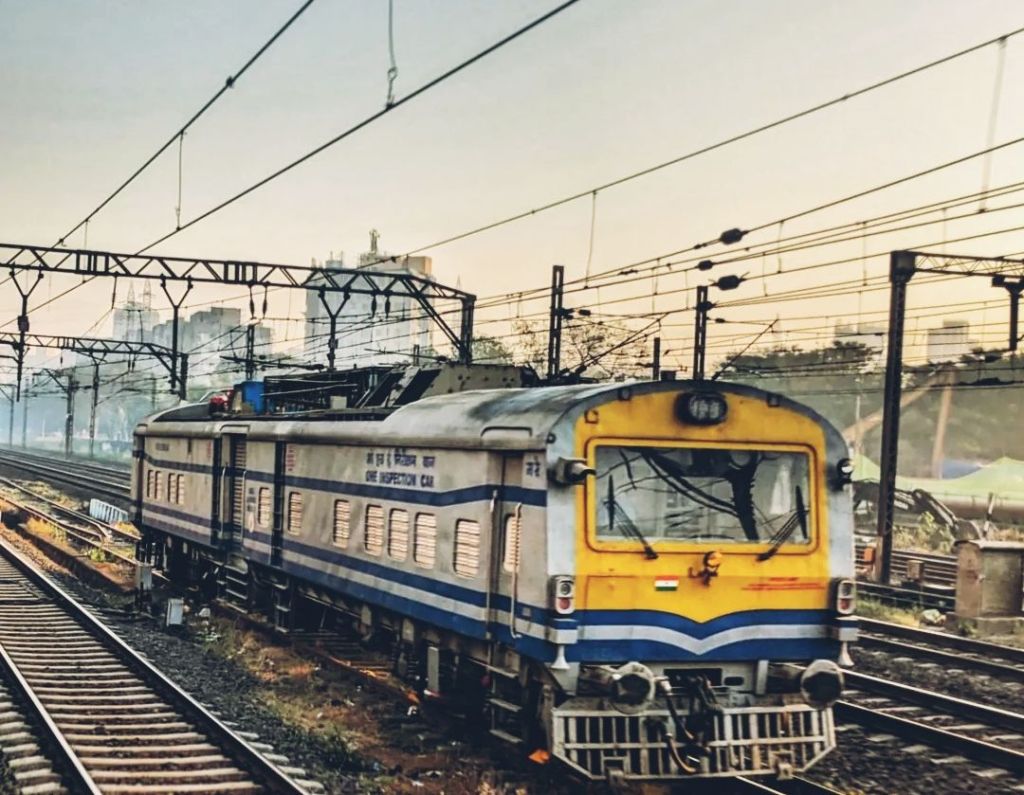
At first glance, electrification seems like history looping back on itself. Steam burned coal, diesel replaced steam, and electric trains again draw power largely generated from coal. The difference lies in efficiency at scale. Centralised power plants operate at far higher thermal efficiencies than locomotive engines, while electric traction converts nearly 90% of input energy into motion, compared to barely 35–40% for diesel. Regenerative braking further tilts the arithmetic by feeding energy back into the grid. Across billions of tonne-kilometres, these marginal gains compound into macroeconomic impact.
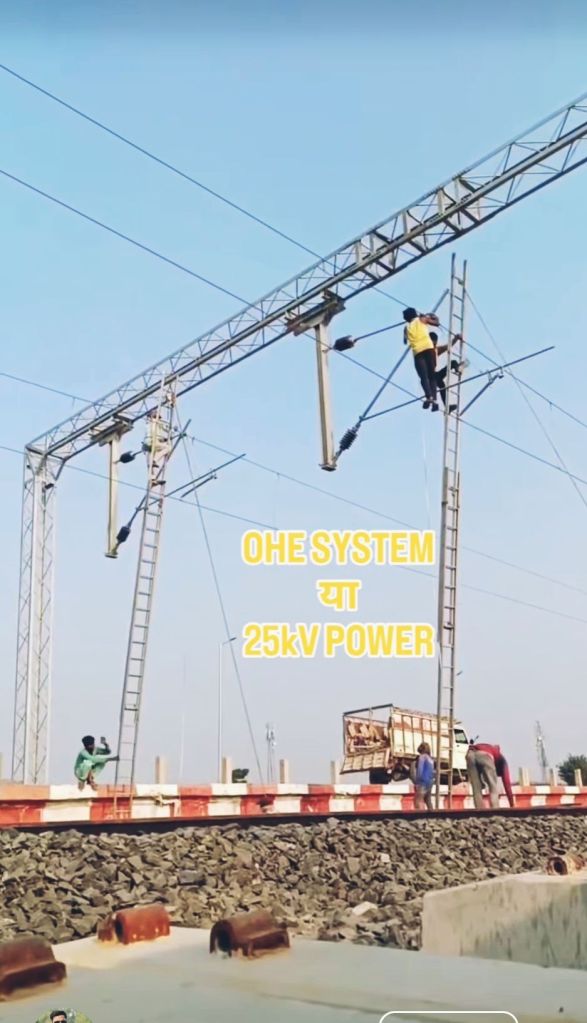
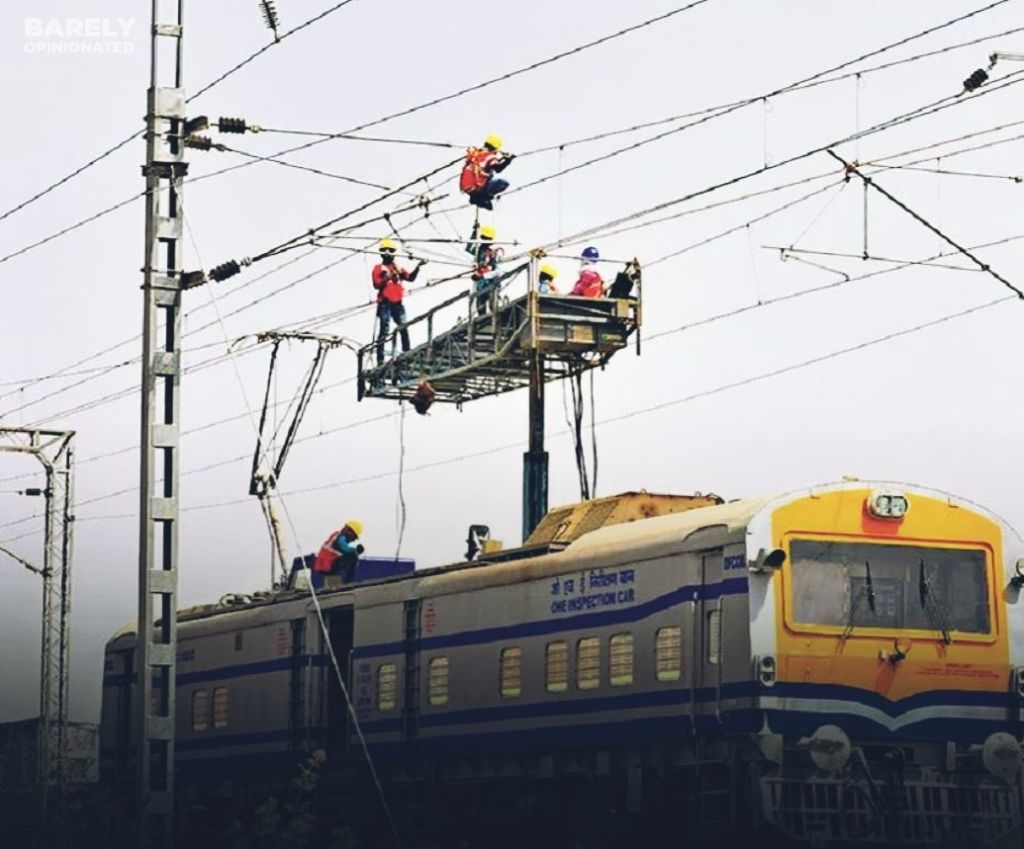
Electrification also reshaped railway infrastructure philosophy. The adoption of 25 kV AC traction in 1961 enabled nationwide standardisation and long-distance power transmission. Once electrified, routes remain interoperable for decades. Achieving this, however, was an engineering marathon. Overhead equipment had to be installed while trains kept running; steam-era bridges raised, tunnels modified, and track beds lowered. In hostile terrains—from the Western Ghats to Himalayan foothills—equipment often arrived only by rail through landslide-prone corridors. This was logistics under live fire.
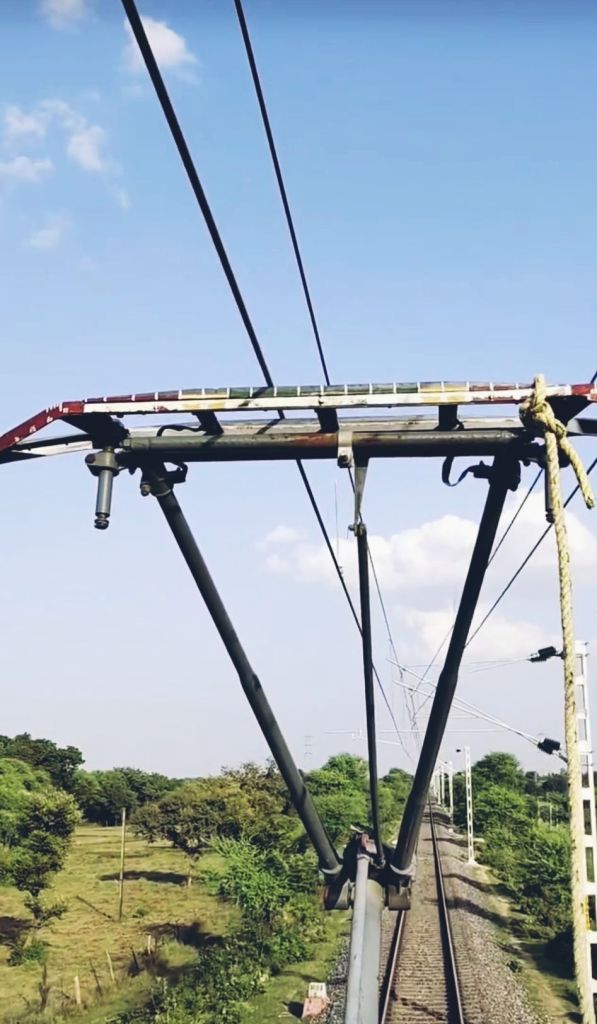
The payoff is now visible on the balance sheet. Electrification insulated Railways from oil price volatility and foreign exchange risk. In 2024 alone, diesel savings exceeded ₹4,700 crore. Per-kilometre traction costs fell to nearly half of diesel, while maintenance improved as electric locomotives—simpler, cooler, and more reliable—reduced downtime. Variable fuel costs declined, traded for fixed infrastructure investment, a shift favouring long-term financial stability over short-term convenience.
For the wider economy, the dividends are larger. Lower diesel consumption reduces crude imports, easing the current account. Electric locomotives haul longer, heavier trains without thermal constraints, lowering freight costs for coal, cement, iron ore, and food grains. Logistics efficiency quietly improves national competitiveness. Simultaneously, electrification catalysed domestic manufacturing—from locomotives to power electronics—embedding rail energy into India’s industrial ecosystem.
Yet the transformation altered risk, not removed it. Diesel logistics gave way to grid dependence. Power outages and transmission delays now matter as much as fuel once did. The Bengaluru–Hubli line, electrified by 2023 but diesel-run until 2025 due to substation delays, cost over ₹4.36 crore per month in fuel—proof that electrification is only as strong as coordination with state utilities. Hence, Railways still retains diesel fleets for resilience, recognising that robustness, not purity, governs real systems.
The next frontier is renewable integration. By November 2025, Indian Railways had commissioned 898 MW of solar capacity—up from 3.68 MW in 2014—across stations, yards, and colonies. Some feeds traction directly; the rest offsets auxiliary demand. Battery-electric and hydrogen pilots, though early, signal experimentation where overhead wires are impractical. Renewables are not yet replacing the grid, but they are reshaping margins and future options.
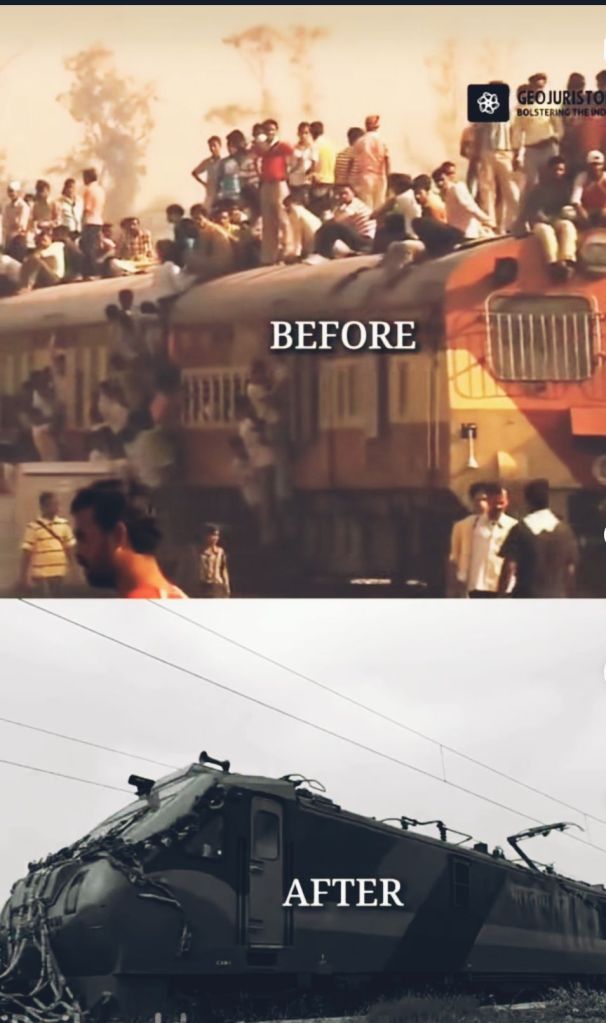
Electrification, then, is not an endpoint but a permanent reorganisation. Indian Railways now operates as a vast energy enterprise, managing procurement, uptime, and grid synchronisation daily. What India has achieved is extraordinary: one of the world’s largest rail networks transitioned its energy base in a single generation. The rails no longer run on smoke and imported oil, but on electrons coursing through a national grid. In doing so, Indian Railways did not merely electrify tracks—it electrified economic momentum itself.
Visit arjasrikanth.in for more insights
 SOCIAL PERSPECTIVES