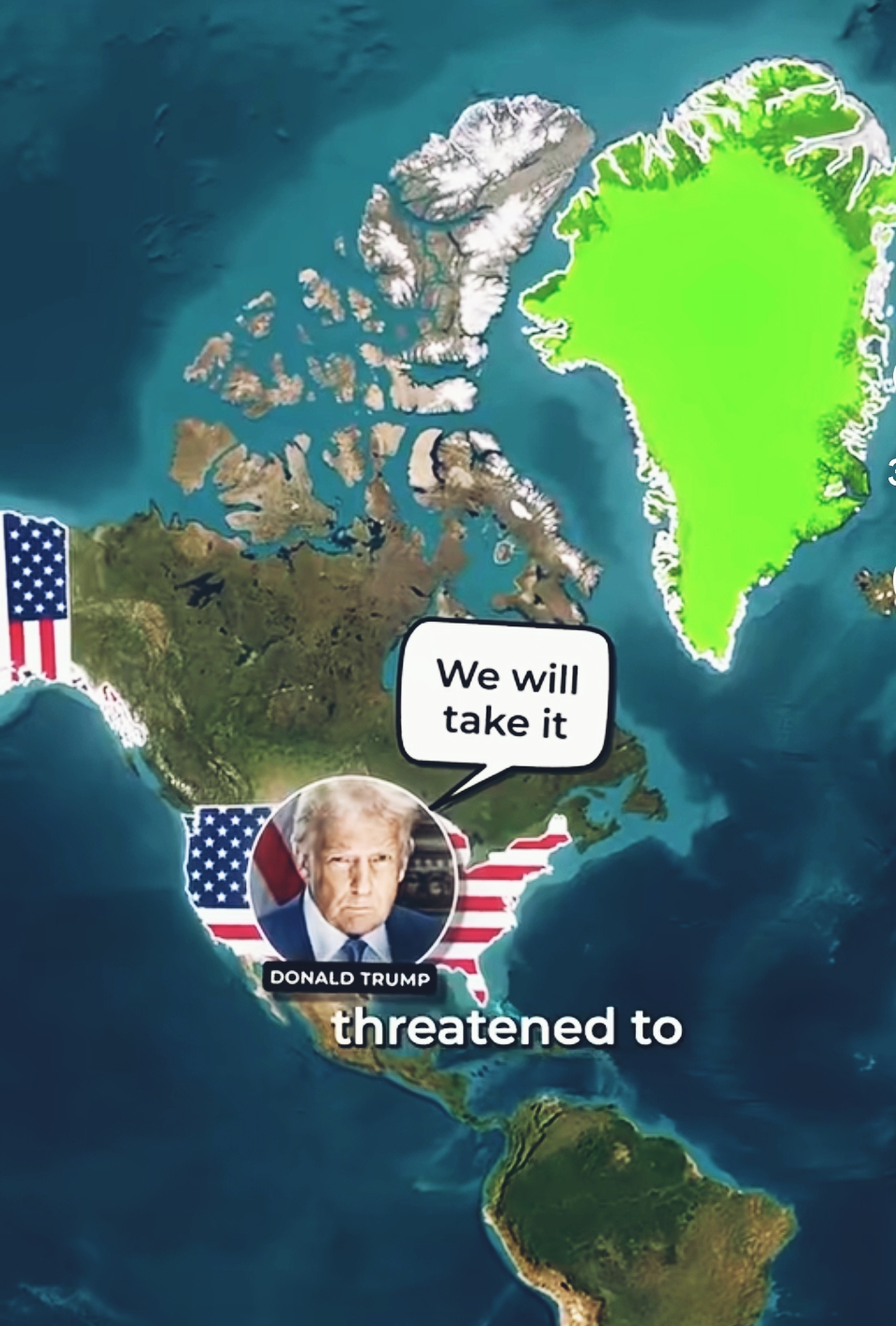
The renewed American fixation on Greenland is neither a diplomatic curiosity nor a momentary rhetorical excess. It reflects a deeper strategic impulse—one shaped by intensifying great-power rivalry, mounting security anxiety, and a residual imperial logic recast in contemporary strategic language. When President Donald Trump asserted that the United States “needs Greenland from the standpoint of national security,” he was not merely referencing a remote Arctic landmass. He was articulating a worldview in which geography is destiny, alliances are contingent, and sovereignty becomes negotiable when power asymmetries allow it.

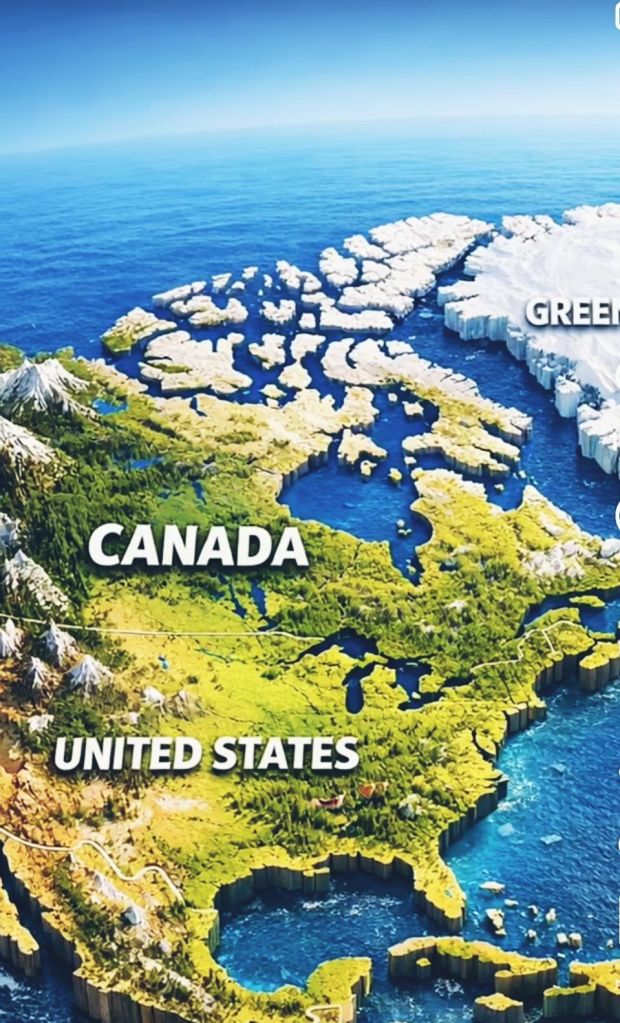
Greenland, the world’s largest island, occupies a uniquely consequential position at the crossroads of North America, Europe, and the Arctic. Militarily, it anchors the northern flank of the Atlantic world, sitting astride missile trajectories, submarine routes, early-warning systems, and rapidly opening Arctic sea lanes. As climate change melts polar ice, what was once a frozen periphery is emerging as strategic core territory. From Washington’s vantage point, any possibility of Russian or Chinese influence in such a space is perceived not as a distant risk but as an unacceptable vulnerability. The Arctic, long marginal to global strategy, is now central to future contestation over surveillance, deterrence, and control of the global commons.

Official American rhetoric frames this concern as defensive rather than acquisitive. Trump’s repeated insistence that failure to secure Greenland would invite Russian or Chinese dominance carefully distinguishes between peoples and governments, portraying the United States as a reluctant custodian of stability rather than an assertive power. This framing is strategic. It allows Washington to claim moral high ground while advancing a pre-emptive logic: action is justified not by immediate threat, but by the possibility that others might act first.

Yet this reasoning exposes a fundamental contradiction. Greenland is not terra nullius. It is a self-governing society with elected institutions, multiple political parties, and democratic agency within the Kingdom of Denmark. Any serious security argument that marginalizes the explicit consent of Greenland’s people reveals the fragility of its moral foundation. When sovereignty is discussed in abstraction from popular will, the language of protection slips unmistakably into the logic of possession.
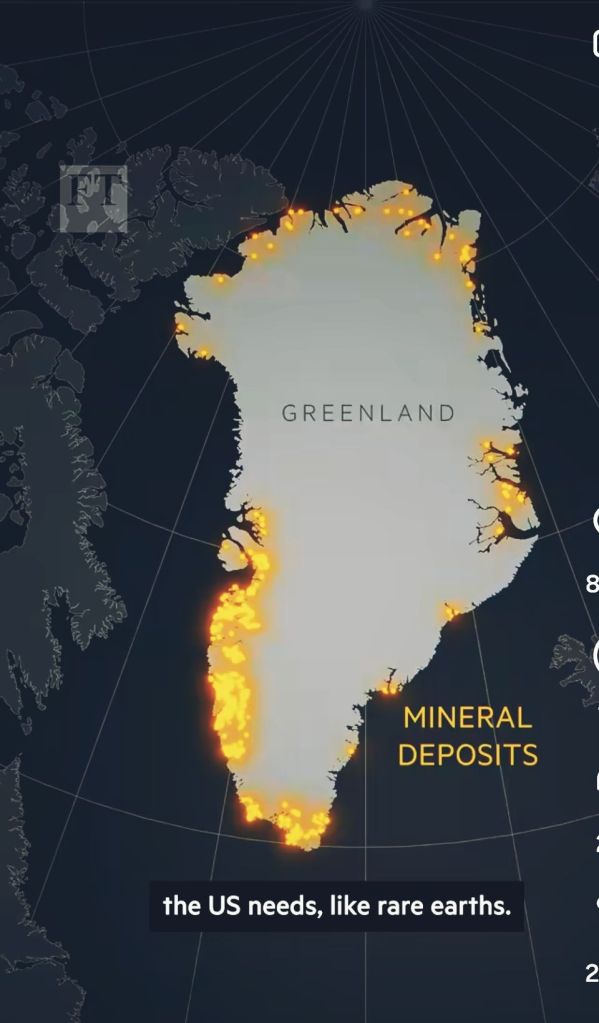
The strategic calculus extends well beyond missiles and radar installations. Effective American control over Greenland would consolidate dominance over the Arctic, secure NATO’s northern gateway under Washington’s direct influence, and foreclose Chinese economic entry into critical sectors such as rare-earth mining and infrastructure. It would also constrain Russia’s strategic maneuverability in an increasingly militarized polar region. In this sense, Greenland is less an end in itself than a keystone: control it, and the balance of power across the northern hemisphere tilts decisively.
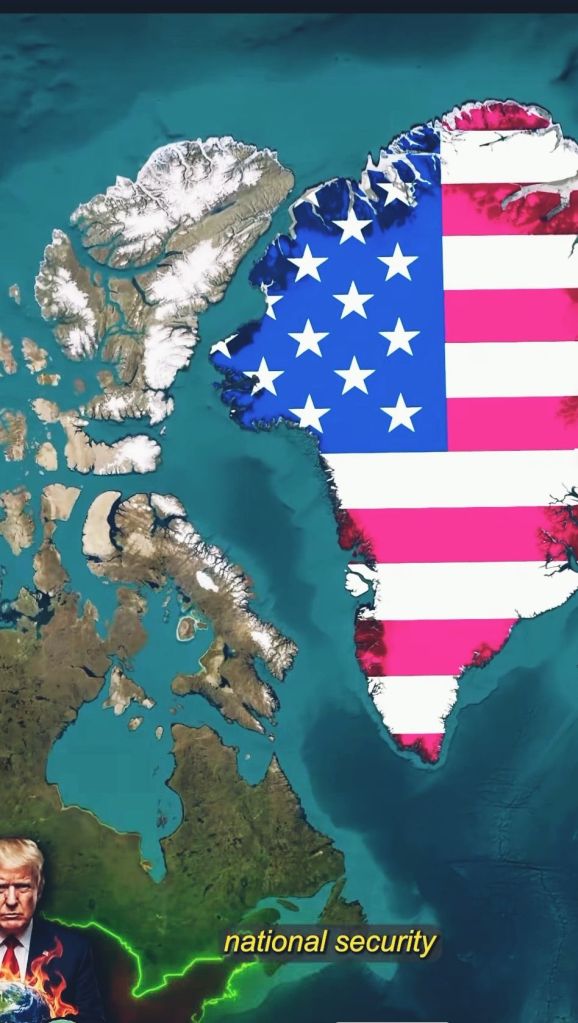
This episode also signals a broader transformation in American statecraft. The post-war United States traditionally projected power through institutions, alliances, and shared norms. The Greenland discourse suggests a shift toward transactional geopolitics, where territory is treated as a strategic asset and alliances as potential encumbrances rather than force multipliers. Trump’s language often echoes that of commercial real estate rather than diplomatic stewardship: some locations are simply too valuable to be left in other hands, too important to entrust to mutual trust.
Ironically, this logic undermines the very alliance system it purports to protect. Denmark is not a rival power but a NATO ally. Greenland already hosts American military facilities under mutually agreed arrangements. Even implicit threats of annexation transform partnership into coercion and cooperation into suspicion. European responses have therefore been unusually firm and unified, emphasizing that Greenland’s future belongs to its people and warning that pressure or force would fracture the Atlantic alliance itself.
From Greenland’s own perspective, American attention often feels less like protection than erasure. While aspirations for eventual independence from Denmark exist, overwhelming majorities reject incorporation into the United States. Treating security imperatives as overriding local self-determination resurrects uncomfortable colonial precedents, in which distant powers justified decisive intervention as necessary for order and stability.
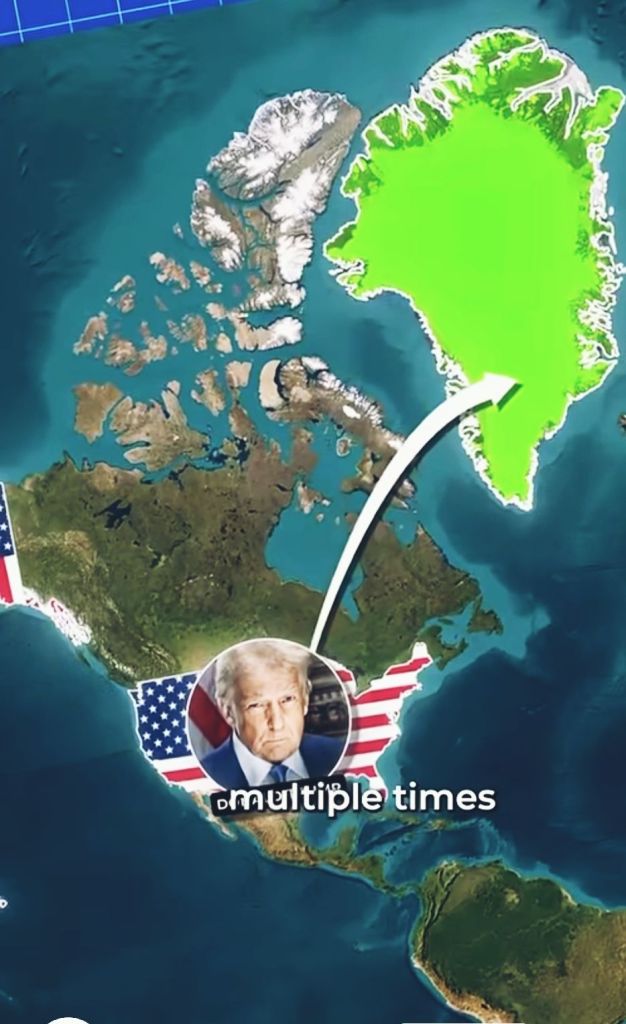
Beyond the Arctic, a wider global audience is paying close attention. If the United States can openly contemplate acquiring territory from a democratic ally, its moral authority to oppose similar actions elsewhere is significantly weakened. The rules-based international order—already under strain—loses further credibility when its principal architect signals that consent is secondary to strategic convenience.
Ultimately, the Greenland fixation is less about ice than about identity. It reflects an America increasingly comfortable with unilateralism, increasingly skeptical of restraint, and increasingly convinced that security requires ownership rather than cooperation. Whether or not Greenland is ever formally “taken,” the intent alone carries consequences: it accelerates European strategic autonomy, emboldens rival powers, and reinforces a global perception of American unpredictability.
Greenland—vast, silent, and strategically pivotal—has become a mirror. In it, the world sees not only America’s Arctic ambitions, but its evolving conception of power itself: one that privileges control over consensus, possession over partnership, and security defined not by shared rules, but by who ultimately holds the map.
Visit arjasrikanth.in for more insights
 SOCIAL PERSPECTIVES