
Every Sankranti, a festival intended to celebrate harvest, renewal, and gratitude to the land, Andhra Pradesh stages a darker, largely unspoken counter-ritual beneath its festive glare. Paddy fields are repurposed as arenas, roosters are sharpened into instruments of violence, and abundance is converted into blood. Cockfighting—Kodi Pandem—no longer survives as a residual rural custom; it prospers as a meticulously organised underground economy worth an estimated ₹500 crore, compressed into three days of sanctioned excess. With nearly 400 breeding centers, over seven lakh roosters traded annually, and individual birds priced between ₹25,000 and ₹3 lakh, cruelty here is not incidental. It is systematized, priced, and professionally managed, marketed as “tradition” while functioning as a high-yield spectacle of engineered violence.

The sheer scale dissolves any lingering romanticism. Hundreds of fighting pits operate across East and West Godavari and Krishna districts, drawing lakhs of spectators and gamblers from across the state and beyond. Single bouts routinely attract bets of ₹10 lakh, while entire venues circulate crores each day through cockfights, card games, and dice tables operating alongside. The birds are bred for aggression, isolated, protein-loaded, sometimes drugged, and forced into endurance regimens—swimming included—before razor-sharp blades are tied to their legs. Death is not an aberration but an expectation. Losing birds are often slaughtered and sold at premium prices, completing a grotesque economic loop where suffering is monetised twice over. All of this violates the Prevention of Cruelty to Animals Act, 1960, and the Andhra Pradesh Gaming Act, 1974, yet enforcement collapses annually under the combined weight of social acceptance and political protection.
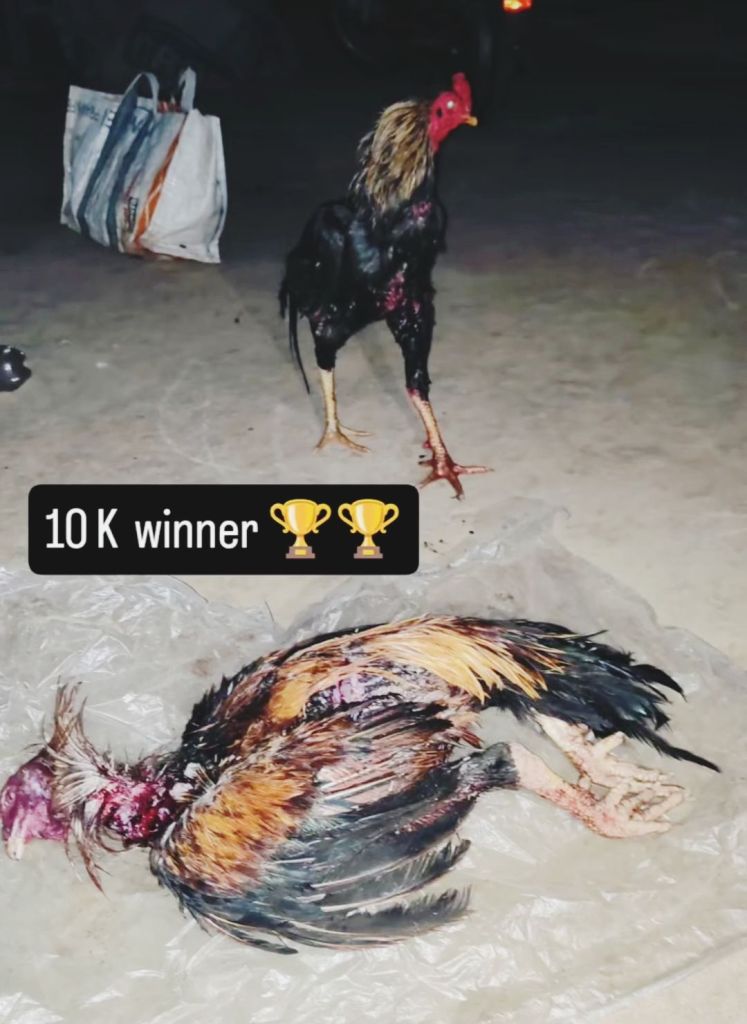
What sustains this industry is not ignorance of the law but accommodation by power. High-stake events are frequently organised by political loyalists, sometimes with elected representatives in attendance, while police presence is neutralised through bribes, selective blindness, or logistical overwhelm. Organising a major venue costs several lakhs—covering tents, bouncers, and “arrangements”—an investment recovered many times over through betting. Each year, police seize thousands of knives and register hundreds of cases, yet the ritual resumes with clockwork certainty. Even senior officers privately acknowledge that cockfighting has acquired social legitimacy, not unlike Jallikattu. When prestige, money, and electoral arithmetic converge, legality becomes negotiable and cruelty acquires immunity.

Yet Kodi Pandem is not uniquely Telugu; it is profoundly human. From the legal Sabong arenas of the Philippines to bullfighting in Spain, camel wrestling in Turkey, dogfighting rings across continents, and bear baiting in South Asia, societies repeatedly convert animal pain into public entertainment. The architecture is remarkably consistent: ritual justification, high economic stakes, masculine pride, and the crowd’s visceral thrill when blood confirms dominance. Animals become proxy battlefields where humans rehearse power, rivalry, and control without moral cost. The suffering is not a by-product of the spectacle; it is the spectacle.
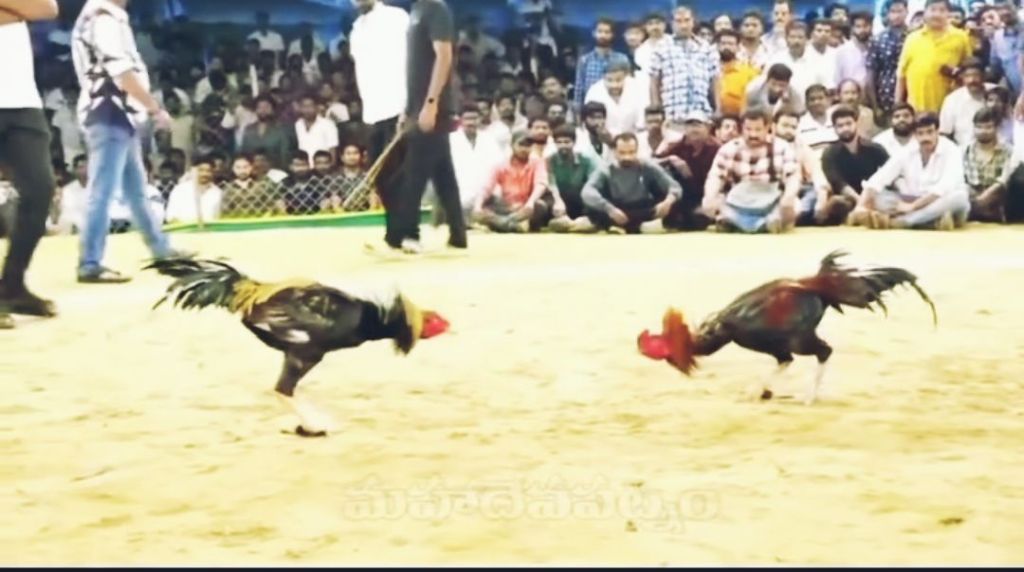
Psychologically, such blood sports offer a socially sanctioned outlet for suppressed aggression and status anxiety. Gambling intensifies the experience by converting violence into adrenaline and profit. The rooster becomes an extension of its owner’s ego—victories mythologized, defeats avenged through higher stakes and sharper blades. Technology has only refined this cruelty. Buyers now select birds through video calls; breeders sell across states and borders; money moves digitally. What was once local and intimate has become networked, efficient, and scalable. Distance dulls empathy, making violence easier to consume.
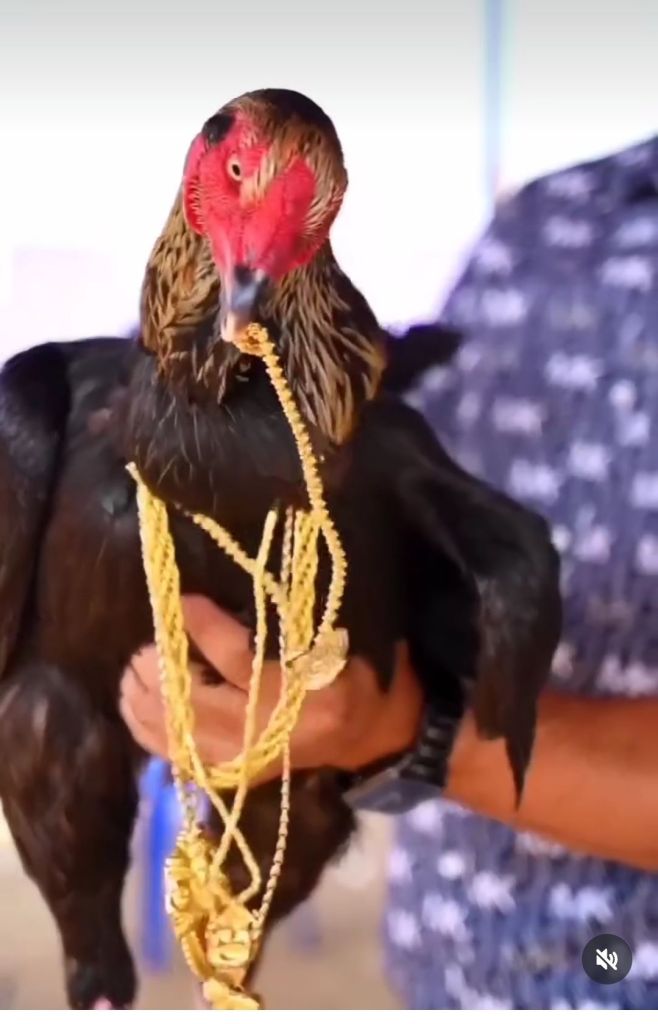
The tragedy is that prohibition alone has proven inadequate against a practice sustained by appetite. Annual bans, court orders, and police assurances remain performative when confronted by cultural sanction and economic gravity. Meanwhile, the collateral damage accumulates quietly: families ruined by gambling losses, spikes in alcohol abuse, public health risks from unregulated animal movement, and a broader social desensitization to cruelty. A ritual once embedded in agrarian life now carries criminal, financial, and moral costs far beyond its festive frame.

The deeper question, then, is not whether cockfighting is illegal—it is—but why societies continue to crave such spectacles. Sankranti does not require blood to endure. Its essence—gratitude for harvest, community bonding, reverence for life—can thrive through non-violent rural sports, cultural performances, kite festivals, and breeding exhibitions without blades. Until we confront the uncomfortable truth that cruelty remains entertaining when wrapped in tradition and money, animal bloodsports will keep resurfacing in new forms. The roosters merely expose what we would rather not acknowledge: that beneath our festivals and progress, suffering still draws applause—and the crowd has not yet looked away.
Visit arjasrikanth.in for more insights
 SOCIAL PERSPECTIVES
One response to ““Blood on the Harvest: Roosters Dying for Our Amusement Exposes the Darkest Pleasure of Civilized Society””
It is a pity that in a peace-glorifying nation where non-violence connotes supreme faith (Ahimsa Paramo Dharmaha), some of its very own denizens revel in utter delight that involves splatter gore.
Srikanth Garu, I fondly admire your writing. You bring the story alive to the reader and share the gist comprehensively. Your choice of words reflects proficiency, articulation and expressivity.
May I share a modest observation…I felt that a statistical outline of the number of birds lost to the brutal game across regions each year would be sensitising. And, a brief word addressing the curiosity as to how two innocent birds are incited and triggered to fight!
Thank you.
LikeLike