
India’s recent governance story is increasingly defined not by what is decided, but by what is undone. Across agriculture, land, taxation, digital governance, education, and rural employment, a strikingly similar pattern has emerged: bold announcements followed by hurried retreats. These reversals are often framed as proof of democratic sensitivity, as evidence that the state listens. Yet their growing frequency tells a less flattering story. It reveals a reform process that repeatedly underestimates the social, political, and emotional terrain on which policy operates. The result is a damaging cycle of announcement, resistance, and withdrawal that erodes state credibility, generates uncertainty, and weakens institutional authority.

The rollback of the three farm laws remains the most emblematic episode of this governance failure. Conceptually, the laws sought to liberalize agricultural markets, attract private investment, and give farmers greater choice beyond state mandis. Politically and socially, however, they collided with deep anxieties over minimum support prices, bargaining power, and livelihood security. Agriculture in India is not merely an economic sector; it is a cultural identity and a historical fault line shaped by decades of state protection. Earlier attempts to amend the Land Acquisition Act failed for similar reasons. By prioritizing economic efficiency while neglecting trust deficits, historical memory, and power asymmetries, the state misread the battlefield. The reforms may have had economic logic, but they lacked social legitimacy—and legitimacy, not logic, ultimately determines survival.
This pattern has not remained confined to agrarian policy. Abrupt changes to capital gains taxation on property, especially the removal of indexation benefits, triggered sharp middle-class backlash, forcing reconsideration.

Digital governance initiatives such as the mandatory Sanchar Saathi app, designed to improve cybersecurity, were rolled back amid fears of surveillance, privacy violations, and the absence of a credible data protection framework. Education reforms, including revisiting the no-detention policy under the Right to Education Act, encountered resistance from states and parents who saw abrupt shifts as disruptive rather than corrective. Even proposals to restructure MGNREGA through alternative employment schemes ran into stiff opposition, driven by fears of diluting a legally guaranteed social safety net. Across sectors, the pattern repeats: speed over sequencing, intent over inclusion.

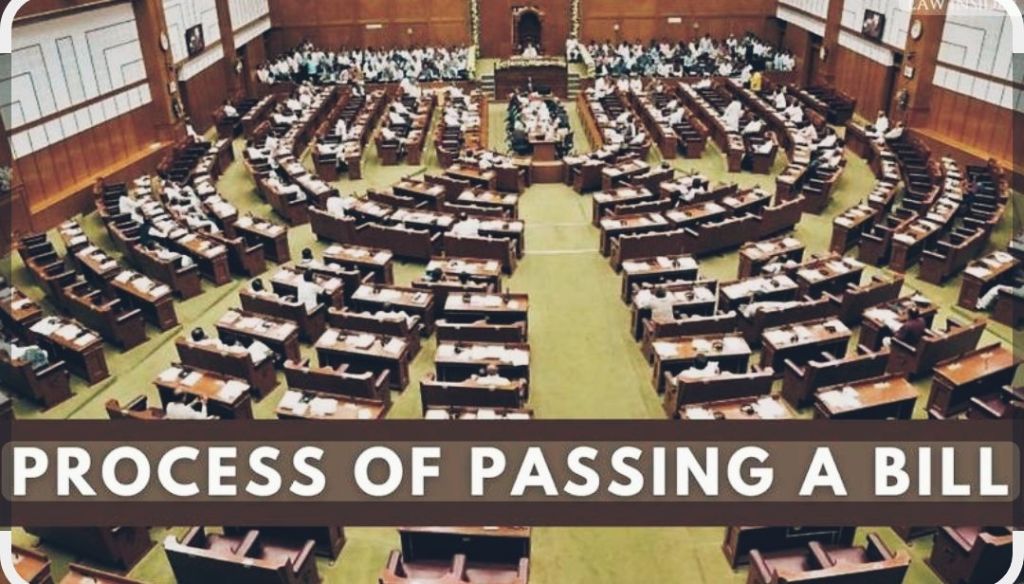
At the heart of these reversals lies a top-down policy culture that privileges signalling over deliberation. Major reforms are often conceived within narrow technocratic or political echo chambers, with inadequate stakeholder mapping and weak pre-legislative consultation. Parliamentary scrutiny is frequently bypassed, with bills rushed through without standing committee examination, white papers, or structured public feedback. This haste breeds suspicion. When stakeholders encounter a finished policy rather than a draft, opposition narratives fill the vacuum before the state establishes credibility. Once trust collapses, even well-designed reforms become politically radioactive. Resistance hardens, and withdrawal becomes the only exit.Communication failures deepen this institutional weakness. Governments have struggled to articulate reform benefits in clear, empathetic language or to acknowledge legitimate fears upfront. Engagement typically begins only after protests escalate, by which point positions are entrenched. In the absence of trusted intermediaries—farmer unions, civil society organizations, professional bodies—official assurances ring hollow. In the digital age, mobilization is instantaneous; grievances can morph into mass movements within days. The unintended message to society is corrosive: sustained agitation, not institutional dialogue, becomes the most effective tool to influence policy outcomes.
The long-term consequences of this governance style are severe. Policy uncertainty discourages long-term investment, especially in sectors like agriculture, infrastructure, and real estate that depend on regulatory stability. Institutional credibility erodes as the state appears decisive in announcement but fragile in execution. Legislative processes are weakened, protest politics is incentivised, and governance becomes increasingly polarised. Perhaps most damaging is reform fatigue—within the bureaucracy, which grows risk-averse, and among citizens, who begin to distrust any reform as temporary or reversible. Necessary changes become harder to attempt precisely because past ones collapsed.

Yet rollbacks are not failures of democracy; they are symptoms of a democratic deficit in policymaking. Durable reform requires legitimacy alongside intent. That legitimacy can only be built through institutionalized deliberation: mandatory social impact assessments, structured stakeholder consultations, and serious parliamentary scrutiny for all major reforms. Policies must be piloted, phased, and reviewed, with feedback loops and sunset clauses built in from the start. Communication must precede implementation, grounded in empathy rather than explanation after unrest. Independent expert commissions and genuine federal dialogue can help build consensus before political capital is spent.

India’s problem is not a lack of reform ambition, but the absence of reform architecture. Unless the state moves from an “announce and defend” model to one of “co-create and adapt,” the cycle of rollback will persist. The true test of governance is not how boldly reforms are declared, but how resiliently they are designed to survive public scrutiny, political contestation, and social reality.
Visit arjasrikanth.in for more insights
 SOCIAL PERSPECTIVES
One response to “Reforms Announced, Reforms Unwound”
Sir, I closely follow your posts. They are informative, objective and educative. I wholeheartedly appreciate your efforts to bring to light subjects that are of great value and content. Solicit many more such write-ups in future too. Thank you.
LikeLike