
At lunchtime in Greater Noida, the doors of a fast-food outlet barely close between orders. Auto drivers queue beside college students, factory workers scroll phones while waiting for takeaway, and delivery bikes idle outside industrial gates near Surajpur Ecotech. Five years ago, this stretch was largely empty. Today it hums with assembly lines, shift sirens, and cafeteria crowds. The work is precise, repetitive, and relentless—electronics manufacturing built on speed and scale. This scene is often celebrated as proof that a once-reluctant industrial state has finally found its manufacturing moment. But look closely and a deeper truth emerges: this success exists almost entirely within the gravitational pull of the metro. The factories did not arrive because the state transformed everywhere; they arrived because this belt sits next to the national capital.

The turnaround did not happen by accident. Policy timing mattered. Global supply chains began searching for alternatives after pandemic disruptions, and India responded with production-linked incentives that rewarded incremental output. The state already had an electronics policy in place, later sweetened with capital subsidies, electricity duty waivers, stamp duty exemptions, and easier land access through expressway-linked authorities offering plug-and-play parcels. A long-delayed airport near the expressway promised global connectivity. Administrative reforms followed: a single-window clearance system cut approvals from months to weeks, pushing the state sharply up national ease-of-doing-business rankings. On paper, this looked like a comprehensive industrial leap. In reality, almost all of it condensed into a narrow corridor—Noida, Greater Noida, and the Yamuna Expressway—a tiny slice of one of India’s largest states.

Geography did as much work as policy. This corridor already had roads, power reliability, logistics, housing, schools, hospitals, and instant access to the capital’s airport and managerial talent.
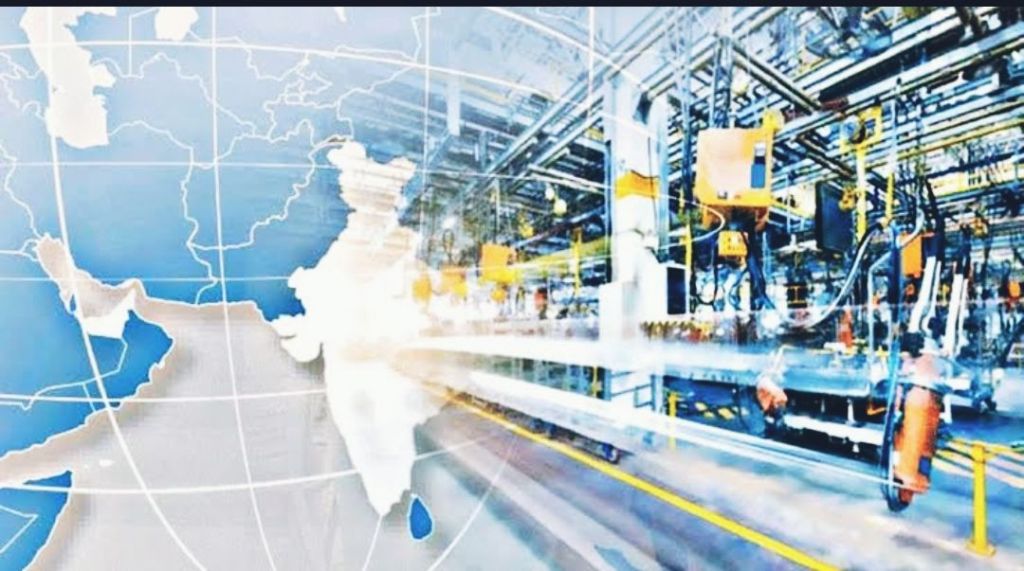
Manufacturers did not need to bet on unknown terrain; they simply extended the metro’s ecosystem outward. That distinction matters. Industrial transformation did not radiate inward from infrastructure; it clung tightly to what already worked. Even firms operating in this belt for a decade hesitate to expand deeper into the state. Executives privately admit that beyond the NCR shadow, confidence drops—about power reliability, social infrastructure, professional housing, and talent retention. The numbers reveal the imbalance: nearly half of the state’s GDP comes from its western UP region, while the eastern districts contribute far less. What looks like state wide industrialisation is, in fact, metropolitan spill over.

This pattern is not unique. Across India, industrial success repeatedly stops where the metro ends. From the western coast to the southern peninsula, manufacturing clusters concentrate within 50–70 kilometres of major cities, where productivity can be three to five times higher than in interior districts. Metros dominate organised employment, manufacturing output, exports, and access to finance. Beyond them, infrastructure thins, approvals multiply, and transaction costs rise. Logistics alone can eat up 14–18% of revenue outside metro regions, compared to under 10% within. Industrial parks, waste treatment, testing facilities, and supplier ecosystems are overwhelmingly urban-adjacent. The result is a national map where growth is intense but narrow, efficient but unequal.

Human capital exposes the fault lines even more sharply. Electronics manufacturing globally depends on women for precision assembly, yet female workforce participation in this state remains among the lowest in India—barely a fraction of what southern manufacturing states achieve. Thousands of industrial training institutes exist, but outdated curricula and weak industry linkages leave graduates underprepared. Companies recruit across multiple states and retrain at their own cost. On the shop floor, wages remain low—often ₹10,000–₹11,000 a month—with little growth despite promotions. Migrant workers crowd into rented housing near factories, while their families and children remain disconnected from the promise of industrial prosperity. Sunrise industries rise, but social mobility lags behind.

Underlying these human constraints are structural weaknesses that metros quietly mask. Power distribution losses remain high state wide, even if pockets near cities enjoy relative reliability. Law-and-order perceptions, though improving, still shape investor caution beyond urban belts. Financial ecosystems cluster tightly around metros: credit, venture funding, export facilitation, and professional services thin out rapidly elsewhere. Foreign investment and exports tell the same story—states may boast manufacturing headlines, but capital and global market access remain stubbornly urban-centric. Industry may assemble products near highways, but its confidence rarely travels inland.

The lesson from Noida—and from every major metro—is uncomfortable but necessary. Limiting industrial success to the boundaries of cities is not transformation; it is concentration. Sustainable manufacturing requires ecosystems, not enclaves. That means power that does not flicker outside privileged zones, skills that are built district by district, towns where professionals want to live, and institutions that function without proximity to a capital. Until policy shifts from celebrating corridor-led optics to building state-wide capability, factories will keep stopping at the metro’s edge. India will continue to count output and rankings while quietly exporting opportunity inward, leaving the vast spaces beyond the city gates waiting for a growth story that actually reaches them.
Visit arjasrikanth.in for more insights
 SOCIAL PERSPECTIVES