
Bangladesh today resembles less a sovereign democracy finding its equilibrium and more a political fault line that keeps rupturing under pressure, sending shockwaves far beyond its borders. The violence and instability following the ousting of Sheikh Hasina in August 2024 were not just another South Asian episode of street politics overwhelming institutions; they marked a structural rupture with direct consequences for India. What began as student protests over job quotas rapidly mutated into a regime-changing upheaval, exposing how fragile democratic legitimacy becomes when institutions fail to absorb dissent. For New Delhi, this is no distant spectacle. Bangladesh’s turmoil has seeped into India’s diplomacy, border security, electoral calculations, and regional strategy, transforming a neighbour’s crisis into a domestic political variable.

At the geopolitical level, India has lost something far more valuable than a friendly government: predictability. Under Sheikh Hasina, bilateral relations had reached a rare maturity—counter-terrorism cooperation was robust, insurgent sanctuaries were dismantled, and India’s northeastern states were stitched closer to the mainland through Bangladeshi transit and connectivity projects. Her removal shattered this equilibrium overnight. The interim administration in Dhaka appears ideologically fragmented, procedurally uncertain, and politically susceptible to anti-India sentiment. This ambiguity weakens India’s “Neighbourhood First” doctrine and exposes the limits of relationship-building that hinges excessively on individual leaders rather than institutional depth.
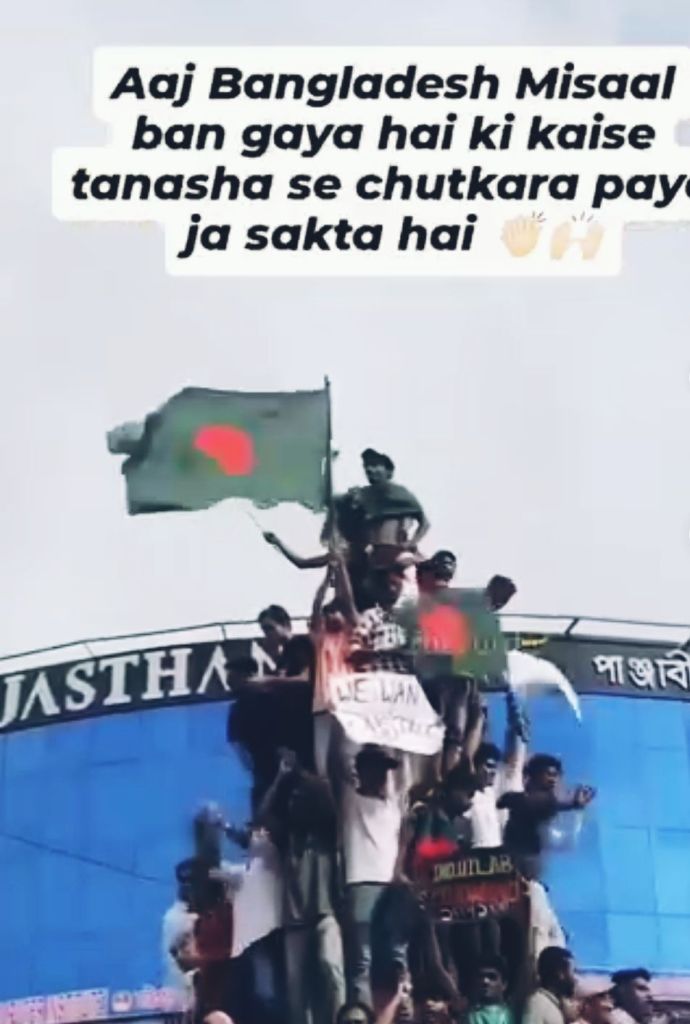
The security implications are immediate and unsettling. The 4,096-kilometre India–Bangladesh border, already porous, has become more volatile amid reports of violence against Hindu minorities and the breakdown of local order. For India’s northeastern states and West Bengal, the spectre of refugee inflows is not theoretical—it is politically combustible. Border instability also revives older anxieties: smuggling networks, illegal migration, and the potential reactivation of extremist groups that had been largely neutralised through bilateral cooperation. Indian security agencies are acutely aware that instability creates opportunity, and that Islamist networks with anti-India orientations—sometimes linked to Pakistan’s ISI—thrive in precisely such conditions. Years of quiet counter-terror gains now stand at risk.
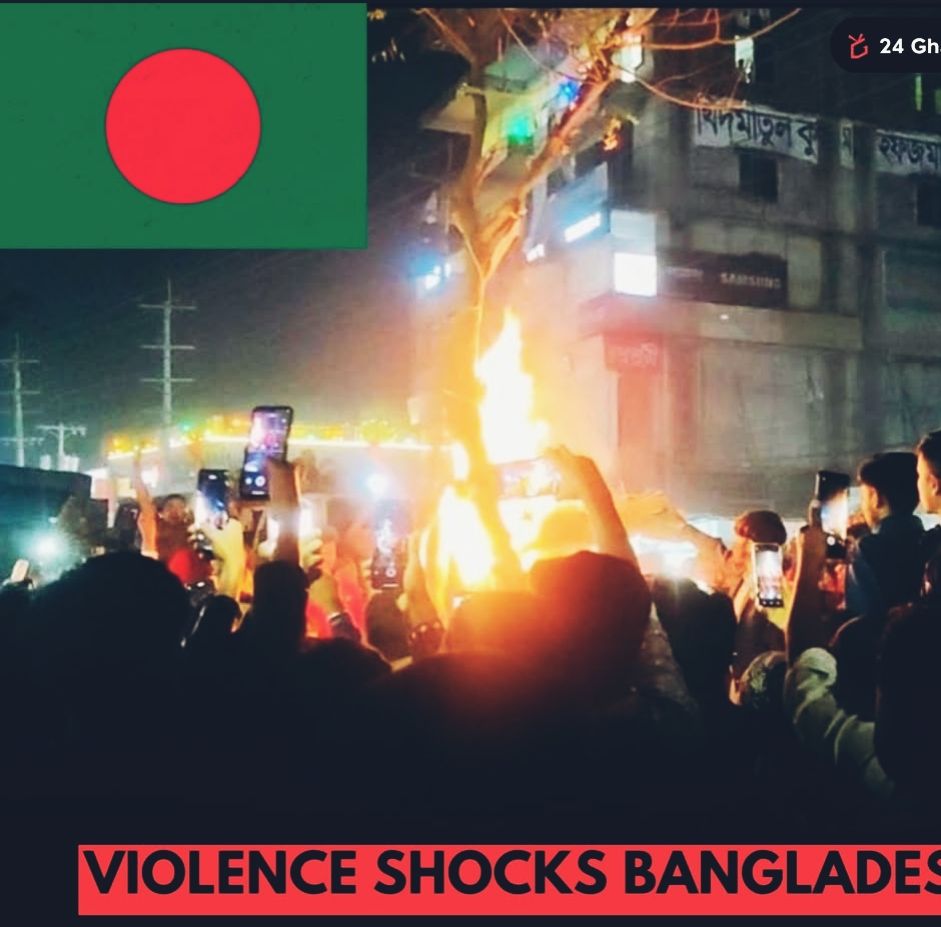
The unrest in Bangladesh is also echoing loudly within India’s domestic politics. Attacks on Indian diplomatic missions, assaults on newspapers perceived as pro-India, and public demands for Sheikh Hasina’s extradition have fed nationalist rhetoric across the Indian political spectrum. These developments acquire sharper edges as West Bengal moves toward elections, where narratives of border security, illegal migration, and minority protection already dominate political discourse. What unfolds in Dhaka is increasingly being interpreted through electoral lenses in Kolkata and Delhi, forcing Indian policymakers to manage not only foreign policy but also its domestic reverberations.
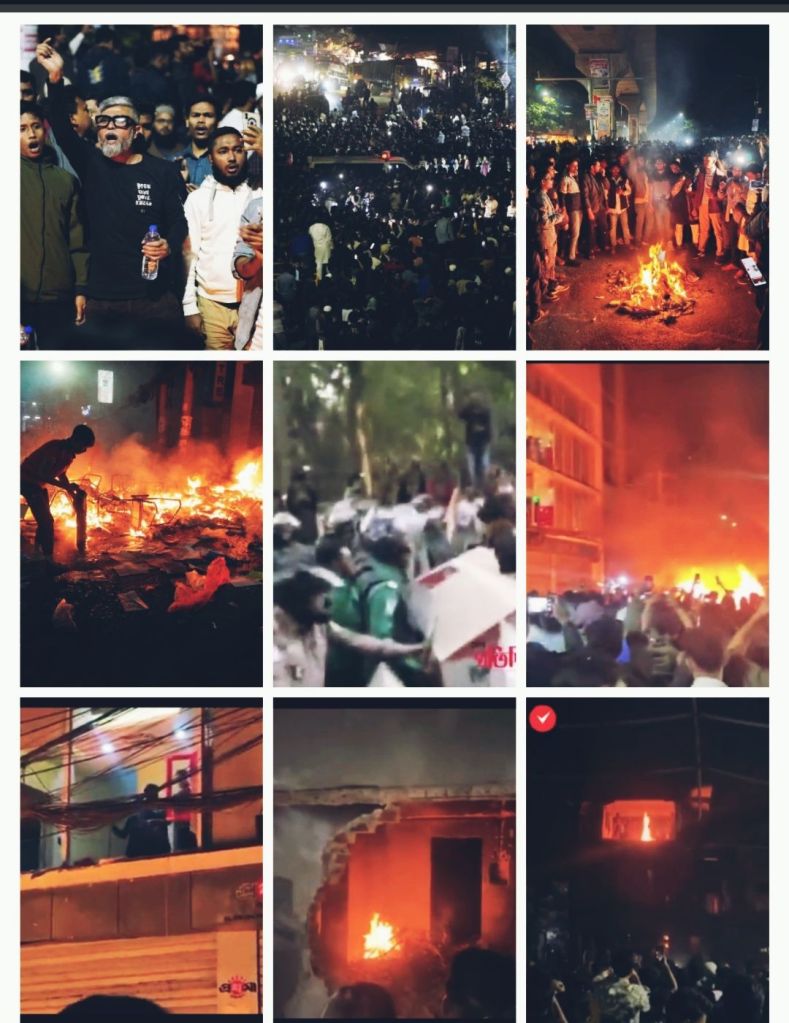
Economically, Bangladesh’s instability threatens to undo years of incremental integration. Indian investments—particularly in textiles and manufacturing—face uncertainty, while negotiations for a bilateral Free Trade Agreement remain stalled. Connectivity projects central to India’s Act East policy and the development of its north-eastern region risk delays or renegotiation under a less cooperative dispensation in Dhaka. Such setbacks carry political costs at home, where promises of regional development and integration have been tied to these cross-border initiatives. Strategic geography, once leveraged for mutual benefit, is now entangled in political flux.

Overlaying all this is the unmistakable return of the China factor. Political uncertainty in Dhaka opens doors for Beijing’s cheque-book diplomacy and infrastructure outreach, echoing patterns seen in Sri Lanka and the Maldives. For India, this reinforces long-standing anxieties about strategic encirclement in its immediate neighbourhood. Anti-India rhetoric within Bangladesh, often framed as resistance to external domination, paradoxically risks replacing one perceived influence with another far more structurally entrenched. In Indian political discourse, this has strengthened calls for a firmer regional posture and greater strategic assertiveness.

Yet Bangladesh’s crisis cannot be reduced to geopolitics alone. Internally, the country appears trapped in a cycle where democratic mechanisms exist but lack trust. The assassination of a young protest leader, the spread of rumours in the absence of credible official communication, and the eruption of mob violence reflect institutional hollowness rather than ideological excess. The looming 2026 election—paired with a single, all-or-nothing referendum on sweeping constitutional reforms—has further polarised society. Asking citizens to approve a comprehensive re-engineering of the state through one binary vote risks substituting democratic deliberation with procedural compression. Method, as much as substance, determines legitimacy.
For India, the lesson is sobering. Bangladesh’s instability is not an episodic crisis to be managed until the next election; it is a structural challenge that tests India’s capacity to balance restraint with resolve. How New Delhi navigates this era of “managed instability”—protecting its security interests without appearing interventionist, supporting democratic processes without being drawn into factional battles—will shape not only bilateral relations but India’s confidence as a regional power. In South Asia, borders may be lines on a map, but political fires rarely respect them.
Visit arjasrikanth.in for more insights
 SOCIAL PERSPECTIVES
One response to “Ballots, Borders and Burning Bridges: Bangladesh’s Democratic Implosion Is Shaking India’s Strategic Spine”
when East Pakistani turned into Bangladesh some learned people expressed doubts of Greater Bangla along with our West Bengal. This proved correct now
All the policies of Congress governments proved to be wrong
Now only thing is to strengthen our Boarders with Bangladesh.
LikeLike