
🔥 Skies on the Edge: IndiGo’s Turbulence Reveals the Fragile Architecture of Indian Aviation
India’s aviation sector has always been a paradox—an industry of soaring ambitions built upon razor-thin margins, volatile costs, and unpredictable competition. Over the decades, the Indian skies have witnessed repeated cycles of promise and collapse, leaving behind a graveyard of once-celebrated airlines. From the monopolistic era of Indian Airlines to the flamboyant failure of Kingfisher, from Jet Airways’ dramatic implosion to the vanishing acts of regional carriers, the industry’s history is a mirror of its structural contradictions. Against this turbulent backdrop, IndiGo emerged not as an innovator but as a master executor—turning discipline, scale, and cost-efficiency into an unbeatable advantage. Yet, as December 2025 showed, even the strongest airline is only as resilient as the ecosystem that sustains it.

Much of India’s aviation evolution has been shaped by waves of consolidation and collapse. The pre-liberalization era was dominated by bureaucratic inefficiency, high-cost public carriers, and stagnant service standards. Liberalization unleashed private ambition, but many airlines self-destructed—East-West Airlines after its founder’s assassination, ModiLuft due to financial misalignment, Damania due to unsustainable costs. The low-cost revolution of the 2000s brought Air Deccan and SpiceJet into the spotlight, yet both struggled with capital constraints. Kingfisher over-expanded, GoAir faded into insolvency, and Jet Airways collapsed twice under the weight of debt and mismanagement. These failures reveal a consistent pattern: poor financial discipline, flawed fleet strategies, over-expansion, and the perennial clash between premium services and India’s price-sensitive market. In this landscape of fragility, IndiGo’s rise to dominance was not accidental—it was structural.
IndiGo built its empire on the back of clarity and consistency. The airline’s early years were defined by a laser-sharp focus on a single aircraft type, young fleet, high utilization, and the famous sale-and-leaseback model that generated liquidity during expansion. It secured prime metro slots, launched aggressive price-led growth, and adhered to a no-frills, reliable service model that resonated with India’s expanding middle class. By the mid-2010s, IndiGo had become synonymous with punctuality and operational efficiency. As the rest of the industry oscillated between ambition and chaos, IndiGo deepened its advantage through fleet diversification, digital transformation, international expansion, ancillary revenue streams, and formidable cost control. With 60% domestic market share and over 2,200 daily flights, it became the backbone of Indian aviation—too central to fail, yet too stretched to afford complacency.

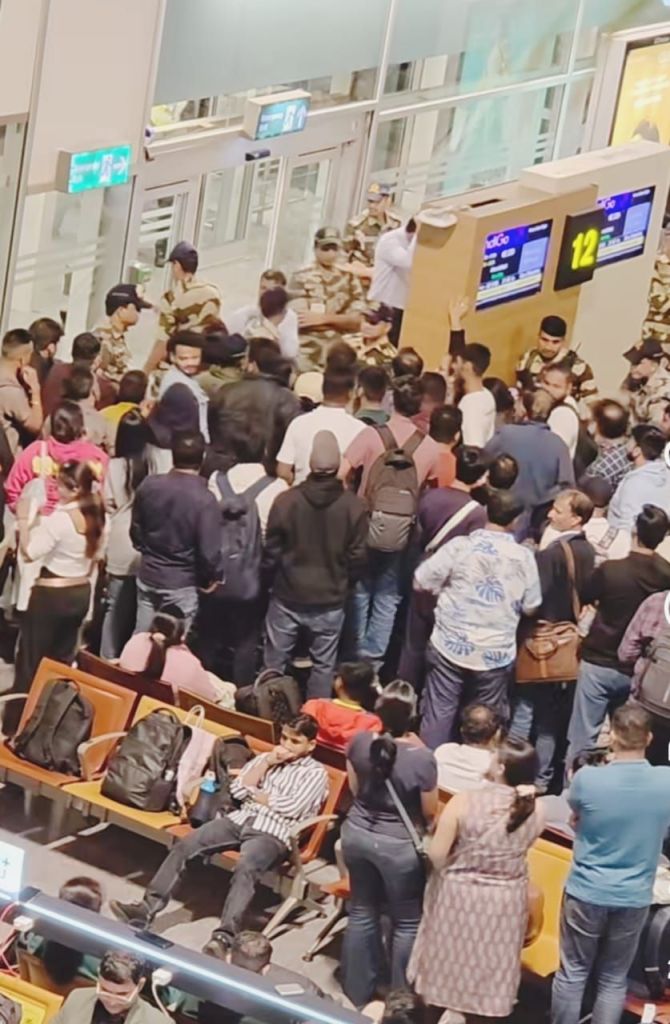
That complacency was exposed brutally in December 2025. India awoke to unprecedented aviation chaos as IndiGo cancelled or delayed at least 175 flights in a single day. Airports from Bengaluru to Delhi melted into scenes of confusion, frustration, and helplessness. The immediate trigger lay in the DGCA’s overhaul of Flight Duty Time Limitations (FDTL), which increased weekly pilot rest requirements and tightened night duty rules—long overdue reforms aimed at ensuring safety and reducing fatigue. Yet these changes struck directly at the heart of IndiGo’s ultra-lean, high-utilization model. With insufficient crew buffers, a tightly packed winter schedule, and inadequate restructuring ahead of the regulatory shift, pilot availability nosedived. Simultaneously, mandatory software upgrades across the Airbus A320 fleet further reduced aircraft availability. The result was a perfect operational storm that shattered IndiGo’s reputation for clockwork precision.
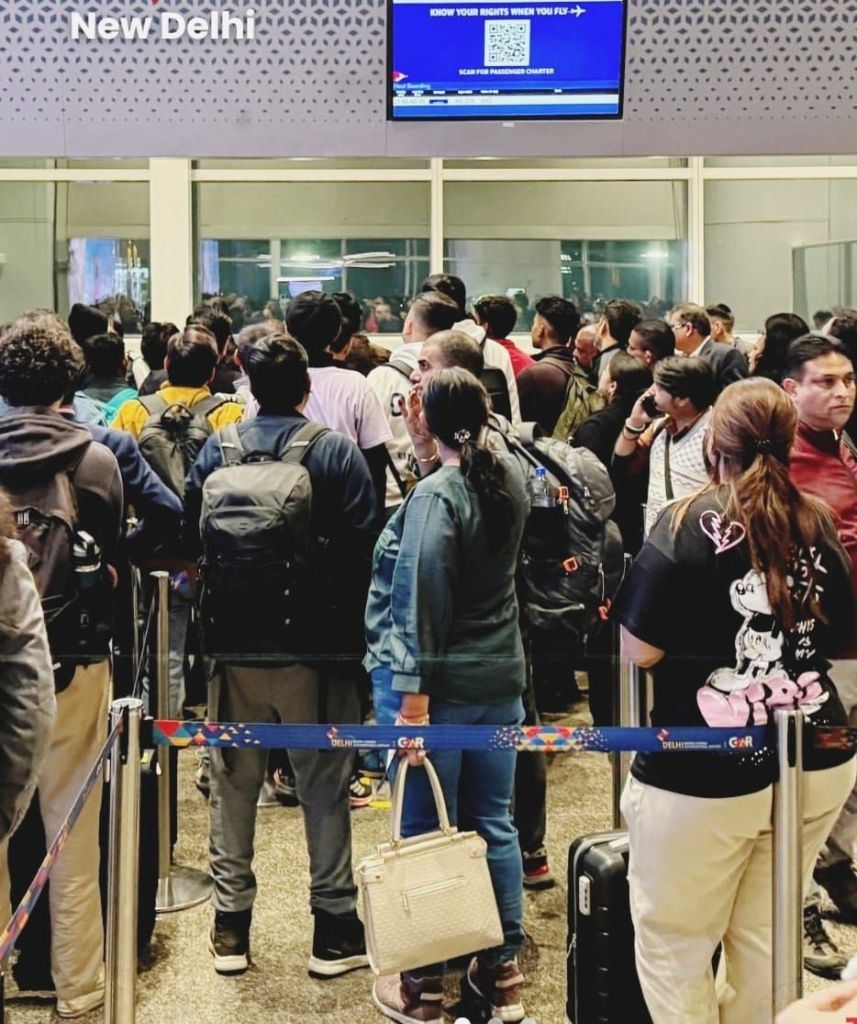
The numbers captured the crisis starkly. In November alone, IndiGo cancelled more than 1,200 flights, with 700 directly attributable to FDTL-driven restrictions. On-time performance collapsed to 35%—the lowest in the airline’s history. Investor confidence dipped as InterGlobe Aviation’s stock slid more than 3% in a day. The DGCA summoned IndiGo leadership for an emergency briefing, itself an extraordinary moment given the airline’s longstanding image as India’s gold standard in efficiency. But the collapse was not merely operational—it was systemic. It exposed how India’s aviation industry had been sprinting ahead of safety, staffing, and infrastructural realities. Pilot supply pipelines lagged behind route expansion. Aircraft orders grew faster than maintenance capabilities. Schedules tightened even as congestion and weather uncertainties rose. IndiGo’s crisis, therefore, became a reflection of deeper structural stresses across the sector.
Yet the airline’s rise—and temporary fall—also demonstrates the paradox of scale in Indian aviation. IndiGo’s dominance has undoubtedly reshaped the ecosystem: it democratized air travel, improved operational benchmarks, stimulated secondary airports, and forced even legacy carriers to modernize. But it also concentrated market power, creating a near-duopoly with the Air India Group. Such concentration brings risks—pricing power, reduced competition, supplier dependence, and limited incentives for service innovation. IndiGo’s recent meltdown was not merely a public inconvenience; it was a national vulnerability. When an airline controlling more than half the market stumbles, the tremors ripple across business travel, tourism, logistics, and consumer confidence.

The turbulence of December 2025 must be viewed as a defining inflection point. Indian aviation can no longer rely on lean staffing, hyper-optimized schedules, or heroic pilot fatigue management to sustain growth. Regulators must balance safety reforms with realistic operational transitions. Airlines must redesign rostering systems, build redundancy into schedules, invest aggressively in training, and strengthen maintenance infrastructure. Policymakers must expand pilot training academies, accelerate airport capacity expansion, and incentivize regional aviation. IndiGo’s crisis is not a story of failure—it is a warning. A reminder that in aviation, speed without resilience is illusion, and dominance without buffers is a structural risk.

India’s aviation future will depend on whether the ecosystem learns from this moment. IndiGo’s history shows that disciplined strategy and flawless execution can transform a volatile market. But its recent crisis shows that even the most efficient airline cannot outrun systemic flaws. As the industry resets, one truth stands out: sustainable aviation growth demands redundancy, resilience, and regulatory foresight. Only then can Indian skies remain not just busy, but safe, stable, and future-ready.
Visit arjasrikanth.in for more insights
 SOCIAL PERSPECTIVES
One response to ““Punctuality to Panic: The IndiGo Paradox” ”
Aptly addressed the current aviation scenario in our country.. .. presentation and flow of writing is super good…
LikeLike