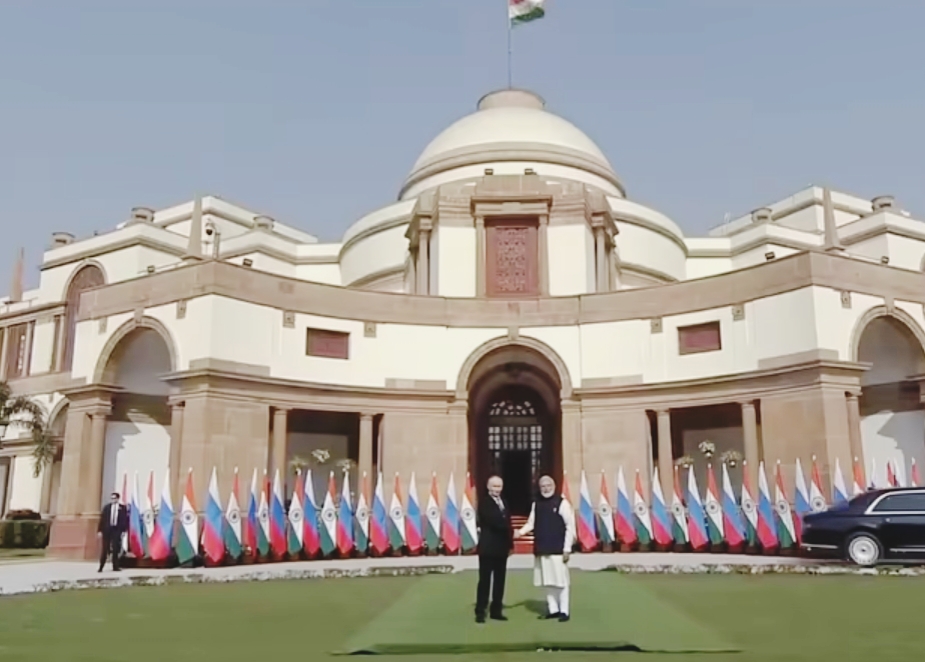
The Modi–Putin dialogue is more than symbolism—it’s a stress test of India’s strategic autonomy amid sanctions, superpower rivalries, and shifting global equilibria.
The meeting between Russian President Vladimir Putin and Prime Minister Narendra Modi unfolds at a time when global geopolitics resembles a shifting minefield—every step deliberate, every gesture strategic, every signal scrutinised by rival power blocs. This is far more than a ceremonial diplomatic exchange. It is the renewal of a partnership forged in 1971 through the Indo-Soviet Treaty of Peace, Friendship and Cooperation, a relationship that has shaped India’s military modernisation, energy security, and global posture for more than half a century. Yet, this legacy now faces unprecedented stress. The Ukraine war, fractured supply chains, Western sanctions, and intensifying global rivalries have transformed Indian diplomacy into a high-stakes balancing act. The question confronting New Delhi today is not whether India and Russia remain close, but whether India can sustain this closeness without rupturing its equally vital partnership with the United States.
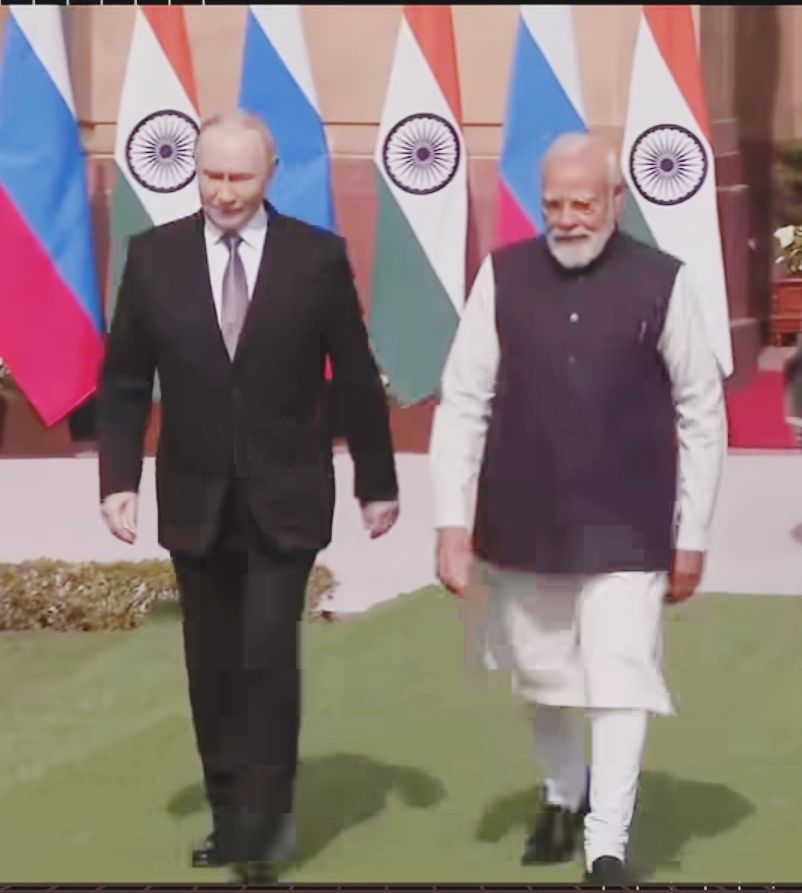
The economic stakes of this challenge are enormous. Once, Russian oil was a marginal presence in India’s energy mix, accounting for barely 2.5% of crude imports. But sanctions on Moscow created a unique opportunity: discounted Russian barrels offered India a chance to insulate its economy from inflation and global price shocks. What followed was a dramatic shift—Russian oil now supplies nearly 35% of India’s crude basket. For Moscow, this became a financial lifeline sustaining its wartime economy. For New Delhi, it was a pragmatic, non-ideological response to protect the livelihoods of 1.4 billion people. But this expanded energy partnership has not been without consequence. Washington’s irritation culminated in an unprecedented move: the imposition of 25% tariffs on selected Indian exports—ranging from textiles to engineering goods—threatening India’s access to one of its most important markets. Delhi is now engaged in a diplomatic tightrope walk, reassuring Washington that energy security is non-negotiable while working to preserve critical economic linkages with the U.S.
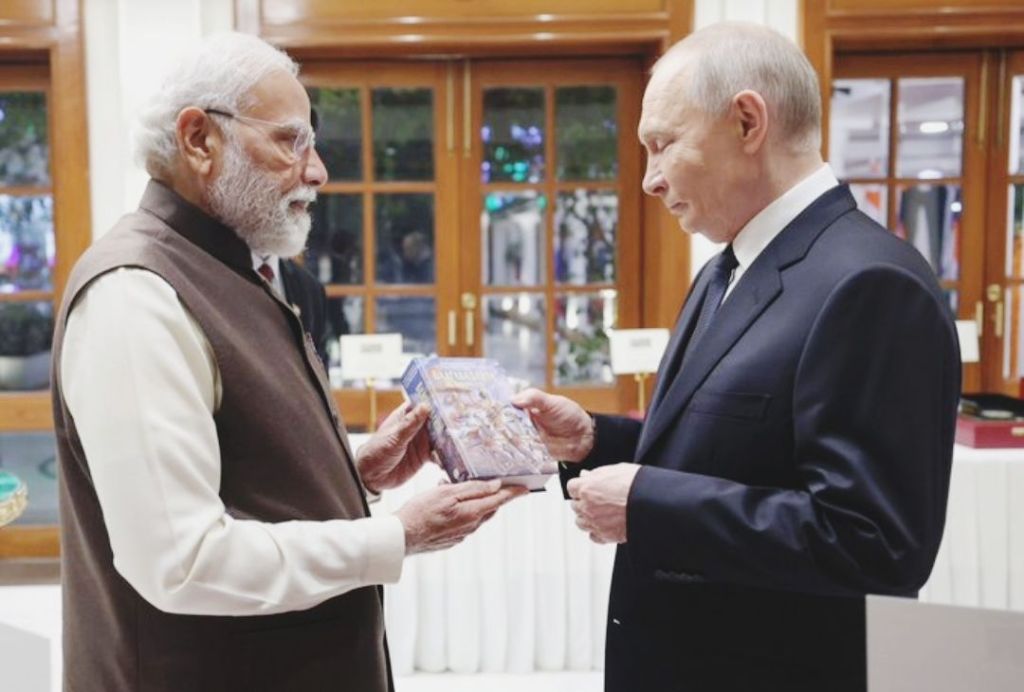
As energy flows reshape bilateral equations, Indo-Russian trade has ballooned from $8.1 billion just a few years ago to $68.7 billion in 2025—an eight-fold expansion driven almost entirely by oil. But this surge carries a structural imbalance that Modi is determined to address. India exports far too little to Russia. The goal now is to push Indian goods—smartphones, pharmaceuticals, agricultural products, consumer garments—into a Russian market increasingly dominated by China. This shift is not merely commercial; it is strategic. A trade relationship skewed toward energy imports creates vulnerabilities that could weaken India’s negotiating leverage in future crises. As global supply chains are rewired under pressure from sanctions, conflict, and geopoliticised markets, India seeks to diversify and embed its exports across key geographies, with Russia as a critical node in this new strategy.
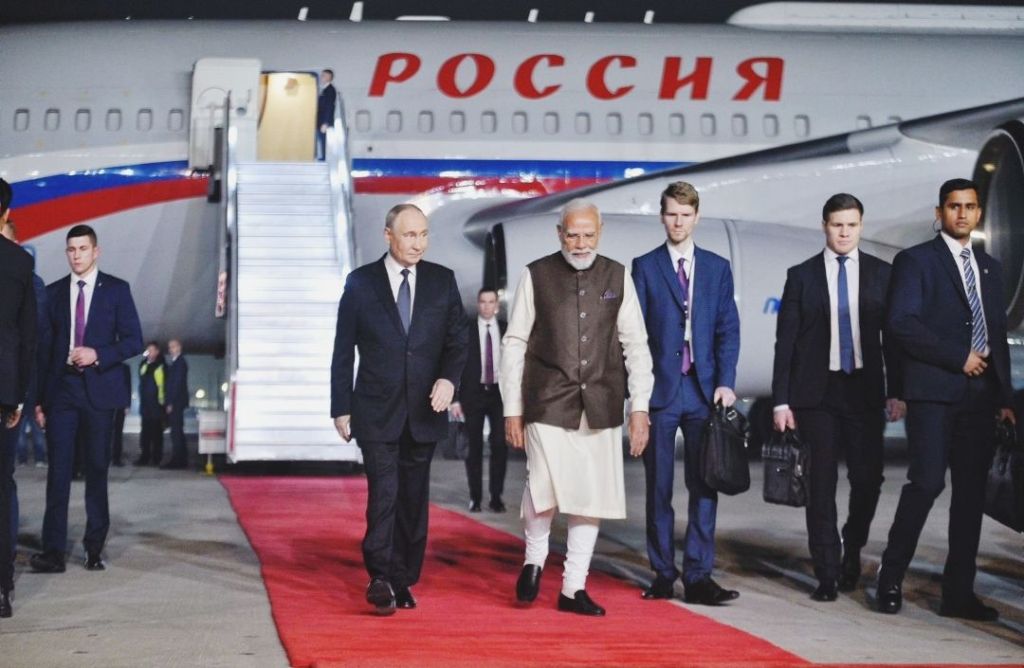
Defence cooperation, historically the bedrock of Indo-Russian ties, adds further complexity. Although Russia’s share in India’s defence imports has declined from 70% to 36%, Moscow remains New Delhi’s single largest military partner. India’s most critical platforms—from nuclear submarines to frontline fighters—bear Russian design DNA. The S-400 system remains central to India’s air defence architecture, even as delivery delays until 2026 highlight the risks of dependence on a sanctions-burdened partner. Yet India cannot simply pivot away. With Pakistan acquiring sophisticated Chinese fighters and a rapidly evolving regional military landscape, New Delhi is quietly exploring next-generation Russian options, including the Su-57 stealth fighter and the S-500 air defence system. But each additional procurement deepens a dependency that India is keen to reduce—illustrating the paradox at the heart of India’s defence diplomacy.
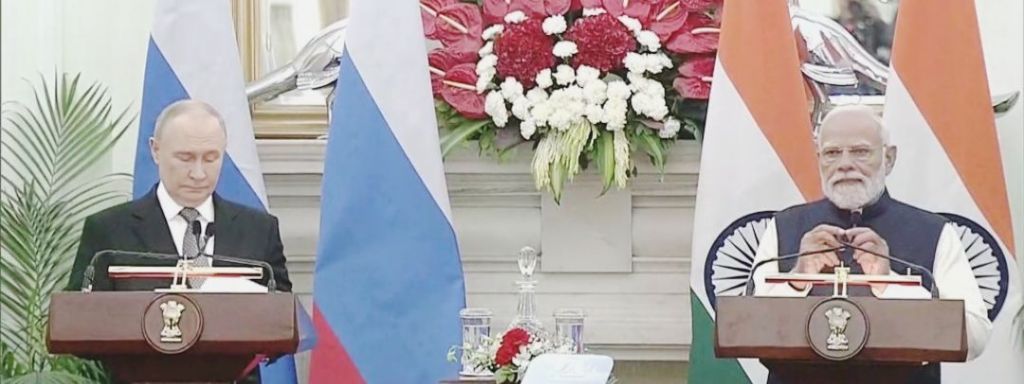
This is the essence of Modi’s geopolitical tightrope walk. Russia provides energy, defence platforms, and historical strategic congruence. The United States offers technology, markets, investment, and critical diplomatic support. Neither relationship is expendable. Washington’s tariff escalation has already unsettled Indian markets, signalling the risks of misalignment. For Putin, meanwhile, the visit is an opportunity to demonstrate that Russia retains significant global relationships despite Western attempts at isolation. In an international system where the G7 no longer monopolises power, Moscow views India as indispensable to its own narrative of resilience and relevance.
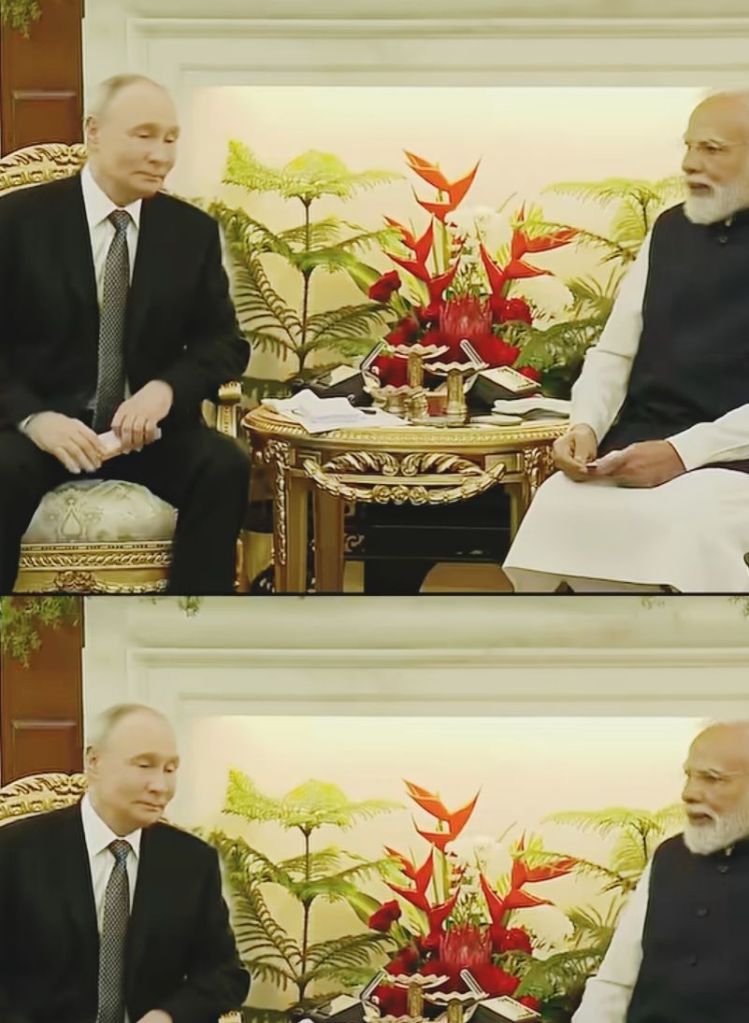
Ultimately, this meeting is not simply about India and Russia—it is about the shape of the emerging world order. India’s strategic doctrine is no longer about choosing sides but about managing overlapping alliances in a multipolar world. Its goal is diversification: of energy sources, defence suppliers, trade partners, and technology ecosystems. New Delhi seeks autonomy, not alignment; influence, not dependence. If India can maintain Russian oil flows without prompting further American economic retaliation, secure defence deliveries without deepening vulnerability, and expand exports to Russia without compromising its global standing, it will reinforce its identity as a decisive, agenda-setting power in an era defined by fracture and flux.
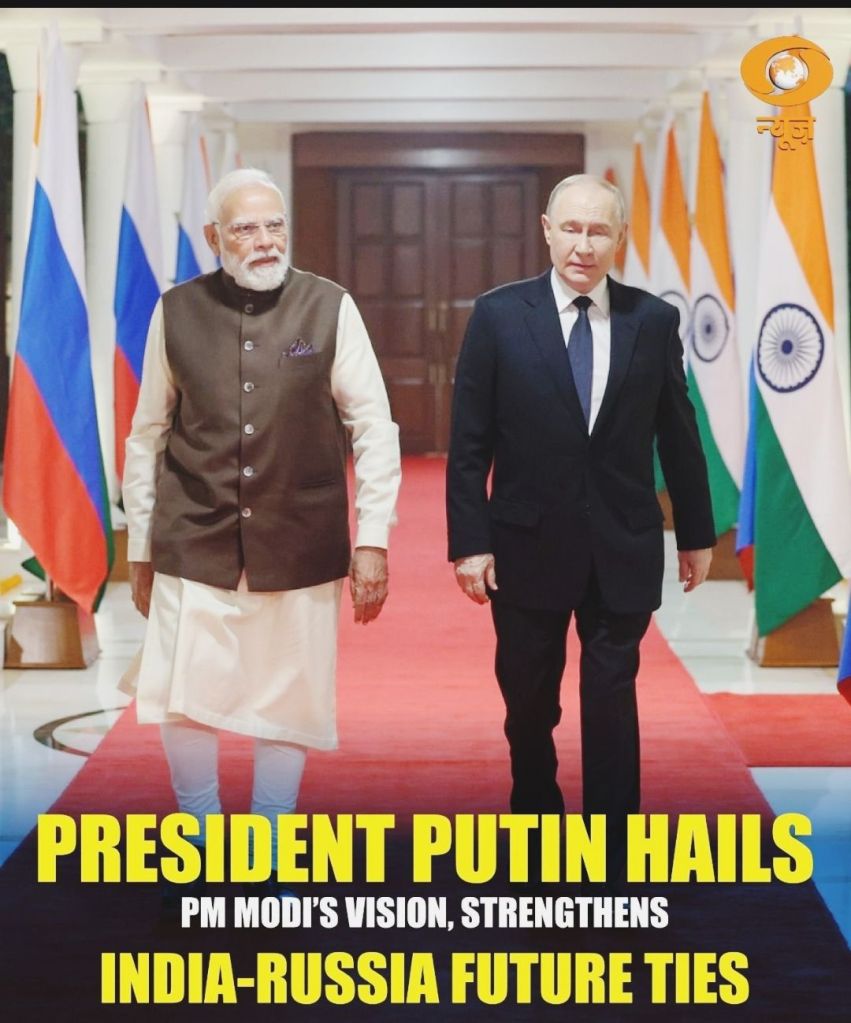
As Modi and Putin shake hands, the world will not be watching for warmth or rhetoric. It will be watching for signals—subtle or otherwise—about how India intends to navigate the most complex geopolitical landscape in decades. The stakes are immense, the balance delicate, and the implications global. Yet if any nation has mastered the art of steady movement on an unstable world stage, it is India—walking the fault line with composure, confidence, and a clear sense of purpose.
Visit arjasrikanth.in for more insights
 SOCIAL PERSPECTIVES