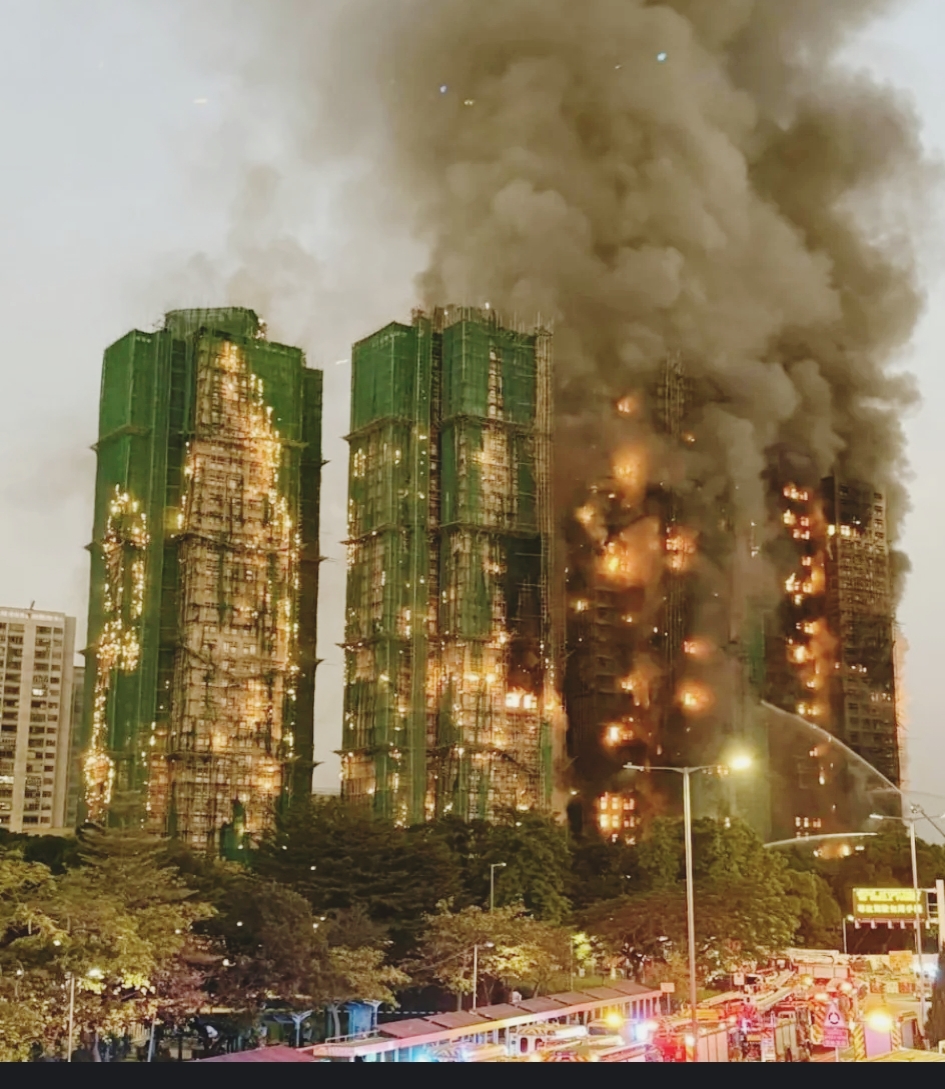
🔥🏙️ “When Cities Shoot Up, Flames Follow: The High-Rise Fire Paradox That’s Burning Our Future” 🚒
Urbanisation has evolved into the world’s fiercest competition — a global race to build higher, live denser, and stretch cities vertically when horizontal expansion is no longer possible. Skyscrapers have become symbols of national pride and economic success, promising premium lifestyles, efficient land use, and futuristic skylines. Yet beneath this glamorous façade lies a dangerous paradox: the taller we build, the harder it becomes to protect human life. A fire in a high-rise is not a mere incident — it is a towering catastrophe with the potential for mass casualties.
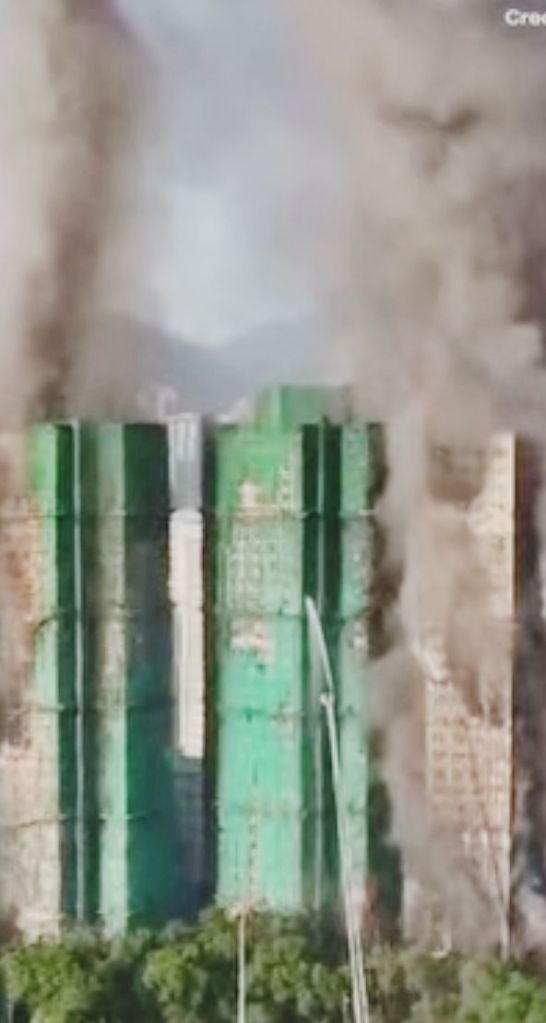
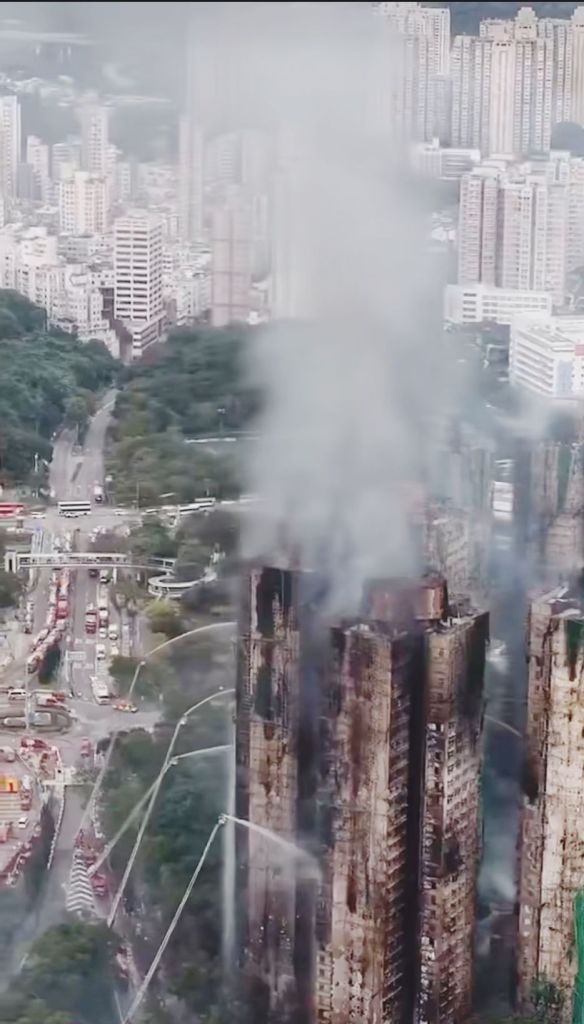
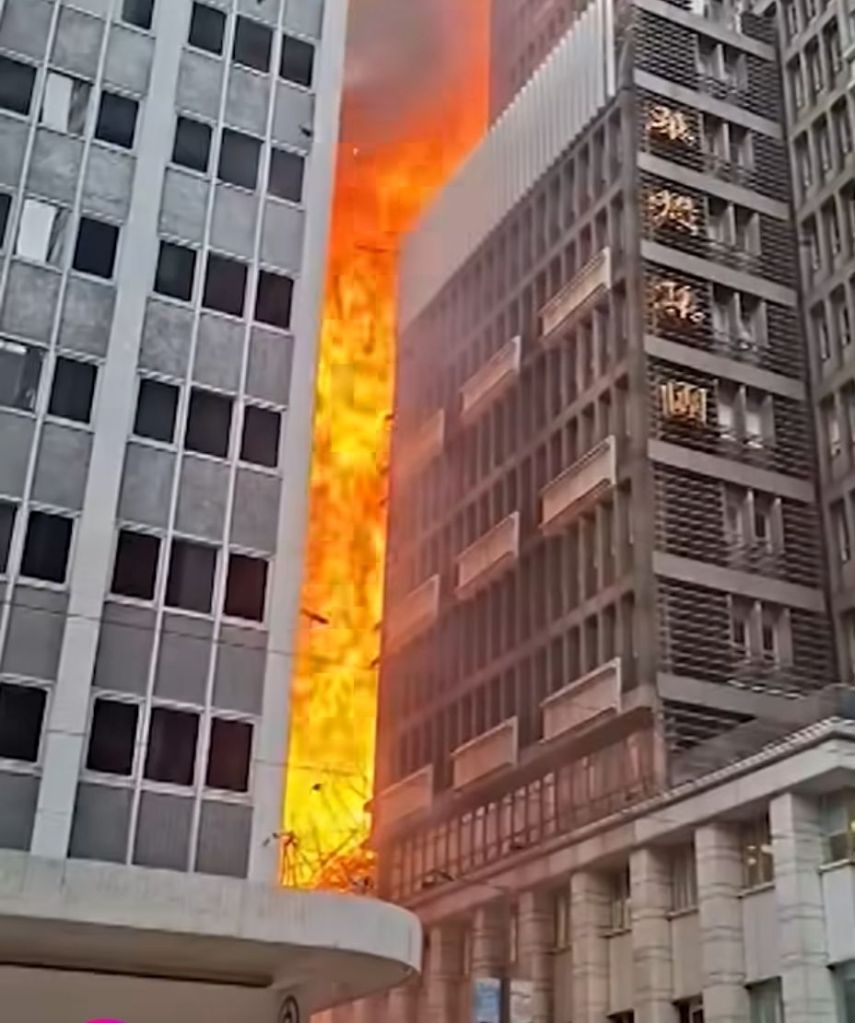
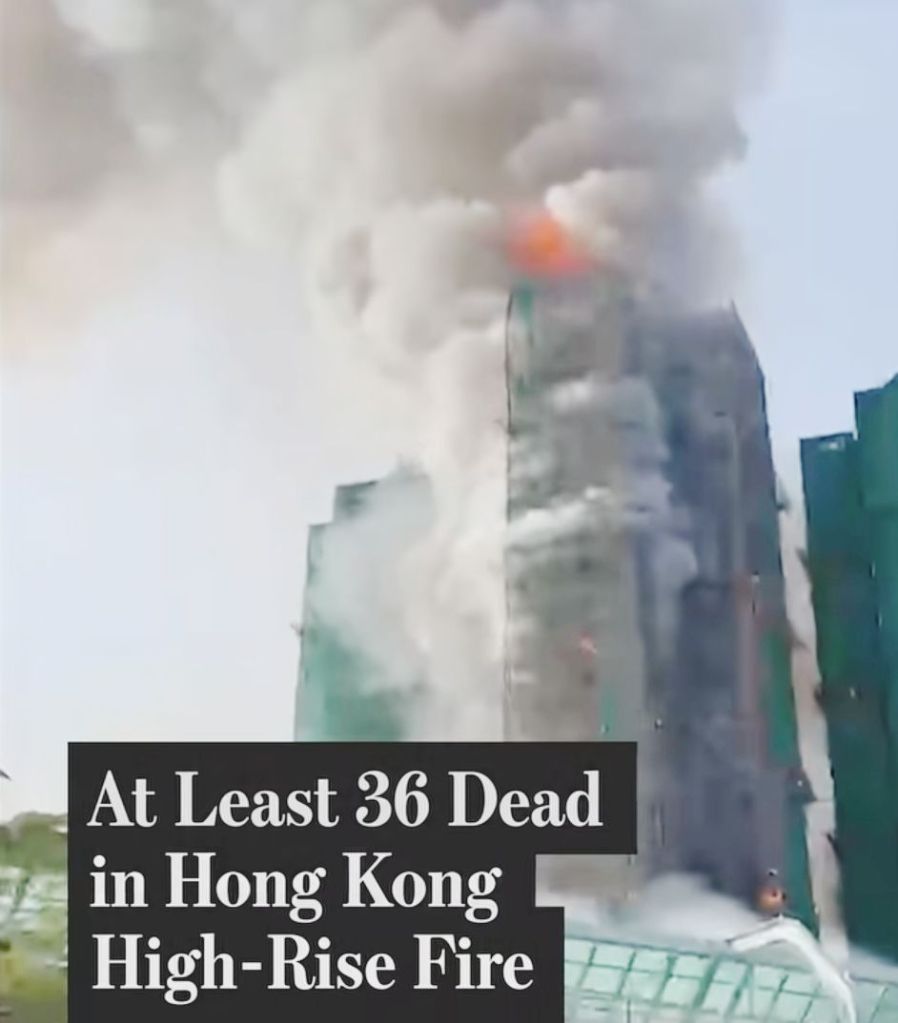
This reality struck humankind with brutal force on November 26, 2025, in Hong Kong’s Tai Po district, where the Wang Fuk Court public housing complex — with towers soaring 31 to 35 storeys high — became a fiery hellscape within hours. Seven of eight massive blocks were devoured by flames. At least 94 lives, including that of a firefighter, were lost, and hundreds remain missing. The fire spread rapidly through bamboo scaffolding used during renovation works, while flammable mesh netting and polystyrene insulation accelerated its movement. Hong Kong, a global pioneer in high-rise engineering, found itself outmatched by the sheer challenges of firefighting at altitude, exposing the fragile underbelly of modern vertical living.
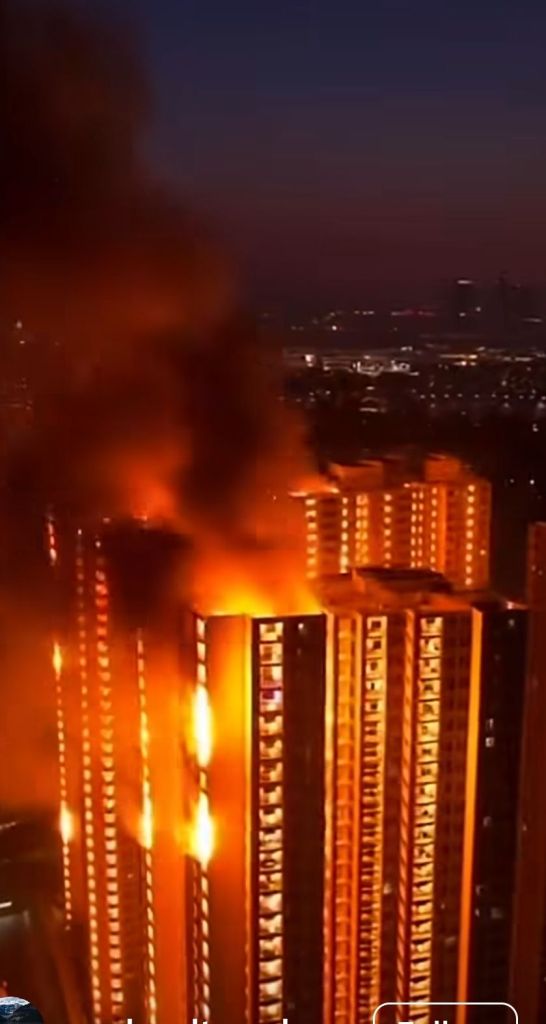
The tragedy echoes previous high-rise fire disasters worldwide. London’s Grenfell Tower turned into a furnace due to combustible cladding, killing 72 residents. In Valencia, Spain, Torre del Moro erupted into a flaming pillar because of highly flammable façade materials. Dubai’s Address Hotel burned like cardboard despite its reputation for luxury engineering. India too battles recurring flames in its vertical concrete jungles — from Mumbai’s dense clusters to Delhi’s aging towers — where illegal repairs, blocked fire exits, overused wiring, and LPG cylinders tucked under staircases endanger thousands every day. These global incidents reveal a shared vulnerability: rapid vertical growth has outpaced adequate safety reform.
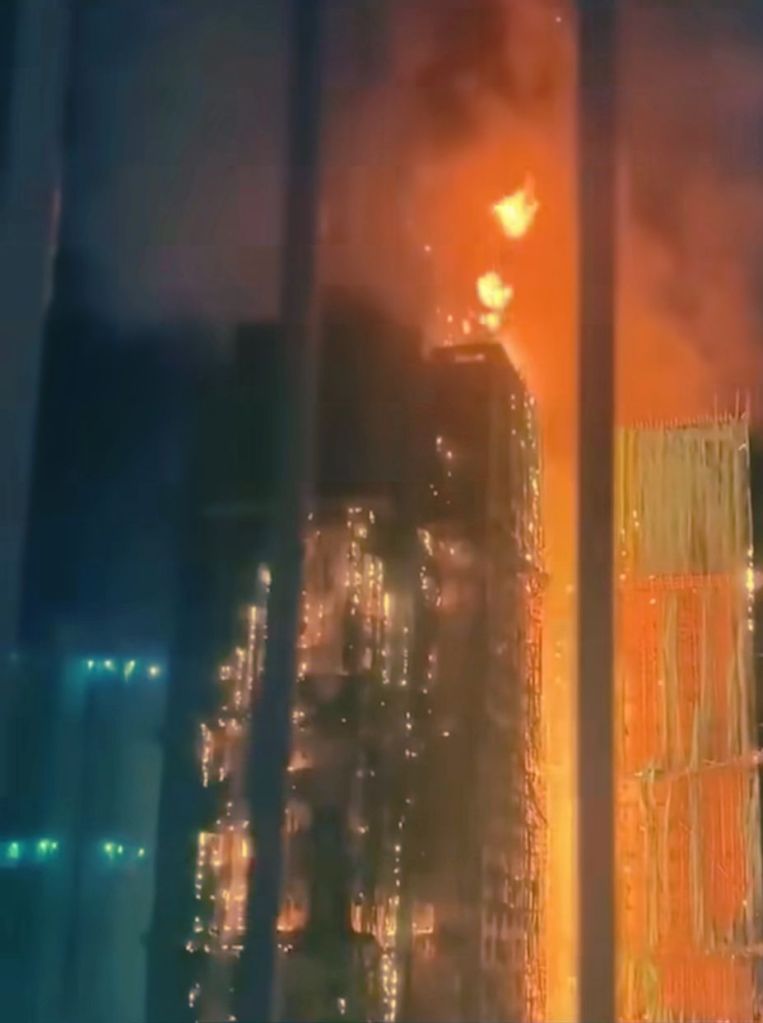
The core issue is not merely fire itself — but the near impossibility of escape from great height. Living 300 feet above ground is aspirational until the only route to survival becomes a smoke-filled staircase. These narrow escape paths quickly turn into choking death traps under panic. Smoke, rising faster than flames, blinds and suffocates victims, while the “stack effect” in tall buildings acts like a chimney, accelerating toxic spread upwards. Elevators cease functioning. Power fails. Elderly residents, children, and people with disabilities are trapped in impossible circumstances. Firefighters cannot rescue beyond the 12th floor using ladders; instead, they must climb dozens of levels in full gear, losing precious minutes while the fire grows. And when fires spread externally — like at Grenfell or Tai Po — even phased evacuation strategies collapse into full-blown chaos.
However, abandoning the vertical future is not an option. Cities will only grow taller as land scarcity intensifies.
Therefore, the challenge is to redesign the architecture of survival. Fireproof building materials and insulation must shift from optional to mandatory. Flammable renovation scaffolding must be prohibited. Stairways must be spacious, pressurised against smoke, illuminated, and always obstruction-free. Refuge floors — critical “safe islands” every 15–20 storeys — must never be compromised for commercial use. At the same time, technology must play a transformative role: evacuation elevators capable of operating during fires, real-time fire and structural monitoring sensors, dynamic emergency signage, and digital twin building models that guide firefighters intelligently.
Ultimately, safety depends not just on design but on preparedness. Fire drills must be strict and regular, not ceremonial routines. Residents should instinctively know escape routes as confidently as they connect to Wi-Fi. Violations such as sealed exits, faulty alarms, or illegal structural alterations must attract penalties serious enough to deter neglect. The Hong Kong tragedy is a loud warning: a single spark can destroy what takes years to build and transform architectural marvels into vertical graveyards. True progress is impossible when safety remains an afterthought.
Skylines may portray ambition, but safeguarding lives defines true civilisation. A modern city is not one that merely touches the sky — but one that ensures everyone can return safely to the ground during crisis. We must build upward with responsibility and ensure that every wall, corridor, and rescue pathway upholds one uncompromising promise: no life will ever be sacrificed for the sake of a beautiful skyline. 🔥🧯
Visit arjasrikanth.in for more insights
 SOCIAL PERSPECTIVES