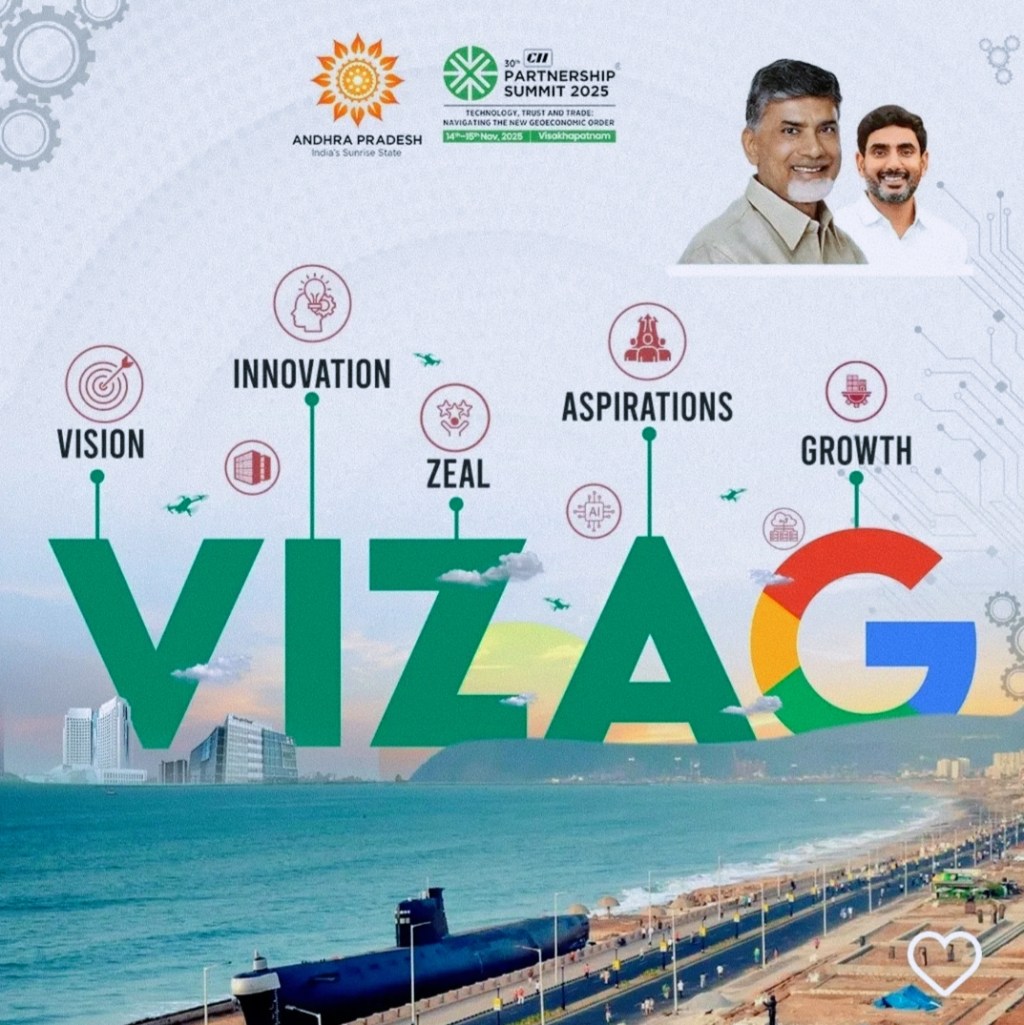
A Single Summit Turned a Rebuilding State into India’s New Capital of Technology, Trust, and Global Ambition
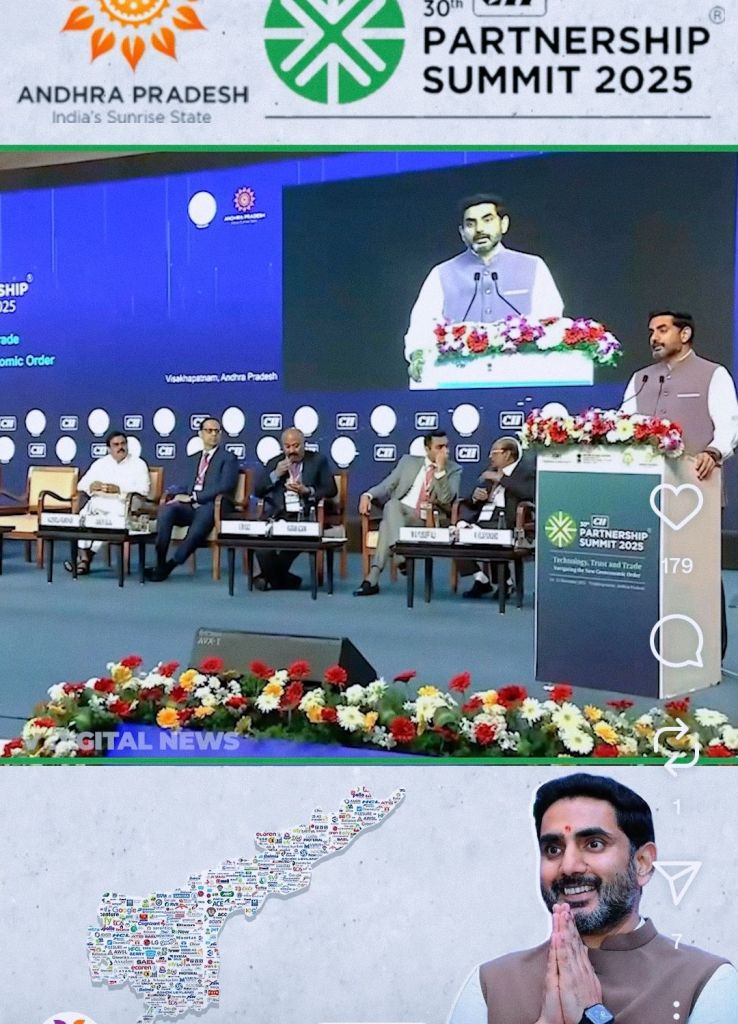
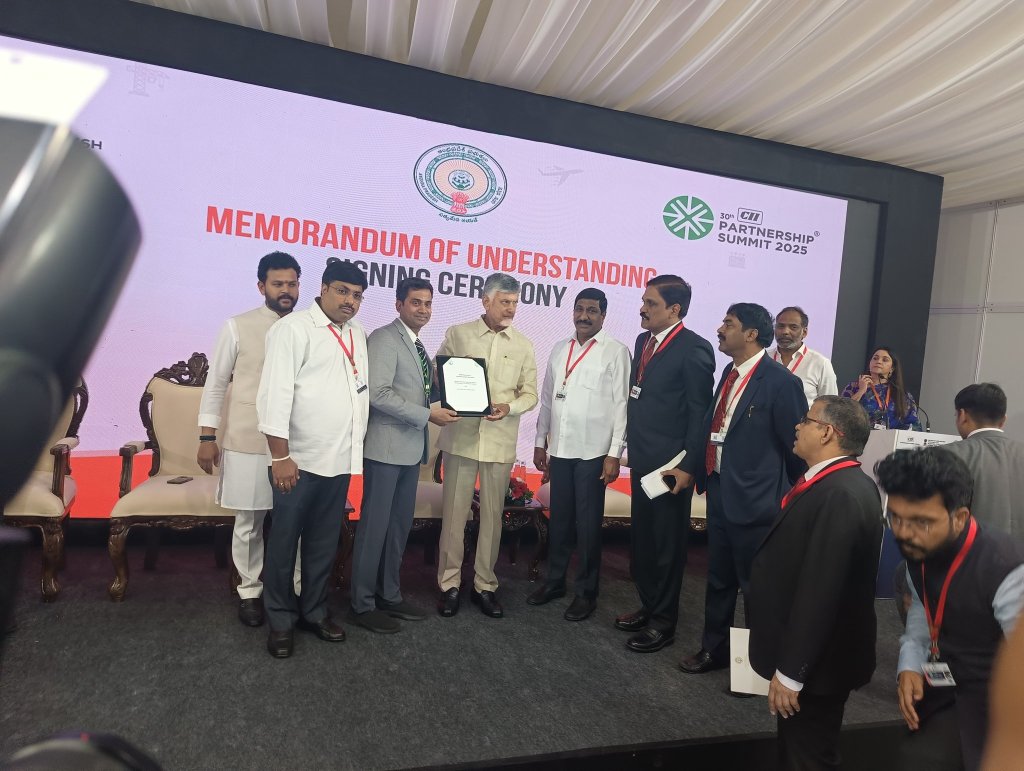
The 30th CII Partnership Summit held in Visakhapatnam on 14th November 2025 did not merely showcase investments—it detonated a new economic imagination for India. What should have been an annual forum for business matchmaking became, instead, a historic declaration that Andhra Pradesh has broken free of its post-bifurcation identity as a recovering state. It has re-emerged as India’s most futuristic investment frontier, where the next decade of the country’s technological rise, industrial expansion, and digital reinvention will be architected. Global corporations, sovereign partners, and technology giants converged with one unmistakable message: the future is being built in Andhra Pradesh.

The announcements that thundered through the summit were nothing short of a national economic re-design. Hyperscale data centers rivaling global digital capitals, solar parks the size of small nations, next-gen quantum research districts, Asia’s largest drone ecosystem, deep-tech corridors, green logistics, integrated food processing hubs, and world-class tourism complexes—all found their place on Andhra Pradesh soil. Investors did not come with incremental upgrades; they came with visions that could tilt India’s technological balance.
Reliance Industries fired the opening salvo. Its announcement of a 1 GW AI Data Centre—fueled by cutting-edge GPUs, TPUs, and high-performance processors—instantly positioned Andhra Pradesh as an anchor of India’s AI revolution. Mirroring the scale of the Jamnagar AI facility, this digital powerhouse will shape the computational backbone of India’s next industrial chapter. To electrify this infrastructure sustainably, Reliance committed a 6 GWp solar park, doubling the state’s solar capacity and solidifying AP as a green-energy exemplar. But Reliance also demonstrated a deeply strategic social vision through its Greenfield Integrated Food Park in Rayalaseema—blending rural transformation with high-tech futures.

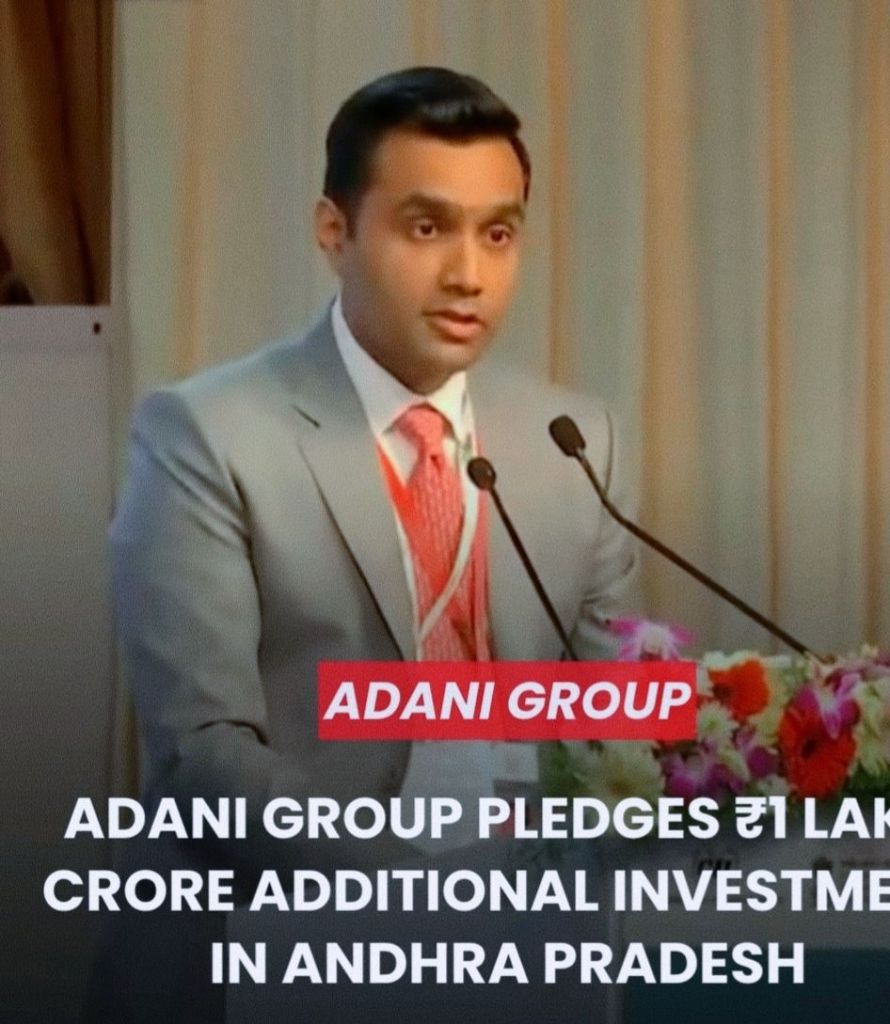
Then came the Adani Group, amplifying the summit’s momentum from impressive to monumental. An additional ₹1 lakh crore investment—over and above its existing ₹40,000 crore—spanned ports, cement, logistics, energy, data centers, and manufacturing. But the true tectonic shift was the USD 15-billion Vizag Tech Park, a collaboration with Google. Green-powered hyperscale data centers, a global subsea cable grid, and gigawatt-scale AI campuses together will catapult Visakhapatnam into the rare league of digital gateway cities such as Singapore, Dublin, and Amsterdam. With additional green data centers from AdaniConneX, Andhra Pradesh is now set to emerge as India’s most strategic digital corridor.

Yet the most defining feature of the summit was Andhra Pradesh’s willingness to think beyond the horizon. The foundation stones laid for Drone City and Space City mark two of the boldest ecosystem-led technology projects in India. Drone City, spread across 300 acres, will enable end-to-end drone manufacturing, design studios, innovation labs, and service hubs, while training 25,000 drone pilots—an unmatched national milestone. Space City will nurture satellite production, aerospace R&D, and deep-space innovation, giving Andhra Pradesh a frontline position in India’s exponential space economy.
This future-facing arc extends further through the announcement of Quantum Valley, set for launch in January 2026. A dedicated deep-tech district for quantum computing research, it positions Andhra Pradesh alongside global knowledge hubs like Zurich, Toronto, and Singapore. Meanwhile, the Lulu Group expanded its footprint with its flagship mall project in Visakhapatnam and promised direct agricultural sourcing from AP farmers—bolstering rural incomes and strengthening value chains.

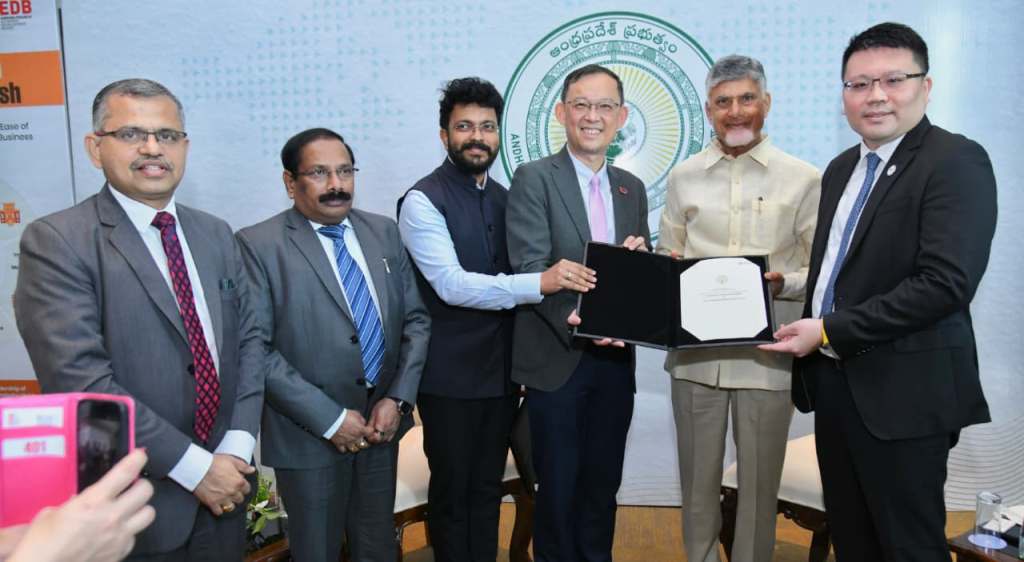
International partnerships reached new heights at the summit. The Singapore Government signed a landmark MoU covering governance reform, green infrastructure, smart systems, and public administration transformation. The move symbolizes Andhra Pradesh’s emergence as a global governance laboratory. This was complemented by the announcement of direct Vijayawada–Singapore flights thrice a week, improving investor access and accelerating industrial corridor connectivity.
These developments mark a dramatic departure from Andhra Pradesh’s early post-bifurcation years, when the state struggled with the absence of a capital, limited revenue, and a disrupted industrial base. Through strategic clarity, port-led economic design, plug-and-play industrial parks, and one of India’s fastest approval systems, the state engineered a turnaround that economists now cite as one of India’s most compelling governance success stories.
The numbers are startling: over $120 billion in firm commitments at the summit and two lakh jobs created in just 16 months—the most rapid job-creation phase in Andhra Pradesh’s history. The state has shifted from the margins of India’s growth narrative to its epicenter.
What makes Andhra Pradesh’s resurgence extraordinary is not just the quantum of investments, but the courage of its imagination. It turned its 974-km coastline from a symbol of vulnerability into a global economic gateway. It converted its disadvantages into leverage. It erased the distinction between aspiration and reality. From AI superclusters to quantum valleys, from space-tech to green-energy giga-projects, from port-led trade engines to smart governance partnerships—the state has declared that its future will not be inherited; it will be engineered.
The coastline that once carried the anxiety of the past has now become India’s newest launchpad to global leadership.
Visit arjasrikanth.in for more insights
 SOCIAL PERSPECTIVES