
From citizen alerts to Chief Minister’s command — Technology turned governance from reaction to prediction.
In an era where governments across the world are struggling to respond swiftly to crises, Andhra Pradesh has quietly pioneered a digital transformation — not through grand speeches or corporate boardrooms, but through the luminous screens of a real-time command centre in the Chief Minister’s Office. This is the story of Real-Time Governance (RTG) and its beating heart — the Incident Management System (IMS) — a technological leap that transformed governance from reactive firefighting to proactive foresight.
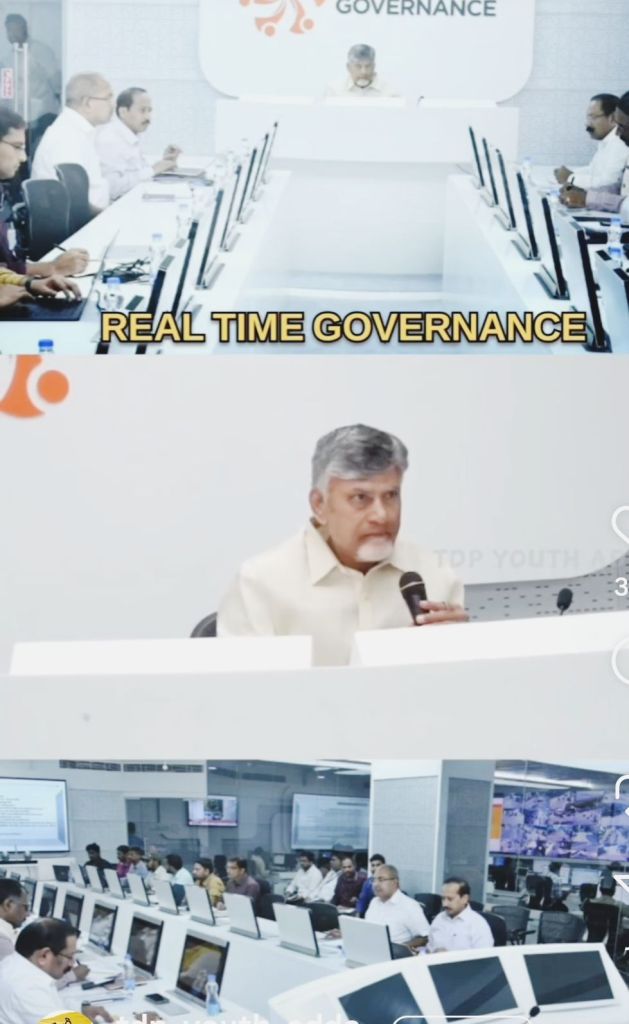
At its core, RTG redefines how government connects, responds, and delivers. No longer must reports climb the bureaucratic ladder. Today, data travels at lightning speed — from a citizen’s mobile phone or a camera on a village street directly to the Chief Minister’s dashboard. The philosophy is simple yet transformative: information in real time enables decisions in real time. The result is a government that listens, acts, and resolves — often before a crisis can escalate.
From the command centre in Amaravati, a massive digital wall streams live feeds from thousands of cameras, drones, GIS-based maps, and district dashboards. Linked through a state-wide Fibre Grid, this digital nervous system connects every administrative tier — from Secretariat officials to field officers in the remotest mandals. Mobile apps, sensors, and helplines continuously feed data into the system — from weather alerts and traffic congestion to citizen grievances — all geo-tagged, prioritized, and tracked for swift resolution.
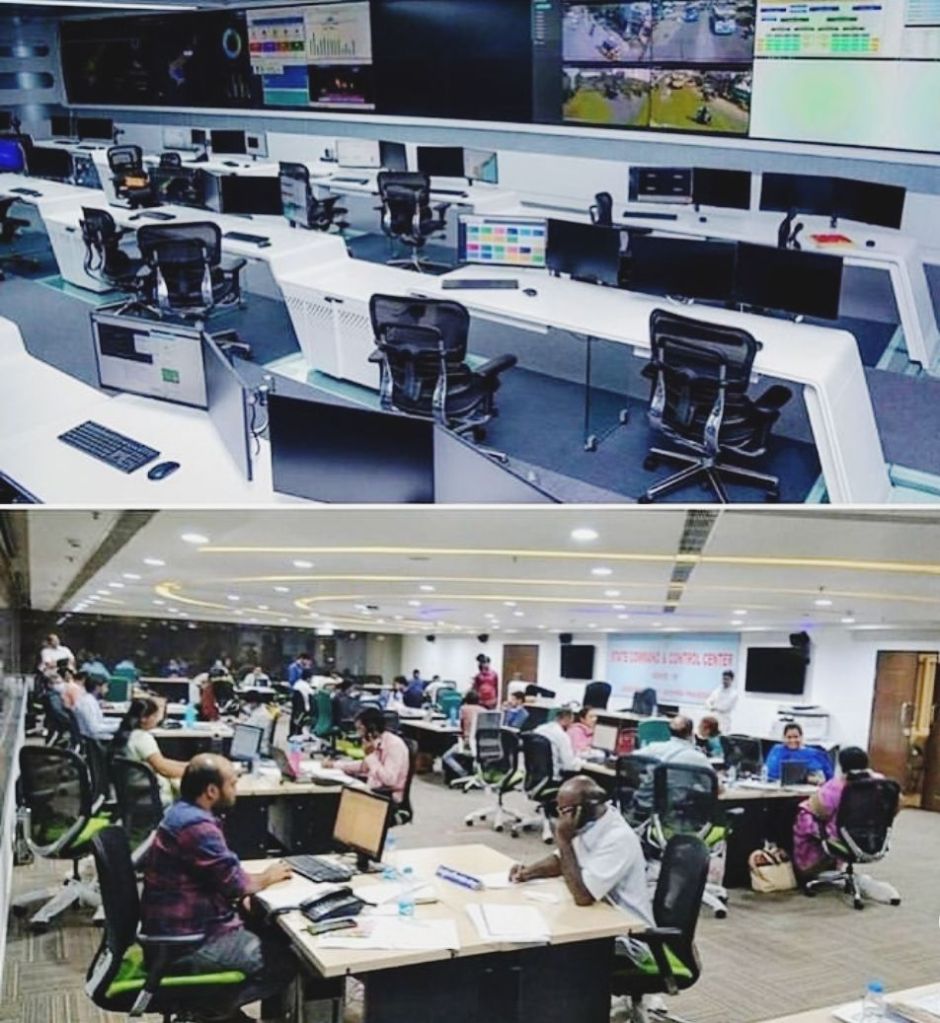
Once an incident is reported, the system moves into action with remarkable precision. It automatically logs the complaint, alerts the relevant officials, and within minutes, the Chief Minister can convene a live video conference with the concerned Collector and department heads. Decisions are issued instantly and digitally recorded for transparency. Ground teams receive real-time instructions, and their progress is continuously monitored until resolution. Whether it’s a broken culvert or a cyclone warning, coordination happens seamlessly — fast, factual, and fully accountable.
What sets Andhra Pradesh’s model apart is its human-tech harmony. Technology here does not replace leadership — it amplifies it. The Chief Minister’s personal involvement injects urgency and purpose into the system. Empowered Collectors act swiftly with clarity, while citizens themselves become active participants. A farmer reporting crop loss or a villager flagging a broken road can now track their issue to closure. Governance becomes participatory — and trust, once lost in bureaucratic opacity, is restored through responsiveness.

RTG’s strength lies in its data-driven precision. Every decision is evidence-based, every action time-stamped and geo-tagged. Transparency replaces opacity; accountability replaces ambiguity. Predictive analytics and historical data enable proactive action — relief measures begin before a cyclone strikes; preventive steps are taken before unrest brews. Andhra Pradesh’s governance has shifted from reactive management to predictive administration.
The system’s sustainability lies in its institutionalization. The Government of Andhra Pradesh has embedded RTG processes into administrative protocols to ensure continuity beyond individual leadership. Backup power, satellite links, and cybersecurity safeguards reinforce its resilience. Artificial Intelligence and Machine Learning are being integrated to filter noise, prioritize alerts, and anticipate emerging issues. Regular mock drills, training programs, and the proposed creation of a specialized RTG Cadre aim to maintain readiness across all levels of governance.
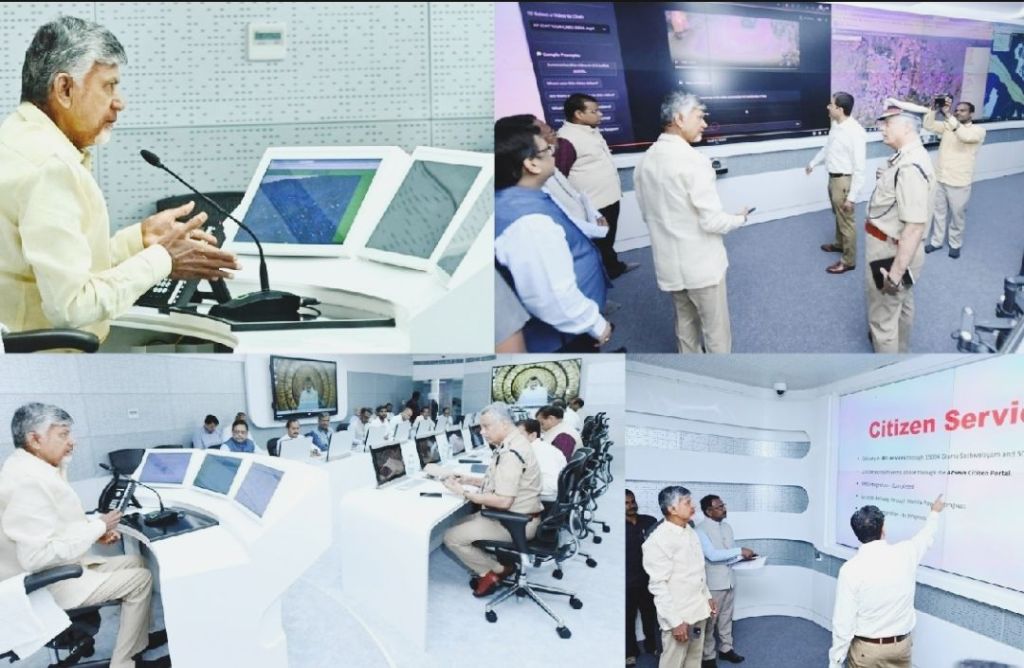
Equally noteworthy is RTG’s inclusive vision. Aware of the digital divide, the state continues to integrate traditional communication channels — helplines, community volunteers, and local intelligence networks — ensuring that every citizen’s voice is heard. This blend of advanced technology and grassroots engagement gives the system its uniquely humane character.
RTG’s effectiveness has already been demonstrated — from managing natural disasters to resolving local crises within hours. It has redefined what governance can achieve when leadership, data, and technology converge with purpose. More importantly, it has set a benchmark for other states and nations to emulate.
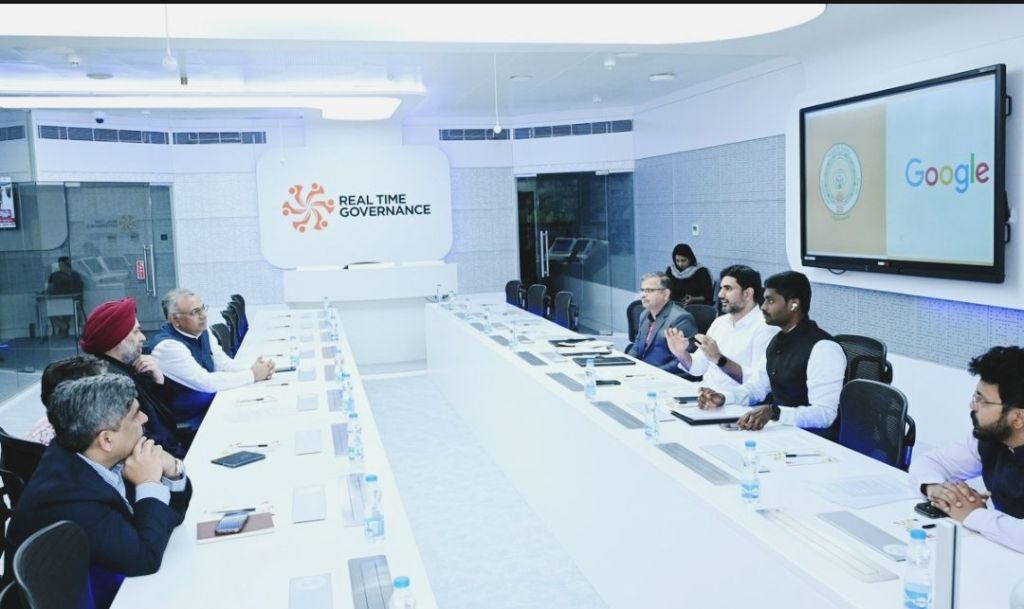
What began as a bold experiment in responsive administration has evolved into a living ecosystem that sees, hears, and acts — 24×7. Andhra Pradesh’s Real-Time Governance is more than a system; it is a philosophy of governance reborn — a promise of agility, accountability, and empathy powered by technology.
As the digital wall in the Chief Minister’s Office glows with live maps and analytics, one can sense a new rhythm pulsing through governance — vibrant, vigilant, and humane. The state that once waited for reports now responds to reality as it unfolds. Andhra Pradesh has not merely adopted real-time governance; it has turned governance itself into a real-time promise — a promise of action, transparency, and unwavering trust in the power of technology to serve humanity.
Visit arjasrikanth.in for more insights
 SOCIAL PERSPECTIVES
One response to “Mission Real-Time: Andhra Pradesh’s Digital Nerve Centre That Sees, Hears, and Acts 24×7” ”
please provide a link to lodge a complaint related to land grabbing
LikeLike