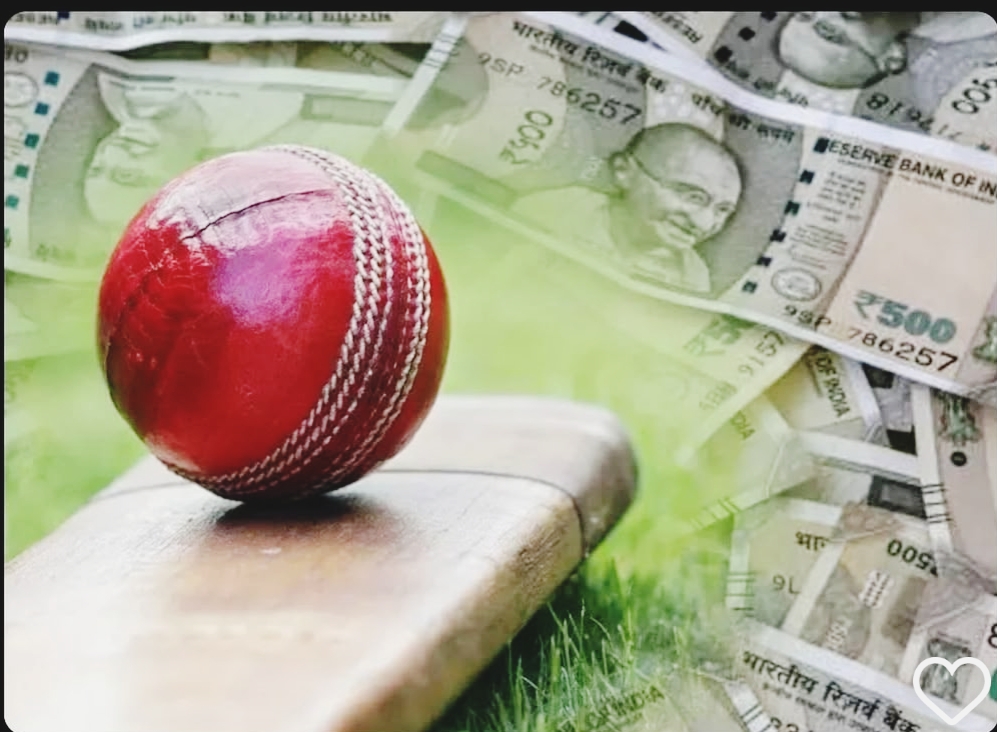
Inside India’s billion-rupee betting scandal that blurred the lines between glory, greed, and gullibility
The glitz of cricket, the roar of fans, and the lure of easy money have collided in an explosive scandal that has shaken the very foundations of India’s most beloved sport. The Enforcement Directorate (ED) has frozen assets worth over ₹11 crore belonging to cricketers Suresh Raina and Shikhar Dhawan in a money-laundering probe linked to the offshore betting platform 1xBit — an app that transformed India’s cricket craze into a billion-rupee black market. What began as a glamorous digital fad, marketed by celebrities and social media influencers, has spiralled into one of the most unsettling financial crime investigations in recent memory, revealing a dark convergence of sport, celebrity, and cybercrime.

Behind the shimmering success of cricket’s commercial empire lies an unregulated digital underworld. The ED’s ongoing probe has uncovered a vast web of offshore betting networks — 1xBit, Mahadev, FairPlay, Lotus 365, Parimatch, and others — collectively running an industry worth an estimated ₹84,000 crore. These syndicates thrive on India’s legal grey zones, laundering massive sums through cryptocurrencies, shell companies, and offshore accounts in Dubai, Cyprus, and the Caribbean. While Indian law enforcement clamps down on local handlers, the puppet masters remain beyond reach, shielded by complex digital ecosystems and international loopholes.

Analysts aptly mention that “These apps mimic legitimate sports platforms — with scores, stats, and predictions — but one click takes fans into a parallel universe of offshore betting.” This shadow industry is powered by slick marketing, encrypted wallets, and influencer campaigns that seduce fans under the guise of entertainment. What appears to be a harmless fantasy cricket ad is often a backdoor to an illegal gambling hub, camouflaged beneath hashtags and celebrity endorsements.
The latest ED action marks its most aggressive strike yet. Investigators have attached over ₹6 crore in mutual fund holdings under Raina’s name and a ₹4.5 crore property linked to Dhawan. Officials allege that both assets represent proceeds of crime earned through indirect endorsement deals with 1xBet and its clones — 1xBad and OneBet Sporting Lines. Funds reportedly passed through multiple foreign intermediaries to obscure their illegal origin. Over 6,000 “mule accounts” were used to collect and divert funds from Indian users through payment gateways operating without proper KYC protocols. Each transaction, however small, contributed to a money trail that now snakes through continents.

The revelations are staggering: fake merchants posing as sellers of apparel or home goods processing transactions worth crores, entirely inconsistent with their declared business activity. The ED believes the total laundered amount may exceed ₹1,000 crore, and statements have been recorded from other cricketers and Bollywood figures allegedly tied to surrogate promotions. The fallout is not just legal — it’s reputational, challenging the integrity of players once seen as national idols.
But this saga runs deeper than two names or one app — it exposes the moral fault lines of India’s sports economy. With traditional endorsements drying up for retired or semi-active players, many have turned to digital campaigns offering quick payoffs through crypto or offshore transfers. The absence of clear regulations differentiating fantasy gaming from illegal betting only widens the grey area. The BCCI, despite having an Anti-Corruption Unit (ACU), restricts its oversight to match-fixing, leaving a gaping void in monitoring players’ off-field financial associations. In that vacuum, dubious operators flourish, preying on the very faces that fuel India’s cricketing passion.

Technology, once cricket’s greatest promoter, has become its silent betrayer. Decentralized crypto exchanges, encrypted payment layers, and transient web domains make these betting cartels nearly indestructible. Even when enforcement agencies freeze accounts, new clones emerge — Lotus 365 today, Lotus 364 tomorrow — identical interfaces, new servers. It’s a digital hydra, regenerating faster than regulators can respond. Yet, the ED’s bold move to attach celebrity assets sends a chilling reminder: in the post-digital world, ignorance is no excuse. Under the Prevention of Money Laundering Act (PMLA), moral blindness is as culpable as criminal intent.

The way forward lies not just in punitive action but preventive reform. The BCCI must revise player contracts to ban all associations — direct or indirect — with betting or gaming surrogates. Its ACU should evolve into a watchdog for digital conduct, integrating financial literacy modules to educate players about deceptive branding offers. Meanwhile, India’s enforcement agencies need a dedicated cyber-financial crime wing within the ED and CBI, equipped to monitor real-time crypto flows, identify suspect gateways, and collaborate with international regulators.
Because in a country where cricket is a faith, the betrayal of that faith cuts deepest. Every fan who cheers from a small-town chai stall or a crowded stadium sees more than a game — they see honesty, struggle, and pride. When those ideals are compromised by greed cloaked in glamour, it isn’t just money that’s laundered — it’s trust. The ED’s clampdown may be just the opening over in a long and bruising battle between integrity and indulgence. But it’s a vital start — a reminder that even in the age of crypto and clickbait, accountability still matters. For in this game behind the game, the scoreboard is not about runs or wickets — it’s about ethics. And as India is now discovering, even the gods of cricket can get caught behind.
Visit arjasrikanth.in for more insights
 SOCIAL PERSPECTIVES