From Tragedy to Transformation — Road Safety Must Become India’s Next Freedom Movement
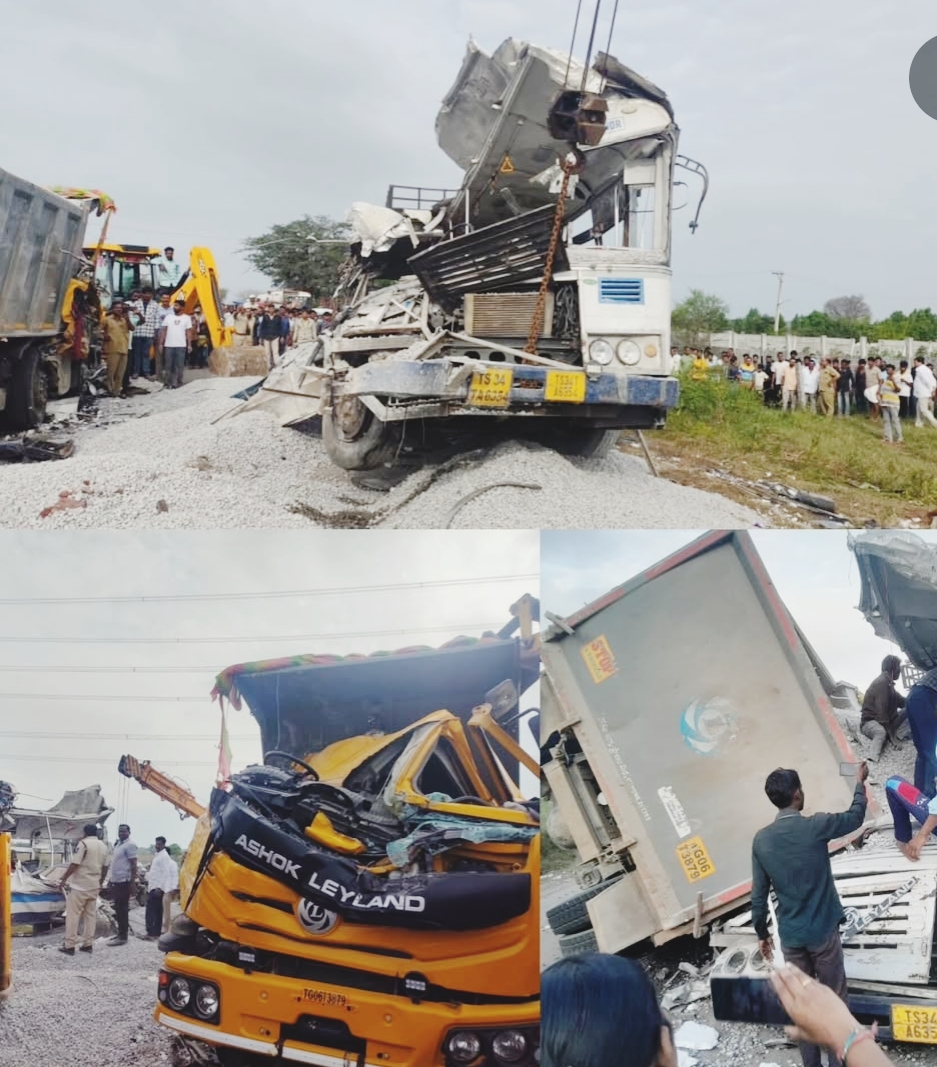
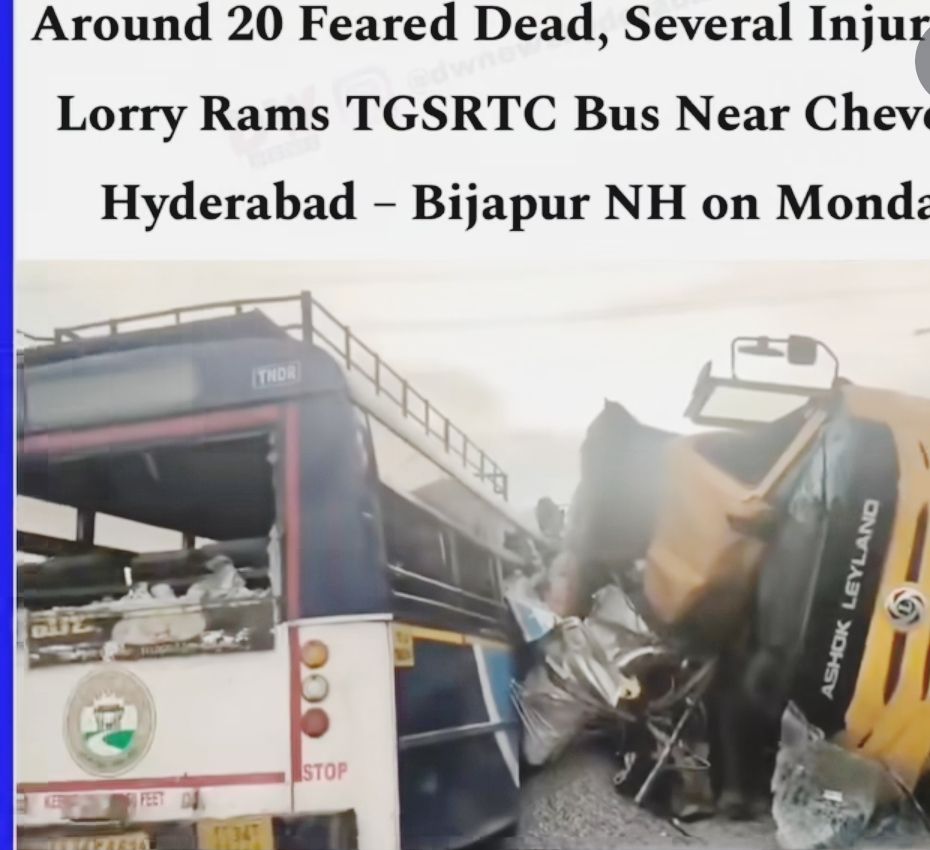
Every few hours, a newspaper headline bleeds with a familiar tragedy — another fatal crash, another family destroyed, another life that could have been saved. The horrific collisions in Kurnool, Chevella and Jaipur recently were not isolated events but stark reminders of India’s silent epidemic: road accidents. In Chevella, a bus rammed head-on into a truck, leaving a trail of twisted metal and lifeless bodies. In Jaipur, an intoxicated truck driver turned a highway into a nightmare. These are not coincidences — they are symptoms of a broken system where human recklessness meets infrastructural apathy, producing a lethal cocktail that kills tens of thousands every year.
The scale of this crisis is staggering. In 2024 alone, India lost 1,80,000 lives to road crashes — a figure greater than the population of several small towns. The fatality rate stands at 12.2 per lakh population, compared to 2.6 in nations like Japan or the UK. Road injuries now rank as the 12th leading cause of health loss in India, bleeding away 3% of the country’s GDP annually — a staggering economic and human cost. Behind these numbers lie stories of shattered families, lost breadwinners, and children growing up without parents. Most victims are pedestrians, cyclists, and two-wheeler riders — the most vulnerable road users, whose daily commutes often become their last.

The truth is that road deaths are not random tragedies — they are predictable outcomes of preventable failures. Human error plays its part: speeding, drunk driving, and distraction remain the top killers. Alcohol impairs judgment and reflexes, yet thousands of drivers take the wheel intoxicated. Mobile phone use while driving has become an invisible epidemic, while the failure to wear helmets or seat belts continues to convert survivable crashes into fatal ones. A simple helmet could reduce head injuries by up to 70%, yet compliance remains dismal.

But the rot runs deeper. Beneath these individual lapses lies a system that fails its citizens. Many Indian roads are designed for vehicles, not people. Unmarked intersections, vanishing footpaths, and “black spots” where accidents are frequent turn highways into traps. Enforcement remains inconsistent — laws exist on paper, but penalties are weak, checks are rare, and corruption often undermines accountability. Even after crashes, victims face another layer of tragedy: delayed ambulances, lack of trauma care, and absence of coordination between police and hospitals. In a country where every second counts, systemic inefficiency turns injuries into deaths.

The solution, therefore, cannot rely on blaming individuals. The world’s safest countries — Sweden, the Netherlands, Japan — understand this truth. They operate under the “Safe System Approach”, a philosophy that acknowledges human error as inevitable but designs roads, vehicles, and laws to ensure such mistakes are not fatal. India must embrace this mindset if it hopes to stem the carnage.

The first step is engineering safer roads. Every major infrastructure project must undergo scientific road safety audits to identify and correct design flaws. “Black spots” should be mapped, redesigned, and eliminated with better signage, barriers, and lighting. Urban roads must shift toward people-centric planning — wide footpaths, protected cycle tracks, raised crossings, and reduced vehicle speeds in pedestrian-heavy areas.
The second step is accountability through enforcement. Cameras and automated penalty systems can remove human discretion and ensure consistent punishment for speeding, red-light jumping, and drunk driving. Proven technologies like ignition interlocks — which prevent drunk drivers from starting their cars — should be expanded for repeat offenders.

Third, education must begin early. Road safety should be woven into school curricula, not left to awareness campaigns that fade after each tragedy. Children who learn discipline on the road will grow into responsible drivers and citizens. Myths, such as “coffee sobers you up,” must be dispelled through sustained public messaging.
Fourth, emergency care must be strengthened. India’s “Golden Hour” response time remains weak, with victims often waiting in agony for ambulances that never arrive. Investment in trauma centres along highways, GPS-enabled ambulance systems, and real-time coordination networks is non-negotiable. The Good Samaritan Law, which protects bystanders who help crash victims, must be popularized so fear does not paralyze compassion.
Finally, the foundation of all reform must be data. Without accurate, real-time crash data, we are fighting blindfolded. India needs a national, public-facing crash database tracking every fatal accident — its cause, location, and outcome — to enable evidence-based interventions.
The world offers lessons India can adopt immediately. Sweden’s Vision Zero initiative aims for zero road deaths through intelligent design and strict speed management. The Netherlands has separated slow-moving traffic from highways, drastically reducing pedestrian deaths. The U.S., through the CDC, has implemented seat belt mandates, graduated driver licensing, and strict alcohol limits — all proven to save lives.
India, too, can achieve such transformation — but only if it treats road safety as a national mission, not a bureaucratic afterthought. The India Status Report on Road Safety 2024 warns that at the current rate, the country will miss the UN target of halving traffic deaths by 2030. Yet, there is hope: every ₹1 invested in road safety yields ₹4 in economic benefit through lives and productivity saved. The question is no longer whether India can afford to act — it’s whether India can afford not to.

The time has come to declare war — not against drivers or commuters, but against complacency. Every crash is a policy failure, every preventable death a national shame. The goal should not be fewer accidents; it should be none at all. Because in a truly civilized society, no one should have to die simply for using the road. In a country that dreams of being a global power, it’s time India learns that real progress isn’t measured in kilometres of highway built — but in lives saved along the way.
Visit arjasrikanth.in for more insights
 SOCIAL PERSPECTIVES