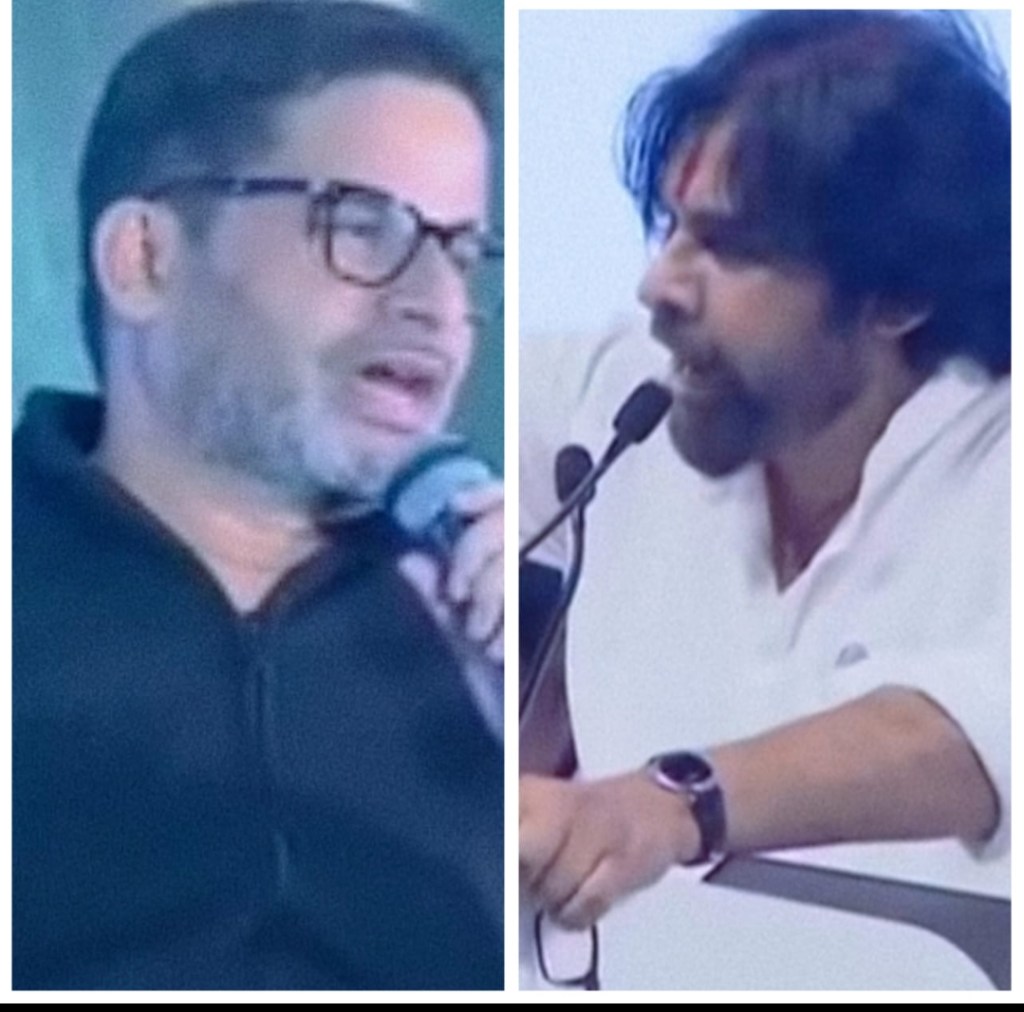
From Andhra’s cinematic rallies to Bihar’s barefoot revolutions, Pawan Kalyan and Prashant Kishor — two men with the same initials but opposite instincts — are rewriting the grammar of Indian politics, blending charisma with calculation and emotion with intellect.
Two men. Two states. Two missions that could not be more different—yet bound by the same initials: PK. In Bihar, Prashant Kishor, the political mastermind who engineered India’s most memorable election victories, is trekking across villages to transform the very DNA of Bihar’s politics. In Andhra Pradesh, Pawan Kalyan, the film superstar-turned-politician, is turning his colossal fan base into a political force that cannot be ignored. One thrives on data; the other on drama. One believes in spreadsheets; the other in slogans. Together, they represent India’s two most fascinating political experiments—where intellect meets charisma, and reform faces off with revolution.

Prashant Kishor’s journey from the backstage of power to the frontline of reform is as bold as it is cerebral. The strategist who shaped Narendra Modi’s 2014 landslide, Nitish Kumar’s revival, Mamata Banerjee’s resilience, and M.K. Stalin’s rise, has now chosen to test his own formula. His movement, Jan Suraaj, is not a conventional party but a mission—a bid to free Bihar from the shackles of caste-driven politics and replace it with performance-based governance. Kishor’s politics is not built on rhetoric but on research, not on vote banks but on voter trust. His is a bid to turn Bihar’s political story from survival to success.

Kishor’s approach mirrors that of a scientist decoding a social genome. Having walked more than 3,500 kilometres across Bihar, he listens, maps, and measures. Every district becomes a dataset; every complaint, a clue. His priorities are clear: jobs, education, healthcare, and corruption—issues that have long been overshadowed by caste equations. For decades, Bihar has oscillated between Nitish Kumar’s Sushasan and Lalu Prasad Yadav’s social justice model. Kishor wants to break this binary, ushering in a new era where governance trumps identity and merit outweighs lineage. Yet, his challenge is immense—convincing a state steeped in emotional politics to embrace rational reform.
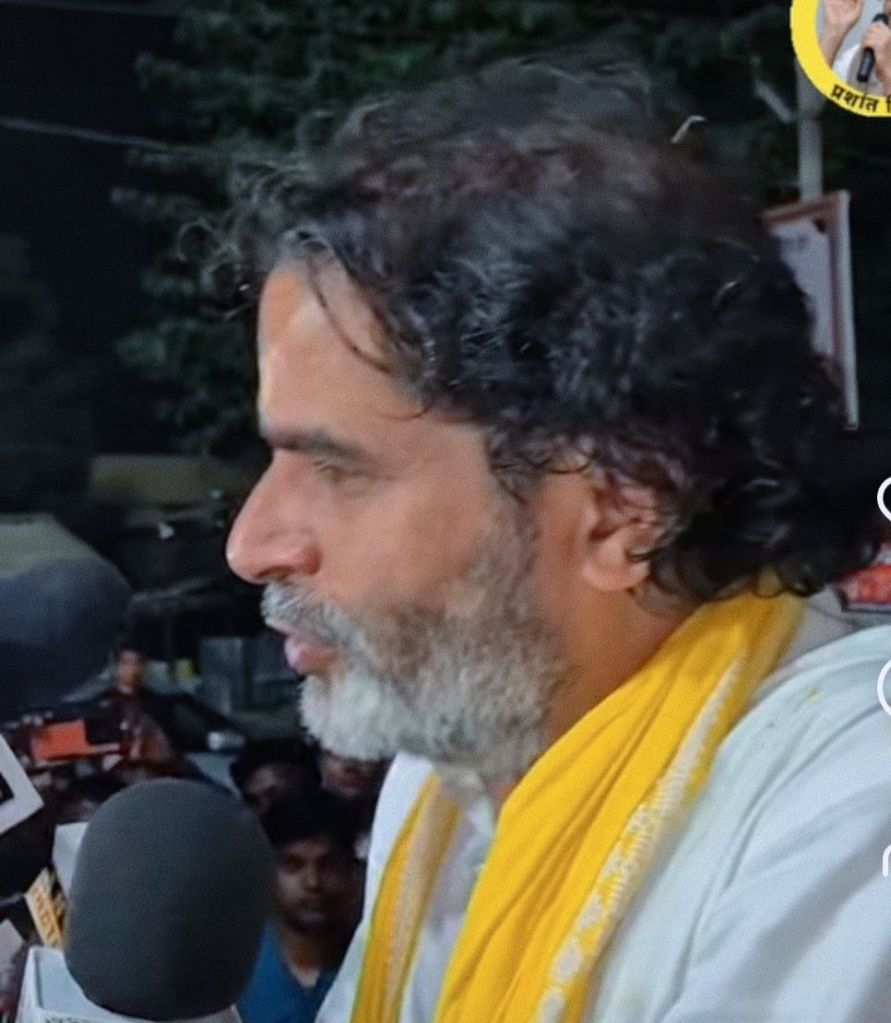
Bihar’s electorate is not just statistical—it is sentimental. Loyalty here runs through bloodlines and belief systems. Kishor’s caste-neutral, youth-oriented pitch finds resonance among migrant workers and first-time voters yearning for change. But for older generations, his language of data and reform feels impersonal, detached from lived realities. His target for 2025 is modest but meaningful—to secure a credible foothold, win a slice of the mandate, and inject an idea of hope into Bihar’s imagination. For Kishor, politics is not about capturing power overnight but about building it brick by brick.

Travel a thousand kilometers south and the other PK—Pawan Kalyan—stages a completely different performance. The “Power Star” of Telugu cinema brings to politics what few others can—mass hysteria, moral conviction, and cinematic charisma. As founder of the Jana Sena Party (JSP), Pawan has recast Andhra Pradesh’s political script. His speeches blend emotion with rebellion, invoking Andhra’s pride, youth’s frustration, and a collective yearning for dignity after bifurcation. Where Kishor seeks transformation through technocracy, Pawan seeks redemption through revolution. His campaign is less about spreadsheets and more about soul.
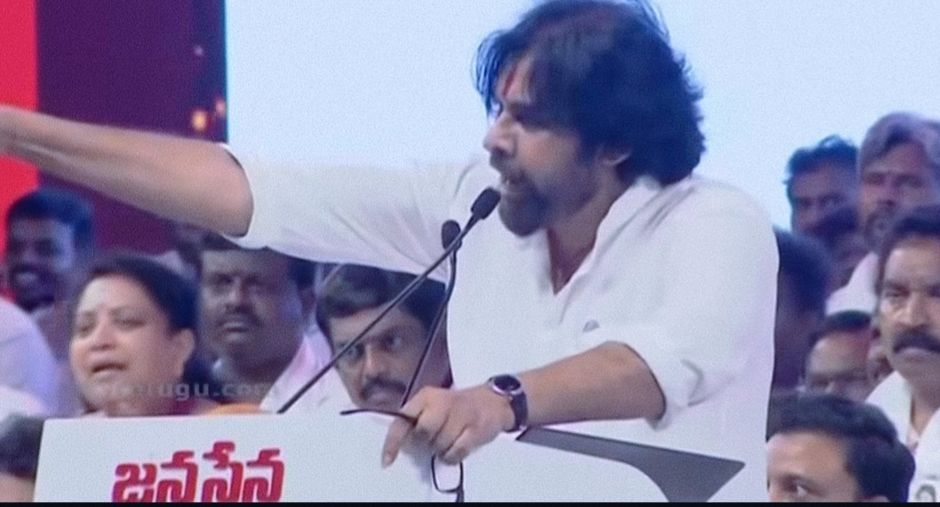
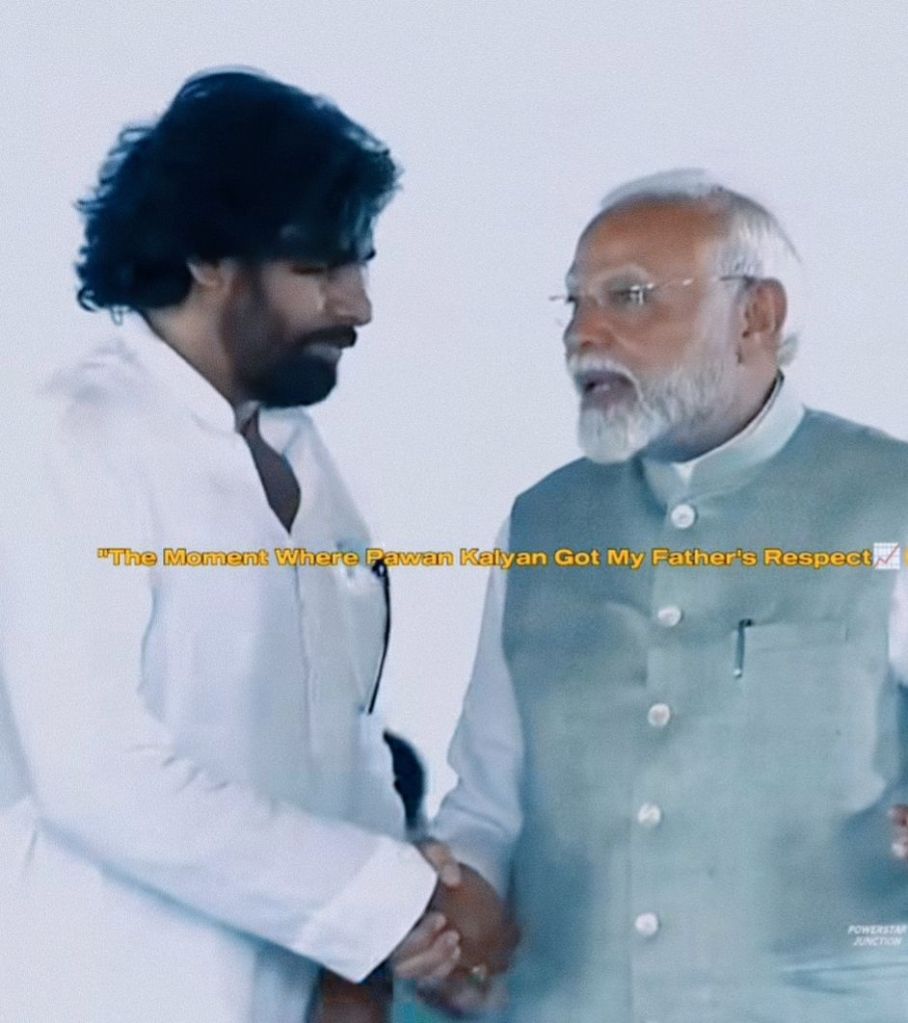
Unlike Kishor, Pawan has embraced alliances to amplify his reach. In the 2024 Andhra Pradesh elections, he aligned with the BJP and Chandrababu Naidu’s Telugu Desam Party (TDP), forming a formidable front against Y.S. Jagan Mohan Reddy’s YSR Congress Party. His strategy is pragmatic—use the NDA’s national muscle and TDP’s regional machinery to give Jana Sena a serious political footing. His emotional connect with youth has turned him into a cultural phenomenon. Yet, the challenge remains—can stardom convert into votes, and charisma into policy? History reminds him of Chiranjeevi’s short-lived political chapter, but Pawan appears more grounded, seeking influence rather than dominance.

Still, alliances blur boundaries. By partnering with the BJP and TDP, Pawan risks diluting his anti-establishment identity. But politics, unlike cinema, rewards compromise over purity. His ability to balance idealism with pragmatism could define his legacy. For him, the goal is clear—to ensure that the voice of the people echoes in the halls of power, even if he’s not the one sitting at its head. His mix of emotional resonance and strategic realism makes him both unpredictable and indispensable.
Together, Prashant Kishor and Pawan Kalyan embody the two pulsating halves of Indian democracy—logic and passion. Kishor walks barefoot through Bihar’s dusty lanes with a notebook; Pawan rides atop campaign trucks through Andhra’s bustling towns. One is scripting a manual on governance; the other is directing a saga of resurgence. Their methods may diverge, but their missions converge: to awaken political consciousness .
Ultimately, Pawan Kalyan seeks to win hearts; Prashant Kishor seeks to win minds. One aims to capture emotion; the other, evolution. And somewhere between Bihar’s fields and Andhra’s film-fueled fervor lies the future of Indian politics—where data and drama, intellect and instinct, reform and rhetoric collide to redefine what leadership means in the world’s largest democracy. The two PKs may walk different roads, but both lead toward the same destination: a new, more self-aware India.
Visit arjasrikanth.in for more insights
 SOCIAL PERSPECTIVES