
The city of smog tries to wash away its sins with science instead of sincerity.
In the choking smog of Delhi, where the skyline fades behind a gray veil of particulate matter, the government’s latest plan sounds almost poetic — to make it rain. Artificially. Cloud seeding, a process that disperses chemicals like silver iodide into clouds to induce rainfall, is being touted as Delhi’s dramatic counterattack against its annual air apocalypse. But beneath this cinematic gesture lies an uncomfortable truth — the city is trying to wash away pollution from the skies while the real decay festers on the ground. The air in India’s capital regularly breaches the “severe” mark on the AQI scale, forcing school closures, flight cancellations, and construction bans. Amid this crisis, artificial rain feels like a technological miracle. In reality, it’s an illusion dressed as innovation.
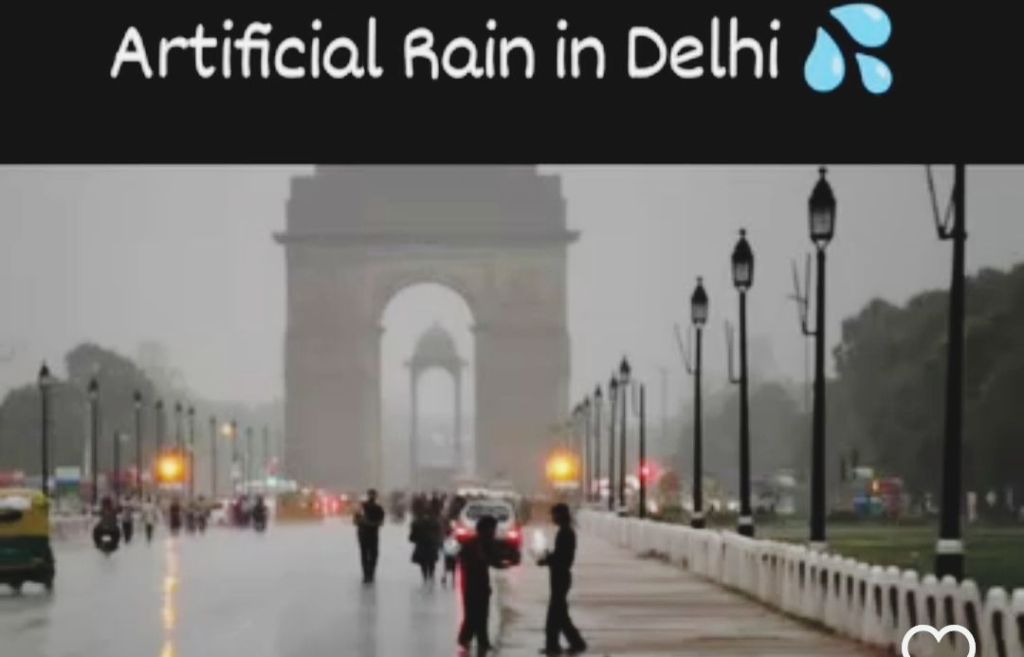
At its best, cloud seeding offers fleeting relief — perhaps a day or two of cleaner air — as rain temporarily scrubs the atmosphere of particulate matter. But the sources of pollution remain untouched. Vehicles still choke the roads, factories resume their hum, and stubble smoke drifts in from Punjab and Haryana to suffocate Delhi once more. It’s like mopping the floor while the tap continues to leak — a performance of action rather than the pursuit of a solution. The plan’s theatrical appeal may win headlines, but its scientific grounding remains uncertain. It requires ideal meteorological conditions — moisture, temperature, and wind alignment — none of which Delhi can guarantee. Even when successful, the cleansing is short-lived, while the public bill may run into several crores. It’s a costly rain of hope that evaporates faster than it falls.

What’s even more ironic is that Delhi is trying to manufacture rain even as it wastes the real one. The capital’s water crisis is inseparable from its pollution crisis. Despite recurring monsoons, rainwater harvesting remains pitifully low; most rainfall washes away as runoff, mixing with sewage and chemical waste before vanishing into the Yamuna’s filth. Groundwater levels plummet year after year, while lakes and ponds shrink into memory. Sewage treatment plants lie underutilized. In a city that squanders natural rain, spending crores to create artificial rain is not just ironic — it’s absurd. Delhi doesn’t lack water from the sky; it lacks the will to manage what it already has. The environmental tragedy lies not in scarcity, but in governance that chooses spectacle over substance.
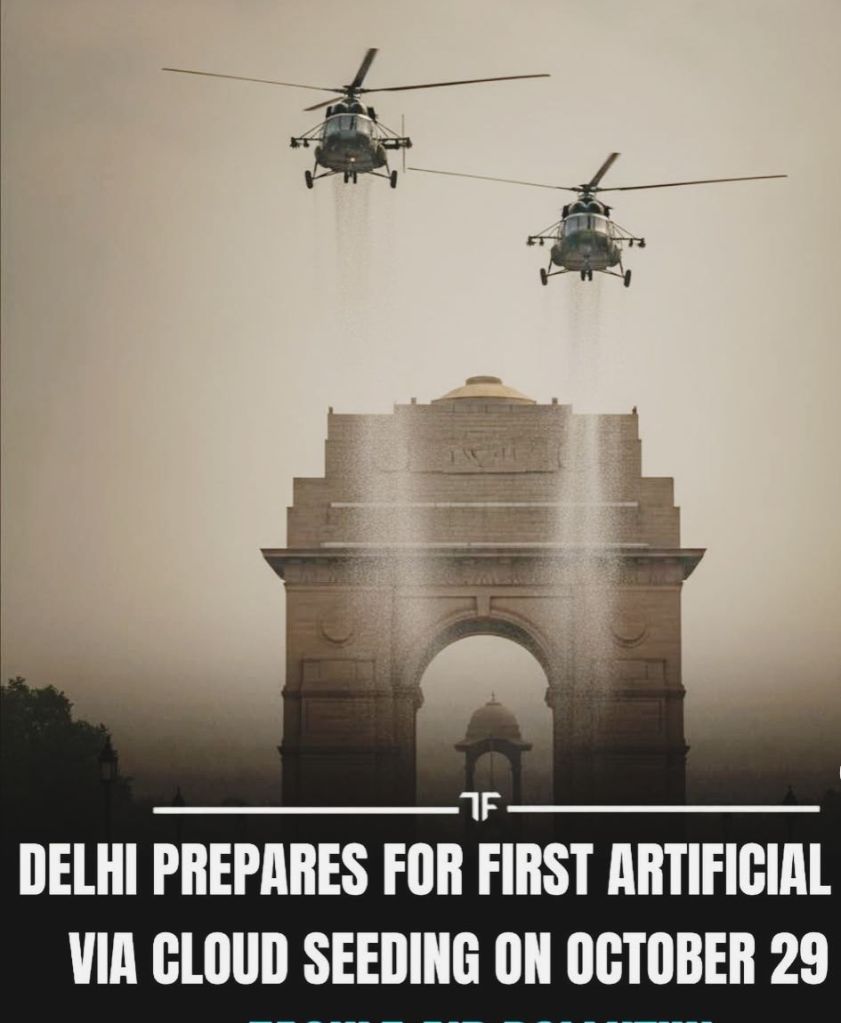
Other world cities have faced their own smog-laden nightmares and emerged through systemic reform, not atmospheric theatrics. London, once notorious for its “Great Smog” of 1952 that killed thousands, reinvented itself through stringent environmental policies — Low Emission Zones, congestion pricing, and clean transport incentives. Beijing, once suffocating under coal fumes, reengineered its industrial ecosystem by shifting to cleaner fuels, relocating factories, and enforcing strict air-quality targets. These examples reveal a truth Delhi refuses to confront: no city ever cleaned its air by manipulating the weather. True change comes from rethinking mobility, energy, and governance — not from silver iodide scattered in the clouds.
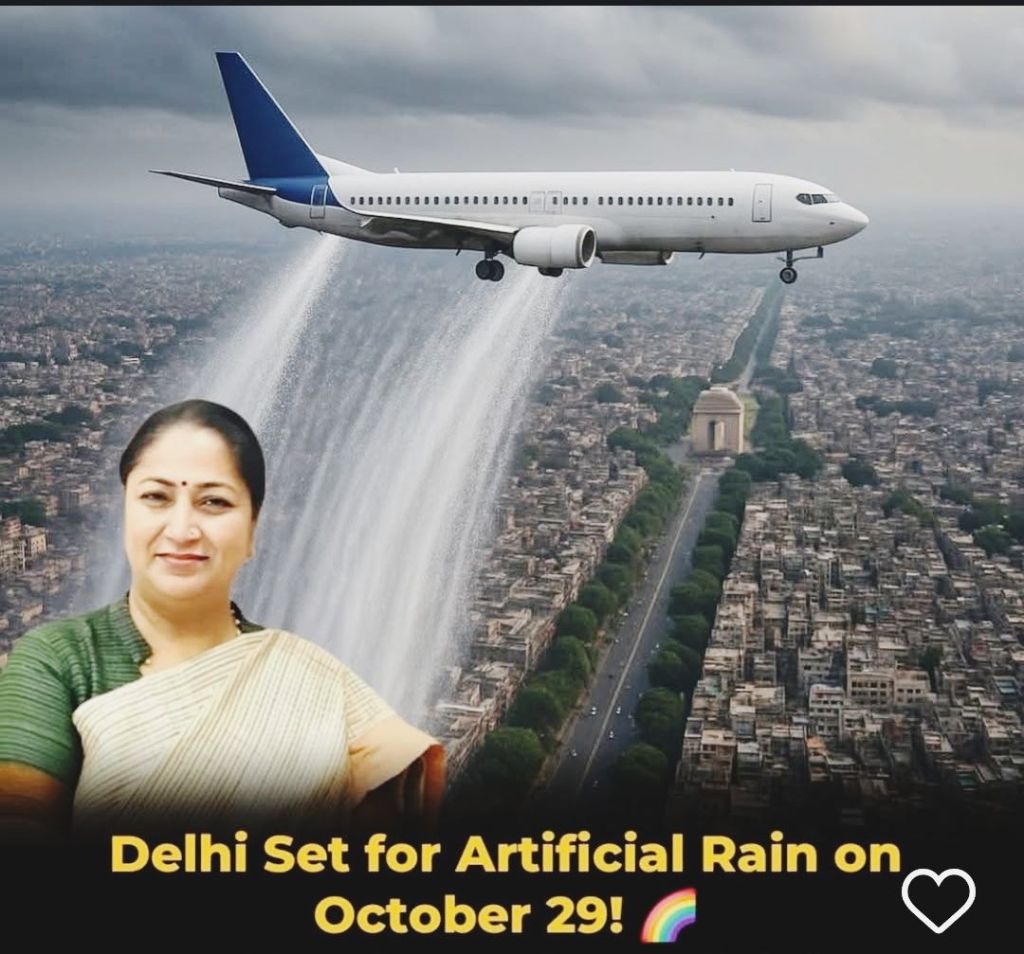
For Delhi, the road to redemption must begin on the ground. The city must embrace a massive shift toward electric mobility, expand its metro and bus networks, and strictly enforce vehicle emission norms. Construction dust must be curbed through on-site regulation and green barriers. Industrial zoning requires modernization, with polluting units relocated or upgraded. Equally vital is adopting the “sponge city” model — integrating rainwater absorption and reuse through green roofs, permeable pavements, and restored wetlands. Cities like Singapore and Berlin have shown how sustainable urban design can simultaneously manage water, reduce heat, and clean the air. Singapore’s “Active, Beautiful, Clean Waters” program turned water management into an art of coexistence — something Delhi desperately needs to emulate.
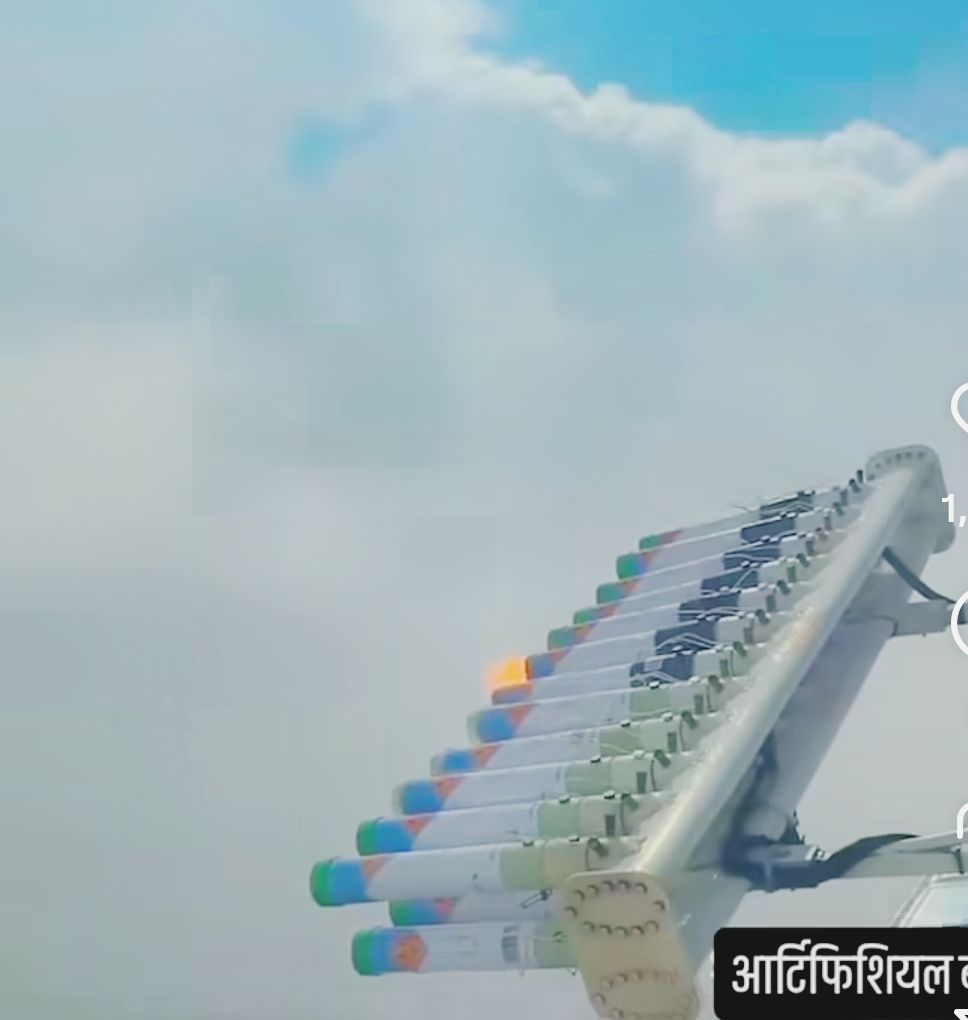
Ultimately, the capital’s fight for clean air will not be won by seeding clouds but by seeding accountability. Every citizen, every official, and every policymaker must recognize that environmental collapse is not a natural phenomenon — it is a man-made failure of governance and vision. Artificial rain may briefly wash Delhi’s skies, but it cannot cleanse its policies. Real progress demands the courage to reform, not the desire to perform. Until Delhi learns this, each drop of artificial rain will fall like a drop of irony — a reminder that the city is drowning not in smog or water, but in denial.
Visit arjasrikanth.in for more insights
 SOCIAL PERSPECTIVES