
India Must Marry Devotion with Discipline Before the Next Stampede Claims More Lives
Every year, millions of devotees throng temples, mosques, churches, and shrines across India—driven by faith, emotion, and collective devotion. But too often, these sacred spaces become sites of tragedy. The recent Kasibugga stampede at the Venkateswara Swamy Temple in Andhra Pradesh once again exposed the deadly gaps in crowd management at religious places—gaps that are not random, but systemic and recurring.

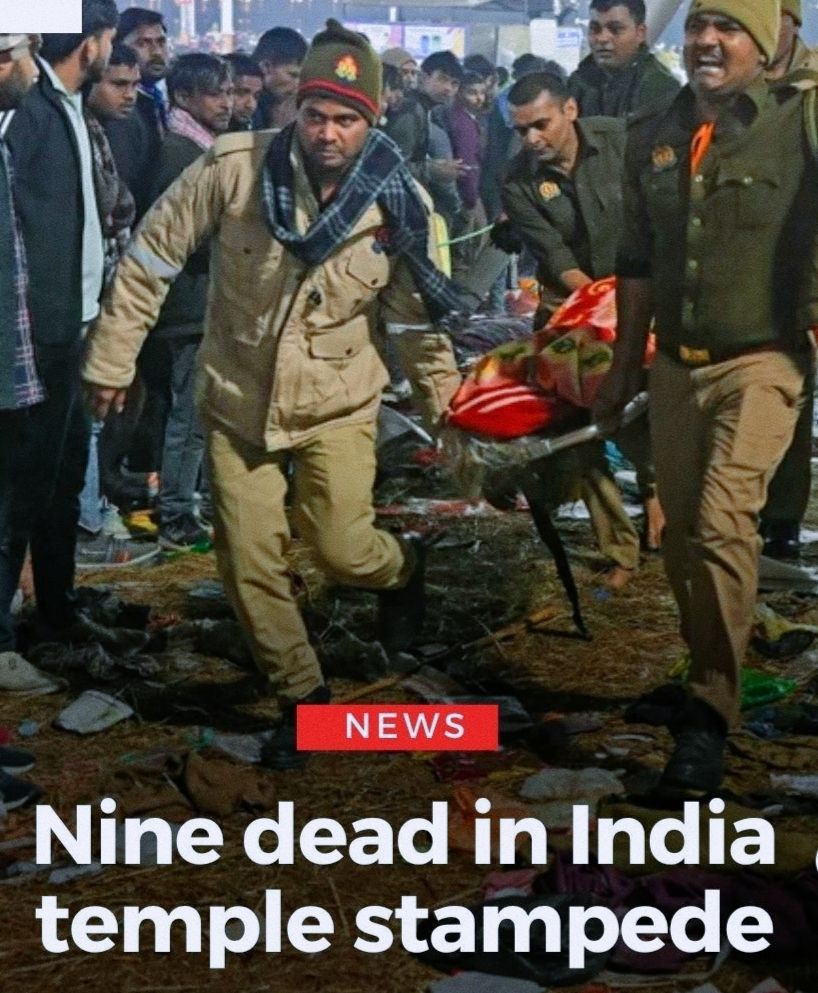
The tragedy, which claimed nine lives—including eight women and a young boy—was a direct consequence of poor planning, fragile infrastructure, and the absence of any professional crowd control. The temple, designed to hold around 2,000 devotees, was overwhelmed by a surge of nearly 25,000 pilgrims on the auspicious Ekadasi day. A single narrow gate was used for both entry and exit; a weak steel grill collapsed under pressure; and chaos spread as devotees tried to enter even as others exited. Eyewitnesses recounted scenes of panic and helplessness. “We came to seek blessings,” one survivor said, “but we were struggling to breathe.”
Such incidents are not isolated—they are a pattern of preventable failures repeated across India’s religious landscape. The first culprit is complacency: an assumption that because nothing went wrong last year, nothing will go wrong now. Event organizers and local authorities often skip fresh risk assessments, crowd density calculations, or safety audits. What should be treated as high-risk gatherings are managed like routine rituals.
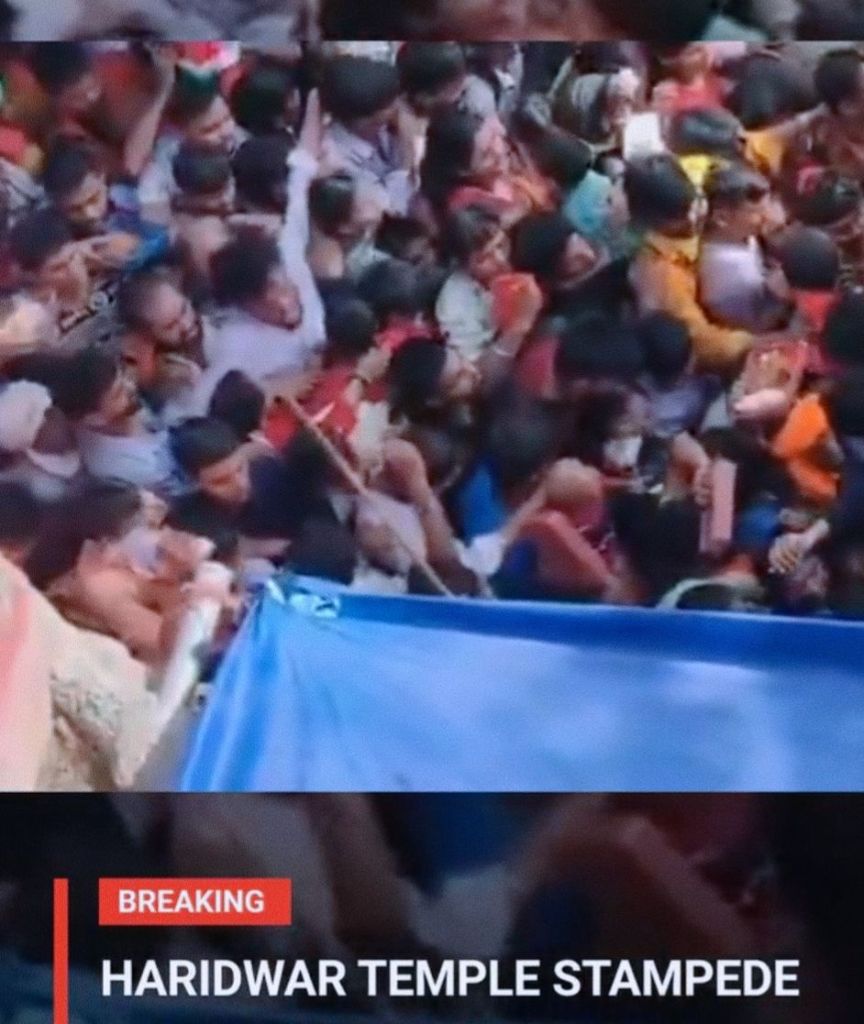
The second failure lies in the absence of accountability. Crowd control responsibilities are typically fragmented among temple trusts, police, revenue departments, and district officials. When tragedy strikes, each blames the other, and no single agency is held responsible.
Third is the near-total absence of crowd science. Permissions are based on how many people can “fit” inside a venue, ignoring the complex, dynamic behavior of moving crowds. Stampedes usually occur at choke points—staircases, gates, or bends—where inflow meets outflow, yet these areas are rarely identified or monitored.
Weak infrastructure compounds the risk. Narrow approach roads, broken barricades, missing signage, and encroachments by shops or vendors turn sacred precincts into death traps. In Kasibugga, rumors about an electric wire and fire spread unchecked because there was no functional public address system. In the vacuum of communication, fear became the loudest voice.
Emergency response systems, too, remain dismally inadequate. Ambulances are often stationed far from the core area and can’t reach victims through clogged lanes. Few temples have first-aid posts or triage zones for immediate care. By the time help arrives, precious lives are already lost.
Globally, nations have turned crowd management into a science. The Hajj in Saudi Arabia, which once witnessed frequent crushes, is now managed through real-time density tracking, RFID tags for pilgrims, and AI-based monitoring. The Jamaraat Bridge was redesigned with multi-level pathways and one-way crowd flow, reducing fatalities dramatically. The Vatican controls gatherings through pre-ticketed access, structured queues, and trained stewards who guide visitors calmly. Even large-scale concerts and sporting events in Europe follow rigorous crowd flow models, pre-event safety checks, and dynamic entry controls.
These examples show that faith and science can coexist—not as adversaries, but as partners in preservation. Managing a crowd is not about controlling belief; it’s about protecting believers.

India, however, remains dangerously behind. Despite hosting the world’s largest religious congregations—from Kumbh Melas to Sabarimala pilgrimages—it lacks a national framework for crowd management. There are no uniform standards for pathway widths, density limits, or safety audits. Powerful temple trusts often resist external oversight under the guise of religious autonomy, while local administrations treat these events as seasonal headaches instead of high-priority safety operations. The result: predictable chaos, year after year.
The time has come for India to institutionalize safety as an integral part of devotion. A National Framework for Safe Religious Gatherings is urgently needed—one that makes crowd management not optional, but mandatory. Each major event should have a pre-approved Crowd Management Plan detailing entry and exit routes, safe carrying capacities, emergency evacuation points, and communication protocols. Independent safety audits must be conducted before permissions are granted. Unified command centers, led by a single incident commander with full authority over police, temple, and medical personnel, should be mandatory for all large events.

Technology must play a central role. AI-powered CCTV systems can monitor crowd density in real time and trigger alerts when thresholds are breached. Drones can map movement patterns, while mobile alerts and public address systems can dispel rumors before they spark panic. Most importantly, India needs a trained cadre of crowd managers—professionals equipped in crowd psychology, communication, and first response—distinct from the police whose primary focus is law enforcement, not mass movement safety.
Accountability must also be non-negotiable. Temple trustees, district collectors, and event managers should face legal consequences for negligence leading to deaths. Lives lost in the name of devotion deserve justice—not platitudes.
The Kasibugga tragedy is not an act of fate—it is an act of failure. The victims were not carried away by divine will but by human negligence. Every such stampede leaves behind grieving families, unanswered questions, and a trail of bureaucratic apathy. Faith deserves reverence, but it also deserves responsibility.

If India can send rockets to Mars with mathematical precision, it can certainly manage its devotees with human care. It’s time to make every pilgrimage not just a journey of faith, but a triumph of foresight. Only then will our sacred spaces truly become sanctuaries—where faith uplifts life, not extinguishes it.
visit arjasrikanth.in for more insights
 SOCIAL PERSPECTIVES