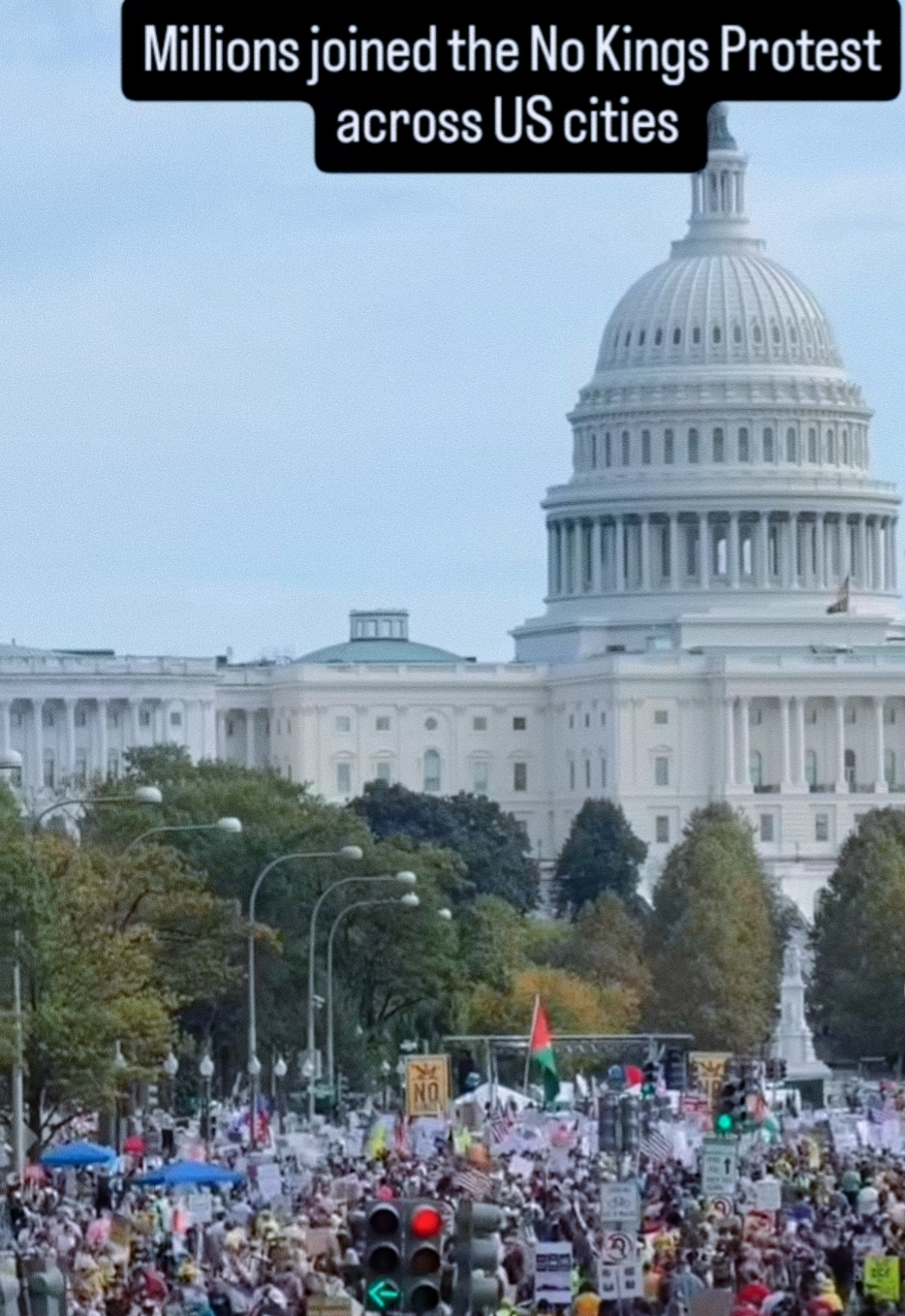
From silent footsteps to a symphony of defiance, 2025 became the year millions of Americans rose—not in anger, but in allegiance—to the idea that power belongs not to rulers, but to the ruled.
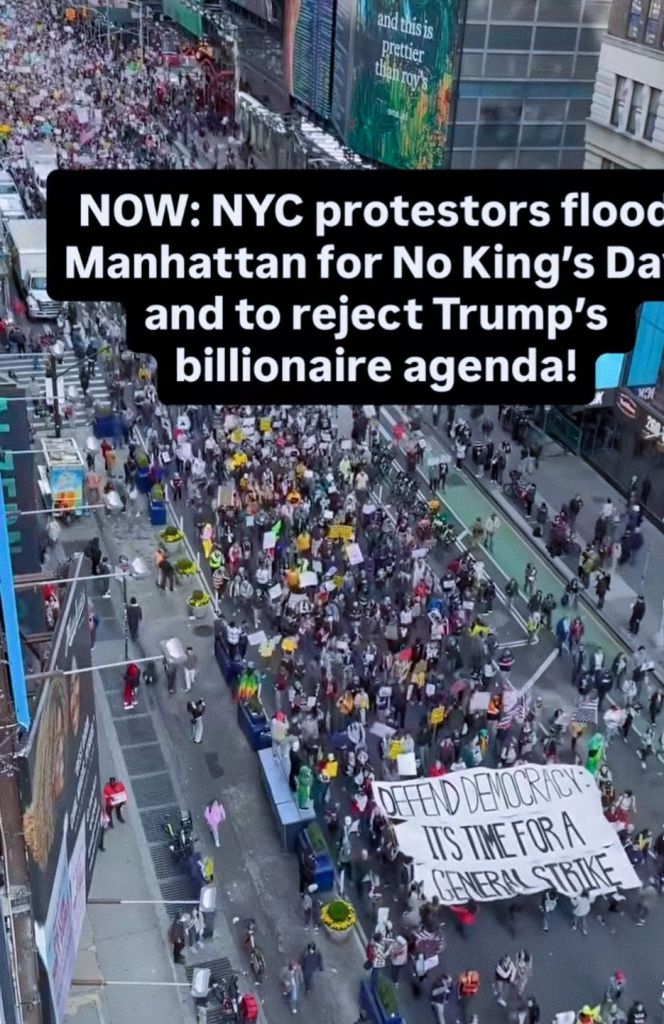
It began not with fanfare, but with footsteps—quiet at first, scattered across parks, campuses, and courthouse lawns. Then, as dawn broke over Washington, New York, Los Angeles, and thousands of towns in between, those footsteps merged into a single, thunderous heartbeat. The message was unmistakable: “No Kings in America.” What started as civic anxiety erupted into a full-blown movement—millions of Americans flooding the streets to reclaim what they felt was slipping away: the essence of their democracy.

This uprising was not driven by partisanship, but by principle. Citizens from every background—teachers, veterans, scientists, nurses, students—united under one conviction: no individual, however powerful, stands above the law. The protests, swelling to over seven million participants across 2,700 rallies, were the largest in modern U.S. history. Streets turned into rivers of yellow, the movement’s colour of unity and nonviolence, as protesters danced, sang, and waved flags that shimmered in defiance of fear.
Yet beneath the creativity and colour lay deep urgency. Federal workers, many furloughed or targeted by administrative purges, rallied to defend the integrity of public institutions. Immigrant families protested sweeping deportations and raids that tore communities apart. Civil rights groups spoke out against policies that sought to roll back protections for women and minorities. Placards reading “Hands Off Our Democracy” and “We the People Means Everyone” captured the inclusive spirit of a nation rediscovering its collective voice.
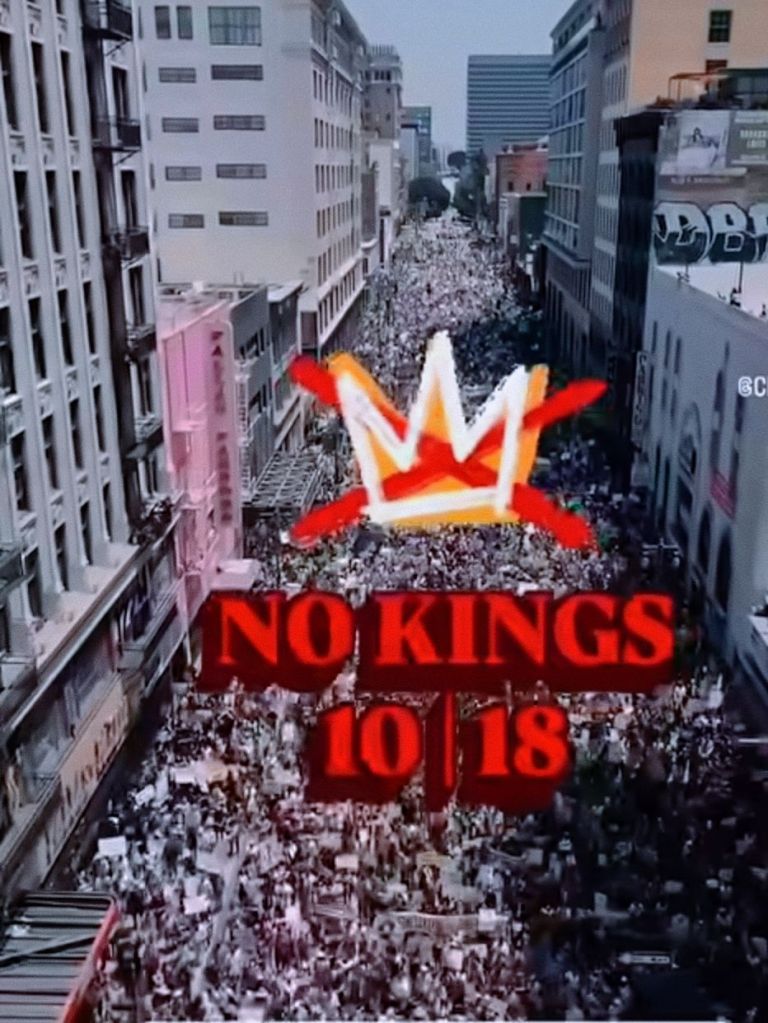
Observers likened it to a modern Boston Tea Party—only this time, the rebellion wasn’t against a foreign monarch, but against the creeping coronation of executive power. The people were not merely resisting policies; they were reasserting ownership of their republic. In many small towns, citizens donned Revolutionary War costumes, evoking the founders’ spirit not as nostalgia but as warning: democracy, once surrendered, rarely returns intact.
The scale of civic energy surprised even seasoned organizers. The Indivisible network—born from earlier waves of democratic activism—channeled outrage into disciplined mobilization. Volunteers trained crowds in peaceful protest, de-escalation, and voter registration. Streets became classrooms of citizenship, where grandmothers linked arms with college students, veterans with teachers, immigrants with lifelong locals. What bound them together was not ideology but identity—the identity of a free people refusing to kneel.

The impact rippled far beyond the rallies. State governments began openly challenging federal directives viewed as unconstitutional. Universities convened emergency forums on the erosion of democratic norms. Media houses debated the ethics of neutrality in times of institutional peril. Corporate leaders, often cautious in politics, issued statements reaffirming commitments to diversity, transparency, and free expression. America’s conscience was stirring—not as a whisper, but as a roar.
Even as authorities dismissed the protests as “chaotic theatrics,” their tone betrayed unease. The sight of millions moving in disciplined unity unsettled those accustomed to division. “It’s hard to call something anarchy,” one commentator noted, “when it looks like a festival of democracy.” Indeed, families brought children to witness history first-hand, transforming anxiety into agency. The movement’s humour and creativity—people dressed as unicorns, waving banners shaped like constitutions—became its Armor against despair.

Though largely peaceful, tensions occasionally flared. A handful of counter-protesters appeared, some armed, some angry. But incidents remained rare, thanks to meticulous organization and an unwavering code of nonviolence. Protest marshals formed human chains between opposing groups, chanting, “We protect even those who disagree.” That moral discipline turned what could have been chaos into choreography—an act of civic grace under pressure.
By weekend’s end, “No Kings” had transcended protest. It became philosophy—a reawakening of the American creed that sovereignty flows upward, not downward. Plans for a follow-up mobilization, dubbed “No Kings 2,” were already underway. The message was clear: this was not a moment; it was a movement.

Perhaps the most profound transformation was psychological. For years, cynicism had dulled civic engagement; now, conviction had reignited it. People who once scrolled past headlines now joined voter drives. Neighborhoods that rarely discussed politics now held weekly forums. “We realized democracy isn’t a noun,” said one organizer. “It’s a verb—you have to do it.”

The implications stretched far beyond 2025. Political strategists began calling it a democratic reset. Analysts noted parallels with historical turning points—the civil rights marches, the anti-war movements, even the suffragist rallies of a century ago. Each had one thing in common: ordinary people standing between power and its abuse. The 2025 uprising joined that lineage, proving once again that democracy’s strongest defenders are not those in office, but those in the streets.
By the time dusk settled on the final day of marches, something fundamental had shifted. The crowd’s chant—“No Kings in America!”—was less a slogan than a sacred vow. It reminded the world that in this republic, power is borrowed, not owned; that leadership is service, not sovereignty.
History will remember 2025 as the year America looked in the mirror and saw both its fragility and its strength. Faced with creeping authoritarianism, it chose defiance over despair, participation over passivity. For all its divisions and doubts, the nation found common ground in a single, enduring truth: democracy, when defended by its people, has no crown—and needs none.
Visit arjasrijanth.in for more insights
 SOCIAL PERSPECTIVES