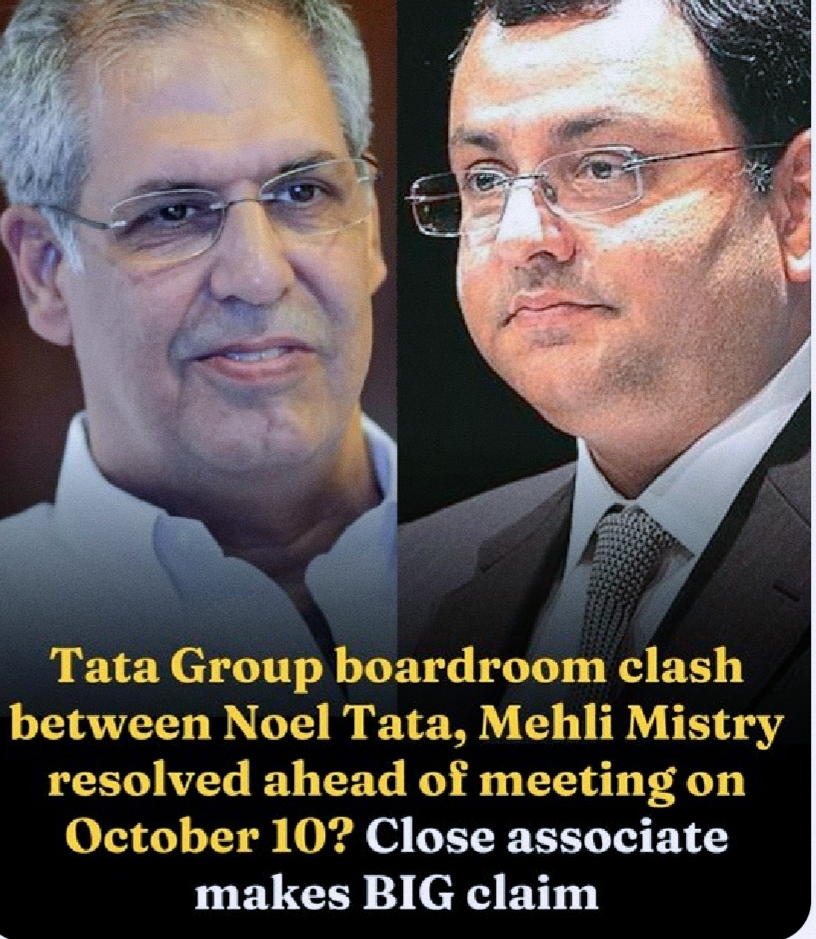
A year after Ratan Tata’s passing, the battle within the Tata Trusts exposes the fragile heart of an ethical empire, where legacy, power, and public faith hang in the balance.
A year after the passing of Ratan Tata, the Tata Group — India’s most admired industrial house and a symbol of ethical capitalism — finds itself embroiled in a governance crisis that few could have imagined. What was once the quiet hum of internal disagreement within the Tata Trusts has erupted into a public spectacle, shaking the foundations of a 150-year-old empire built on integrity, stewardship, and trust. The Trusts, which control 66% of Tata Sons — the parent of 26 listed companies with a combined market capitalization exceeding ₹9 lakh crore — have split into two warring camps, forcing the government itself to step in.
Union Home Minister and Finance Minister recently met Tata leaders — Noel Tata, N. Chandrasekaran, Venu Srinivasan, and Darius Khambata — in an extraordinary effort to restore calm. The message was unmistakable: the Tata name is not just a corporate brand; it is a pillar of India’s economic and moral architecture. When that pillar begins to crack, the tremors are felt across Dalal Street and beyond.
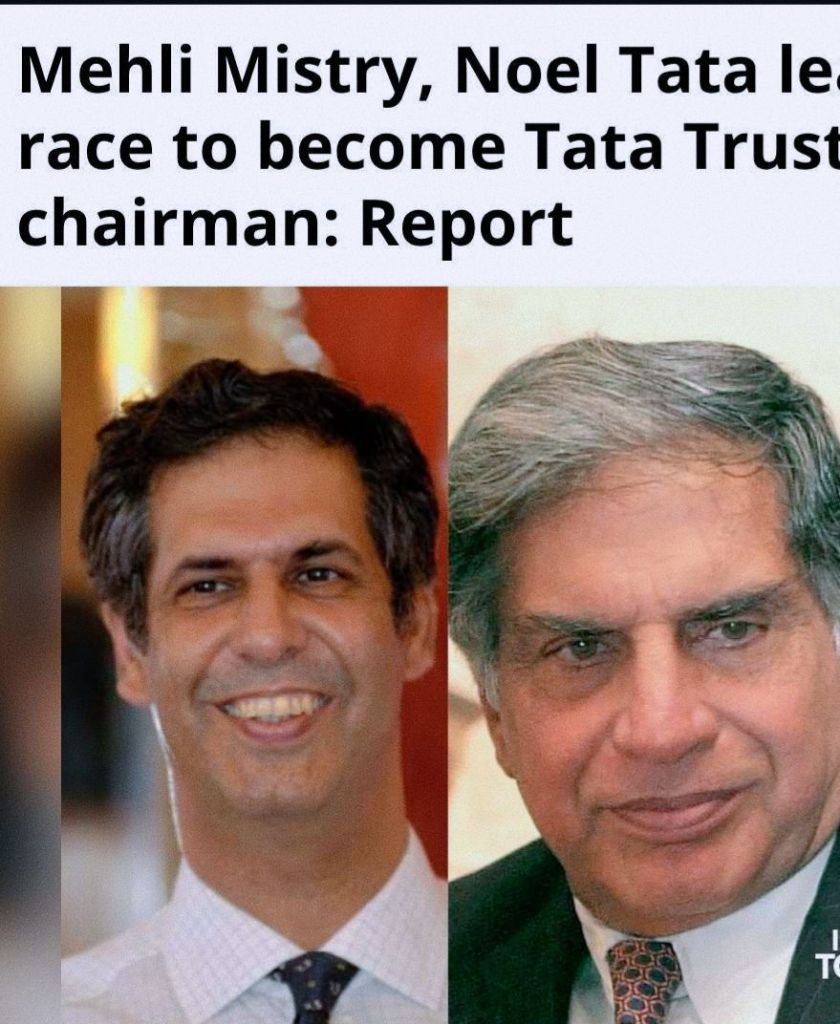
At the heart of the crisis lies a bitter divide among the trustees of Tata Trusts. On one side is Noel Tata, the newly appointed chairman, backed by Venu Srinivasan and a loyal cohort. On the other is a faction led by Mehli Mistry, supported by J. Javeri, Darius Khambata, and R. Venkatraman. The spark came from a contested decision: the reappointment of Vijay Singh, a senior trustee and Tata Sons board member. When the motion to retain him was defeated amid allegations of procedural manipulation, unity crumbled into open hostility.

The dissenting trustees accuse Noel Tata of consolidating control, side-lining dissenting voices, and ignoring the spirit of collective decision-making enshrined in the Trusts’ charter. The Noel camp, in turn, insists that the dissenters are driven by personal ambition and are destabilizing an institution historically defined by consensus and humility. The philosophical rift is stark: continuity versus change, stewardship versus control.
This discord has forced India’s corporate conscience into an uncomfortable paradox. For decades, business leaders argued that the state should stay out of corporate affairs. Yet, faced with a crisis of their own making, the Tata camp quietly sought intervention from the highest echelons of government. The irony is palpable: the institution that once symbolized self-reliant governance now looks north to Delhi for arbitration.
The government’s concern is not misplaced. Tata’s vast presence across IT, automobiles, steel, aviation, energy, finance, and consumer goods makes it systemically important. A prolonged governance battle could dent investor confidence, unsettle markets, and tarnish the image of corporate India. Reports suggest the ministers’ message blended reassurance with warning: settle this internally, preserve the Tata legacy, and protect a national treasure.
Ratan Tata’s absence looms large. For decades, his moral authority and personal gravitas ensured cohesion among strong-willed trustees and ambitious executives. His word carried legitimacy. Ideological differences never spiralled into warfare. Now, unresolved questions about succession and control have resurfaced.
The parallels with the 2016 Cyrus Mistry episode are striking. Then, a leadership clash exposed governance fault lines. Mistry’s ouster led to years of litigation and bruised reputations. The Supreme Court upheld Tata Sons’ right to remove him, yet the episode exposed tension between promoter control and professional management. Today’s turmoil suggests those lessons were only partially absorbed.
Two structural issues complicate matters further. First, the listing dilemma: the Reserve Bank of India, treating Tata Sons as a “core investment company,” mandated compliance with public listing norms or stricter governance standards. Tata Sons has remained private, citing philanthropic ownership and strategic flexibility. While claiming compliance, RBI’s silence since the September 30 deadline has deepened uncertainty.
Second is the Shapoorji Pallonji Group’s 18% stake in Tata Sons. Burdened by debt, SP wants to monetize its holding. Tata Sons resists a market-driven exit, aiming to preserve private status. The deadlock over valuation persists, and with the Trusts in disarray, negotiation seems improbable.
Analysts caution that while listed companies — TCS, Tata Motors, Tata Steel — remain operationally sound, the psychological damage is serious. Investors value stability as much as performance. A divided Trust undermines confidence in long-term strategy, particularly as Tata pursues bold ventures in semiconductors, AI, and aviation.
Beyond business, the crisis affects Tata’s philanthropic mission. Trusts fund institutions — from Tata Institute of Social Sciences to Tata Memorial Hospital — shaping India’s development. Governance paralysis could slow grants, disrupt social impact programs, and tarnish the moral legacy.
The Tata episode mirrors a recurring theme in Indian business dynasties: the tension between legacy and modernity. Ambani’s 2005 split and Bajaj’s 2008 division exemplify how succession disputes test emotional and institutional legacies. Tata Trusts, though not a traditional family holding, face the same challenge: distributing power while redefining governance for a new era. Independence of oversight, professional trustee appointments, transparent communication, and codified succession plans are no longer optional — they are essential.

The government’s subtle involvement underscores the symbolic weight of the Tata name. Tatas are architects of India’s economic identity. From steel to software, their enterprises shaped modern India. To see this institution fraying from within is more than a corporate concern; it is a cultural unease.
As the Trusts prepare for their crucial board meeting, much hangs in the balance: unity, leadership, market confidence, and legacy. Officially, the agenda covers administration, but the subtext is unmistakable: restore cohesion and reaffirm authority.
Ultimately, the Tata crisis is not merely about who holds power; it is about what that power represents. Ratan Tata once said, “If you want to walk fast, walk alone. But if you want to walk far, walk together.” The Trusts must rediscover that wisdom — to walk together, to rebuild trust, and to ensure India’s most trusted name does not become another cautionary tale of fractured legacies.
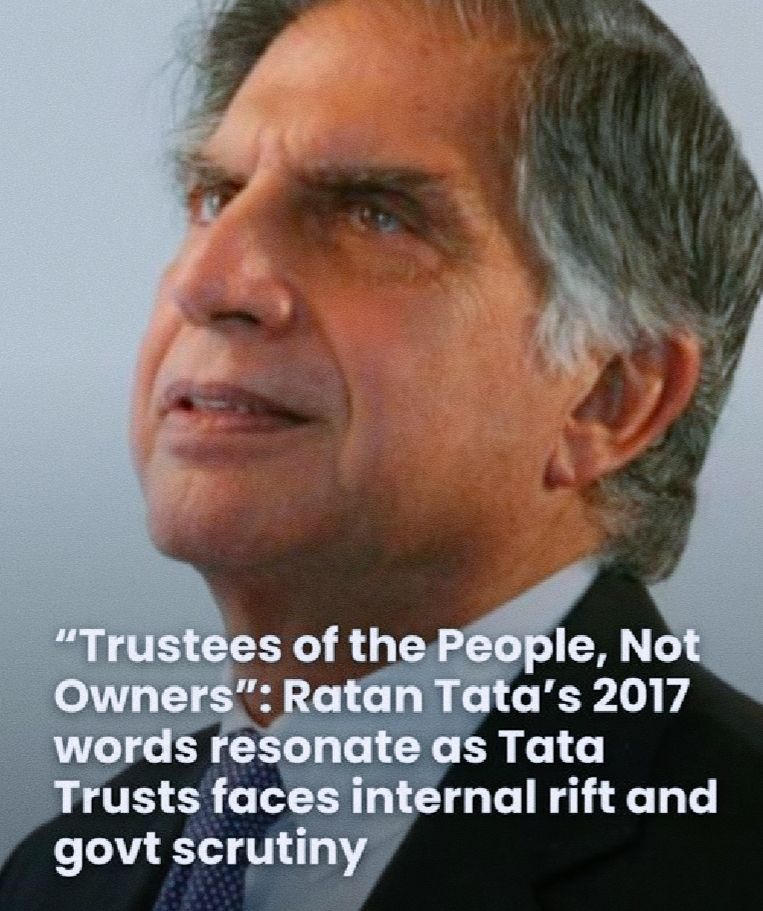
If the Tatas can navigate this storm with grace and fortitude, it will prove that true greatness lies not in avoiding crises, but in facing them — together, with dignity, humility, and vision.
Visit arjasrikanth.in for more insights
 SOCIAL PERSPECTIVES