
ATelecom Rebel Shocked India, Freed Data, and Built a Digital Empire
When Reliance Jio stormed into India’s telecom scene in 2016, it wasn’t merely a market entry — it was a digital earthquake. Out of nowhere, a new player promised the impossible: free calls, free data, free everything. For a country long accustomed to paying exorbitantly for minutes and paltry data packs, it felt revolutionary. But behind the spectacle, industry insiders knew it was something far more calculated — one of the boldest, best-financed market captures in corporate history.

Within weeks of its “Welcome Offer,” Jio had signed up 16 million subscribers, a record-breaking feat in the global telecom world. By year’s end, over 100 million Indians were hooked, while competitors gasped for air. Suddenly, binge-streaming cricket on phones, video-calling distant relatives, and living the high-data life became commonplace — all for zero cost. It wasn’t charity; it was strategy.
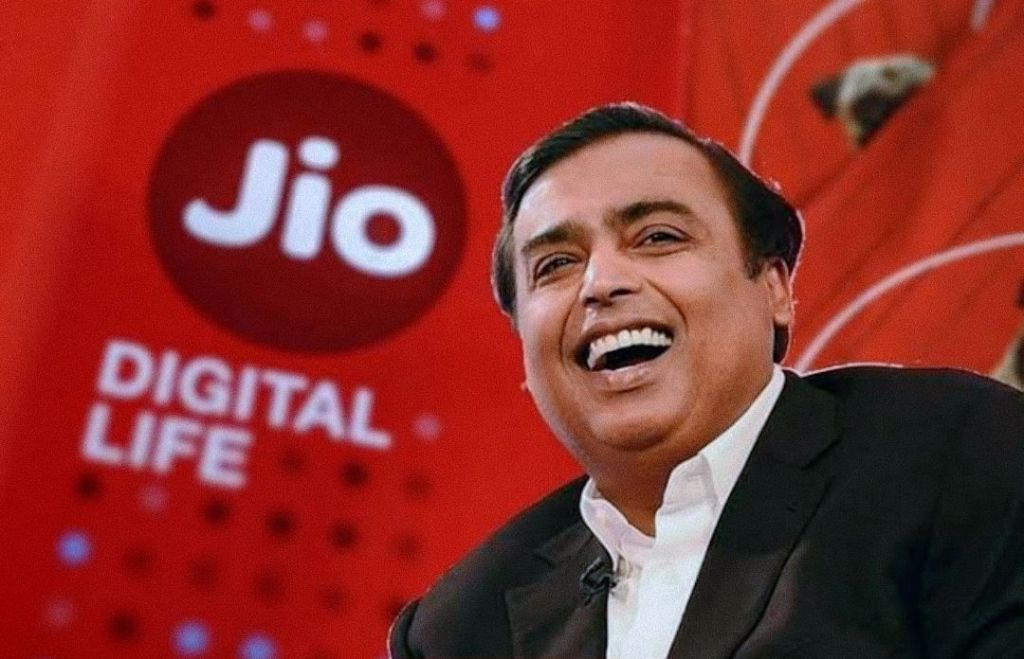
Jio’s entry was a masterclass in phased disruption. The first phase deployed free voice and data for months under promotions like “Happy New Year Offer.” Critics called it unsustainable. Jio called it building addiction. Once users were hooked, ultra-cheap plans followed, undercutting rivals by miles. Overnight, India became the world’s largest consumer of mobile data, and Jio became a household name synonymous with connectivity.
By the consolidation phase, the gloves were off. Armed with Reliance Industries’ deep reserves, Jio could burn cash while rivals bled. Airtel and Vodafone Idea struggled under debt; smaller operators vanished. From a crowded dozen, India’s telecom arena shrank to three — Jio, Airtel, and a faltering Vodafone Idea. The game had been reset.

Critics screamed “predatory pricing.” Bharti Airtel and Vodafone Idea dragged Jio to the Competition Commission of India (CCI) and courts, claiming the generosity masked economic warfare — the first step toward monopoly. Regulators, however, didn’t bite. The CCI ruled Jio wasn’t guilty because it wasn’t dominant when the alleged behaviour occurred. Predatory pricing applies only when a dominant player abuses its position. Jio, the newcomer, was simply a disruptor, employing “penetrative pricing,” a legitimate strategy. It wasn’t cheating. It was legal disruption — capitalism with an Indian accent.

Once dominance was achieved, Jio didn’t stop at telecom. It built a digital empire: smartphones (JioPhone), broadband (JioFiber), streaming platforms (JioTV, JioCinema), fintech (JioPay), and enterprise cloud services. No Indian company had attempted such integration before.
The flood of global money followed. In 2020, even amid a pandemic, Jio Platforms raised over $20 billion from investors like Google, Facebook, and Intel. Beyond validation, this was a signal: the world’s tech giants saw India through Jio’s lens. WhatsApp Pay integrated with Facebook; affordable 4G smartphones came via Google. Reliance transformed Jio from telecom operator to digital monopoly-in-the-making.

Yet with empowerment comes unease. Jio’s ecosystem dominance allows bundling, cross-subsidizing, and locking users into its universe. Regulators now watch closely. The European Union’s antitrust actions against Google offer a warning: dominance across layers of a digital economy can morph into a monopoly of innovation itself.
How does India keep the balance? The solution isn’t punishing Jio for winning, but rewriting rules. Antitrust laws must evolve to recognize potential dominance — deep-pocketed firms shaping markets before they technically become dominant. Early intervention matters.
Infrastructure sharing is another key. Opening telecom towers, fiber networks, and backend systems to fair use can lower barriers and keep competition alive. Regulators must also monitor ecosystem dominance as Jio expands into payments, entertainment, and e-commerce. Cross-subsidization must be scrutinized to prevent stifling competition.

Sustainable competition, not nostalgia for inefficient incumbents, should be the goal. Transparent spectrum auctions, fair interconnection charges, and level playing fields are the tools to keep India’s telecom space dynamic and vibrant.
Reliance Jio’s rise is a paradox wrapped in brilliance — a study of how capitalism, regulation, and innovation collide to empower millions while concentrating immense corporate power. For now, Jio is the hero that delivered cheap data, high-speed internet, and global attention. But in its shadow lies a pressing question: what happens when the disruptor becomes the system itself?
If history teaches anything, it is this: revolutions promising freedom often end up owning the very empire they once sought to overthrow. And in the tale of Jio, India glimpses both the thrill of disruption and the shadow of monopoly in one breath-taking sweep.
Visit arjasrikanth.in for more insights
 SOCIAL PERSPECTIVES