
When Profit Trumps Protection, Children Pay the Price—A Nation’s Regulatory Amnesia Lets Toxic Cough Syrups Flow Freely While Innocent Lives Are Lost
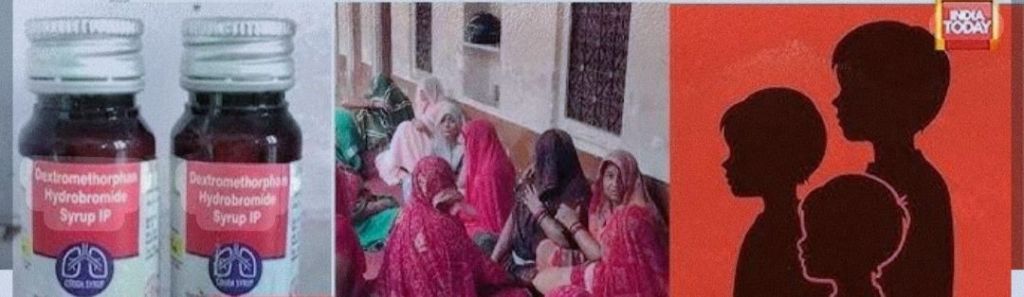
In 2025, the deaths of at least sixteen children in central and western India after consuming contaminated cough syrup tore open an old wound in the nation’s public health conscience. What should have been a simple remedy for a common cough transformed into a silent execution—bottled in bright labels and sold over the counter. Laboratory tests revealed diethylene glycol, a chemical used in brake fluid and antifreeze, toxic enough to kill even in minuscule doses. These children, unlucky in illness alone, became victims of a system that prioritizes profit over life and opacity over accountability.

This tragedy is not an aberration—it is repetition. Decades ago, dozens of children died after consuming cough syrup laced with the same lethal chemical. Commissions and expert committees issued detailed recommendations for drug safety reforms, urging stricter inspections and transparent oversight. Yet, four decades later, the same poison continues to flow freely through the veins of the most vulnerable. “It is the same toxin, the same neglect, the same institutional amnesia,” an expert in drug policy notes.
India’s pharmaceutical regulation remains fractured. The central authorities approve new drugs, but state governments are responsible for enforcing manufacturing standards. This split creates a labyrinth of loopholes, where enforcement varies wildly. Of roughly 10,500 pharmaceutical units in the country, experts estimate only about 20 percent are fully compliant with good manufacturing practices, nearly half operate in violation, and the rest exist in grey zones of lax supervision, paper compliance, and convenient ignorance.

At the root lies cost-cutting disguised as efficiency. Cough syrups require pharmaceutical-grade glycerine—a safe but costly solvent. Many manufacturers substitute cheaper industrial-grade alternatives containing diethylene glycol (DEG) or ethylene glycol (EG) to save a few rupees per litre. The results are catastrophic. Once ingested, these chemicals attack the kidneys, leading to acute renal failure. For adults, the dose is deadly; for children, it is annihilating.
Even after repeated tragedies, regulatory vigilance remains a mirage. Recommendations decades ago called for one drug inspector for every 55 manufacturing units and one for every 200 pharmacies. Today, most states have a fraction of that oversight. Underpaid and overburdened, inspectors are often complicit or coerced into silence. Informal arrangements replace formal accountability, leaving the system dependent on luck rather than enforcement.

The irony is brutal. India, celebrated as the “pharmacy of the world,” exports medicines to over 200 countries, including those with stringent quality standards in North America and Europe. Yet domestic production lines often operate under lower safety protocols. One can manufacture for the world with world-class quality while supplying the domestic market with inferior products, where oversight fades and standards drop.
When disaster strikes, blame rarely travels upward. Authorities often target the prescriber or frontline healthcare workers, deflecting attention from systemic rot. A physician cannot test every medicine for purity and relies on the regulatory framework to ensure safety. Scapegoating the prescriber ignores the broader failure: manufacturers and regulators who failed to protect the public.

Beyond regulatory lapses lies a deeper absurdity: most children do not need cough syrup at all. Paediatric experts long argue that the majority of childhood coughs are viral and self-limiting. Syrups offer no real cure; they merely suppress symptoms, often at the cost of side effects. Yet parents expect medicine, pharmacies comply, and pharmaceutical companies exploit this psychology through aggressive marketing. The cycle of ignorance, profit, and tragedy continues unabated.
Breaking this cycle demands courage, not cosmetics. India must implement a “test-to-release” system for high-risk medicines, especially paediatric syrups. Regulatory staffing must match the scale of the industry, with criminal prosecution for violators, including culpable homicide for proven negligence. Every bottle should be digitally traceable through QR-coded supply chains, allowing consumers to verify authenticity instantly. Doctors must educate parents about unnecessary drug use and the risks of overmedicating children.
These measures are not futuristic dreams; they are global norms. Countries with advanced regulatory frameworks enforce non-negotiable safety standards for high-risk medicines, ensuring no child is exposed to preventable harm. India has the technology, scientists, and manufacturing might to implement similar safeguards. What it lacks is moral urgency—the conviction that a child’s life is worth more than a company’s profit margin.
Until that conviction takes root, “Made in India” remains a paradox: exported pride, domestic peril. For grieving parents, words and inquiries are cold comfort. Their children’s coughs have fallen silent forever, smothered by a syrup that promised relief and delivered death. The sweetest poison, it seems, still flows unchecked through India’s veins, a reminder that innovation without accountability can be lethal.
India’s global reputation as the “pharmacy of the world” can only be sustained if it first ensures the safety of its own children. Until systemic reforms are enacted, every cough syrup bottle carries not just medicine but a potential menace—a lesson in tragedy repeating itself through indifference, greed, and bureaucratic failure. The bitter truth is unavoidable: children continue to pay the price for a system that values profit over life.
Visit arjasrikanth.in for more insights
 SOCIAL PERSPECTIVES