
From Gandhi’s salt to Ambani’s molecules and Adani’s megawatts, the Rann of Kutch is no longer just India’s salt bowl—it’s the battlefield where survival, sustainability, and supremacy collide.
The Rann of Kutch is a place that most Indians will never set foot in, but whose gifts touch almost every kitchen, factory, and highway in the country. For centuries this has been a desert of extremes—a blinding salt plain that floods like an inland sea in the monsoon and hardens into a shimmering crust in summer. Nearly three-fourths of India’s salt still comes from here, a legacy born of the 1819 earthquake that cut the land off from the Arabian Sea. Salt was Kutch’s first great offering to the nation, sustained by generations of Agariyas who wrestled survival out of evaporation and endurance. But deserts, like old magicians, always have a second trick hidden up their sleeve. Today, those white salt flats are being reimagined as the launchpad of India’s green energy revolution.
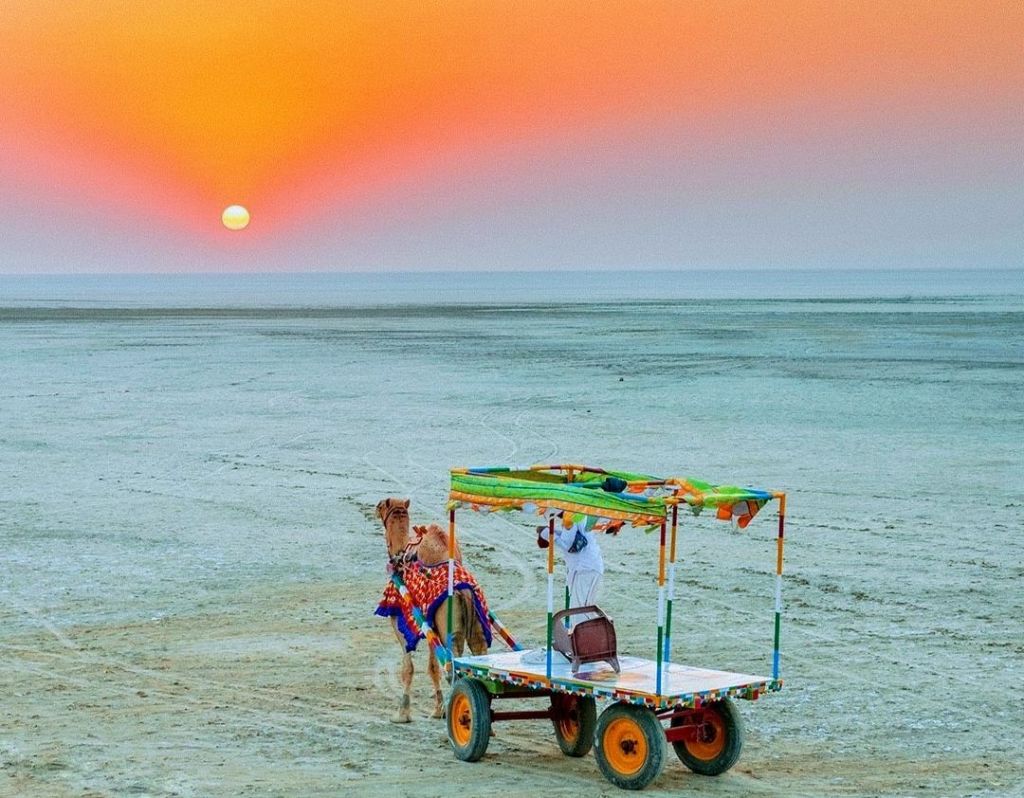
This is no quiet story of incremental development. It is spectacle—salt becoming sun, scarcity mutating into abundance, and India’s two most powerful billionaires, Mukesh Ambani and Gautam Adani, turning Kutch into their grand chessboard. Between them, they have locked claims over nearly a million acres of land—close to a tenth of the district itself. Their projects are so vast that they cannot be measured in megawatts alone; they must be imagined as empires. Ambani has staked out the future of molecules, promising a ₹75,000 crore “new energy ecosystem” by 2032: 20 GW of solar modules, 40 GW of battery storage, and three million tonnes of green hydrogen every year. He is betting on chemistry, not electricity, trying to master the molecules that will power global industry. Adani, by contrast, is building monuments of scale: 30 GW of solar and wind farms at Khavda, stitched together with his own private transmission lines, forming the largest cluster of its kind anywhere on Earth. Ambani is alchemy, Adani is architecture; one dreams of hydrogen exports, the other of flooding India’s grid with electrons.
At first glance they seem to run in parallel, but in reality their battlefields overlap everywhere—factories, incentives, grid corridors, supply chains. Analysts murmur about duopoly: that India’s green future might be carved not by the public will, but by the private strategies of two families. Yet paradoxically, for India, this clash may prove a blessing. If Ambani builds the molecules and Adani lays down the Solar parks, India could leapfrog into renewable dominance at breath-taking speed.
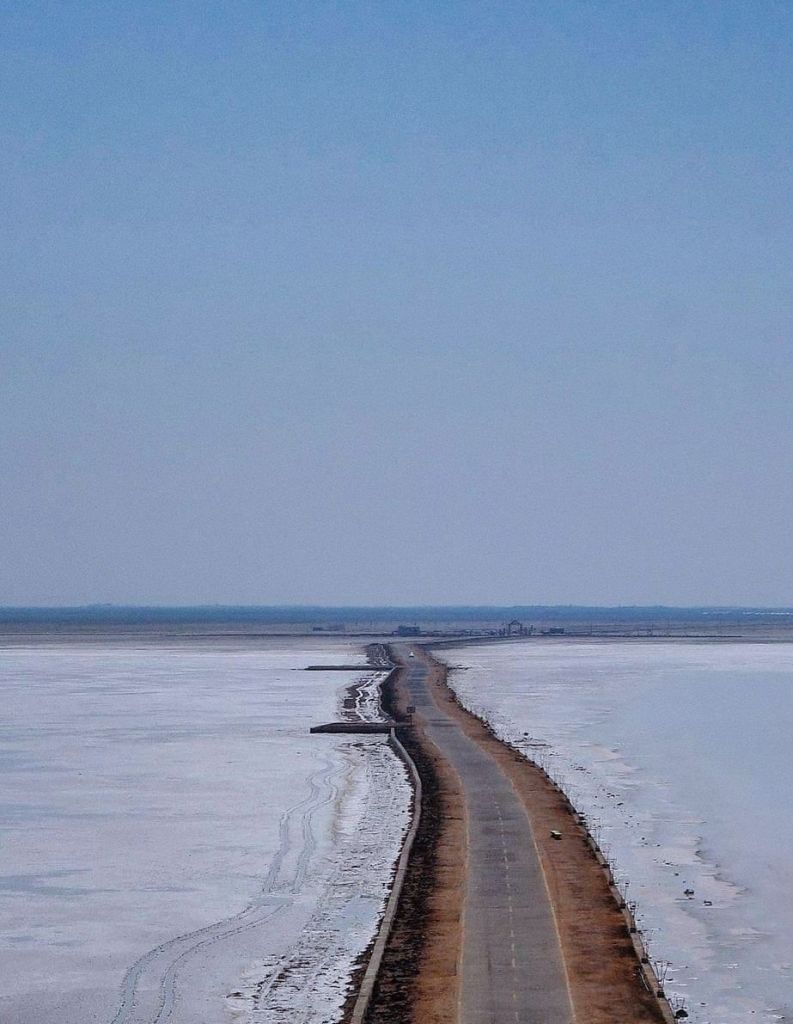
But deserts always demand their toll. Reliance’s hydrogen ambitions are crippled for now by missing pipelines and punishing transport costs. Grid access is capped at just 3 GW until 2030, a drop compared to its targets. Adani carries reputational baggage heavier than any turbine—his identity as India’s coal king, the bruises of the Carmichael mine in Australia, the accusations of greenwashing soot with solar gloss. Global capital, wary of contradictions, watches nervously. Beyond both men, the fundamentals remain harsh: coal still anchors 74% of India’s grid, batteries are cripplingly expensive, hydrogen costs run two to three times higher than fossil fuels, and without adequate evacuation lines, mega-projects risk turning into stranded assets.

The ecological costs cut deeper. Kutch is no empty wasteland—it is one of the last habitats of the Great Indian Bustard, a bird so rare it verges on myth. Transmission lines slice through its skies like guillotines, while the Supreme Court’s order for underground cabling remains half-fulfilled. The Banni grasslands, home to Maldhari pastoralists for centuries, are being whittled away by corridors and panels, threatening to erase an entire way of life unless community leases and revenue-sharing anchor them to the land. Then comes the cruel irony of water: cleaning solar panels at this scale could consume billions of liters in one of India’s driest regions. The desert that once epitomized survival through scarcity may now risk dying of abundance.

Globally, the irony grows sharper. Much of the power from these sun farms may not light up Indian villages at all, but instead fuel Silicon Valley’s hunger for green data centres. For Google and Meta, carbon footprints shrink neatly on balance sheets; for Kutch, the ecological ledger bleeds red. Critics fear this dissonance most—that India’s desert will be sacrificed as collateral for global optics.
Yet retreat is not an option. India has pledged 500 GW of renewables by 2030, and without Kutch the math falls apart. The challenge is not whether India can build green energy, but whether it can build it fairly. That means mapping corridors to avoid fragile habitats, conducting cumulative impact assessments instead of piecemeal clearances, deploying robotic dry-cleaning to save water, and enforcing transparent policies that don’t bend geography for corporate might.
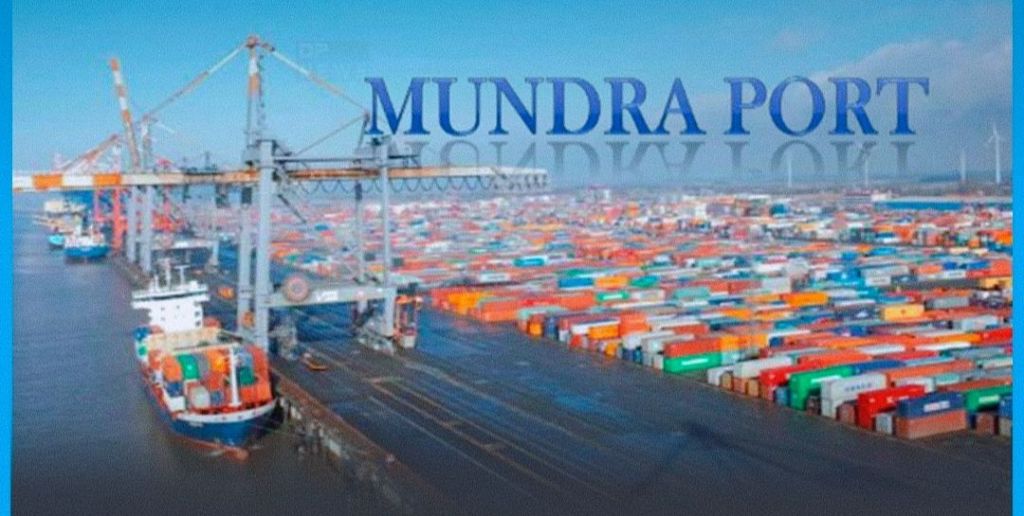
Kutch has always been a parable of survival against impossible odds—first with salt, now with sun. For Ambani and Adani, it is a battleground. For India, it is a proving ground. Recklessly built, it could become a graveyard of stranded assets, broken habitats, and thirsty lands. Wisely shaped, it could become the desert of tomorrow—where salt and sun combine not just for survival but for prosperity.
Because when the salt gods face off with the sun kings, the outcome cannot simply be another billionaire duel. It must be the revolution that proves India can lead the world into a green future—without abandoning the people and land that made it possible.
Visit arjasrikanth.in for more insights
 SOCIAL PERSPECTIVES